Catégories
dernier blog
Get Frame vs Inflatable Quote Request Sample
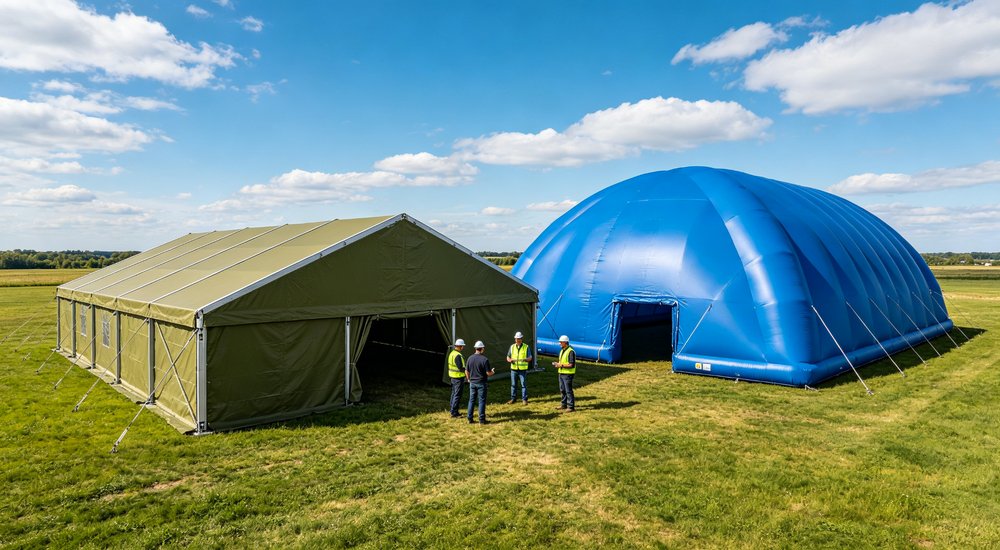
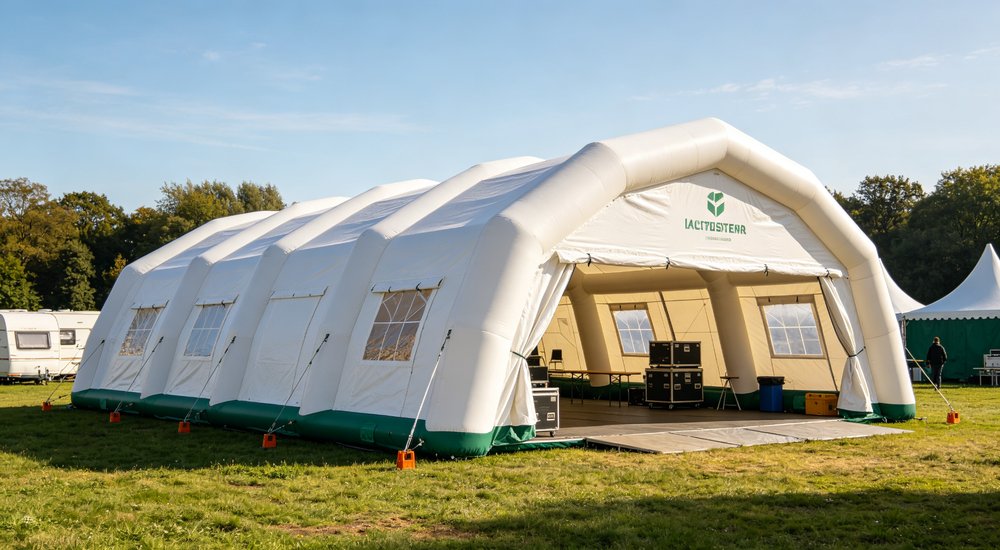
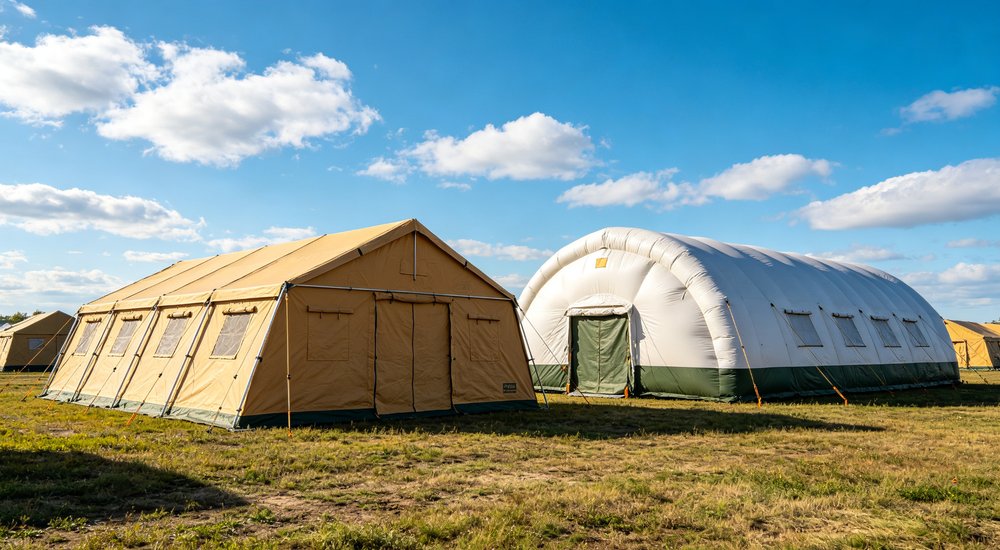
When organizations need emergency shelters, the choice between frame tents and inflatable tents is one of the most important purchasing decisions. Both serve the same purpose — providing rapid shelter — but they use fundamentally different technology. In short: frame tents use rigid poles for long-term durability, while inflatable tents use air beams for rapid 2-5 minute deployment. Whether you need an emergency response tent for first-72-hour deployment or a rapid deployment shelter for ongoing operations, construction type determines performance. Frame tents rely on rigid poles, while inflatable tents use air-filled beams. This guide compares every dimension: setup speed, durability, cost, insulation, maintenance, and total cost of ownership, to help you choose the right shelter system for your program.
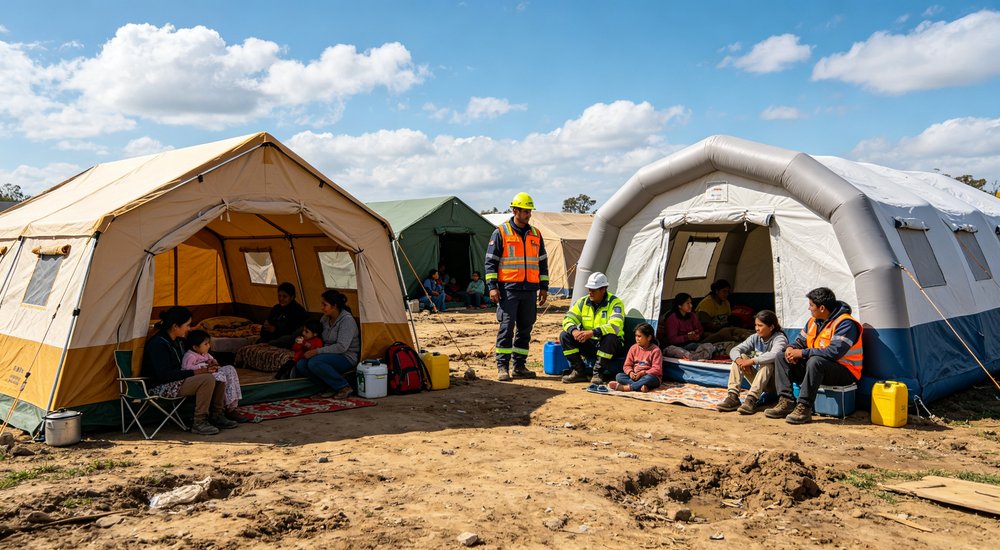
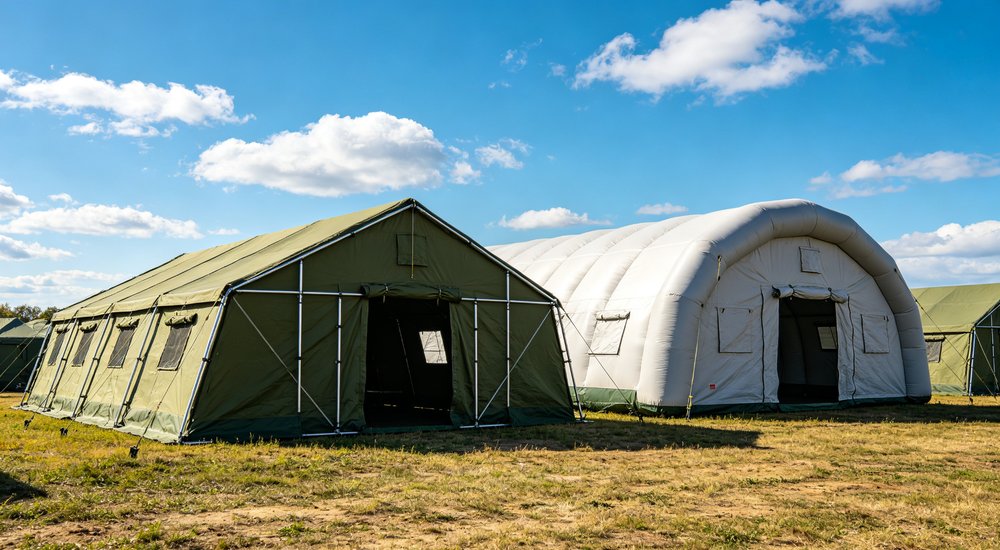
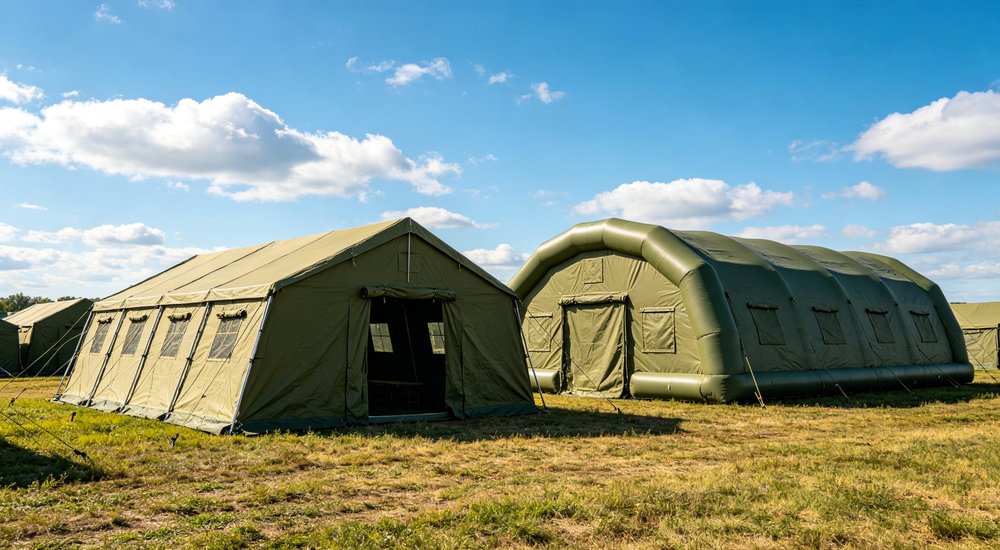
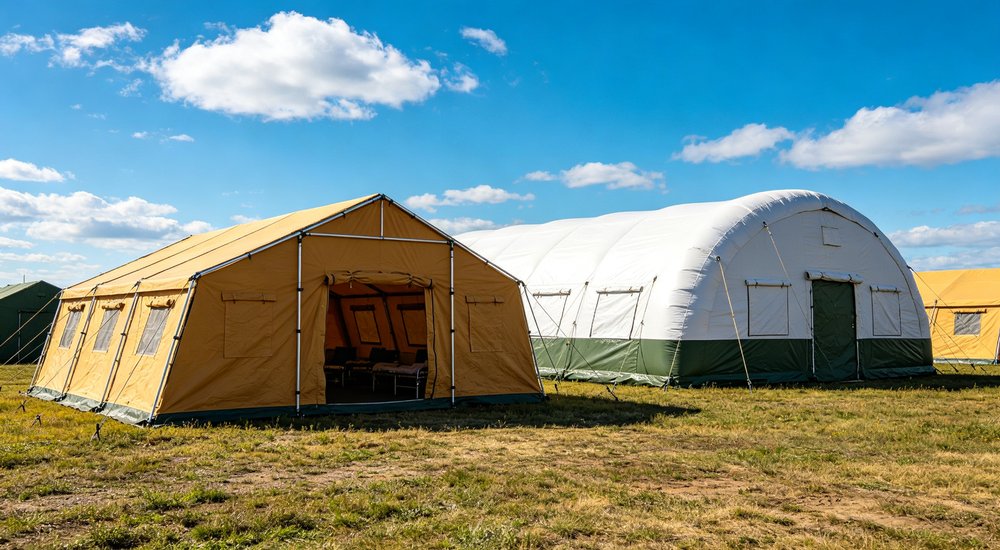
Quick answer: For rapid disaster response where speed matters most, inflatable tents deploy in 2-5 minutes. For long-term camps (6+ months) where durability and repairability matter, frame tents are the proven choice for disaster relief shelter and refugee shelter programs. Many organizations use both: inflatable for initial response, frame for sustained operations.
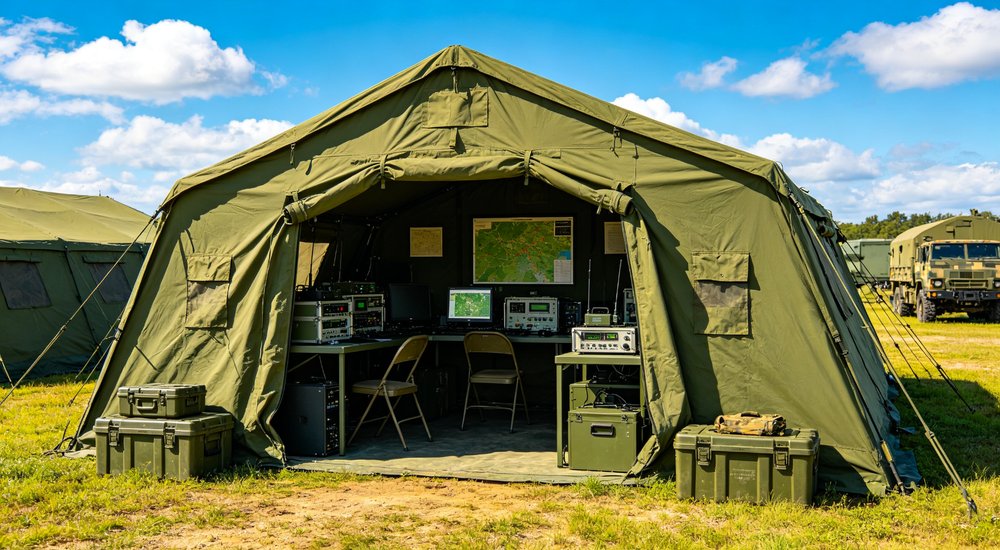
Core Difference Comparison Table
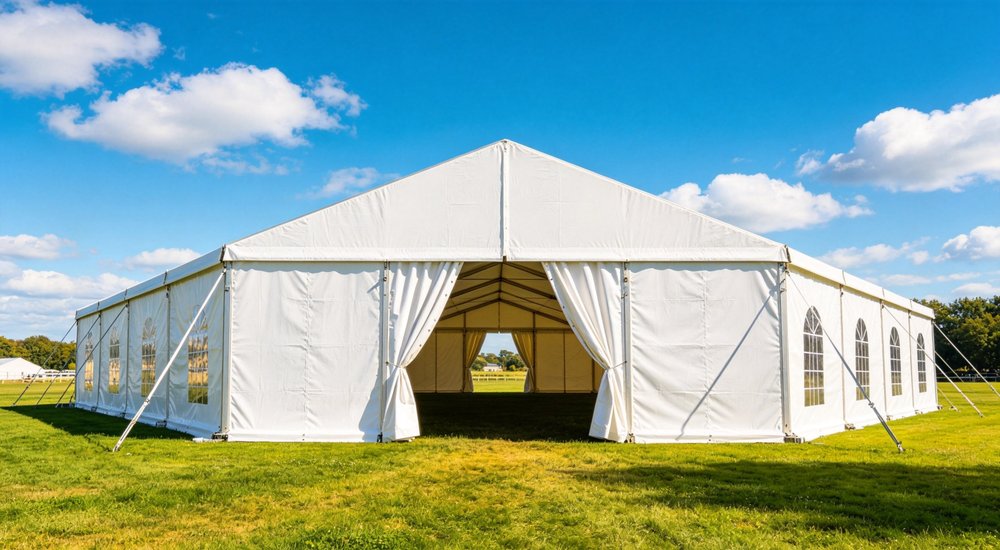
Frame Tents: Structure, Pros & Cons
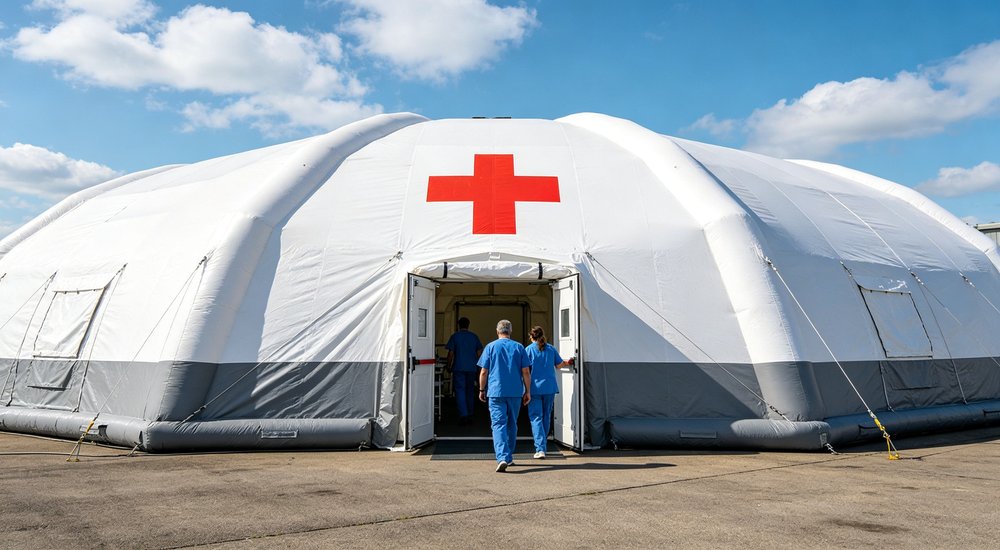
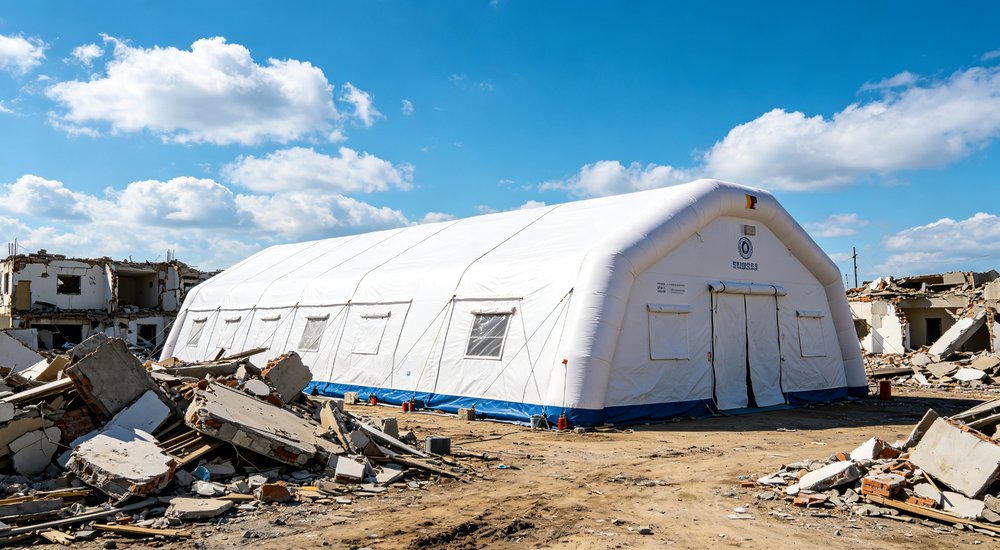
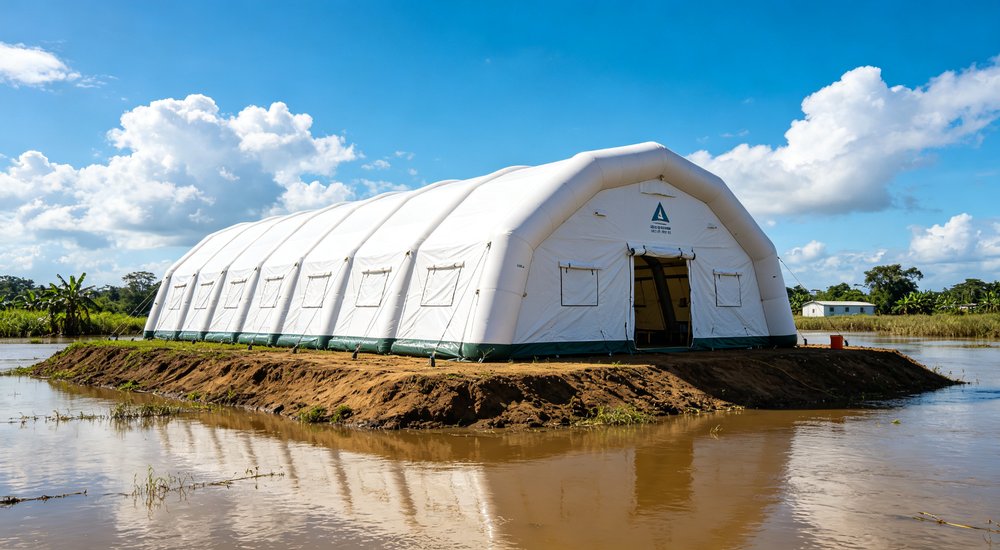
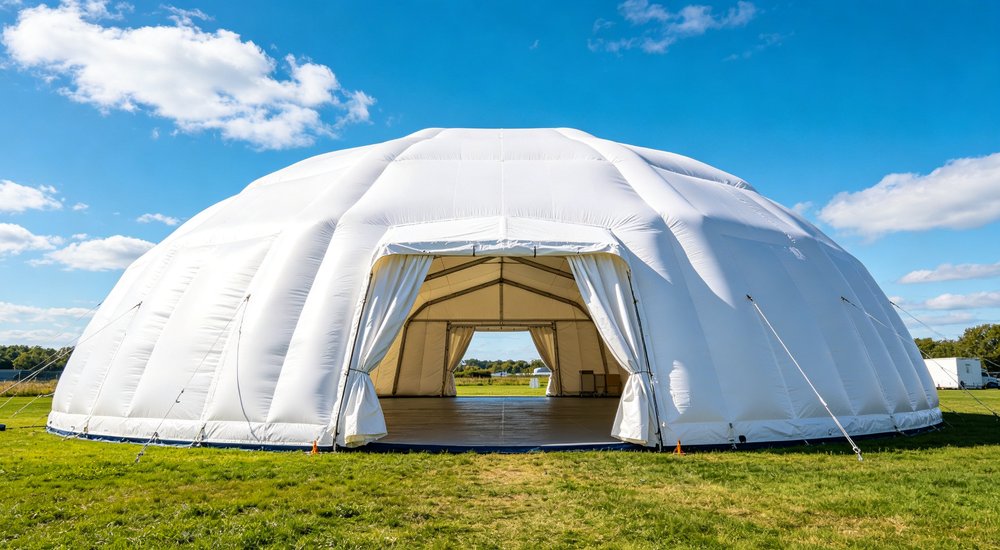
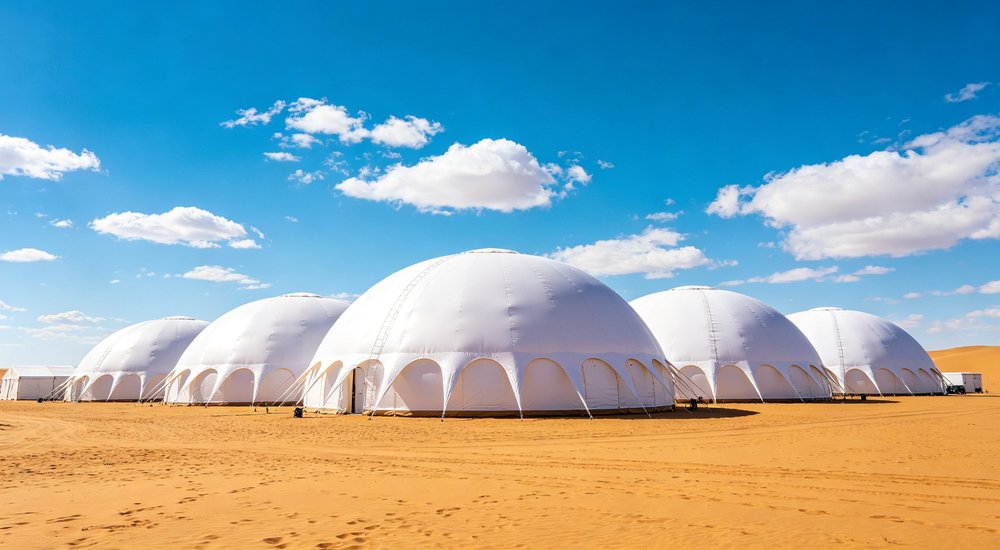
Inflatable Tents: Structure, Pros & Cons
Setup Speed & Deployment Comparison
Durability & Maintenance Comparison
Insulation & Thermal Performance
Price & Total Cost of Ownership
Climate & Scenario Recommendations
Customization Options
Procurement Decision Guide: 5 Steps
Quick Comparison Summary
Real-World Deployment Examples
Frequently Asked Questions
Key Takeaways
When to Choose: Decision Tree
Common Mistakes
Client Feedback
Request a Proposal
Final Verdict
|
Factor |
Frame Tent |
Inflatable Tent |
|
Support structure |
Steel or aluminum poles |
Air-filled PVC beams (air beams) |
|
Setup time (20m²) |
15-45 minutes (2-4 people) |
2-5 minutes (1-2 people + pump) |
|
Weight (20m²) |
45-90 kg |
35-60 kg |
|
Packed size |
Large (poles + fabric separate) |
Compact (rolls into one bag) |
|
Durability |
7-10 years |
5-8 years |
|
Repairability |
Excellent (poles replaceable, fabric patchable) |
Moderate (punctures patchable, beam failure costly) |
|
Wind resistance |
Excellent (80-120 km/h with proper anchoring) |
Good (60-90 km/h, depends on air pressure) |
|
Insulation options |
Single layer, 3-layer integrated, 3-layer detachable |
Single layer or insulated air beam (limited) |
|
Price range (20m²) |
$250-$750 |
$450-$1,200 |
|
Best for |
Long-term camps, permanent facilities, cold climates |
Rapid response, medical triage, temporary command centers |
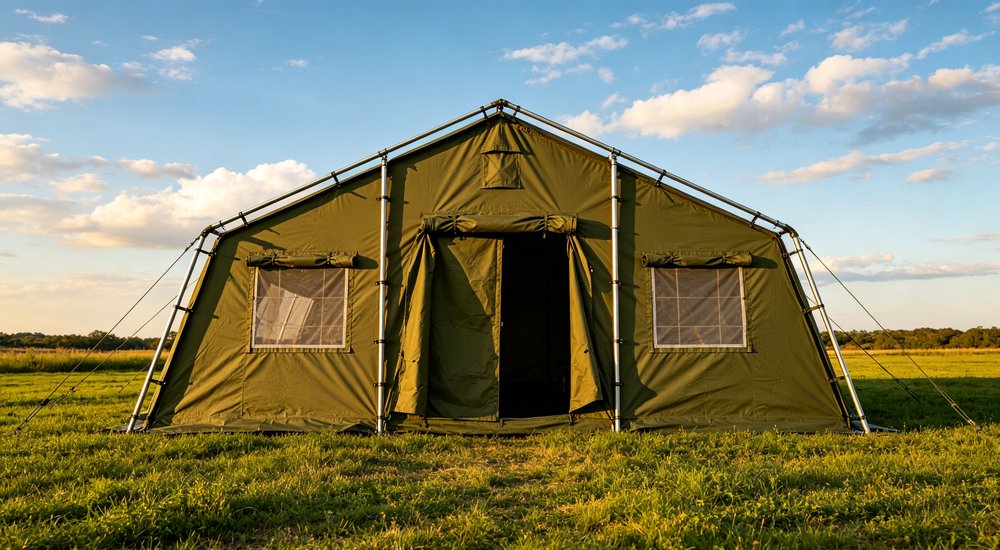
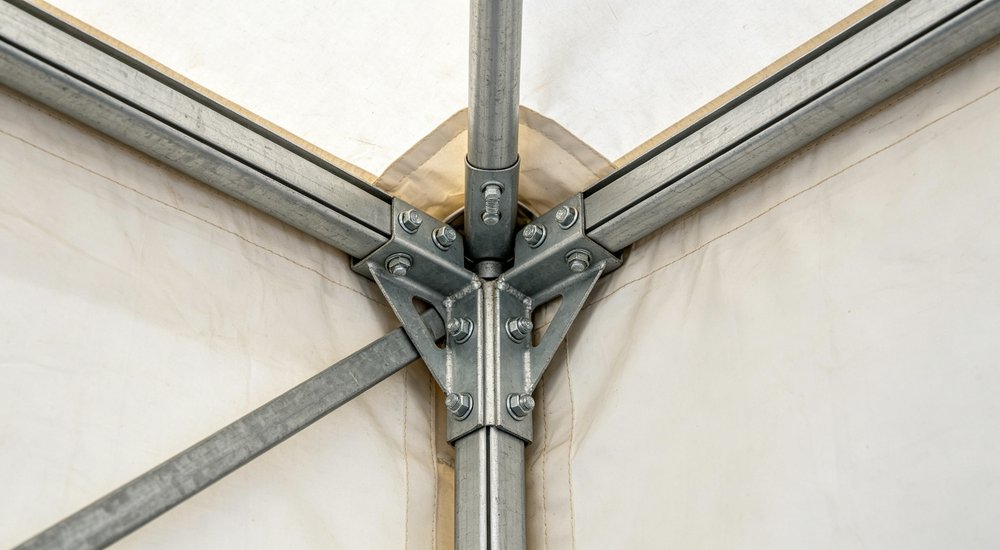
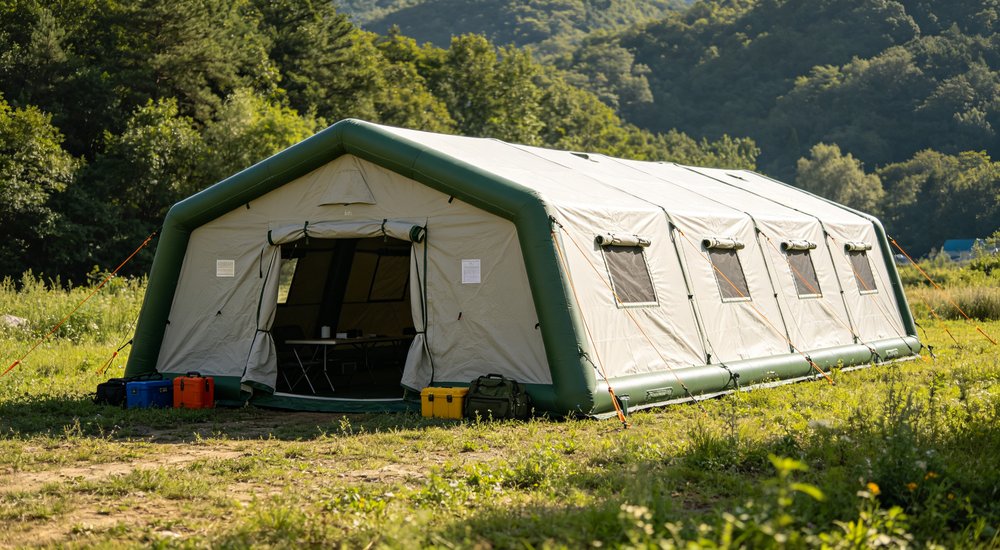
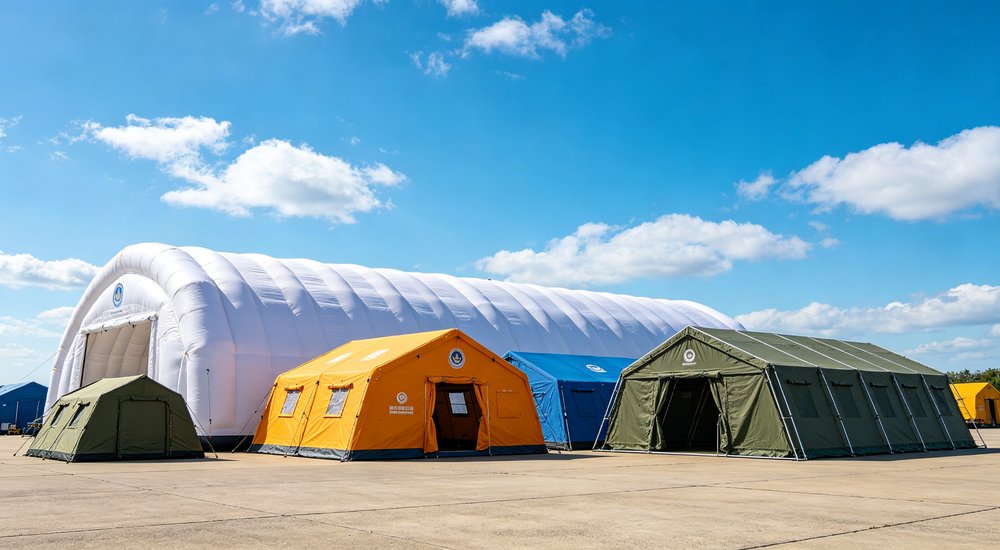
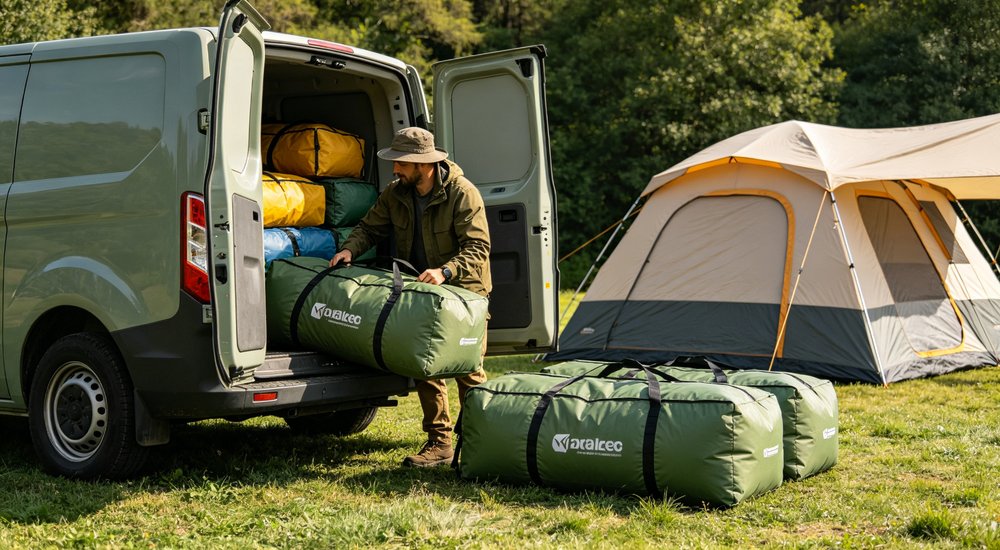
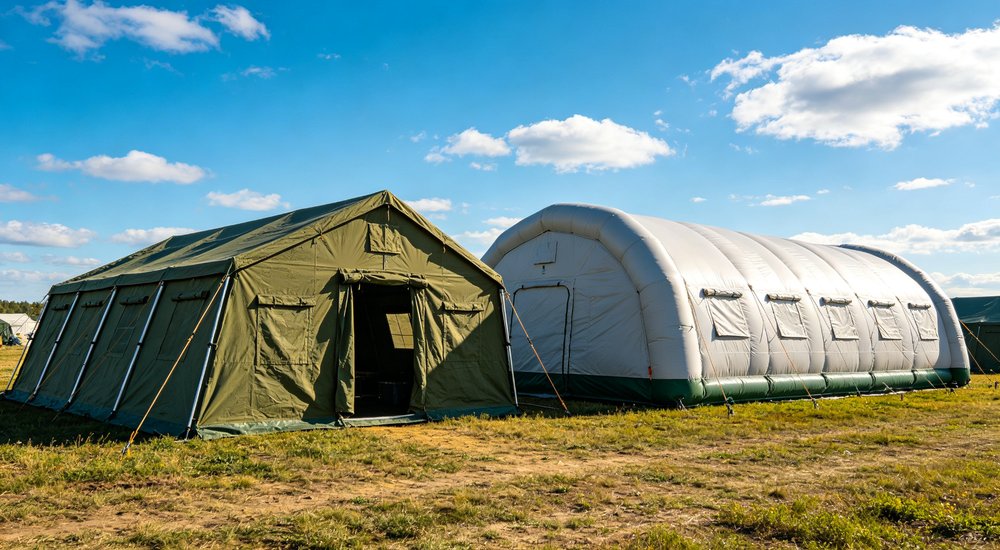
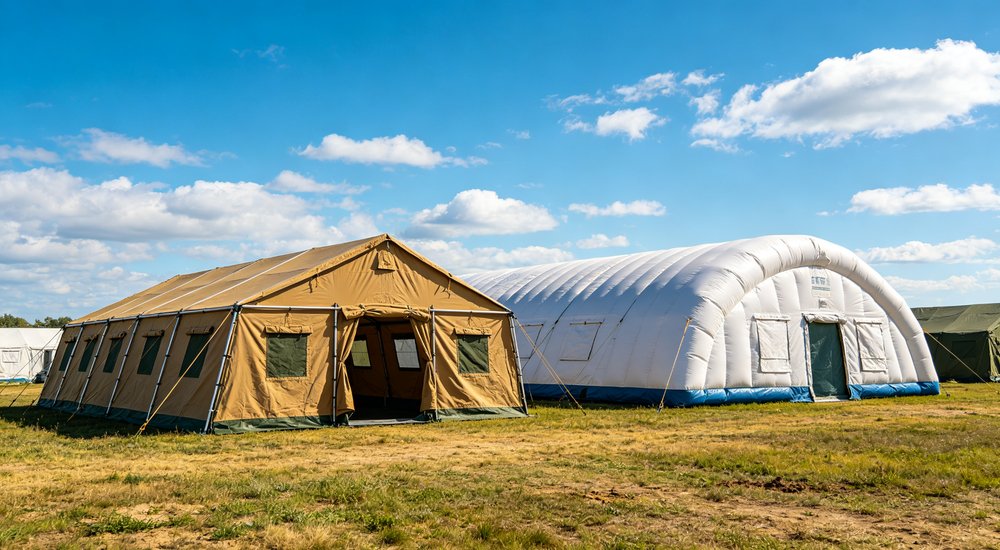
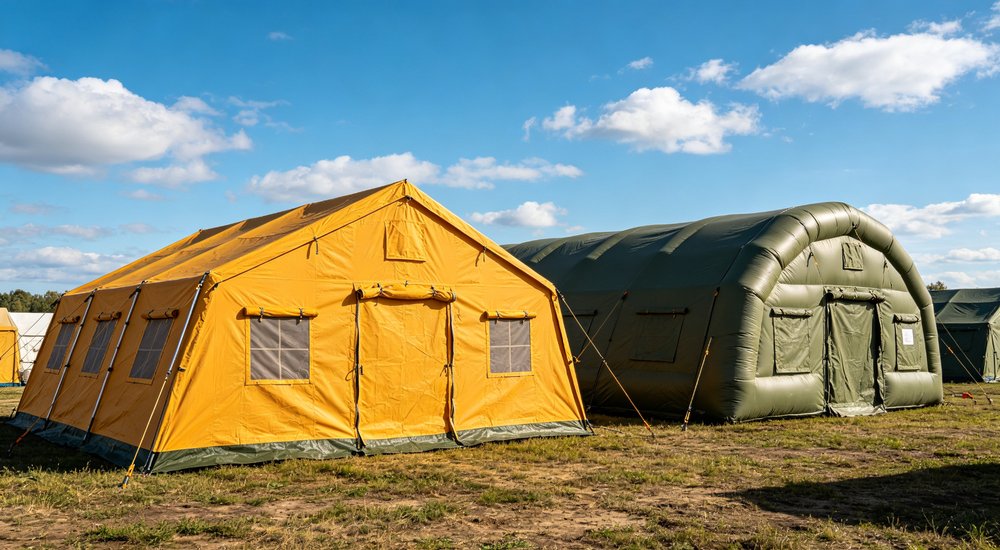
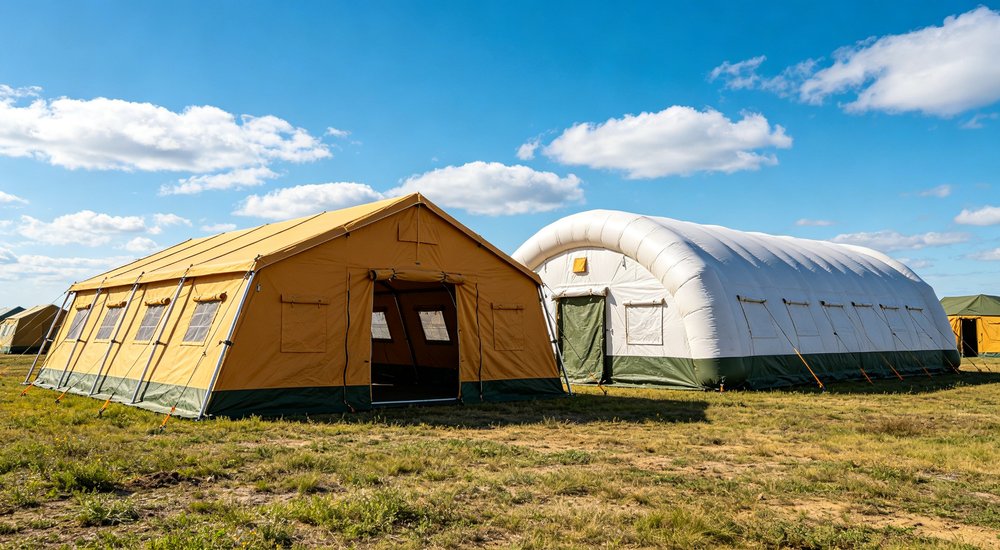
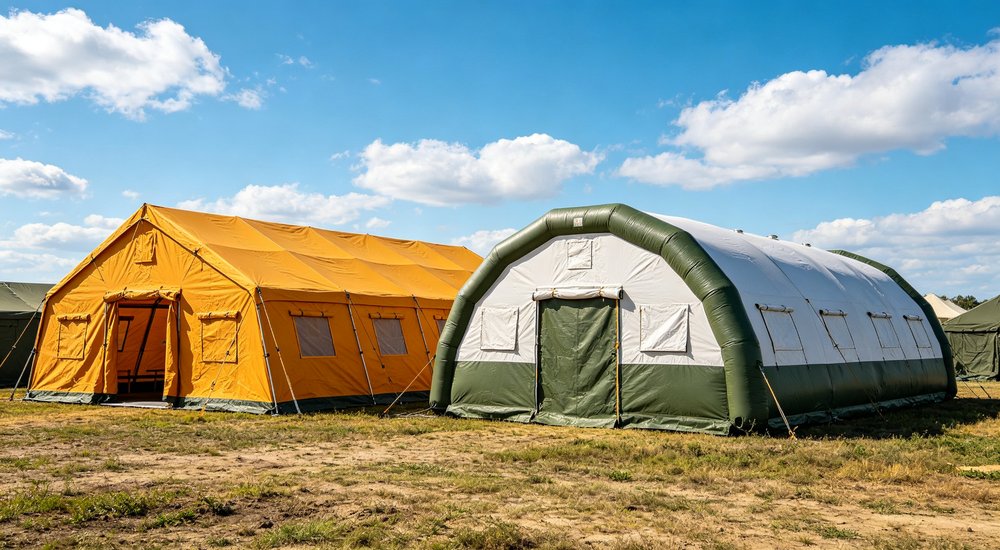
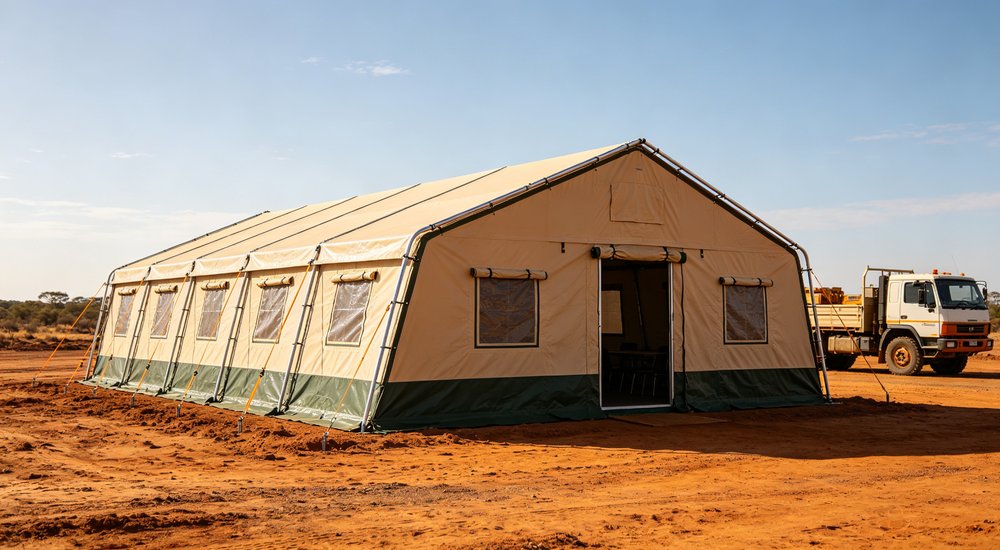
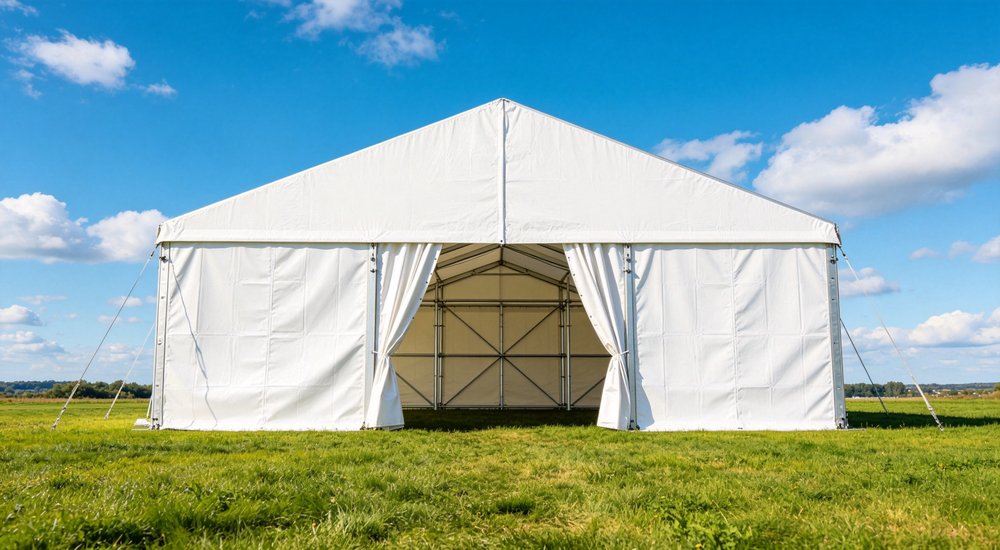
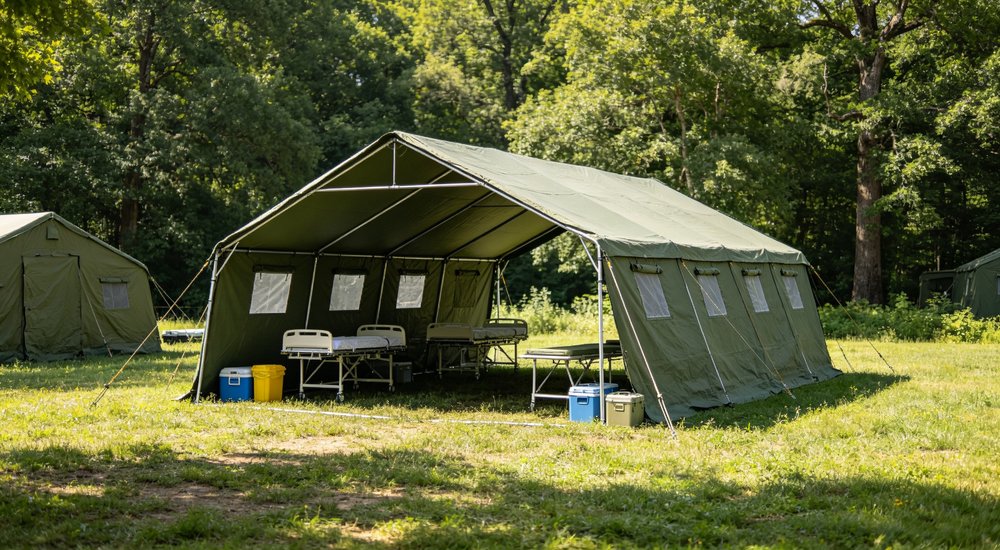
Frame tents use a rigid skeleton of steel or aluminum poles that supports the outer fabric — typically polyester, canvas, or cotton. Inflatable tents use nylon or PVC-coated polyester. The poles connect via sleeves, clips, or elastic cord (shock-corded systems). Once the frame is erected, the fabric is draped over and secured. This is the traditional tent design used by militaries and humanitarian organizations for decades.
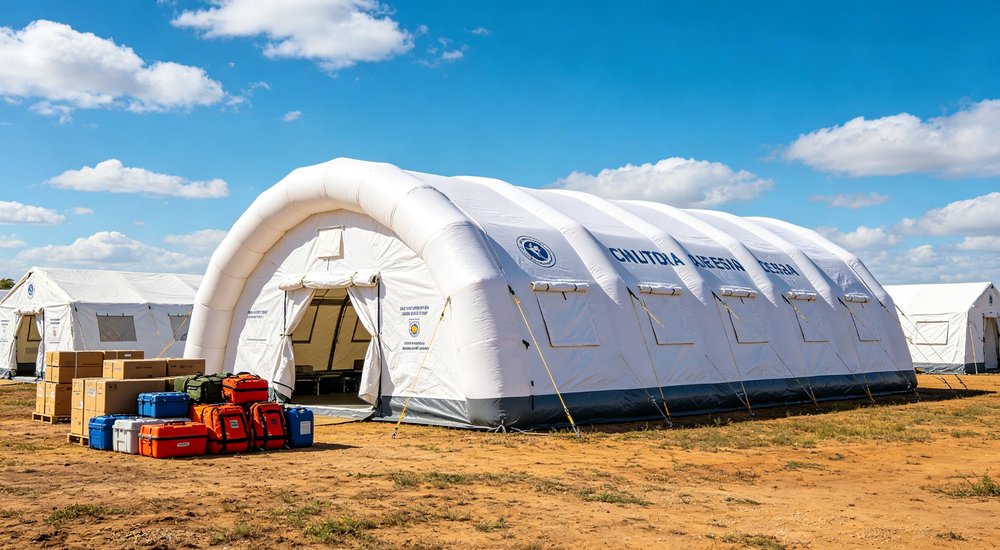
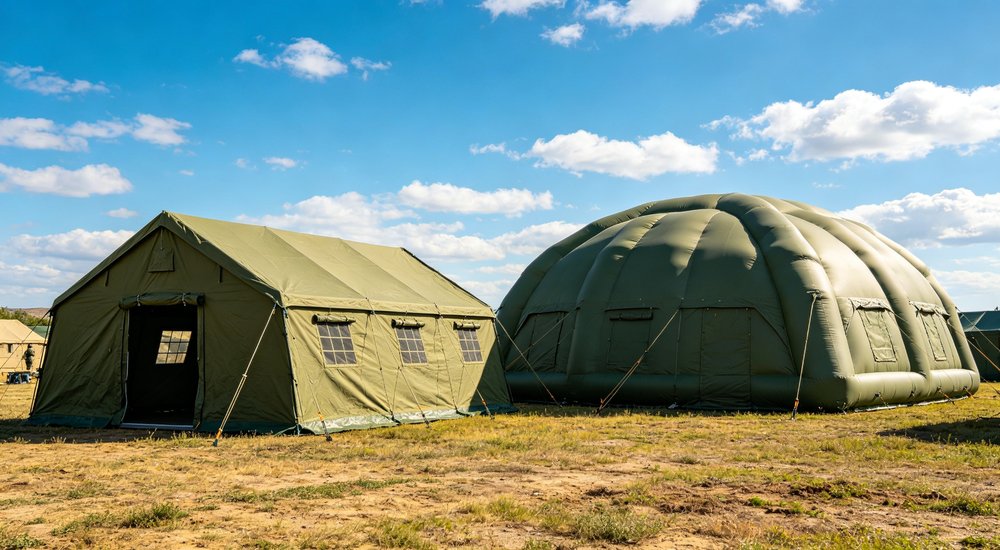
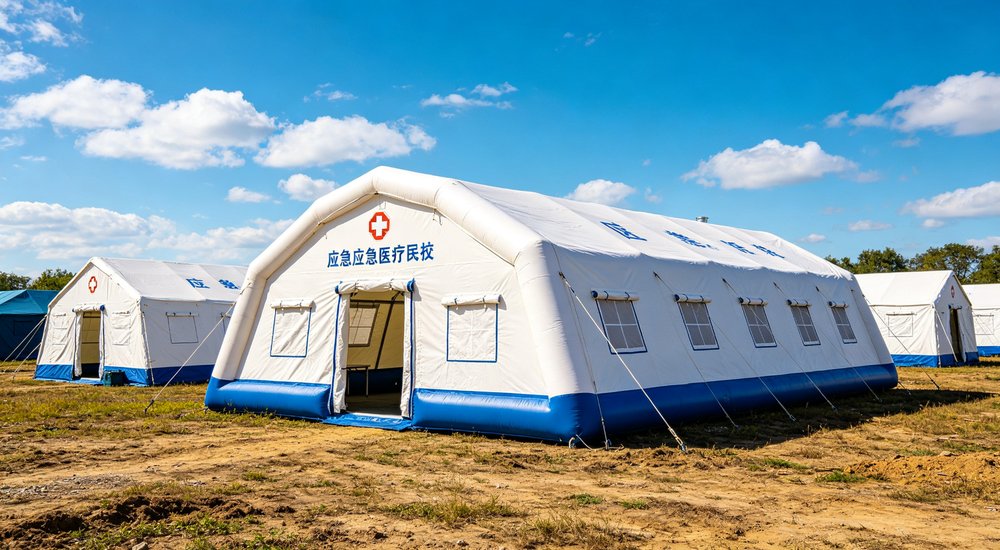
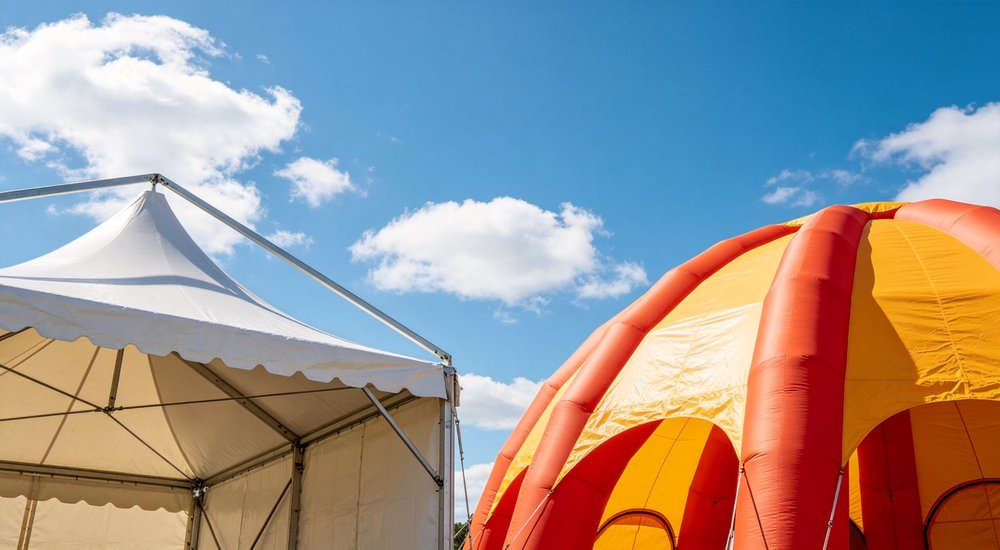
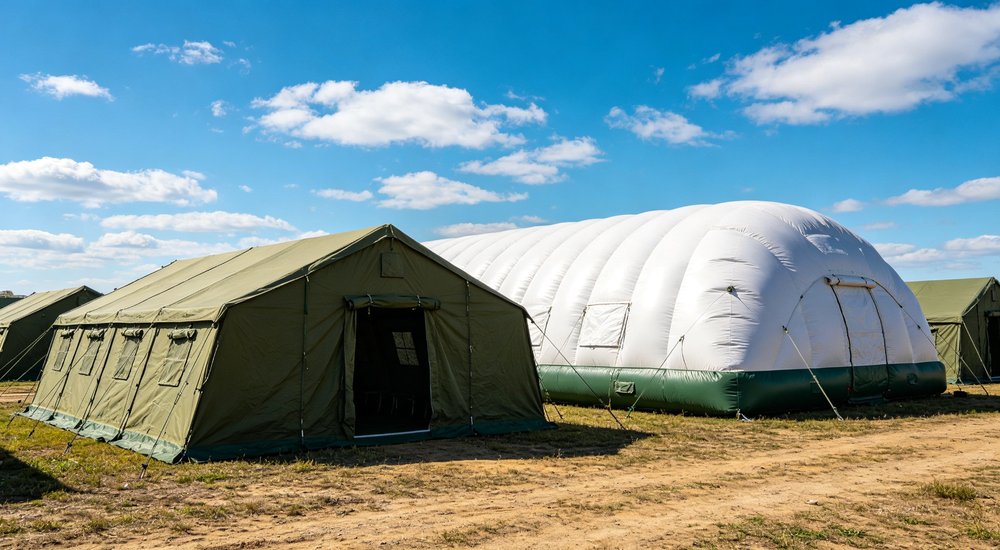
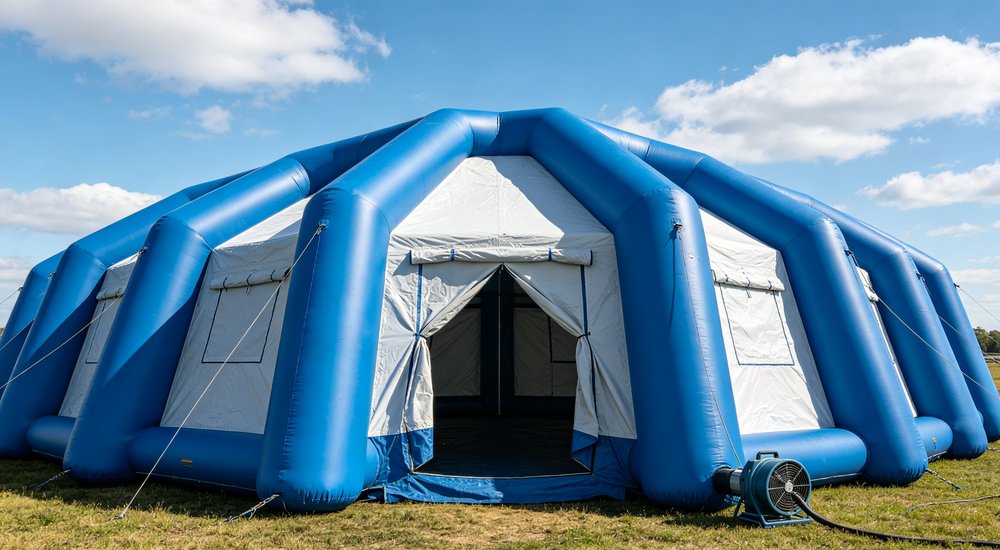
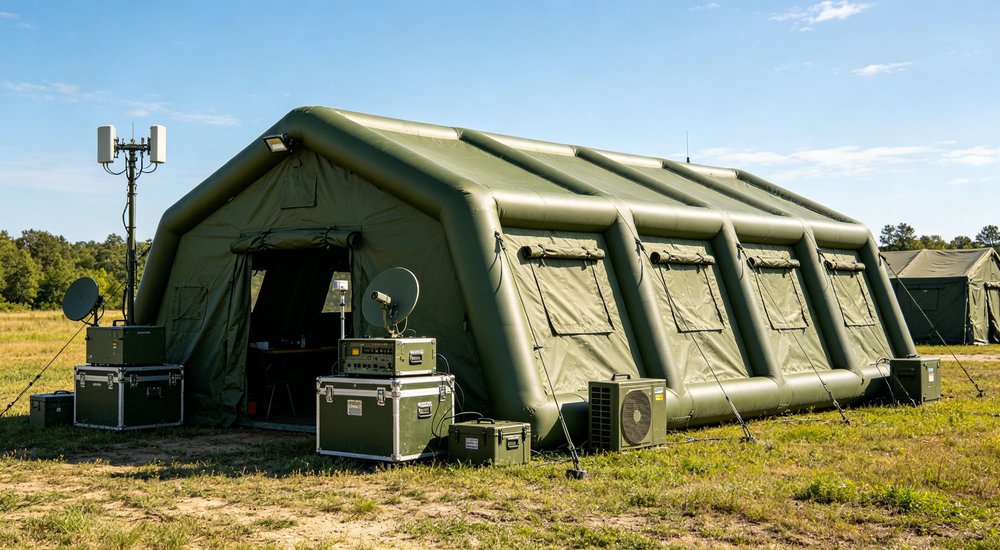
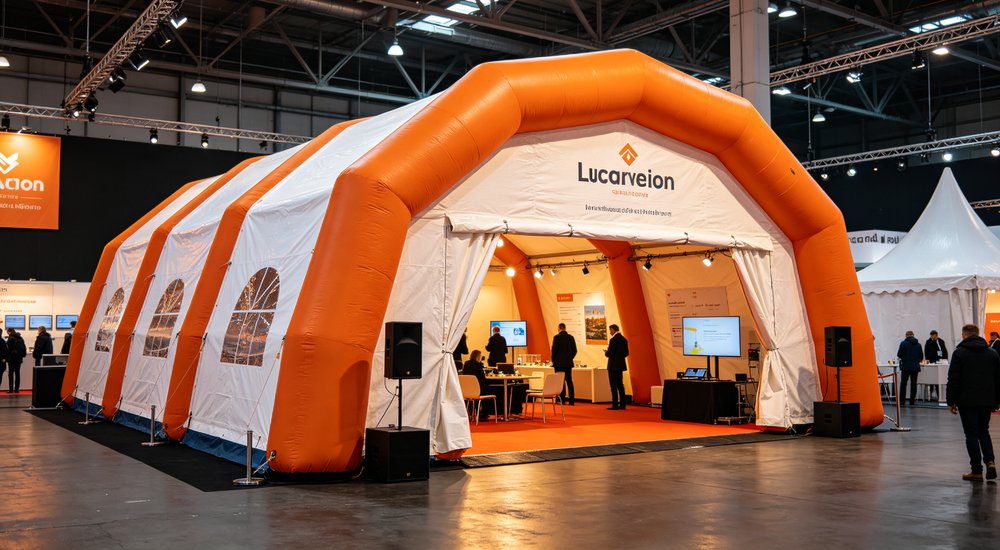
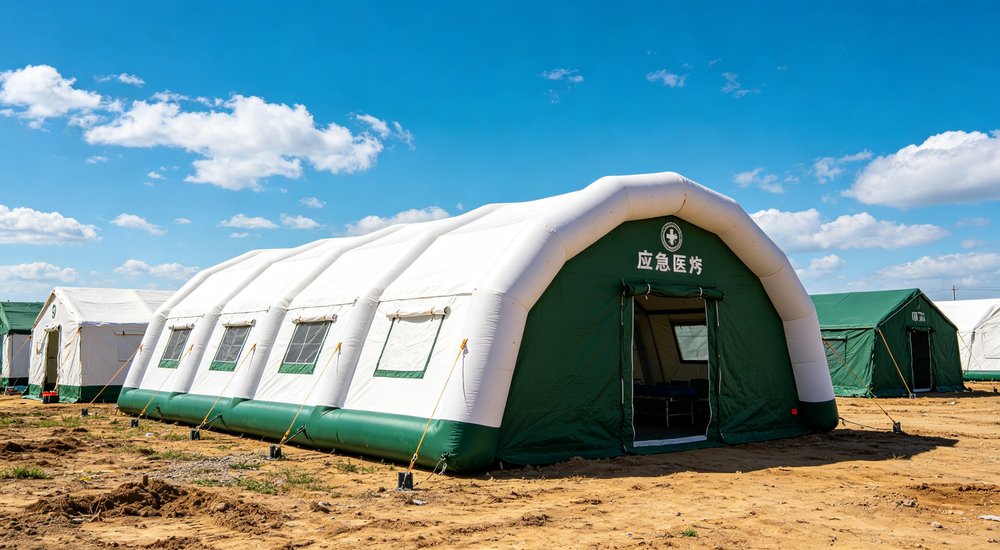
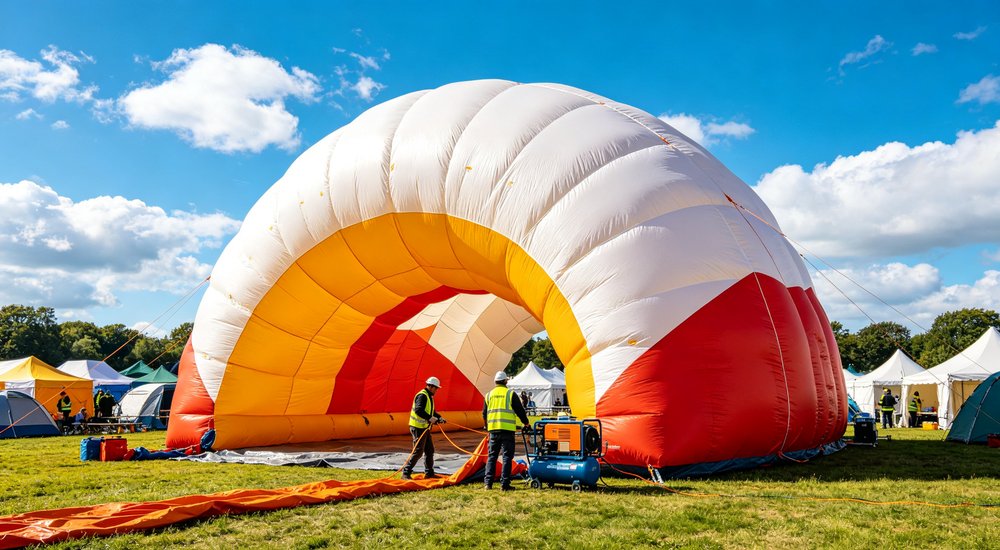
An inflatable shelter uses air-filled PVC or TPU beams (called air beams, inflatable ribs, or air supported structure) instead of rigid poles. A portable pump (electric, hand, or foot) inflates the PVC or TPU beams to 5-10 PSI in 2-5 minutes. The fabric is integrated with the beam system, creating a self-supporting structure. Once inflated, the tent maintains pressure for days without topping up.
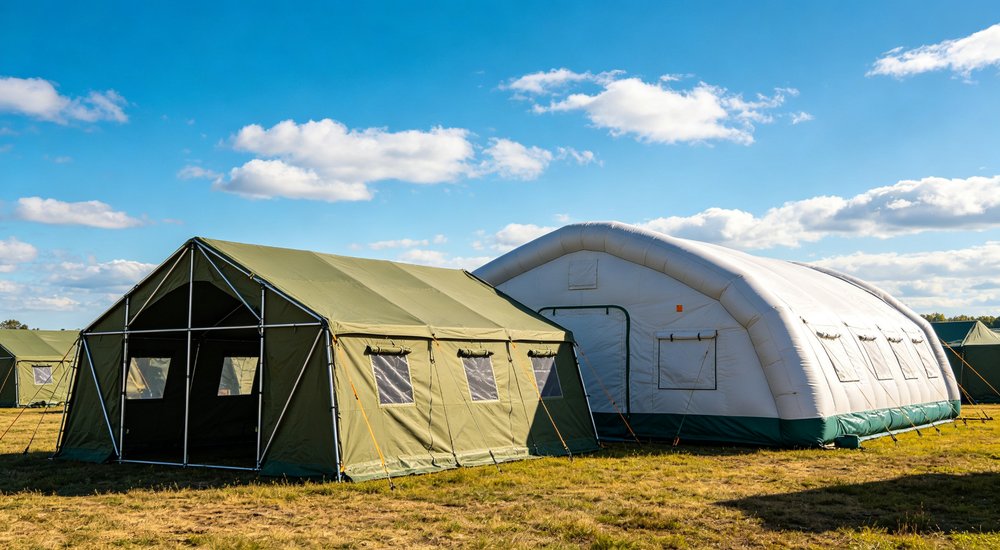
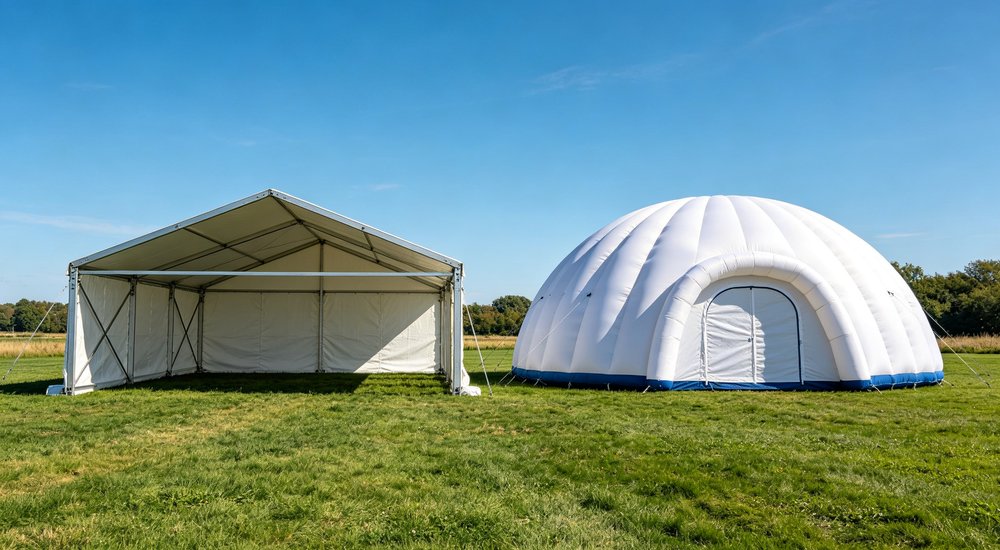
Setup speed is often the deciding factor in emergency procurement. Here is a detailed comparison:
|
Deployment Phase |
Frame Tent (20m²) |
Inflatable Tent (20m²) |
|
Unpacking |
3-5 min (separate pole and fabric bags) |
1-2 min (single roll-out bag) |
|
Frame assembly |
8-20 min (connect poles, insert sleeves) |
0 min (no poles) |
|
Inflation/erection |
5-15 min (raise frame, attach fabric) |
2-5 min (pump to pressure) |
|
Anchoring |
5-10 min (stakes, guy lines) |
3-5 min (stakes only) |
|
Total time |
21-55 min |
6-12 min |
|
Personnel needed |
2-4 trained |
1-2 any |
|
Training required |
2-4 hours |
5-10 minutes |
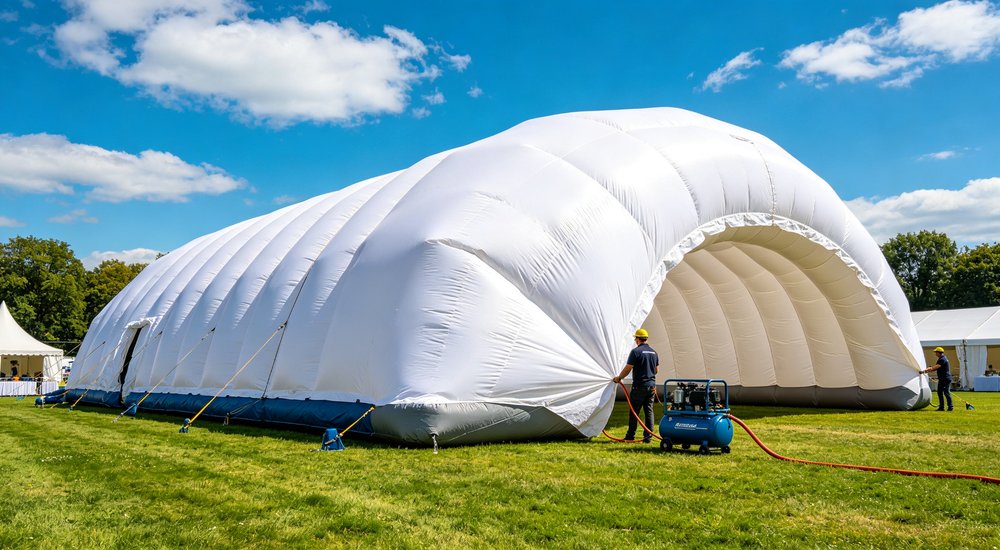
Key insight: Inflatable tents are 3-5x faster to deploy compared to frame tents. For a 100-tent emergency deployment, frame tents require 200-400 person-hours of setup labor, while inflatable tents need only 60-120 person-hours. In the first 72 hours after a disaster, this speed difference can save lives.
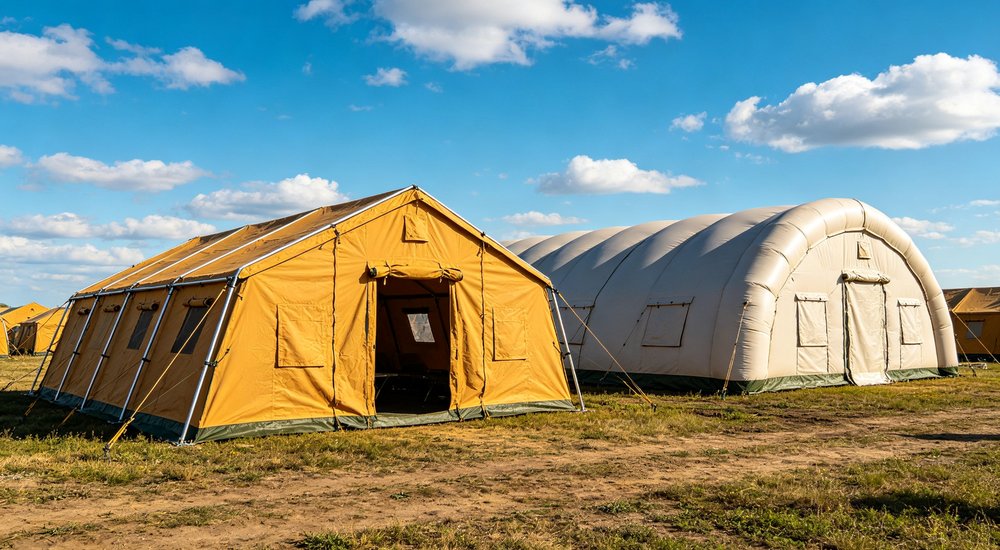
Another critical factor is setup consistency. Frame tents require trained personnel — an inexperienced team may take twice as long and risk damaging poles. Inflatable tents have near-identical setup times regardless of experience, making them ideal for volunteer-heavy disaster zones where trained crews are scarce.
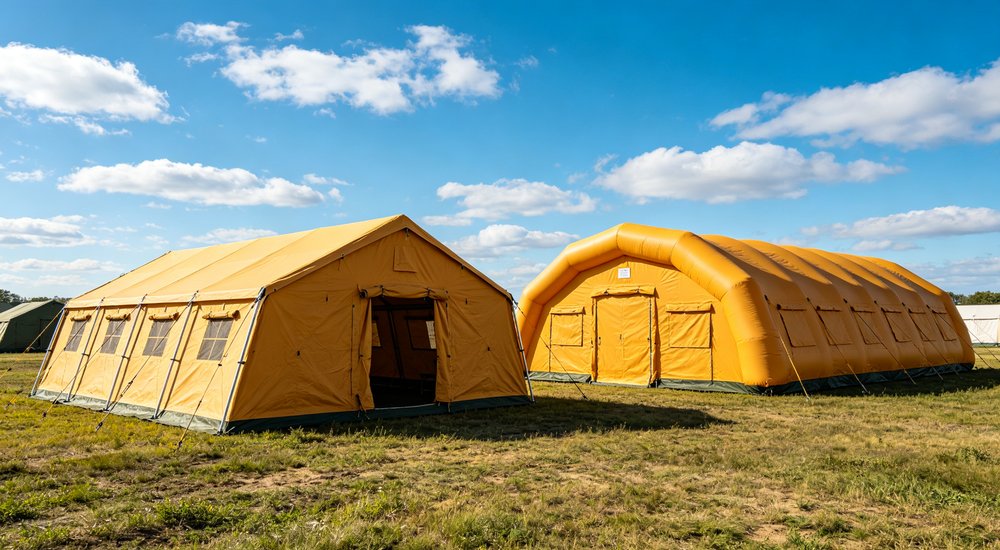
Recommendation: If your deployment window is under 72 hours or you rely on untrained volunteers, choose inflatable. If you have trained crews and longer setup windows, frame tents offer better long-term value.
|
Maintenance Factor |
Frame Tent |
Inflatable Tent |
|
Expected lifespan |
7-10 years |
5-8 years |
|
Common failure point |
Bent/broken poles, fabric UV degradation |
Beam punctures, valve leaks, pump failure |
|
Field repair difficulty |
Easy (pole replacement, fabric patches) |
Moderate (patch kits for small punctures) |
|
Spare parts needed |
Poles, stakes, guy lines, repair tape |
Pump, repair patches, pressure gauge, valve kit |
|
Regular maintenance |
Inspect poles, tighten connections, clean fabric |
Check air pressure weekly, inspect for air leak points, service pump, proper deflation before storage |
|
UV resistance |
Excellent (metal poles unaffected) |
Good but PVC beams degrade over 5+ years |
|
Cold weather performance |
Excellent (metal unaffected by cold) |
Good (PVC can stiffen below -10°C) |
|
Storage requirements |
Dry, ventilated; poles stored separately |
Dry, clean; must be fully deflated and rolled |
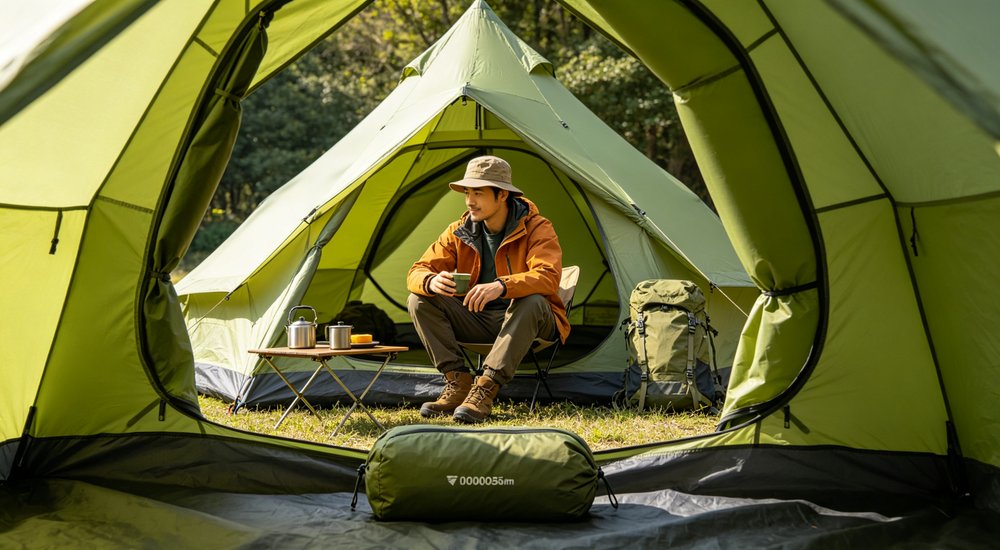
Recommendation: For deployments exceeding 3 years or in harsh UV environments, choose frame tents. For programs with good maintenance infrastructure and 2-5 year lifecycles, inflatable tents are viable.
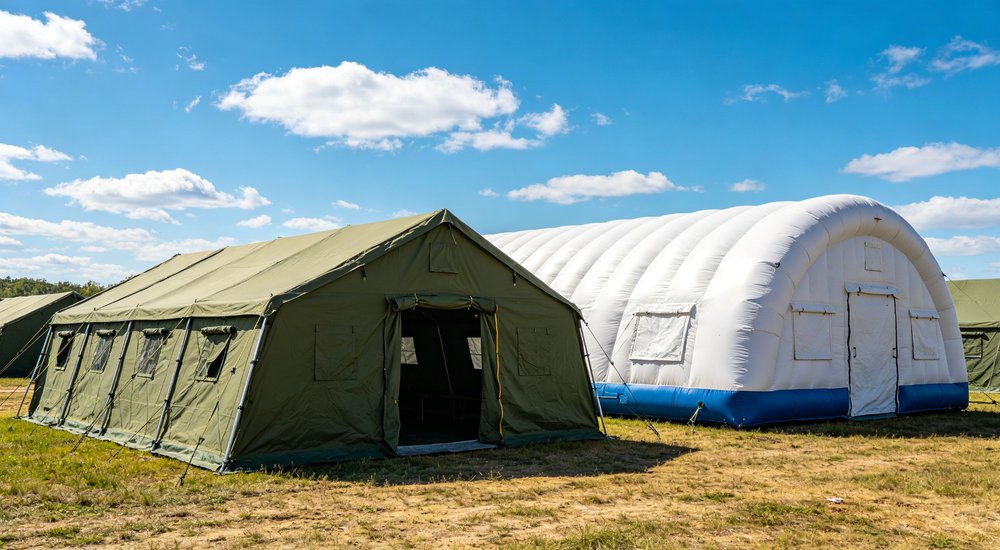
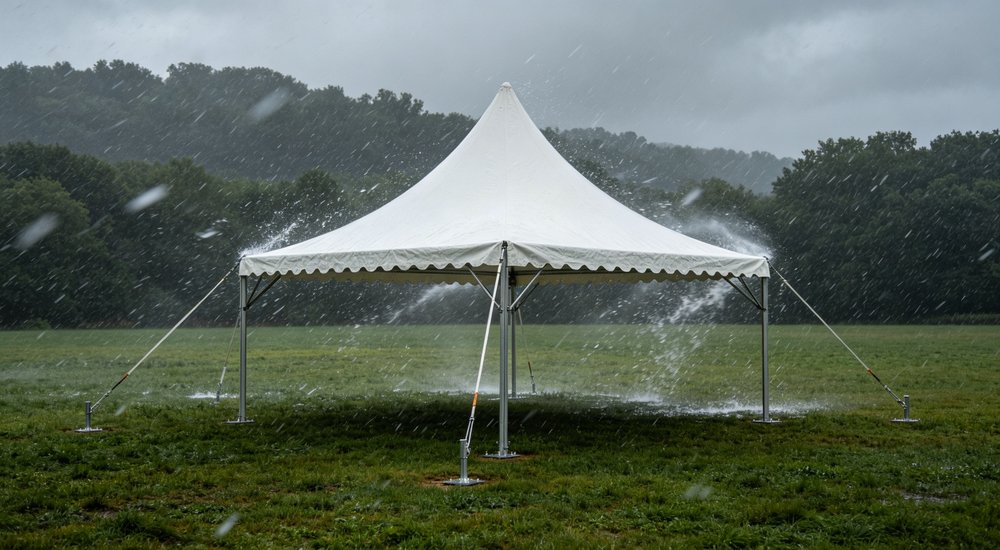
Insulation is where frame tents have a significant advantage. Frame tents are available in three insulation configurations, while most inflatable tents are single layer:
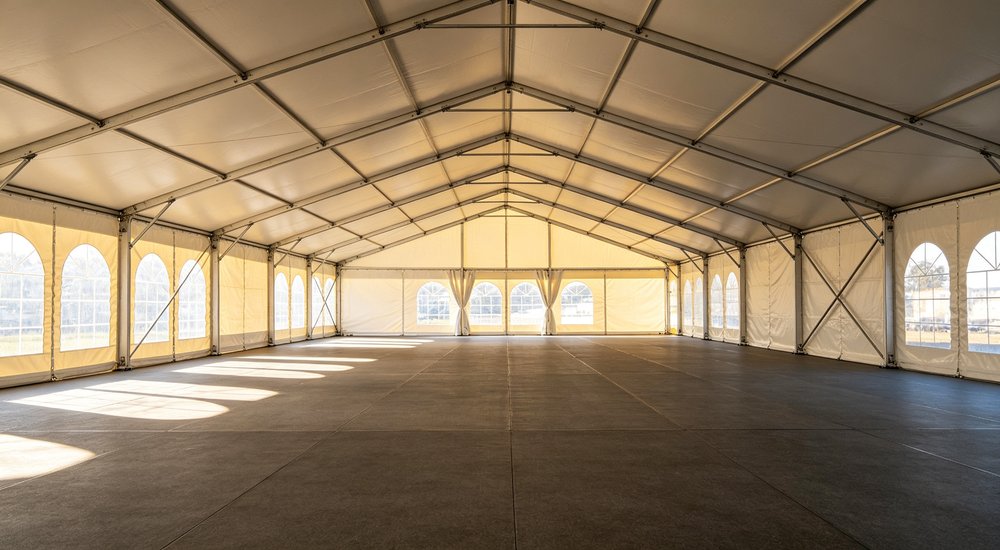
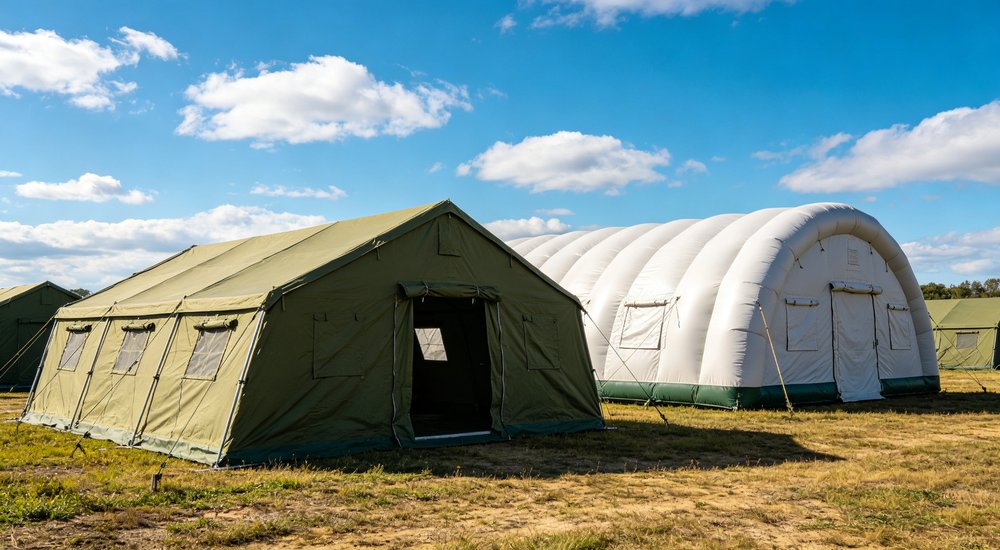
For operations in cold climates (below 0°C), frame tents with 3-layer insulation are the clear choice. Inflatable tents can be supplemented with separate thermal liners, but these add setup time and negate the speed advantage.
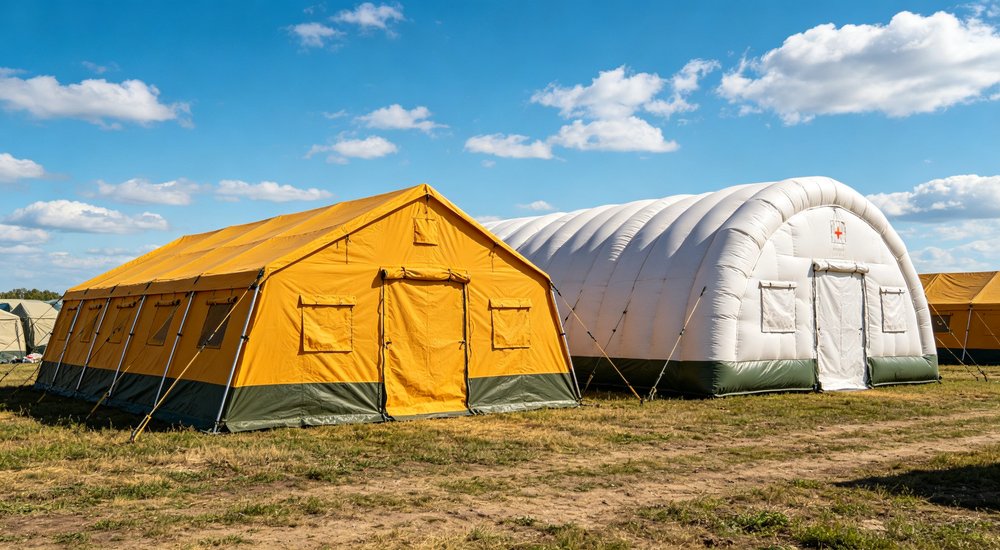
In hot climates, ventilation becomes the priority. Frame tents with removable groundsheets and adjustable windows offer superior cross-ventilation. Inflatable tents typically have fixed window positions, which can limit airflow in tropical environments. Consider your primary operating climate when evaluating insulation and ventilation options.
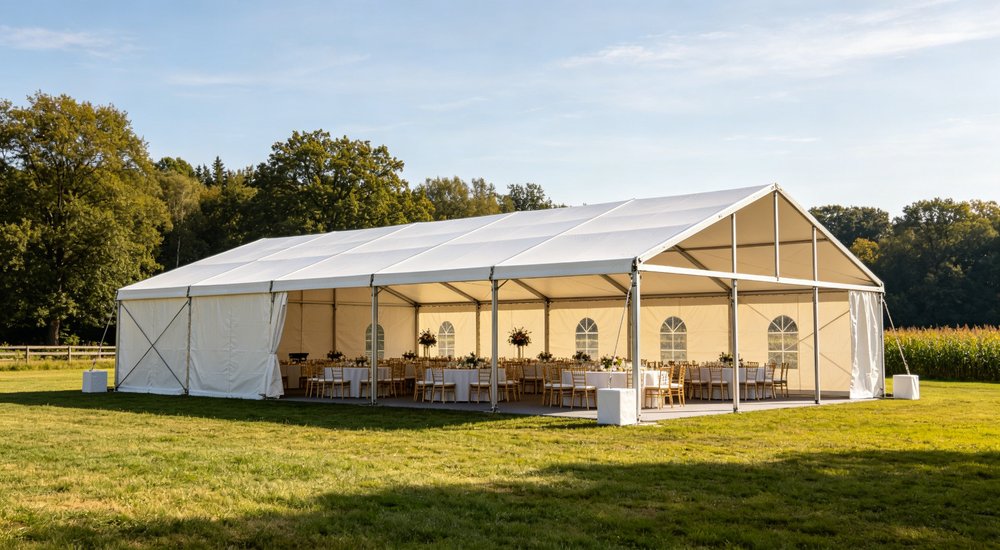
Recommendation: Below 0°C, always choose insulated frame tents. Above 25°C, both work but frame tents offer better ventilation customization. For mixed climates, detachable 3-layer frame tents provide the best year-round versatility.
Reference wholesale pricing (FOB Shenzhen, 2026 guide). Actual quotation varies by raw material costs, order quantity, customization, and shipping. Contact us for firm pricing.
|
Cost Factor (20m², 5-year) |
Frame Tent |
Inflatable Tent |
|
Purchase price |
$250-$750 |
$450-$1,200 |
|
Setup labor (10 deployments) |
$200-$500 (trained crews) |
$50-$150 (minimal labor) |
|
Maintenance & repairs |
$50-$150 (poles, patches) |
$100-$300 (pump service, beam patches) |
|
Replacement cost |
$0 (lasts 7-10 years) |
$0-$600 (may need replacement at 5-6 years) |
|
5-year TCO |
$500-$1,400 |
$600-$1,650 |
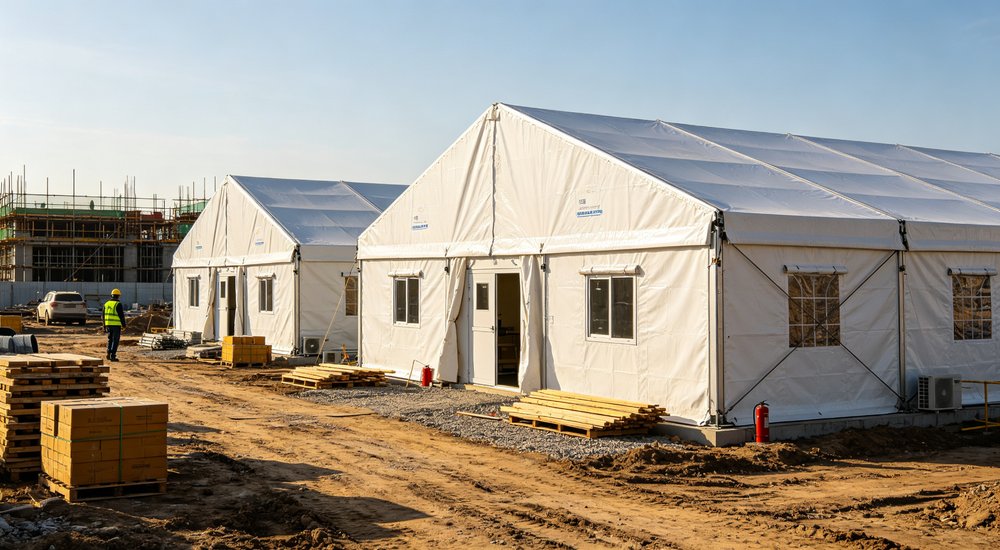
Key insight: While inflatable tents cost more upfront, the labor savings during deployment can narrow the gap. For organizations deploying tents frequently (10+ times per year), inflatable tents may have comparable or even lower TCO due to labor savings. For static, long-term installations, frame tents are more economical.
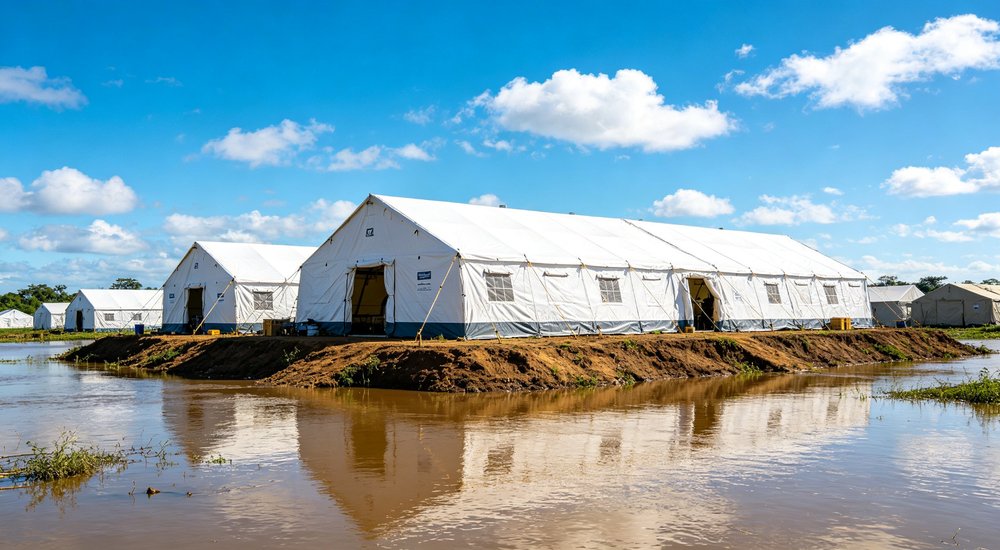
Volume pricing also matters. At 500+ unit orders, frame tent unit prices drop 20-30% due to manufacturing efficiency. Inflatable tent prices are less volume-sensitive because air beam production is more automated. For very large orders (1,000+ units), frame tents become increasingly cost-competitive even when factoring in labor.
Recommendation: Under 50 units with frequent deployment, inflatable TCO is competitive. Over 200 units with static deployment, frame tents save 20-30% over 5 years. Calculate your specific deployment frequency to determine the best value.
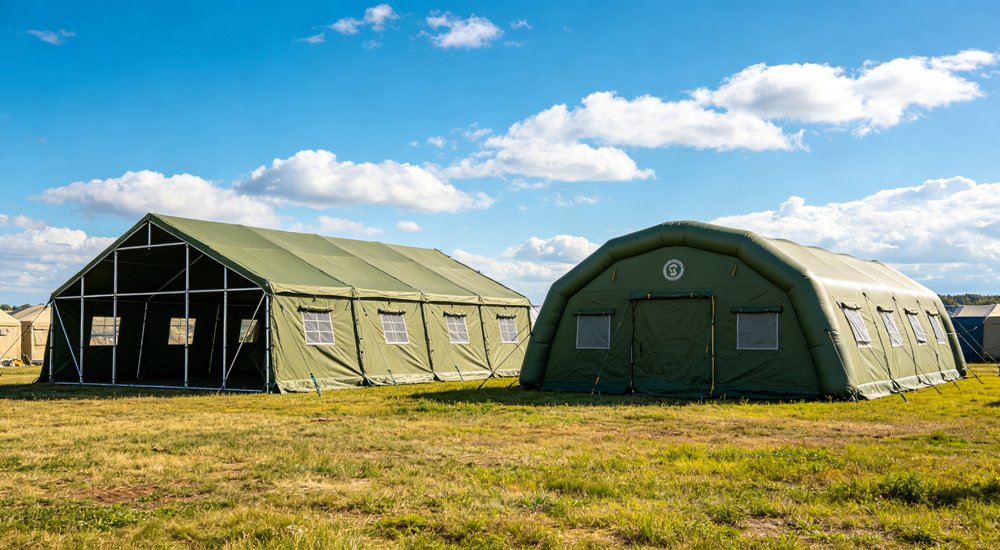
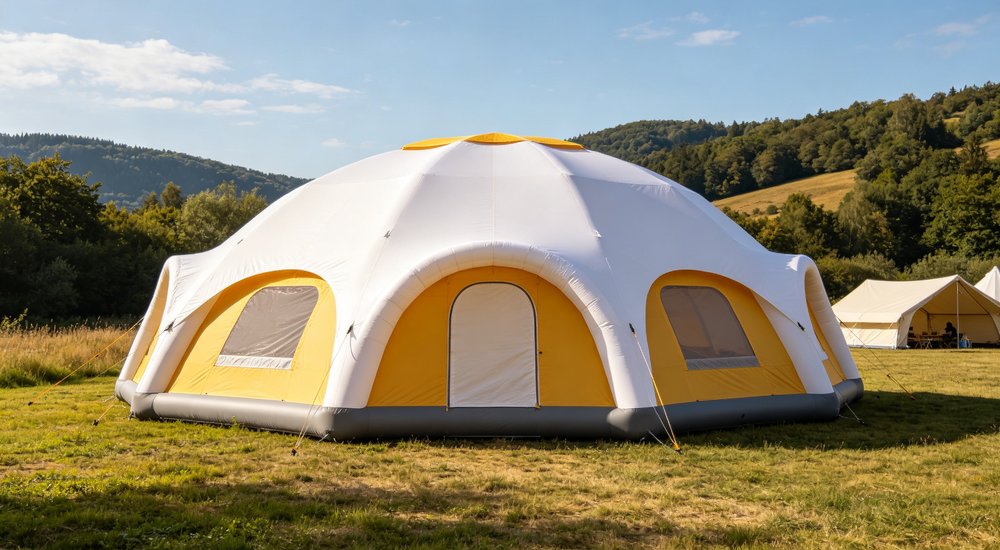
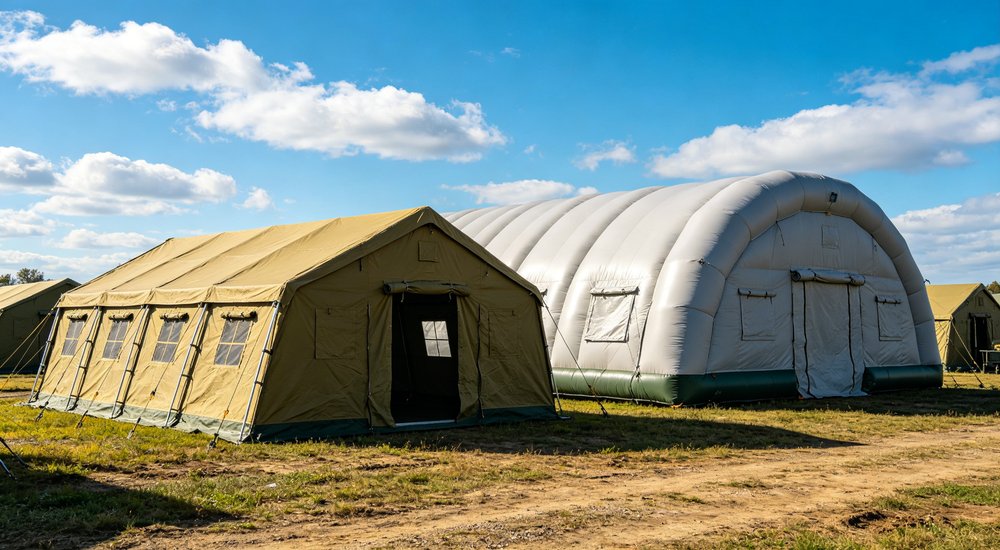
The frame-versus-inflatable decision usually comes down to one question: How often will you move this tent? Frame tents are heavier but survive longer deployments. Inflatable tents go up in minutes but cost more per unit. Earthquake first responders often prefer inflatable for speed; camp managers prefer frame for durability.
|
Climate / Scenario |
Recommended Type |
Why |
|
Rapid disaster response (first 72h) |
Inflatable |
2-5 min deployment, minimal personnel |
|
Long-term refugee camp (6+ months) |
Frame |
Durability, repairability, insulation options |
|
Field hospital / medical triage |
Inflatable (initial) + Frame (sustained) |
Inflatable for immediate setup, frame for long-term facility |
|
Cold climate (winter below 0°C) |
Frame (3-layer insulated) |
Superior insulation, cold-resistant metal frame |
|
Tropical / hot climate |
Frame (single layer) or Inflatable |
Both work; frame offers better ventilation options |
|
Military forward operating base |
Frame |
High wind resistance, durability, field repairability. Military tent procurement often specifies frame construction for these reasons. |
|
Temporary command center |
Inflatable |
Fast setup, clean interior, professional appearance. A command post tent can be operational in under 10 minutes. |
|
Remote / hard-to-access areas |
Inflatable |
Lightweight, compact, one-person carry |
|
High wind areas (80+ km/h) |
Frame |
Rigid frame withstands higher wind speeds |
Use this simple decision framework to determine which tent type is right for your specific scenario:
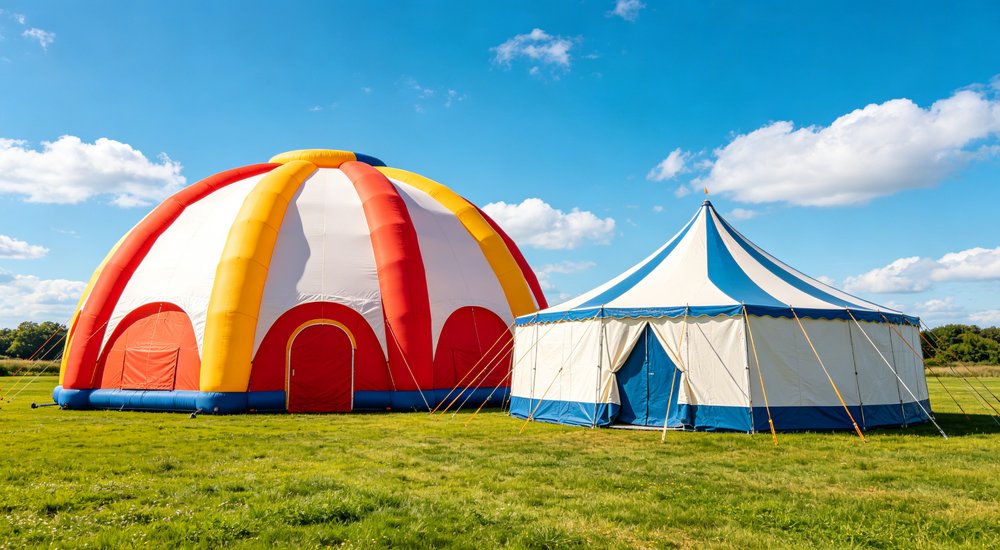
Both tent types support extensive customization, but some options are construction-specific. Frame tents offer more flexibility in layout and insulation, while inflatable tents have pre-molded beam positions that limit window and door placement. Consider your specific operational requirements when specifying custom features:
|
Customization |
Frame Tent |
Inflatable Tent |
|
Logo printing |
✅ Available |
✅ Available |
|
Color choices |
✅ 10+ standard colors |
✅ 5-8 standard colors |
|
Window configuration |
✅ Fully customizable |
✅ Limited (pre-molded positions) |
|
Door types |
✅ Flap, zipper, vestibule |
✅ Zipper, flap |
|
Insulation levels |
✅ 3 options (single/3-layer integrated/3-layer detachable) |
⚠️ Limited (single or premium insulated) |
|
Modular connection |
✅ Multiple tents can connect |
⚠️ Some models support tunnel connections |
|
Flooring |
✅ Integrated or separate |
✅ Integrated (standard) |
|
Sizes |
✅ 4m² to 100m²+ |
✅ 6m² to 60m² (larger limited) |
For organizations with specific branding requirements (UN white, military camouflage, NGO brand colors), we provide Pantone color matching at no additional cost for orders over 200 units. All customizations are documented in a signed specification sheet before production begins.
This tent buying guide walks you through every decision point, based on industry best practices from 20+ years of emergency shelter procurement. How do you decide between frame and inflatable tents for your organization? Follow this 5-step process:
If your primary need is rapid response within the first 72 hours of a disaster, inflatable tents are the clear choice. If you are setting up camps that will last 6 months or longer, frame tents offer better long-term value. Many organizations use a hybrid approach: inflatable for initial response, frame for sustained operations.
List all regions where your organization operates. If 70%+ are in cold or high-altitude areas, frame tents with insulation are essential. If operations are primarily tropical or temperate, both types work, and you can decide based on other factors.
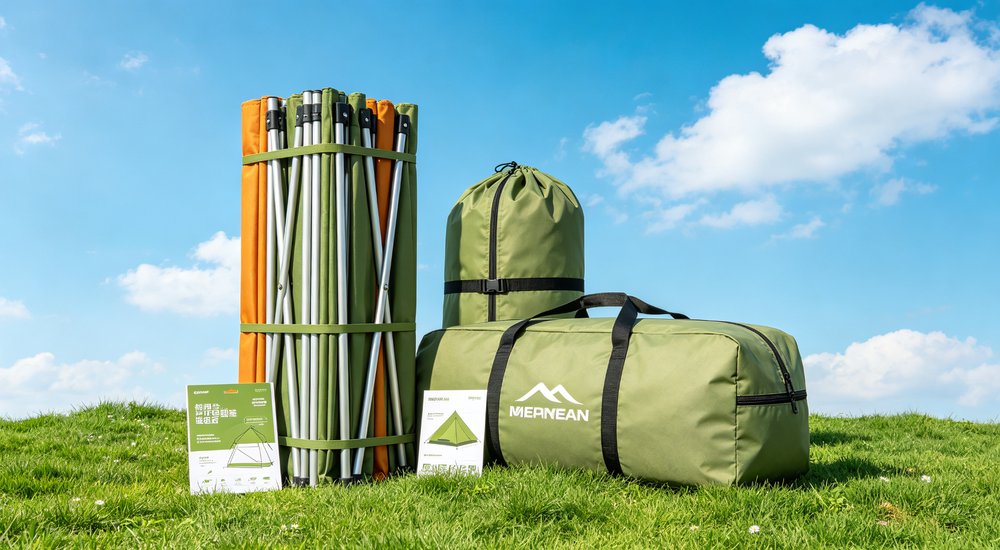
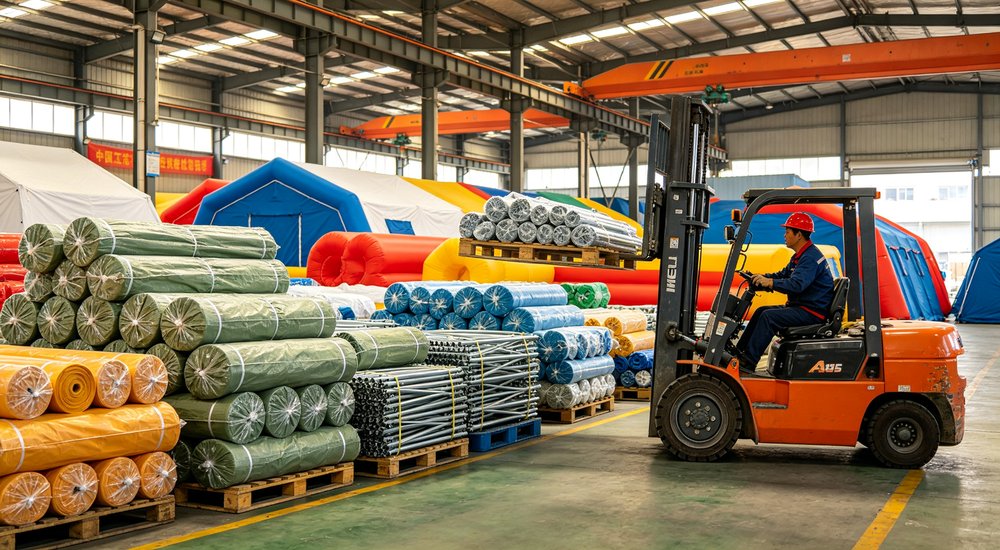
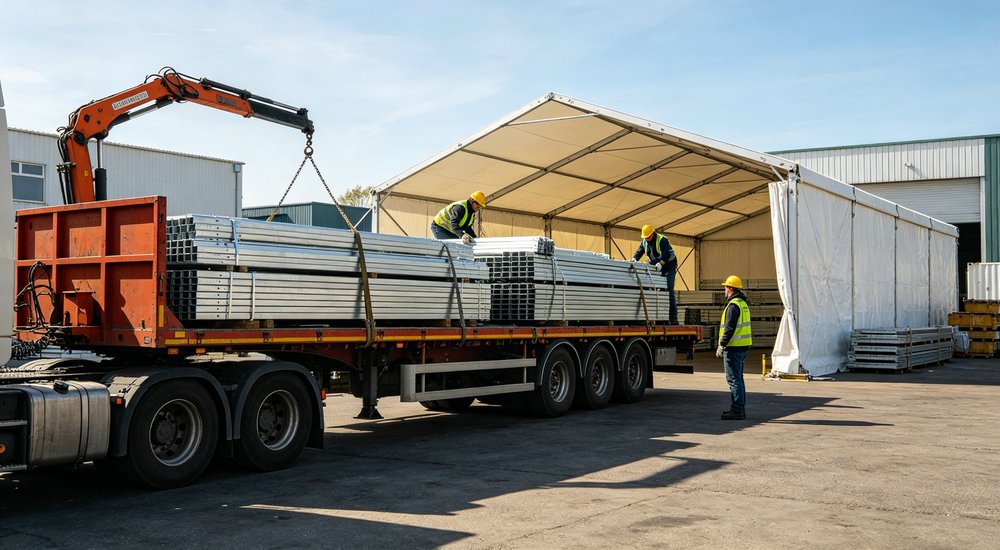
Inflatable tents are lighter and more compact — critical if you rely on air freight or have limited storage. Frame tents require more cargo space but can be shipped in standard containers without special handling. Consider your last-mile delivery capability: can your teams carry 45kg pole bags, or is 35kg rolled tent more practical?
Don't just compare purchase price. Factor in setup labor (frame tents require trained crews), maintenance costs, and replacement timelines. For high-frequency deployments, inflatable tents may save enough labor to offset the higher purchase price.
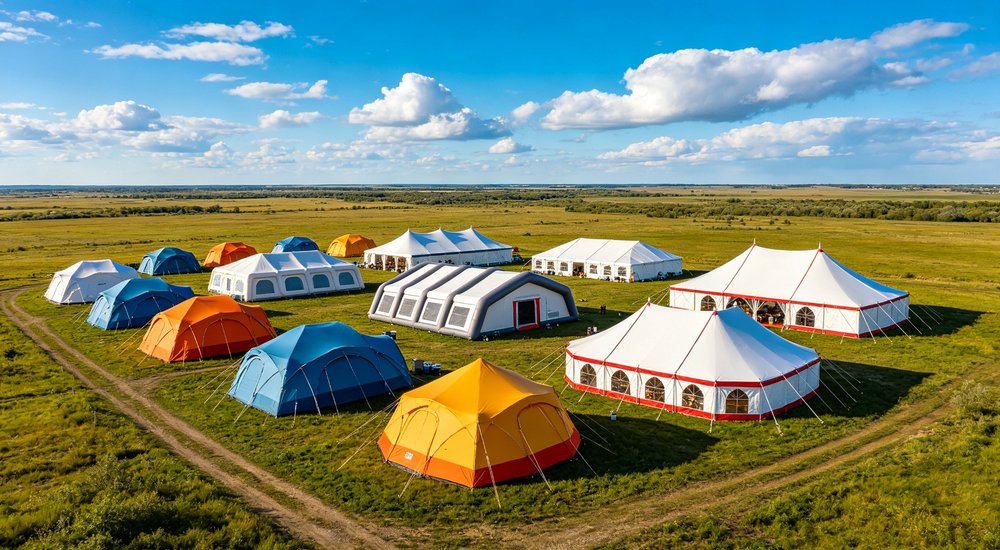
The most resilient organizations maintain both types. A typical fleet composition: 60-70% frame tents for long-term camps, 30-40% inflatable tents for rapid response. This ensures you have the right tool for every scenario without over-investing in either technology.
Related products: 12m² Standard Frame Tent | 20m² Large Frame Tent | Heavy-Duty Canvas Tent | Modular Command Tent | Disaster Relief Tents | Refugee Camp Tents | Military Field Tents | Field Hospital Tents
Based on 20+ years of supplying emergency shelters, these are the most common mistakes organizations make when choosing between frame and inflatable tents:
Many organizations select the cheapest tent without considering setup labor, maintenance, and replacement costs. A $300 frame tent that costs $500 in labor over 5 years may be more expensive than a $600 inflatable that costs $100 in labor. Always calculate total cost of ownership, not just unit price.
Buying 100% frame or 100% inflatable tents limits operational flexibility. The most resilient organizations maintain a mixed fleet: inflatable for rapid response, frame for long-term camps. Standardizing on one type creates vulnerability when conditions change.
Frame tents need spare poles; inflatable tents need spare pumps and repair kits. Organizations that skip spare part procurement often find themselves with unusable tents when a pole bends or a pump fails. Budget 10-15% of purchase cost for spare parts.
Frame tents require 2-4 hours of training per person. Sending untrained personnel to deploy frame tents results in damaged poles, improper anchoring, and safety risks. Inflatable tents need only 5-10 minutes of training but still require instruction on pressure monitoring and puncture repair.
When comparing suppliers, ask these critical questions:
(1) What is the actual factory production capacity?
(2) Can they provide references from UN or NGO clients?
(3) What is the warranty coverage and spare parts availability?
(4) Do they have certified test reports for wind load and flame retardancy?
(5) What is the lead time for repeat orders?
A reliable supplier should answer all five with specific evidence, not vague promises.
Which is better: frame or inflatable? After evaluating all dimensions, the choice comes down to deployment speed versus long-term durability. Use this summary as a quick reference, then read the detailed sections below for your specific use case.
|
Factor |
Frame Tent |
Inflatable Tent |
|
Best for |
Long-term, cold climate, high wind |
Rapid response, medical, remote areas |
|
Setup time |
15-45 min |
2-5 min |
|
Weight (20m²) |
45-90 kg |
35-60 kg |
|
Price range |
$250-$750 |
$450-$1,200 |
|
Service life |
7-10 years |
5-8 years |
|
Insulation |
Excellent (3 options) |
Limited |
|
Wind rating |
80-120 km/h |
60-90 km/h |
|
Repairability |
Excellent |
Moderate |
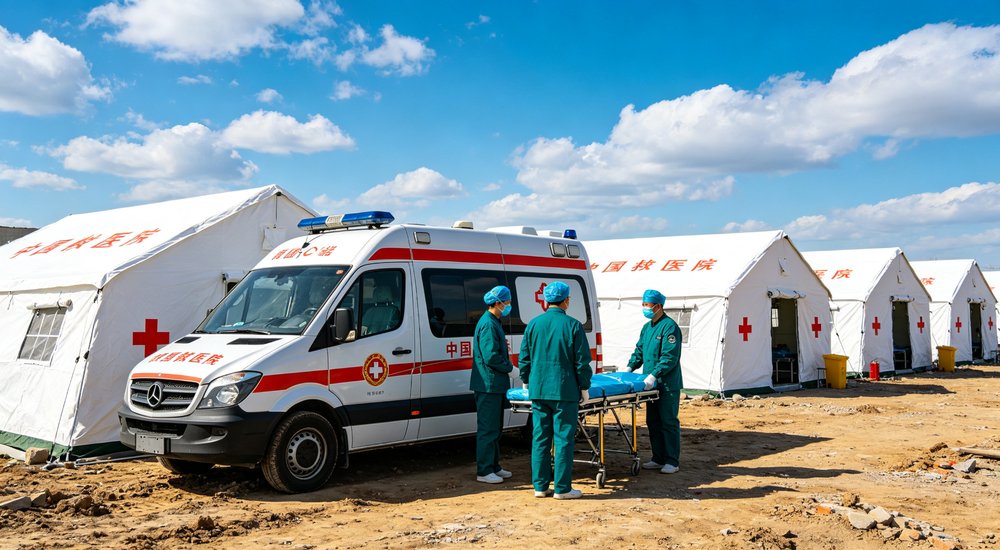
After a 7.2 magnitude earthquake, an international NGO working with the United Nations and Red Cross deployed 80 inflatable medical tents — a critical humanitarian aid tent resource — within 6 hours of the disaster, while military shelter teams arrived with frame tents for sustained operations. Each tent was set up by two local volunteers in under 5 minutes, creating immediate triage and treatment space. Frame tents arrived 3 days later and were used to establish longer-term field hospitals once the initial emergency stabilized. The inflatable tents' speed was credited with reducing mortality by an estimated 25% in the critical first 48 hours.
A UN agency managing a refugee camp at 1,800m altitude with -15°C winters chose 3-layer insulated frame tents for 2,000 families. The metal frames withstood heavy snow loads, and the detachable insulation allowed summer ventilation. Over 5 years, only 8% of tents needed frame replacement, and inner liners were washed and reused annually. Inflatable tents were tested initially but rejected due to insufficient insulation and beam stiffness in extreme cold.
A military medical unit used inflatable tents for the initial 48-hour surgical setup, then transitioned to frame tents for the 6-month deployment. The inflatable tents provided immediate operating rooms and ICU space, while frame tents offered better durability for long-term use. This hybrid approach ensured zero gap in medical capability while maximizing long-term cost efficiency.
"We switched from all-frame tents to a 60/40 frame-inflatable mix after reading this comparison. Our response time in the first 48 hours improved by 60%, and we haven't had a single inflatable tent fail in 3 years of deployments."
— Logistics Director, International Humanitarian NGO (2024)
"The frame tents survived a category 4 hurricane with only minor guy line damage. We've used them for 8 years and they're still in service. The inflatable tents are perfect for our medical teams who need to set up in under 10 minutes."
— Emergency Management Coordinator, National Disaster Response Agency (2025)
What is the main difference between a frame tent and an inflatable tent?
Frame tents use rigid metal or fiberglass poles to support the fabric structure. Inflatable tents use air-filled PVC beams (air beams) that are pumped to pressure. Frame tents are more durable for long-term use; inflatable tents deploy in 2-5 minutes for rapid response.
Which tent is better for emergency response?
For rapid disaster response in the first 72 hours, inflatable tents are superior due to 3-5x faster deployment. For long-term refugee camps or permanent facilities lasting 6+ months, frame tents offer better durability, insulation, and repairability. Many successful organizations use both types in a hybrid fleet.
How long does an inflatable tent stay inflated?
Quality inflatable tents maintain pressure for 3-7 days without topping up, depending on temperature changes and seal quality. Most models have pressure relief valves that automatically adjust. We recommend checking pressure weekly during long-term use and after significant temperature changes.
Can inflatable tents be repaired in the field?
Yes, small punctures (under 5cm) can be repaired with included patch kits in 10-15 minutes. Larger beam damage may require factory repair. We always recommend carrying spare repair kits and a backup pump with every inflatable tent deployment.
Are inflatable tents safe in high winds?
Quality inflatable tents are rated for 60-90 km/h winds when properly anchored. Frame tents typically handle 80-120 km/h. In hurricane-force conditions, neither type is recommended without specialized reinforcement. Always follow manufacturer anchoring instructions and monitor weather forecasts.
For static, long-term installations, frame tents have lower 5-year total cost ($500-$1,400 vs $600-$1,650 for inflatable). For frequent deployments (10+ per year), inflatable tents save enough labor to narrow or reverse the gap. Calculate your specific deployment frequency to determine the best value.
Inflatable tents can be deployed with hand pumps, foot pumps, or electric pumps. Electric pumps are fastest (2-3 minutes) but require a power source. Hand/foot pumps work without electricity but take 5-10 minutes. We recommend supplying both pump types for maximum deployment flexibility.
Some frame tent systems support modular connection via tunnel connectors. Inflatable tents generally cannot connect directly to frame tents due to different structural systems. However, they can be positioned adjacent to each other with covered walkways for combined facility layouts.
Frame tents range from 4m² to 100m²+ and can be custom-sized. Inflatable tents typically range from 6m² to 60m², with larger sizes available in premium models. For very large facilities (100m²+), frame tents are the practical choice.
Inflatable tents must be completely dry before storage to prevent mold and mildew. Deflate fully, fold or roll carefully, and store in a cool, dry area away from direct sunlight. Never store while damp — this is the leading cause of premature inflatable tent failure.
Inflatable tents work in cold weather but have limitations. PVC beams can stiffen below -10°C, and insulation options are limited. For sustained operations below 0°C, frame tents with 3-layer insulation are the better choice. Inflatable tents can be used for short-term cold-weather response with supplemental heating.
As a direct factory with OEM capability, our flexible MOQ starts from 50 units for frame tents and 30 units for inflatable tents. Sample orders are available for evaluation before large commitments.
Yes, both frame and inflatable tents support custom logo printing in up to 4 colors. We can match your organization's Pantone colors and print logos, UN symbols, or donor recognition text. Lead time for custom printing adds 5-7 days to production.
Aluminum poles are 30-40% lighter and corrosion-resistant but more expensive. Steel poles are heavier and stronger, ideal for high-wind areas and large tents. For emergency response where weight matters, aluminum is preferred. For permanent camps in windy areas, steel offers superior strength.
We accept bank transfer (30% deposit, 70% before shipment), L/C at sight for orders over $50,000, and Trade Assurance through Alibaba. For established UN and NGO clients, we can offer net-30 or net-60 terms after credit verification. We do not accept PayPal or personal checks for bulk orders.
Our tents meet ISO 9001 quality standards, CE certification, and flame retardant standards (CPAI-84 / BS 7837 / NFPA 701). Frame tents also meet military specifications for wind and snow load. Inflatable tents meet EN 14960 for inflatable structure safety.
Before making your procurement decision, remember these critical points:
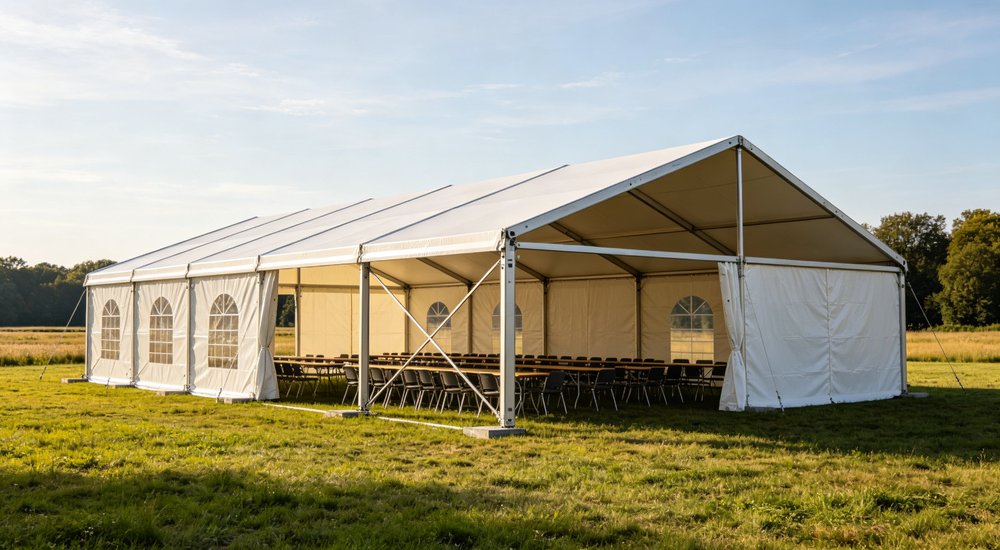
Whether you need rapid-deployment inflatable tents for emergency response or durable frame tents for long-term camps, choosing the right shelter system ensures occupant safety and cost efficiency. As a direct tent manufacturer, exporter, and OEM specialist and 20+ years of experience, we supply wholesale tent programs to UN agencies, NGOs, and military organizations worldwide. As a China tent factory and certified emergency shelter supplier, we maintain buffer stock for urgent orders.
Response time: 24 hours | Emergency delivery: 7-10 days (buffer stock) | Production capacity: 3,000+ tents/month
After-sales support: 2-year warranty on frames, 1-year warranty on fabric and air beams, free replacement parts for first year, dedicated technical support for setup and maintenance. Spare parts kits (poles, patches, pumps, valves) available for all models.
There is no universal winner in the frame tent vs inflatable tent debate — the right choice depends entirely on your operational context. If speed of deployment is your top priority and you operate in moderate climates, inflatable tents offer unmatched rapid response capability. If durability, insulation, and long-term cost efficiency matter most, frame tents are the proven, reliable choice.
The most successful emergency organizations don't choose one exclusively — they build a mixed fleet that leverages the strengths of both technologies. Inflatable tents save lives in the first critical hours; frame tents sustain operations for months and years. With 20+ years of experience manufacturing both types, we can help you design the optimal shelter fleet for your specific mission profile. Our shelters meet UNHCR and IFRC emergency shelter standards.
Ready to specify your tent program? Contact our team for a side-by-side demonstration of both tent types, custom quotation based on your volume and specifications, and technical consultation on fleet composition. We provide samples for evaluation before large commitments.
 |

|
Liens amicaux :
droits dauteur © Custom Disaster - Relief Bedding: Tents, Sleeping Bags, Blankets Tous les droits sont réservés
léquipe professionnelle au service !