Published: October 13, 2026 | Last Updated: October 13, 2026
Wholesale Earthquake Rescue Equipment & Rescue Tools Supplier
Wholesale rescue equipment turns search teams into life-saving units. This page presents acoustic life detectors, hydraulic rescue tools, rope rescue gear, rescue stretchers, lighting and communication sets and rescue PPE, with practical specifications, packing details and procurement steps for government and institutional buyers. Direct factory pricing and batch quality checks are standard for bulk orders.
|
Life Detectors |
Hydraulic Rescue Tools |
|
Rope Rescue Equipment |
Rescue Stretchers |
|
Lighting & Communication |
Rescue PPE |
|
Medical Supplies |
Team Kits & 100-Person |
|
Packing & Shipping |
Quality & Certifications |
|
Procurement Steps |
Maintenance |
|
Custom & OEM |
FAQ |
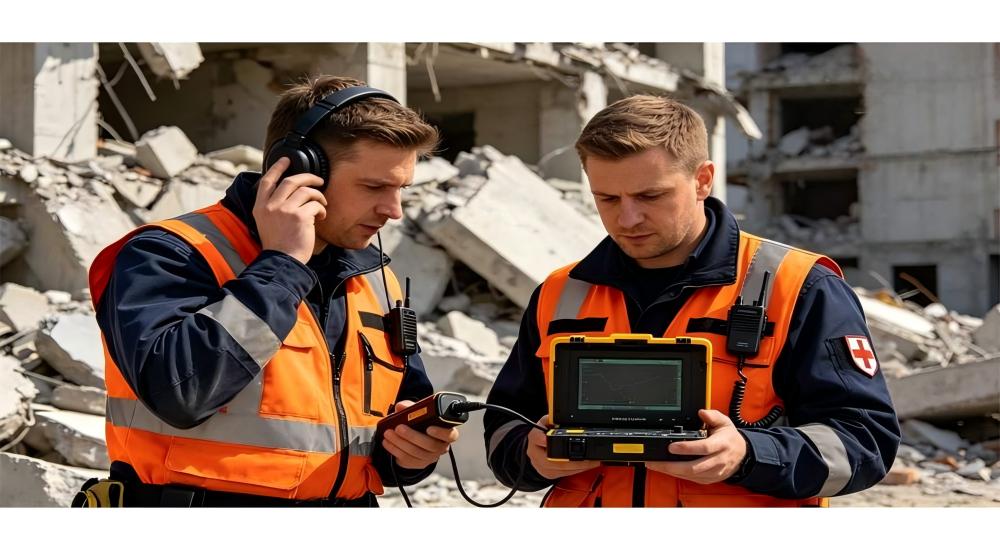
Earthquake rescue equipment is specified around the 72-hour window: search devices locate survivors, hydraulic tools break through concrete, rope gear reaches upper floors, and stretchers move casualties out. Government teams, urban search and rescue units and disaster response contractors buy these items in bulk to keep stock ready for deployment.
Within the life detector category, buyers compare acoustic models against radar and optical systems. Acoustic devices read vibration patterns from trapped survivors, while radar units penetrate deeper rubble layers. Confirm the search and rescue team size and debris type before selecting a detector type, then match battery runtime to the expected deployment window.
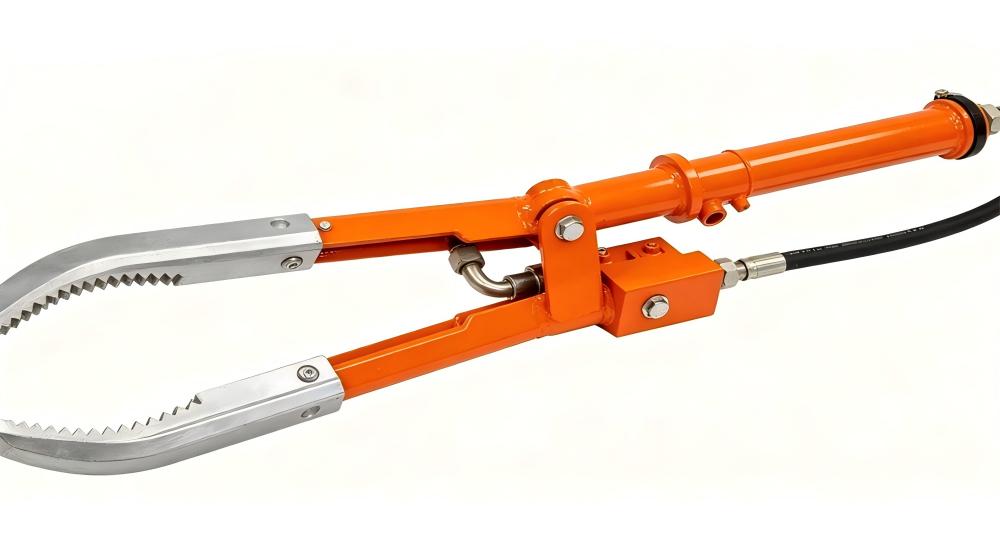
Hydraulic rescue tools convert pump pressure into cutting and spreading force, making them the workhorse of urban earthquake response. Spreaders open gaps in collapsed concrete, cutters shear rebar and car wreckage, and rams push walls or machinery clear. Rated pressure and blade geometry decide which tool suits each rescue equipment task, so verify both before ordering.
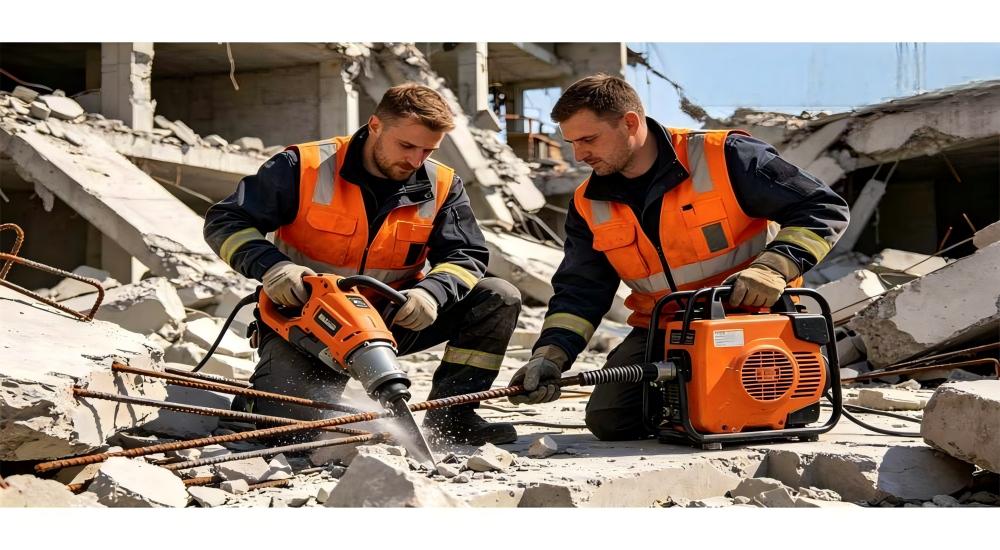
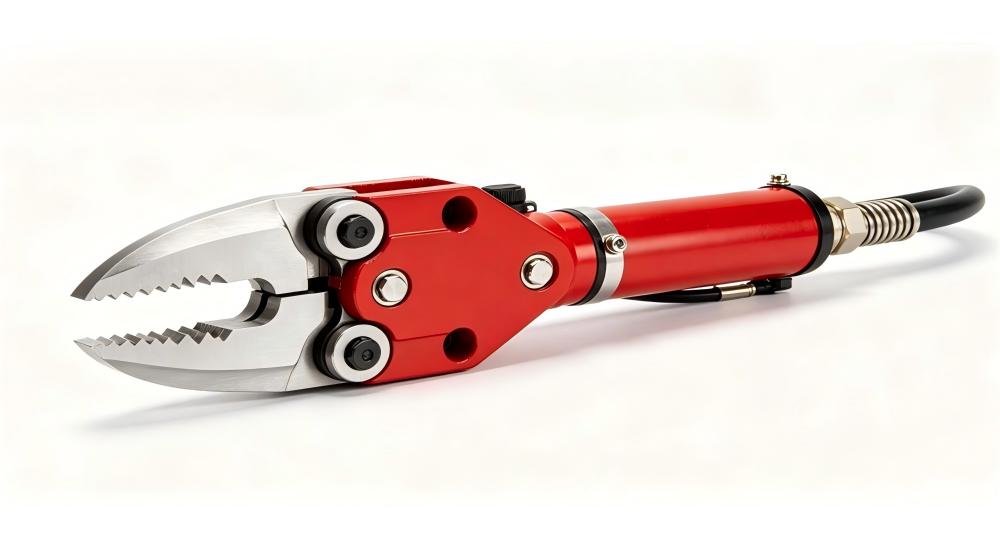
Combination tools merge cutter and spreader functions into one unit, saving space on rescue vehicles and reducing changeover time at the scene. For earthquake response teams, a combi tool plus a dedicated pump covers most breaching and spreading jobs. Pair it with spare blades and hydraulic hoses so the kit stays operational through extended operations.
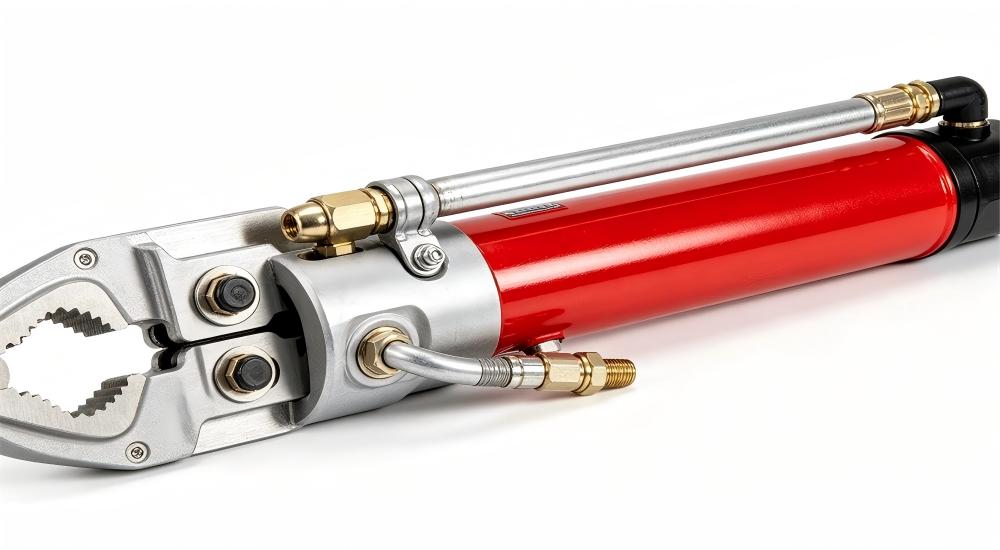
High angle rope rescue work depends on harnesses, descenders, pulleys and static rope rated for dynamic loads. Teams operating on collapsed structures or steep terrain need certified hardware and clear rigging plans. Rope rescue gear should be inspected before every deployment and replaced on a set schedule to keep loads within safe working limits.
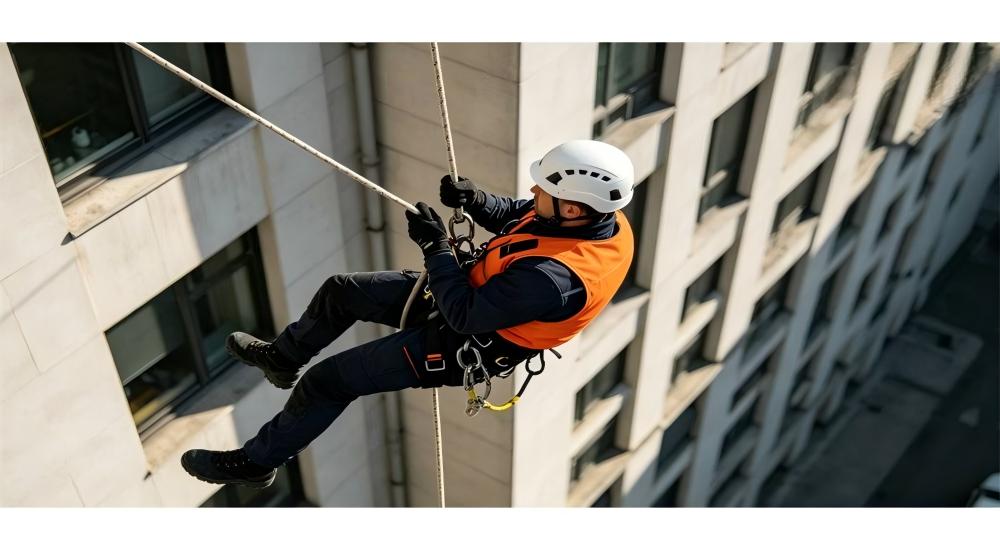
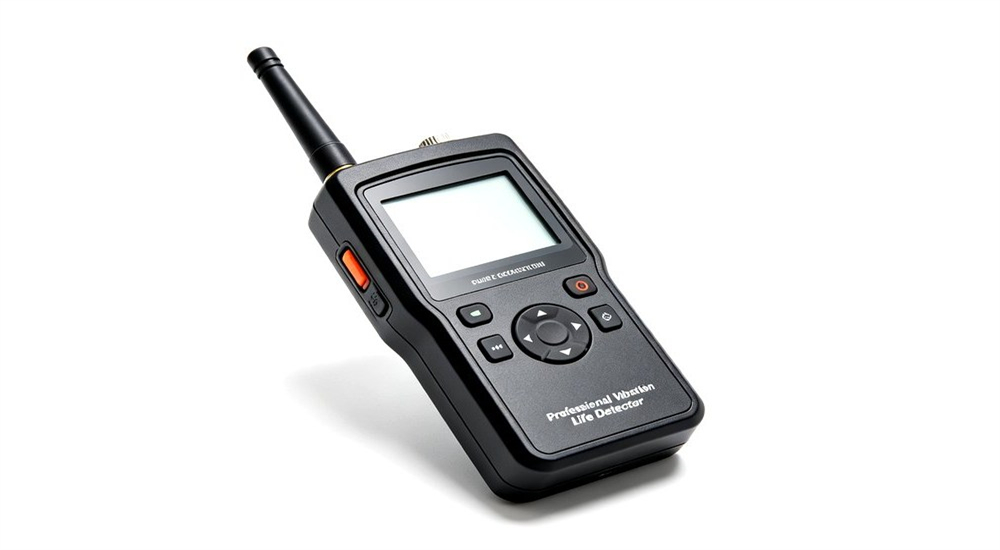
Life detectors are the first equipment deployed after a collapse. Three main types are used in earthquake response: acoustic detectors that listen for tapping and voices, video detectors with extendable cameras that inspect voids, and radar detectors that sense micro-movement under rubble. Each type suits a different phase of the search.
Acoustic and video life detectors guide the first search sweep inside collapsed buildings.
Acoustic detectors work best in the first 24-48 hours when survivors can still tap on surfaces. Video detectors help teams see into narrow voids without moving debris. Radar detectors add a second opinion when sound is unclear, because they detect breathing and small movements through up to several metres of rubble.
Rescue equipment wholesale buyers should confirm battery runtime, sensor sensitivity, cable or probe length and the training material included. Most professional units come with a carrying case, headphones and a simple user manual. For government tenders, ask whether the detector needs a certificate or a conformity declaration.
Detection range depends on the sensor type and rubble conditions for life detector equipment and the rubble conditions. Confirm the practical range for concrete rubble, not only the open-air figure, because manufacturers state both. A demo with the actual deployment team is the most reliable way to compare units before a bulk order.
Spare batteries and a second sensor channel are worth adding to the order. Teams operating long shifts run through battery capacity quickly, and a backup sensor keeps the search moving while the first unit charges. Confirm the charging time and whether a vehicle charger is included.
Some detectors record audio and video for post-operation review. This helps commanders confirm that a void was fully searched before moving to the next sector. Confirm the storage capacity and the transfer method (SD card or USB) when comparing models for institutional use.
Working with a single rescue equipment supplier for the full package simplifies inspection, packing and documentation. Batch consistency, spare parts availability and maintenance schedules decide whether equipment performs when it matters. Each product family below lists the specification points to confirm at quotation.
Search and rescue equipment is a regulated category in most markets. Confirm the standards that apply in your destination country, request test reports from accredited laboratories, and keep certificates with the shipment file for end-user acceptance. Operational guidance is available from NFPA codes and standards and FEMA.
Life Detector Type
Primary Use
Key Spec to Check
Acoustic detector
Listening for tapping and voices in the first 24-48 hours
Battery runtime, headphone set, sensor channels
Video detector
Inspecting narrow voids without moving debris
Camera cable length, probe diameter, screen size
Radar detector
Detecting micro-movement and breathing through rubble
Penetration depth, false alarm rate, operating time
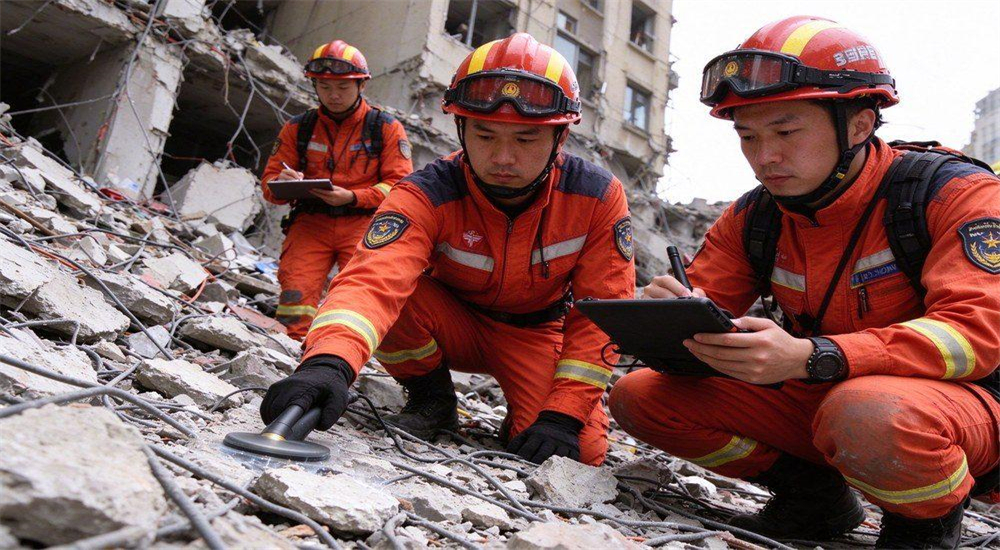
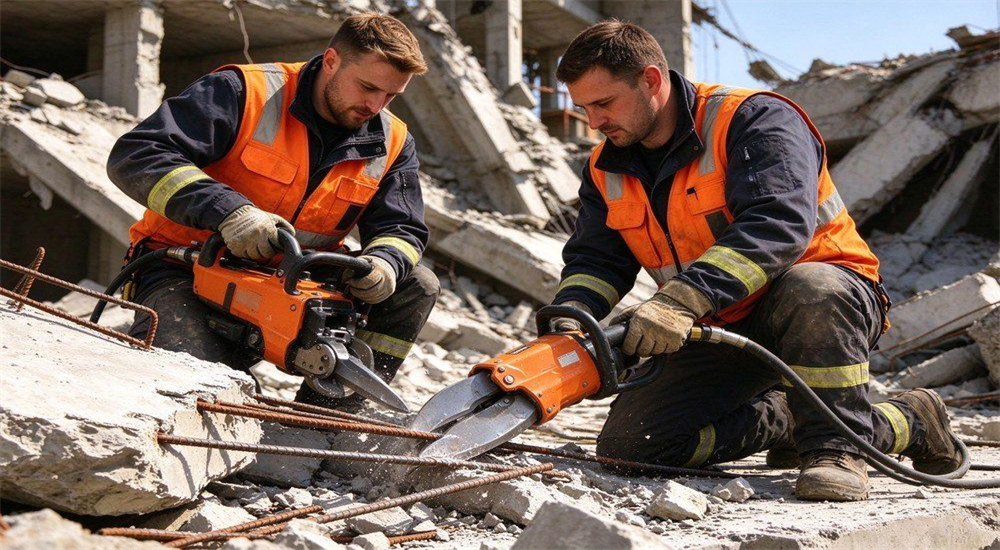
Hydraulic rescue tools are the workhorse of structural collapse response. The standard set includes a combi tool (cutter and spreader in one), a dedicated spreader, a cutter, an extension ram and a power unit. Electric models with lithium batteries are increasingly common because they work without a running engine in confined spaces.
Cutting force and spreading distance are the two numbers buyers check first. A combi tool with 220-350 kN cutting force handles most vehicle and structural steel found in urban rubble. Spreaders with 650-740 mm opening distance lift and hold heavy concrete elements while the team clears a casualty path.
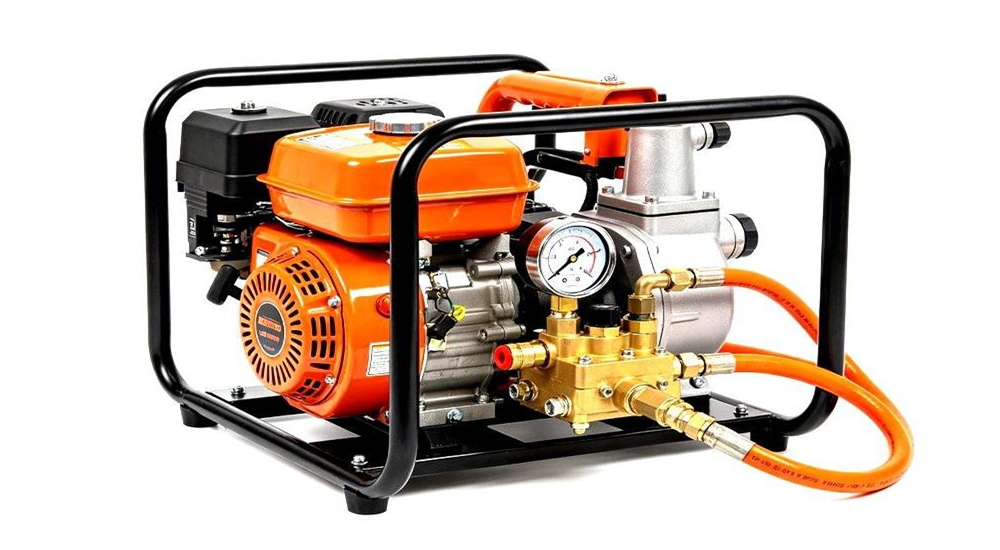
Power units are specified by rated pressure, flow rate and engine type. Petrol pumps with 72 MPa rated pressure and dual output are the institutional standard, while hand pumps cover small-scale and backup use. Confirm the hose length and quick-coupler type so the set matches the tools in the same order.
Weight matters for team deployment. A full combi tool set with pump weighs roughly 20-30 kg depending on model. Confirm the carrying case, spare blades and the maintenance schedule before ordering. Spare cutter blades and seals are the parts teams most often need after heavy use.
For tender specifications, list the rated working pressure, cutting capacity in steel grade and diameter, spreading distance and the pump flow rate. These numbers let suppliers quote comparable models instead of vague descriptions.
Electric lithium tools are a growing preference for earthquake work because they start instantly in confined voids where a petrol engine cannot run safely. Confirm the battery swap design and the number of batteries per tool. Two batteries per tool keep a full shift covered.
Accessory compatibility is a common mismatch: blades, hoses and couplers vary between brands. Keep the whole hydraulic set with one manufacturer or confirm the adapter options before ordering. This avoids field surprises when a spare part is needed mid-operation.
Rescue Tool
Rated Pressure
Key Output
Electric combi tool
28V lithium
Spreading 480-670 mm, cutting 220-355 kN
Hydraulic spreader
72 MPa
Spreading distance 650 mm, force up to 260 kN
Hydraulic cutter
72 MPa
Cuts round bar up to 38 mm, plate 20-30 mm
Two-stage ram
72 MPa
Stage-1 force 16T, stage-2 force 8T
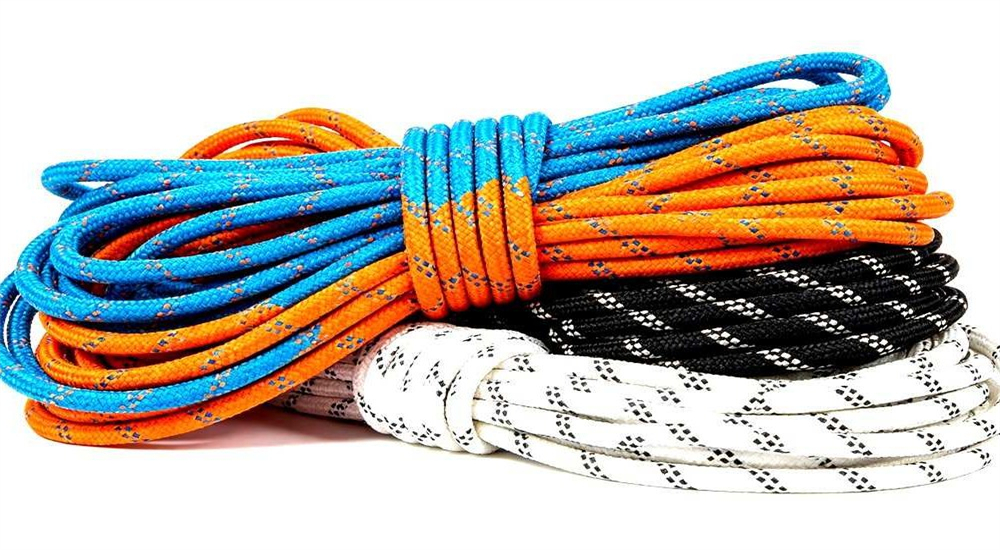
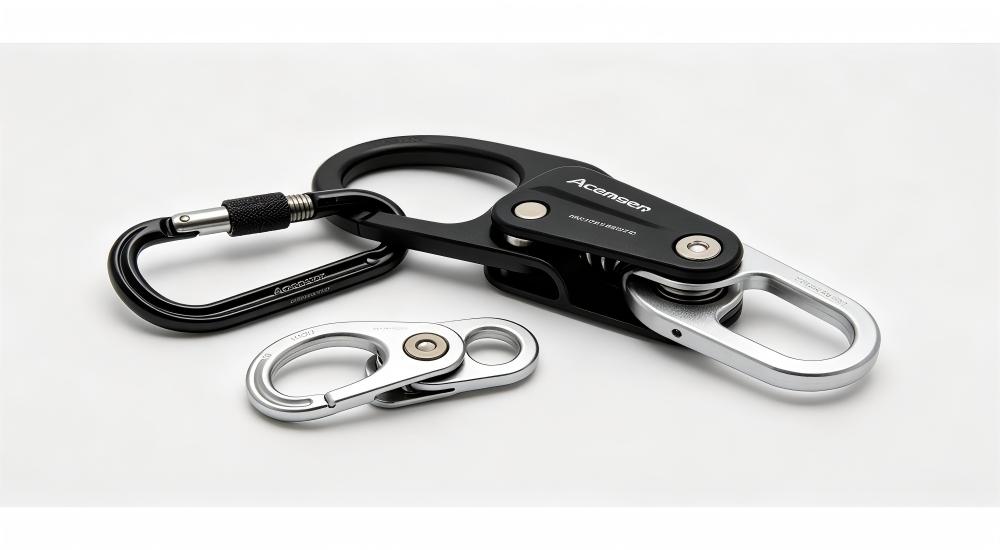
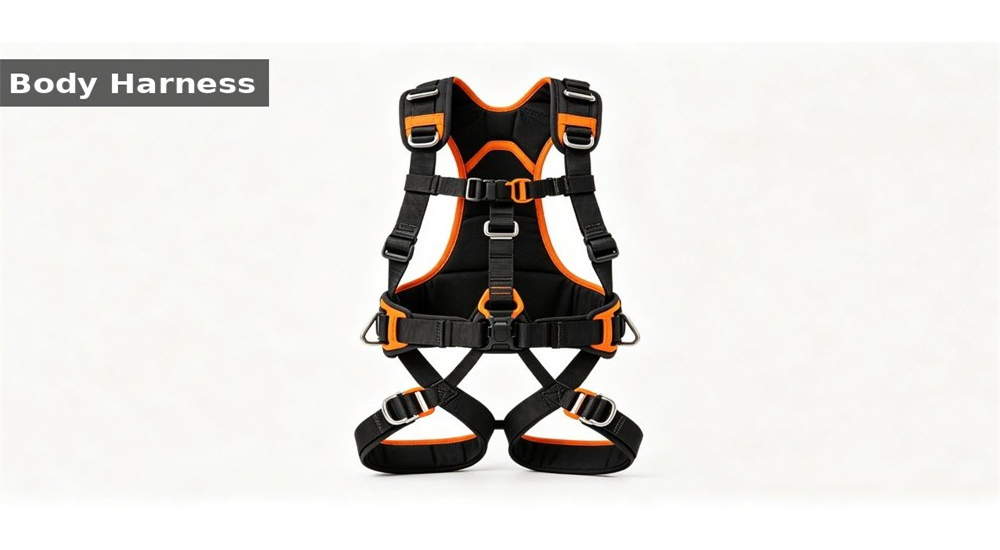
Rope rescue equipment is required when teams operate on upper floors, stair towers and damaged facades. The core set includes static and dynamic rope, a full-body harness, an ascender-descender device, carabiners, pulleys and anchor slings. High angle teams add a rescue rope bag for organised deployment.
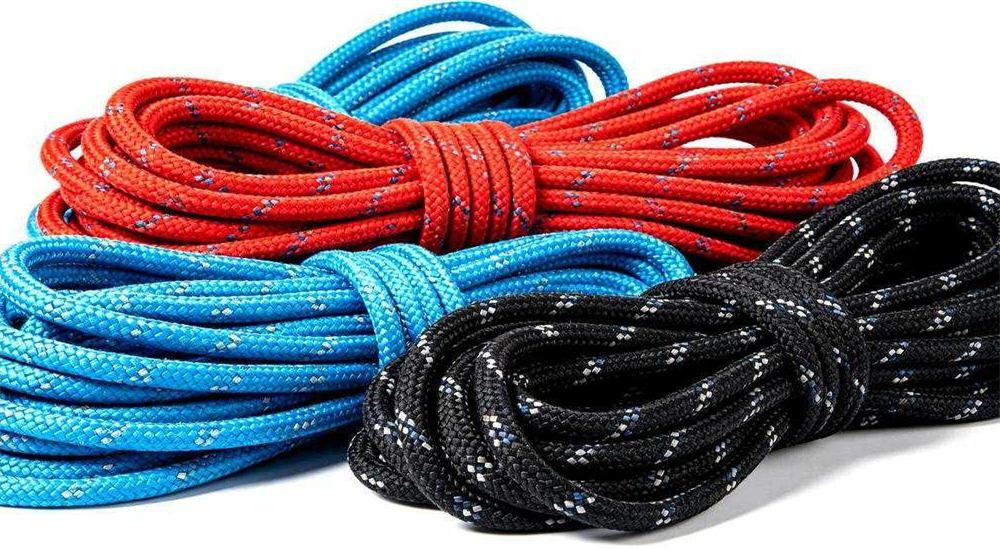
Static rope is specified by diameter, breaking strength and elongation. A 10.5-11 mm static rope with low elongation suits rappelling and raising systems. Dynamic rope with higher elongation is used for fall protection where the rope absorbs shock. Confirm the EN or NFPA rating your tender requires.
Harnesses are sized by waist and leg circumference, with adjustable leg loops and a dorsal attachment point. Ascender-descender devices must match the rope diameter range printed on the device. Confirm the carabiner gate type and gate strength for the anchor system.
For bulk rope orders, request the rope certificate with breaking strength and the batch test report. Rope degrades with use, so order spare lengths with the initial quantity. Confirm the colour options, because team SOPs often use colour coding for different rope purposes.
Training equipment is a separate line: practice ropes, dummy harnesses and low-angle kits keep training runs affordable. Many institutions order training versions alongside operational gear so new team members can drill without wearing out the certified equipment.
Carabiners and pulleys are load-rated components that must match the system design. Confirm the gate strength, the breaking load and the corrosion treatment (anodised or stainless steel) for coastal and wet environments.
Rope storage is worth specifying at order: rope bags with drainage, labelled storage reels and UV-protective sleeves extend service life. Confirm the accessories included with bulk rope orders so teams can store gear properly between deployments.
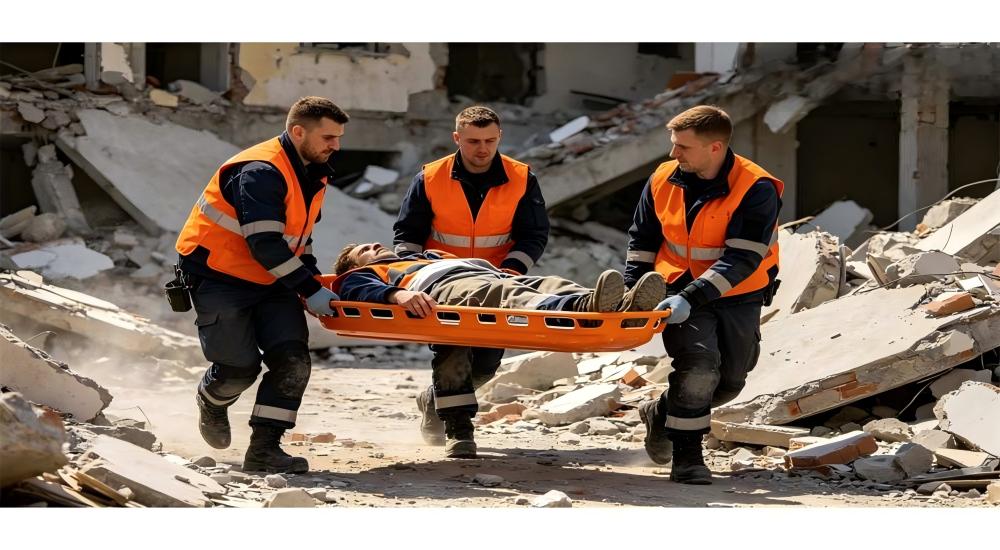
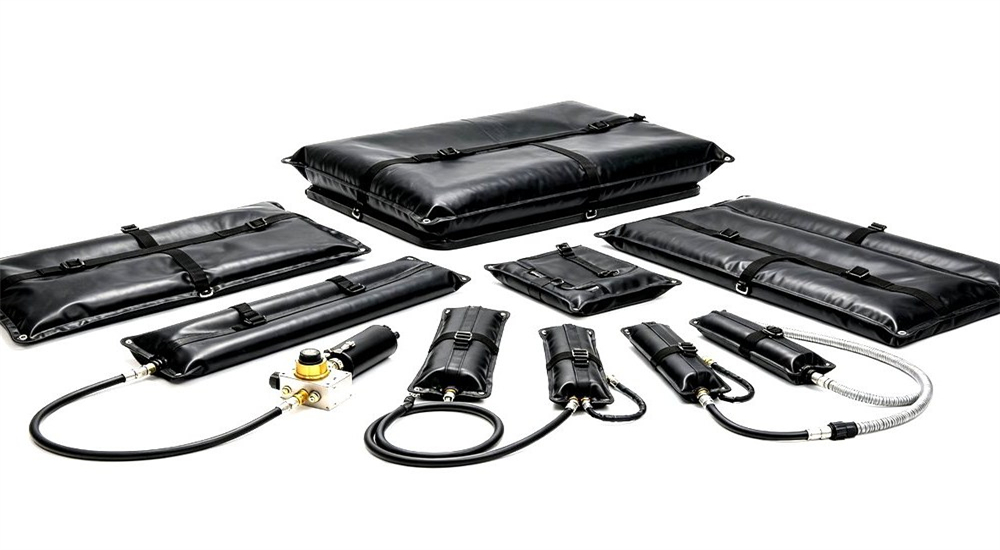
Casualty movement equipment covers basket stretchers, roll-up stretchers, vacuum rescue mattresses and spine boards. Each type supports a different phase: basket stretchers carry casualties over rubble, vacuum mattresses immobilise spinal injuries, and spine boards transfer patients through narrow openings.
Basket stretchers are specified by length, weight capacity and material. A standard adult basket stretcher holds 150-250 kg and weighs 8-15 kg. Confirm the wheel set option, the head protection frame and the lifting bridle included with the order.
Vacuum rescue mattresses immobilise the patient by moulding around the body and holding shape under vacuum. Confirm the mattress length, the pump type (manual or electric) and the carry bag. Roll-up stretchers are lighter for first response and pack into a compact roll for vehicle storage.
Spine boards are specified by length, patient weight capacity and X-ray translucency for hospital transfer. Confirm the strap set and head immobiliser included. For fleet orders, request the packing unit and the replacement strap availability.
Casualty movement equipment is a high-turnover category after each response. Order spare straps, vacuum bags and wheels with the initial quantity so teams can repair on site instead of grounding equipment.
Team compatibility matters: confirm that the stretcher lift points match the ropes and harnesses in the same order. A basket stretcher that shares the lifting bridle with the rope kit reduces extra equipment on scene.
For medical fleets, request the cleaning specification for each stretcher type. Some models allow full immersion disinfection, which is required after certain operations.
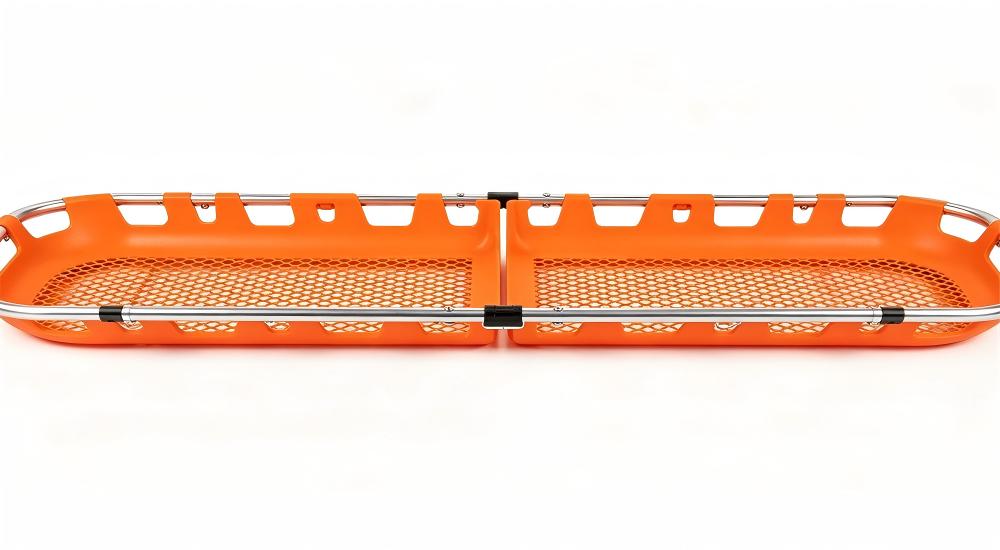
Stretcher Type
Typical Capacity
Best Use
Basket stretcher
150-250 kg
Carrying over rubble and uneven ground
Vacuum mattress
Adult length
Spinal immobilisation and smooth transfer
Roll-up stretcher
120-150 kg
First response and vehicle storage
Spine board
Adult capacity
Narrow opening and ambulance transfer
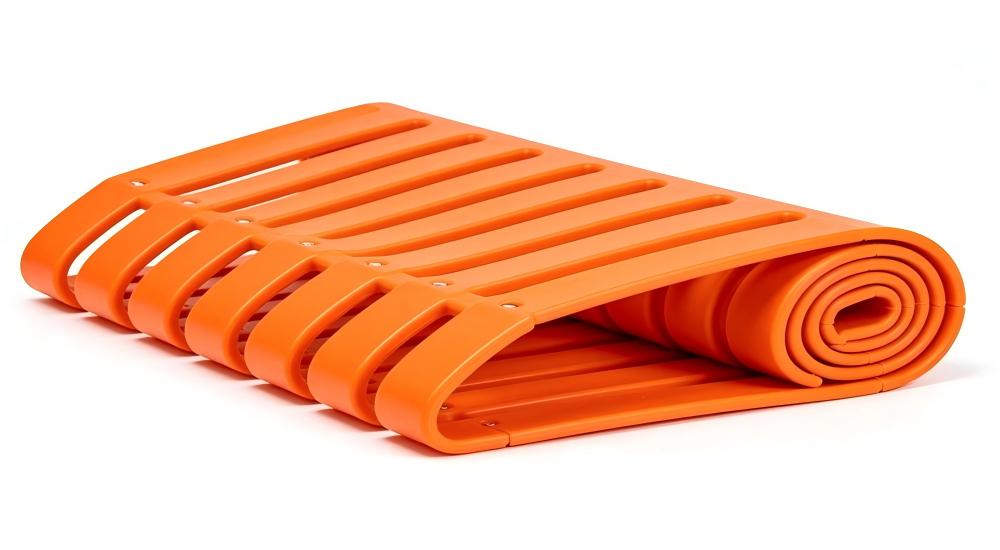
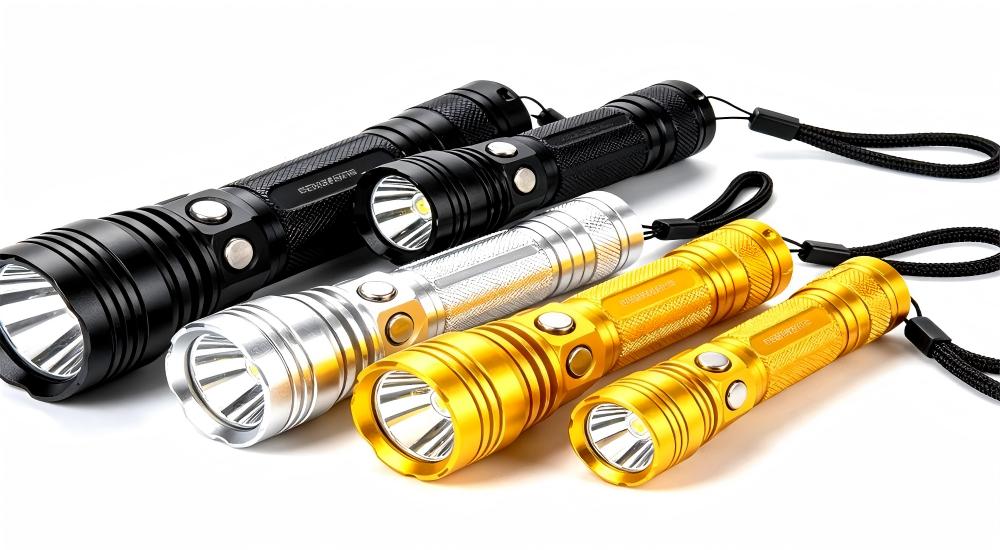
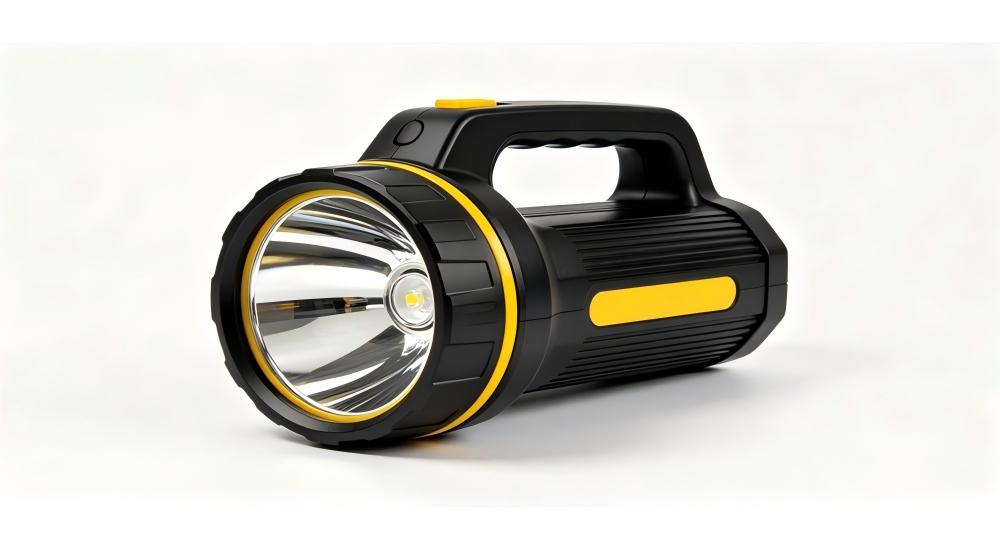
Earthquake response rarely stops at sunset. Lighting and communication equipment keep teams working through the night and coordinate multiple crews across a disaster zone. The standard package includes headlamps, portable searchlights, mobile lighting towers and two-way radios.
Headlamps for rescue work are specified by brightness, battery runtime and explosion-proof rating. A professional headlamp delivers 500-1000 lumens with 4-8 hours runtime on high beam. Confirm the charging time, the helmet mount compatibility and the spare battery availability.
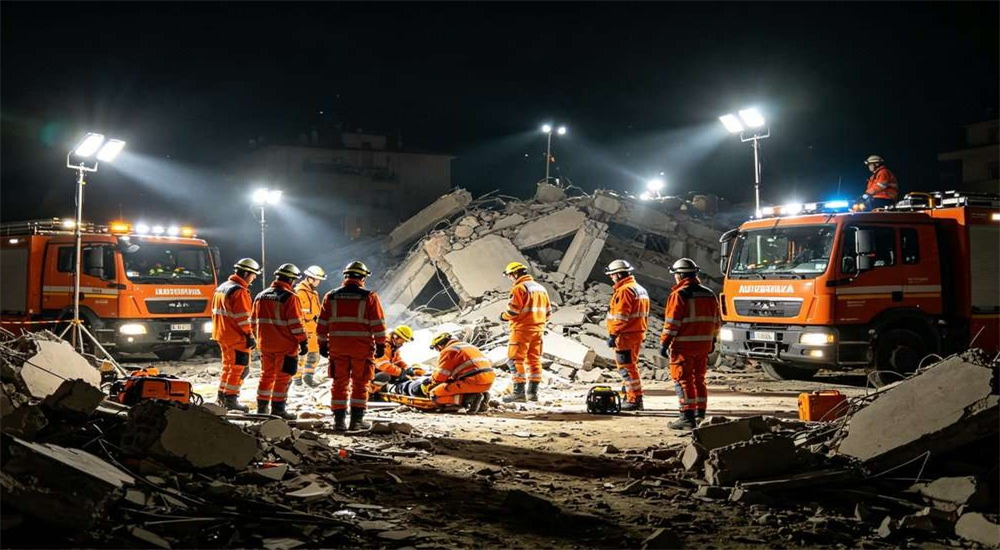
Portable searchlights and mobile lighting towers illuminate the whole work area. Mobile towers with 4×500-1000W LED heads reach 7-8 metres of lifting height and cover a wide flood area. Confirm the power source (mains or generator) and the setup time for rapid deployment.
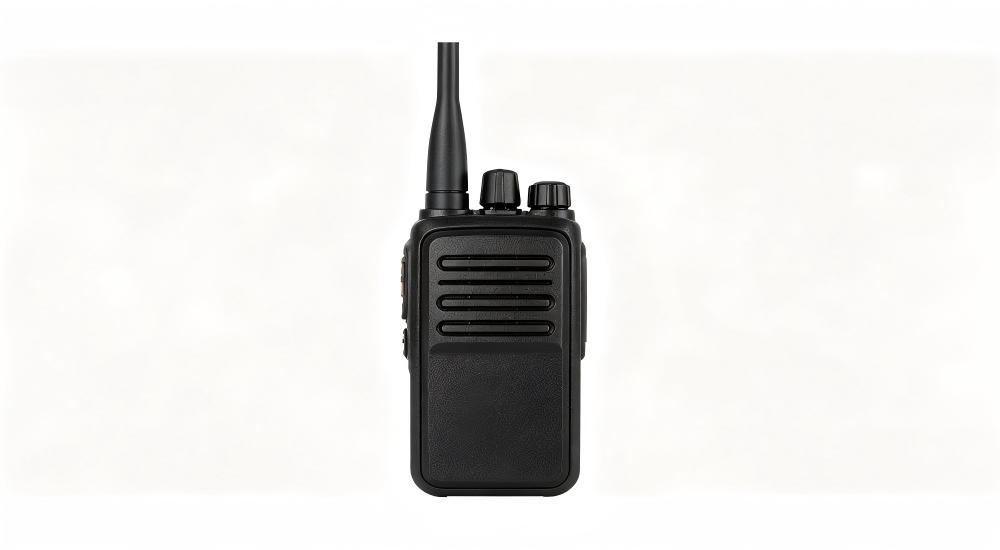
Two-way radios coordinate teams across the site. Confirm the frequency band (VHF or UHF), the number of channels, the battery capacity and the waterproof rating. For larger operations, request a charging cradle and spare battery set with the order.
Communication equipment should be tested with the actual team radios before purchase, because frequency licensing differs by country. Confirm whether the supplier can program frequencies or whether the buyer handles programming locally.
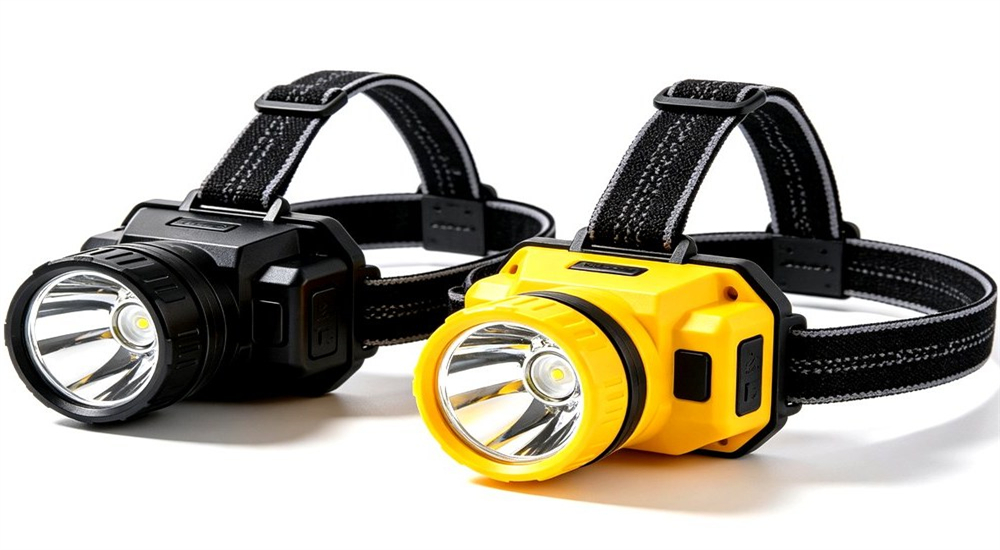
Headlamps free both hands during search and rescue operations, and a spare battery pack per headlamp keeps the lighting chain working through the night shift.
Lighting towers with telescopic masts need a clear setup procedure. Confirm the manual or electric lifting mechanism, the wind stability rating and the anchoring kit included. For earthquake zones, a low-profile tower that resists vibration is preferred.
Spare lamps and control boards are the parts that fail under heavy use. Order a spare set with the initial lighting order and confirm the replacement lead time so the site is never left dark.
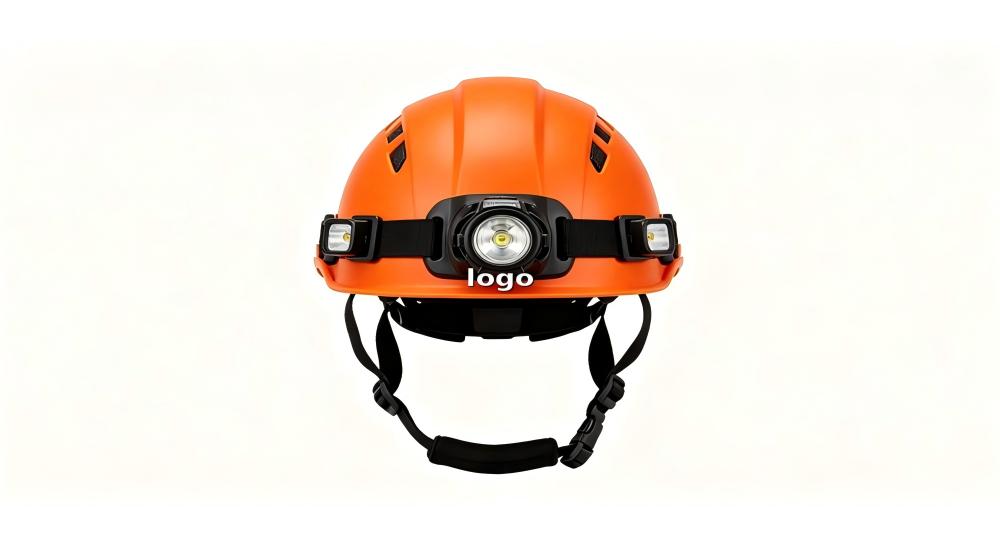
Rescue PPE protects the team while they work. The core set includes a rescue helmet with chin strap, cut-resistant gloves, safety boots with steel or composite toe, safety goggles and respiratory protection for dusty environments. Each item has a specification point that buyers confirm at quotation.
The square catalog view below shows the same helmet from the main-image angle, which buyers use for tender documents and product sheets.
Rescue helmets are specified by shell material, weight and the accessories accepted: headlamp mount, hearing protection mount and face shield. Confirm the helmet standard your tender references and the adjustment range for different head sizes.
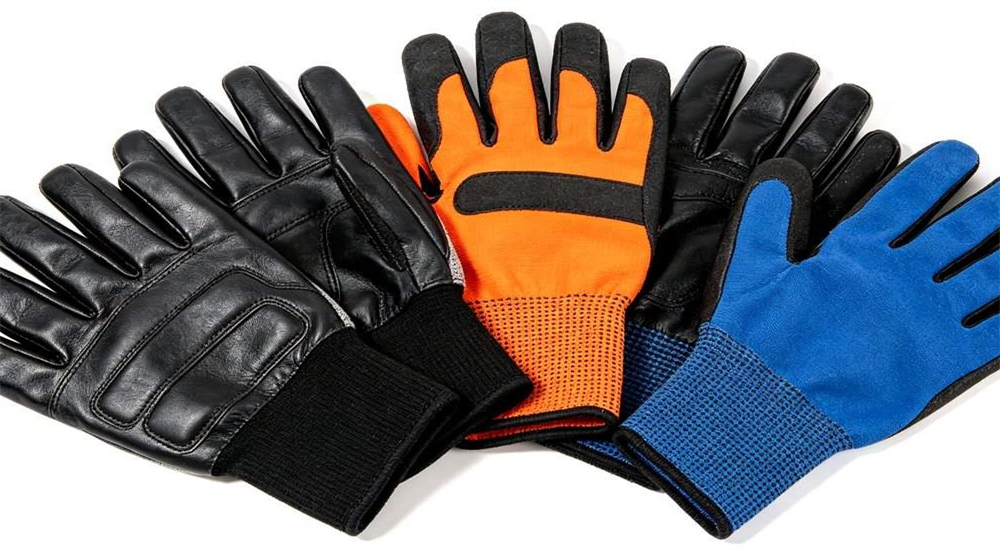
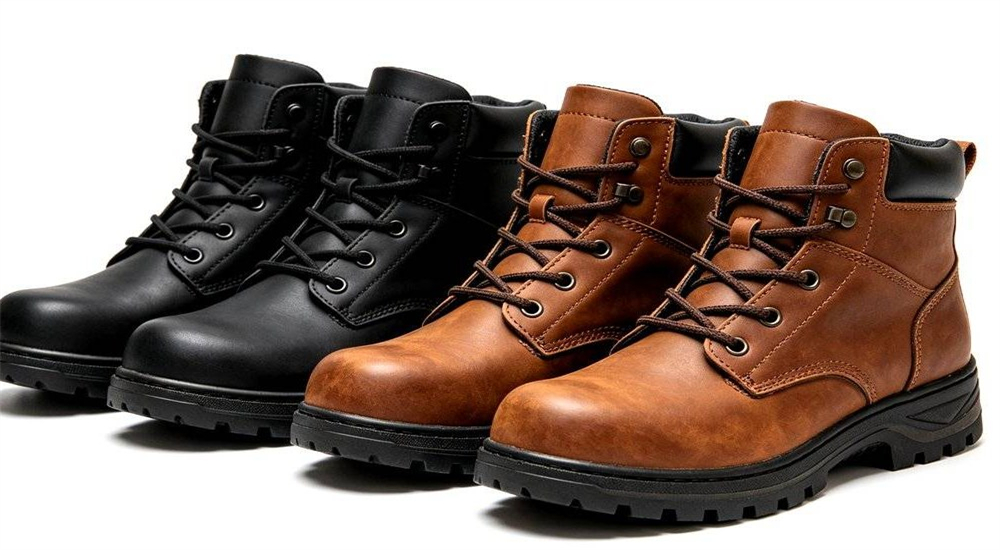
Gloves for rescue work are cut-resistant with reinforced palms and touchscreen fingertips. Confirm the cut resistance level, the cuff length and the sizing chart (S-XXXL) before ordering fleet quantities. Boots are specified by toe protection, sole type and waterproofing.
Respiratory protection for earthquake response is usually a half or full face mask with dust and particulate filters. Confirm the filter type, the mask size range and the spare filter availability. Goggles should meet the impact rating required by the operation.
PPE sizing is a common source of order errors. Request the full size chart, order a sample of each size for the team to test, and confirm the replacement parts (filters, lenses, straps) available for each model.
Helmets with integrated headlamp mounts and communication clips reduce the number of separate items a rescuer carries. Confirm the mount standard before ordering so the helmet fits the team's existing lamps and radios.
For long deployments, rescue PPE comfort features matter: padded chin straps, breathable liners and moisture-wicking gloves reduce fatigue. Request the ergonomic options when comparing quotes for fleet PPE.
PPE stock rotation matters for readiness: label each item with its production batch and inspect seals, liners and soles before each deployment season. A quarterly PPE check keeps the fleet free of cracked shells and degraded fabrics.
Medical supplies complete the rescue loop: locate, extricate and treat. The standard disaster medical package includes trauma first aid kits, vacuum splints, bandages, dressings, AED units for cardiac events and basic patient monitoring tools for field triage.
Trauma kits are specified by contents list, case material and pack size. Confirm the kit contents against your tender checklist, because different institutions require different dressing and instrument sets. A 20-30 piece trauma kit suits most team-level response.
AED units are specified by the defibrillation protocol, battery capacity and the training materials included. Confirm the electrode pad shelf life and the replacement pad availability. Field medical teams also stock cold packs, thermal blankets and basic splinting material.
For bulk medical orders, request the expiry date management: the supplier should deliver fresh stock with a clear batch code. Confirm the carton packing and the cold chain requirements if any item needs temperature-controlled transport.
Medical documentation matters for institutional buyers: request the product registration or the certificate your market requires, and keep the batch records with the shipment file. This is especially important for government tenders with strict acceptance criteria.
Rescue teams often add stretcher-side oxygen and suction to the medical module for entrapped casualties. Confirm the compact unit options and the refill arrangements for the deployment region.
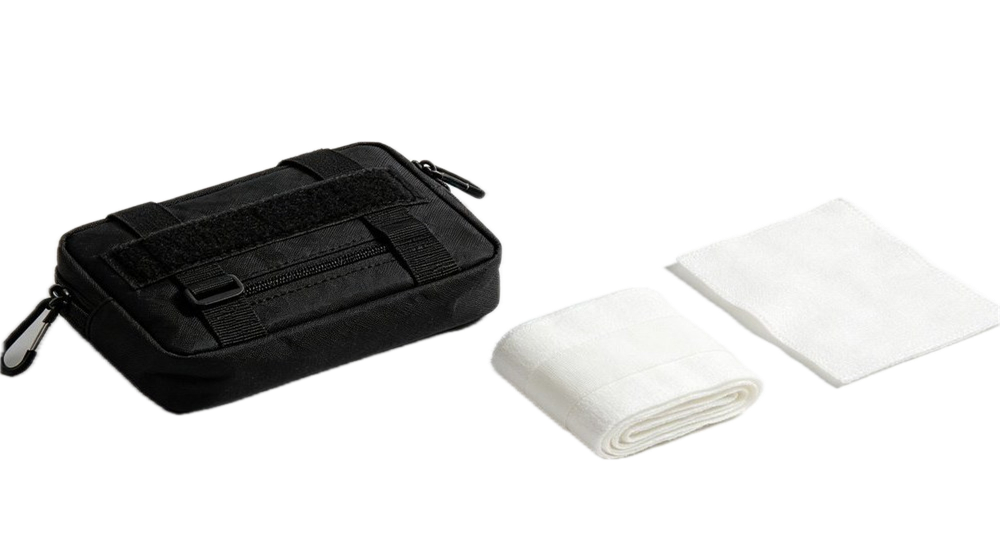
Institutional buyers often order complete team kits instead of single items. A standard rescue team kit bundles search devices, breaching tools, rope gear, stretchers, lighting, communication and medical supplies in one packing list. Bulk kits for 100-person deployments follow the same logic at a larger scale.
Rescue team equipment configuration starts with the deployment scenario: structural collapse, high angle or general disaster response. Each scenario changes the tool mix. Confirm the team size, the shift pattern and the resupply plan before the kit list is finalised.
A standard rescue team of 6-8 people carries rescue team equipment one life detector, one hydraulic set, two rope kits, two stretchers, six headlamps, two radios and one trauma kit as the baseline load. Larger teams scale the baseline by module, which keeps the packing list predictable across deployment sites.
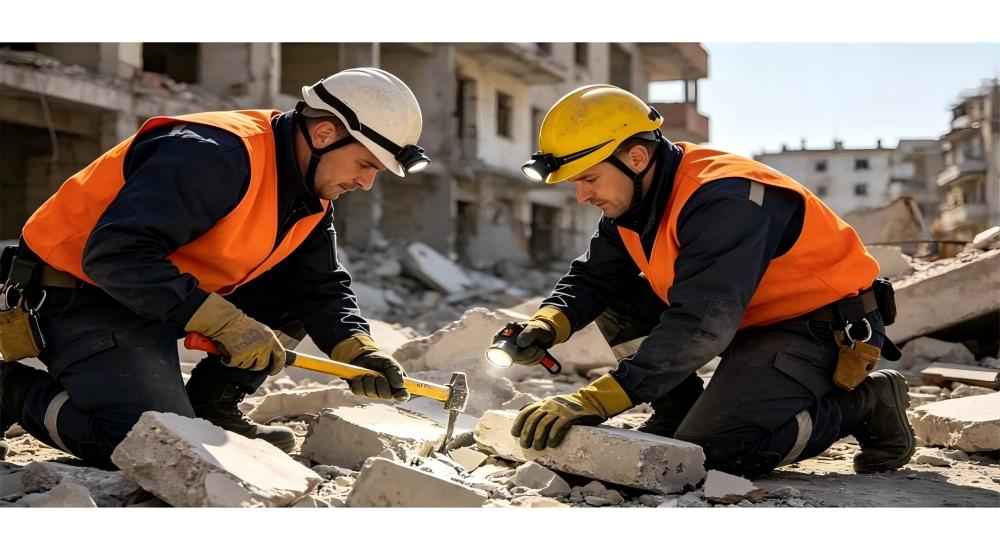
For 100-person kits, the packing unit matters as much as the contents. Confirm how many cartons each item ships in, the carton weight for manual handling, and whether palletisation is included. A clear packing list lets local teams distribute stock without repacking.
Spare parts and consumables should be ordered with the initial kit: spare cutter blades, seals, filters, batteries and straps. This keeps equipment serviceable during the response window without waiting for a second shipment.
Confirm the training support included with team kits. Many rescue equipment suppliers provide a basic operation guide and a one-day training option for the hydraulic and rope systems, which reduces misuse and extends equipment life.
Kit documentation should list each item with its carton number, so commanders can check arrival against the packing list in minutes. Request a bilingual kit manifest when the receiving team works in a second language.
Rotation planning keeps kits fresh: label each kit with a service date and rotate stored consumables before expiry. The supplier can advise the shelf-life policy for each product family.
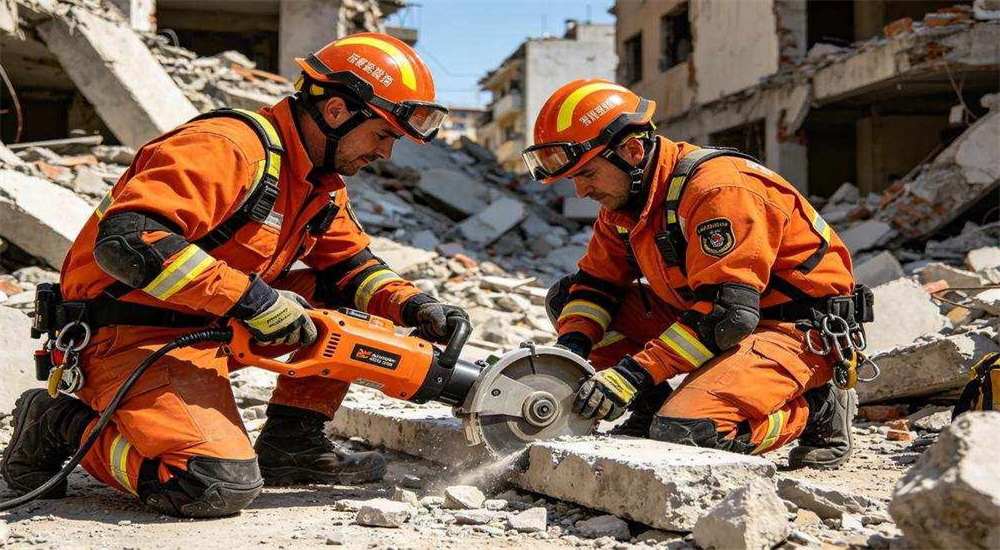
|
Kit Module |
Per 100-Person Kit |
Packing Note |
|
Search devices |
2 life detectors |
2 units per carton |
|
Breaching tools |
4 hydraulic sets |
1 set per carton |
|
Rope gear |
10 rope kits |
5 kits per carton |
|
Stretchers |
8 stretchers |
2 units per carton |
|
Lighting |
20 headlamps + 2 towers |
10 headlamps per carton |
|
Medical |
20 trauma kits |
5 kits per carton |
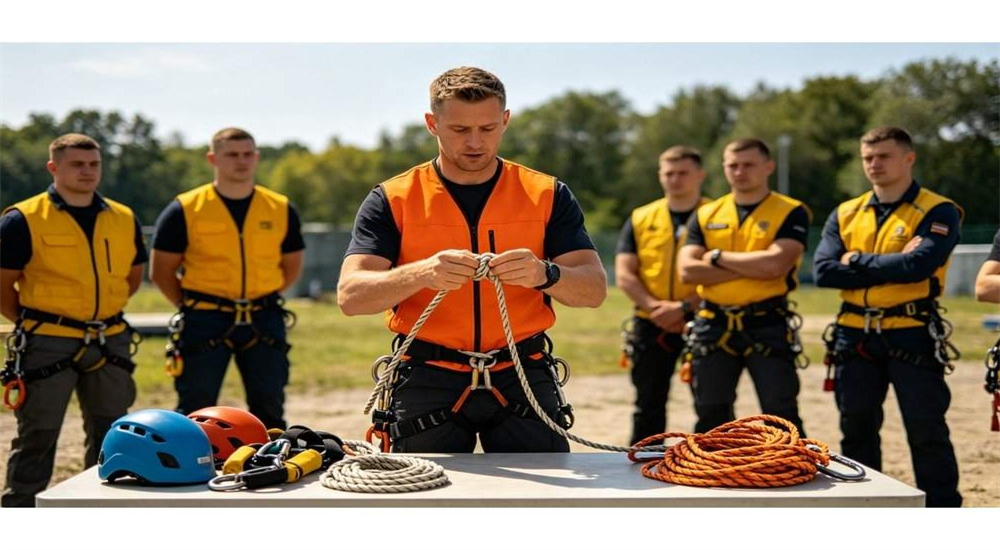
Packaging decides freight cost and on-site handling speed. Rescue equipment ships in plywood cases for heavy tools, cartons for soft goods, and foam-lined boxes for electronic detectors. Confirm the packing unit, carton dimensions and weight with the quote so freight is calculated accurately.
Container loading is calculated by carton dimensions, not by piece count. A 20 ft container holds about 28 CBM and a 40 ft container about 58 CBM. Request the factory loading plan to confirm how many cartons fit and compare unit freight cost between suppliers.
For air freight, request compact carton designs and foam protection for detectors and electronic items. Confirm whether the cartons meet the airline size limits for the chosen route. Heavy tools ship by sea in plywood or steel cases with export strapping.
Confirm the documentation set with the quote: commercial invoice, packing list, certificate of origin and any fumigation certificate required by the destination. Bilingual packing lists help local teams identify contents without language support.
For mixed shipments, group cartons by product family and mark each carton with the family name. This speeds up customs inspection and makes distribution to different depots simpler.
Quality control for rescue equipment follows a three-stage process: incoming material inspection, in-production line checks and a final batch inspection before loading. Each stage records key parameters so the buyer can trace every unit back to its batch.
For hydraulic tools, the rated pressure test and the cutting test are the core checks. For rope and harnesses, the breaking strength certificate and the batch test report are required. For electronics, the battery test and the function test cover the main failure modes. Worker protection guidance from OSHA helps define the PPE and inspection baseline for rescue operations.
Each batch of rescue equipment receives a unique batch number printed on the carton and the packing list. The batch record links the material certificate, the production date and the inspection results, so any question about a specific unit can be traced within one working day.
Certifications depend on the destination market. NFPA and EN standards cover rope systems and PPE, while hydraulic tools follow rated pressure and safety standards. Confirm which certificates your tender requires and request them before production starts.
Third-party inspection is available for institutional orders: the buyer names the inspection agency, and the factory arranges access to the production line and the final inspection. Confirm the inspection cost and the report format with the quote.
Keep all certificates in the shipment file because end-user acceptance often depends on the same documents. Request PDF copies of test reports at quotation stage so your team can pre-clear the documentation.
The factory inspection checklist covers dimensions, function, finish and packing for each unit. Confirm the acceptance sampling plan (AQL) used for bulk orders so both sides agree on the pass criteria before production starts.
Earthquake rescue equipment orders follow a fixed sequence: specification confirmation, quotation, sample or pilot batch, production, inspection and shipment. Confirm each step's timeline in writing so the delivery date is realistic for your deployment plan.
Payment terms for export orders are usually a deposit at order confirmation and the balance against shipping documents, or a letter of credit for larger contracts. Confirm the Incoterms (FOB, CIF, EXW) with the factory because the price basis changes the unit price.
Rescue equipment quotation documents should state the unit price basis, the packing unit, the lead time and the validity period. A complete quote lets the buyer compare offers without follow-up calls and protects both sides if the order is delayed.
A practical tip for first-time bulk orders: order a pilot batch of one carton per item before the full production run. The pilot confirms the factory quality level, the carton packing and the delivery timing with a small financial risk.
For government tenders, ask about documentation requirements early: certificate of origin, fumigation certificate, specific test reports or bilingual packing lists. Some tenders need the supplier to register in the buyer's vendor system before the order can be placed.
Lead time planning: search devices and electronic items usually take longer than textile and soft goods. Confirm the longest-lead item in the order and align the shipment date to that item, or arrange partial shipment.
Rescue equipment needs a documented maintenance schedule to stay deployment-ready. Hydraulic tools need seal inspection and blade checks after each heavy use. Rope systems have a service life that depends on use history, and batteries need a regular charge-discharge cycle to hold capacity.
Confirm the spare parts availability before ordering: cutter blades, seals, filters, batteries, straps and vacuum bags are the parts teams replace most often. A spare parts kit ordered with the main equipment keeps units serviceable on site.
After-sales support covers warranty terms, repair turnaround and technical response. Confirm the warranty period, the repair process and whether the supplier stocks parts for your region. Request the maintenance manual and the inspection checklist with the order.
For fleet owners, a simple rescue equipment service log per unit (date, hours used, parts replaced) helps track when each unit needs service. Request the log template from the supplier or build one locally.
The maintenance manual that ships with each product family lists the service points, the torque values and the lubrication schedule. Keep the manual with the equipment case so technicians can service units in the field without returning them to the depot.
Seasonal storage checks prevent corrosion and battery loss: confirm the storage conditions for each product family and schedule a quarterly inspection for high-use fleets.
Custom rescue equipment options include colour choices, logo printing, private label packaging and document customisation. For bulk orders, specify the logo position, the packaging print and the label text at quotation stage so the factory can include the cost in the unit price.
OEM labelling covers the product label, the carton print and the manual cover. Confirm the language of the user manual and whether bilingual versions are needed for international tenders. Barcode labels help retail and warehouse teams scan stock efficiently.
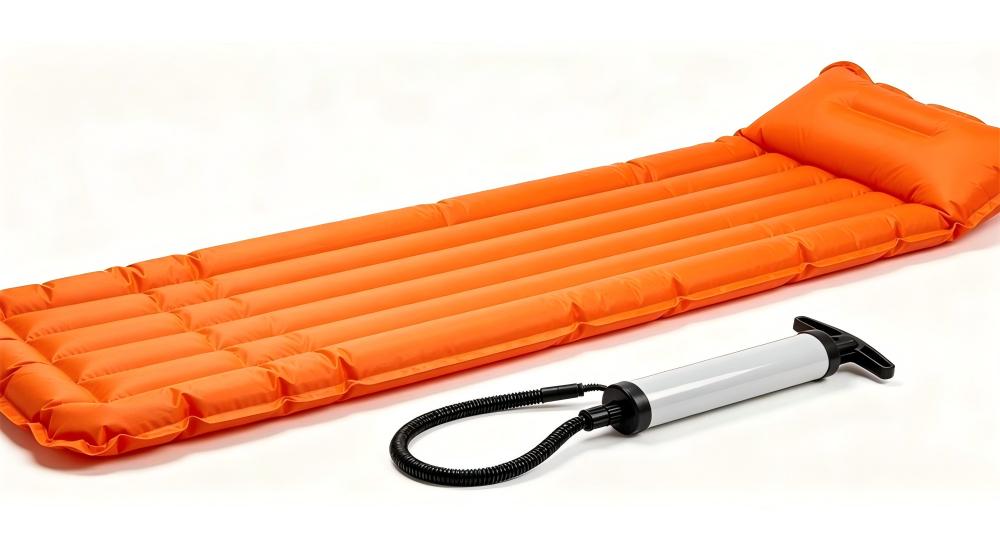
For tenders, request the exact documentation set early: certificates, test reports, factory profile and the compliance declarations your market requires. The supplier can prepare most documents within the production lead time if the requirement is confirmed at quotation.
Custom colour matching is available for textiles and soft goods. Confirm the Pantone reference and request a sample swatch before bulk production so the final colour matches your specification.
Packaging customisation includes logo cartons, colour labels and export-ready strapping. Confirm the carton print cost and the minimum quantity for custom packaging before finalising the order.
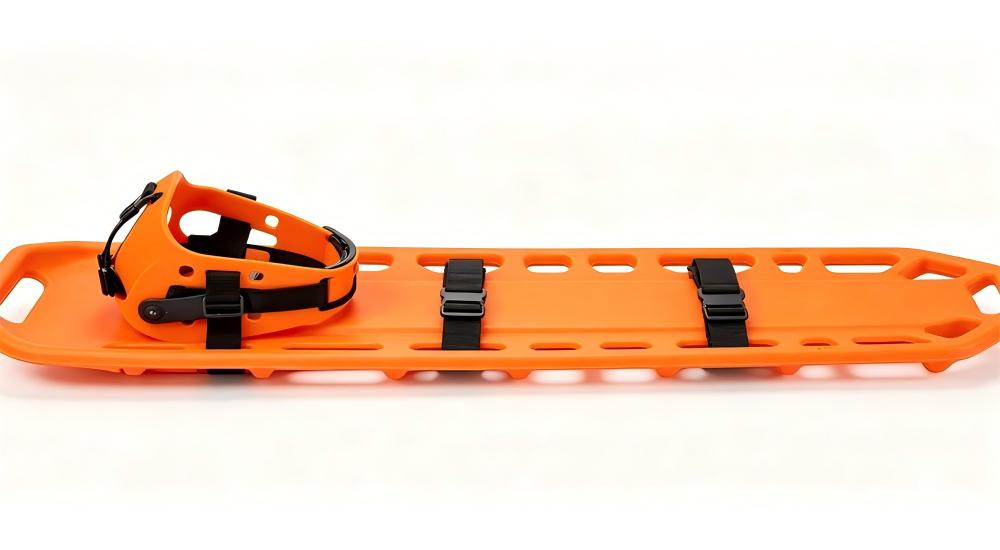
Government buyers evaluate rescue equipment suppliers on four criteria: certified quality, batch consistency, documentation completeness and after-sales support. Build a checklist that covers these points before requesting quotes, and score each supplier against the same list.
The rescue equipment specification sheet is the first document to prepare: list every item, the quantity, the standard or certificate required and the delivery point. A clear sheet reduces quote-to-quote comparison errors and shortens the negotiation cycle.
When several suppliers quote the same specification, compare unit freight, packing quality and the spare parts policy in addition to the price. The lowest price per piece is not always the lowest total cost after freight, inspection and spares.
Request a reference packing list from each supplier to compare carton dimensions and weights. This small document reveals packing discipline and freight cost more honestly than a price list.
Deployment planning starts with the equipment manifest: what the team carries in the first 6 hours, the first 24 hours and the sustained phase. First-phase gear is the lightest and fastest to deploy: life detectors, hand tools, headlamps and trauma kits. Sustained-phase gear adds hydraulic tools, towers and medical modules.
Confirm the vehicle or airlift plan with the equipment order. Carton dimensions and weights determine how much fits in each transport unit, so request the loading plan early in the procurement cycle.
Rehearse the deployment sequence locally: which boxes open first, which tools stage closest to the search sector and how spare parts are carried. A rehearsal day with the actual manifest finds packing problems before the real response.
Rotation planning keeps consumables fresh. Label each kit with a service date and rotate stored stock before expiry so the manifest is always deployment-ready.
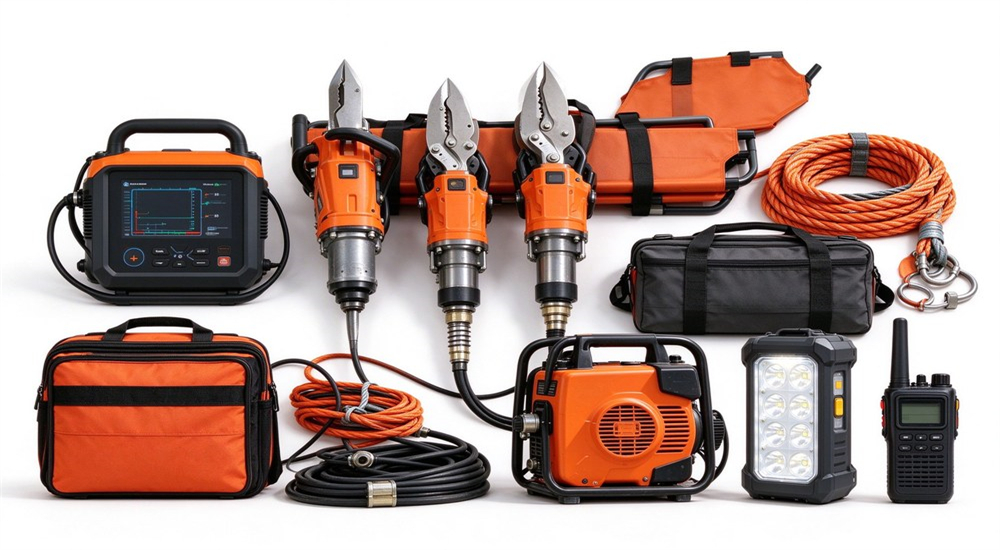
Evaluating a rescue equipment factory before a bulk order reduces risk. Check the production line capacity, the in-house test equipment and the inspection records for similar export orders. A factory that tests every hydraulic unit before packing has a different risk profile from one that samples only.
Confirm the factory's export experience for rescue equipment: destination markets, certificates handled and documentation support. Ask for a production photo report or a live video call during production for transparency.
Request the factory profile and the quality manual before placing the order. These documents describe the quality system and make the third-party inspection faster and more meaningful.
Ask how defects are handled in a batch: replacement, rework or credit. An agreed defect policy prevents disputes at the acceptance stage and keeps the relationship predictable.
Rescue equipment freight coordination covers the booking, the loading and the delivery window. Confirm the sailing or flight schedule with the logistics partner and request a loading plan that fits the transport unit, whether it is a container or an air pallet.
Insurance for rescue equipment shipments covers loss, damage and delay. Confirm the insured value, the coverage type and the claim procedure with the insurer before the shipment date.
Delivery coordination includes the destination port or airport, the receiving point and the local transport leg. Confirm the delivery terms (FOB, CIF, EXW) with the supplier so the responsibility split is clear for each leg.
For urgent deployments, air freight with partial shipments keeps the first phase gear moving while the balance follows by sea. Confirm the split-shipment option with the factory before finalising the order.
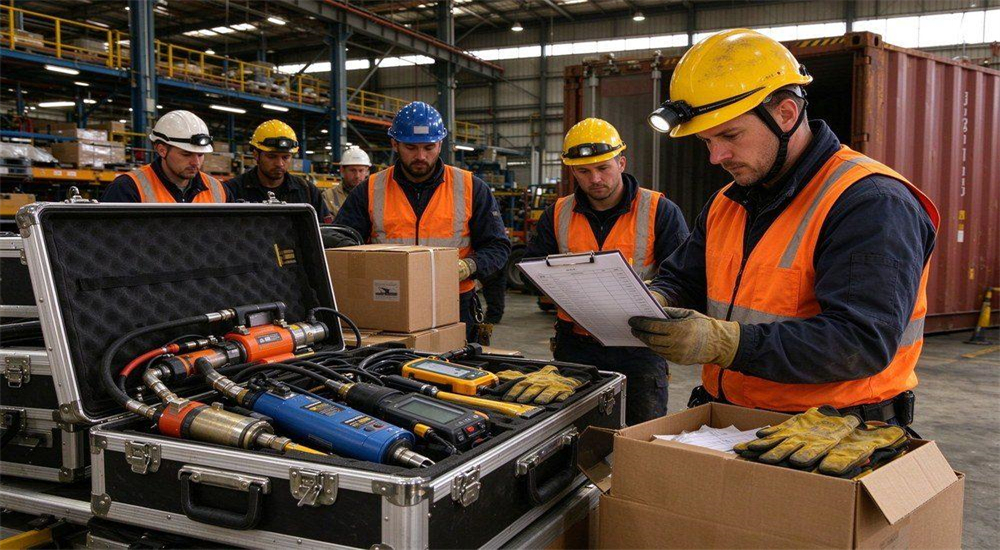
These are the questions that government buyers and institutional teams ask most often before placing a rescue equipment wholesale order. Each answer covers the specification, certification and delivery points that affect the final decision.
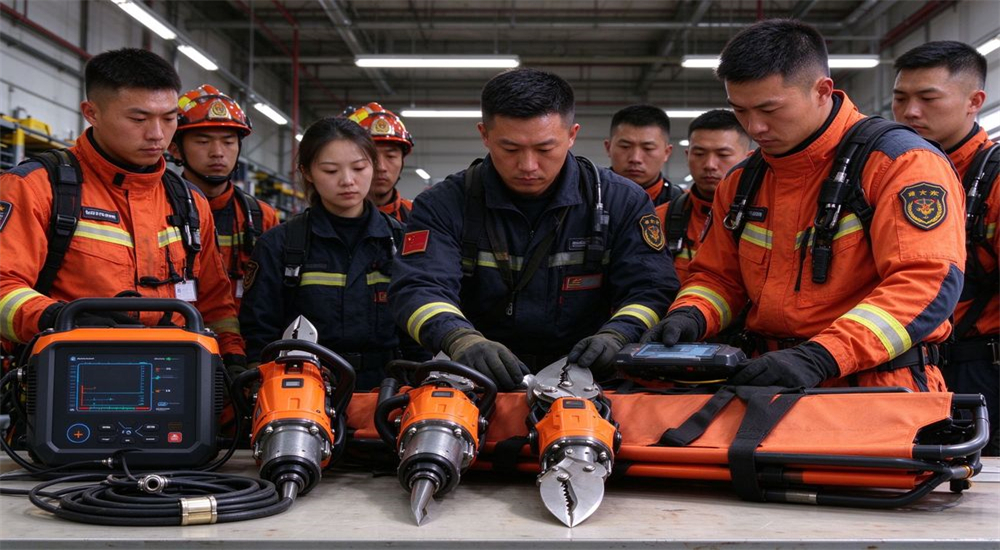
MOQ varies by item for rescue equipment wholesale orders. Life detectors and hydraulic tools usually start at 1-2 units for evaluation, while stretchers, ropes and PPE ship in carton multiples. Confirm the MOQ with the factory before quotation.
Yes. Custom colour, logo printing and private label options are available for bulk orders. Specify the logo position and packaging requirements when requesting a quote.
Hydraulic tools follow rated pressure standards, lighting products use explosion-proof rated housings, and PPE items can be supplied with material certificates and test reports. Request the documents your tender requires.
Standard production is 25-40 days depending on item and quantity. A pilot batch of one carton per item is recommended for first-time bulk orders before full production.
Yes. Cartons are built for sea freight with pallet options, and small-batch air freight is supported. Vacuum packing applies to textiles and soft goods.
Yes. Team kits combine search devices, breaching tools, rope gear, stretchers, lighting, communication and medical supplies in one order with a single packing list.
Static rope has low elongation for rope rescue equipment and suits rappelling and raising systems. Dynamic rope absorbs shock and is used for fall protection. Confirm the EN or NFPA rating your tender requires.
Two power options are standard for hydraulic rescue tools: petrol-powered hydraulic pumps with 72 MPa rated pressure, and electric lithium tools that work without a running engine in confined spaces. Confirm the hose length and coupler type with the set.
Detection range depends on the sensor type and rubble conditions. Confirm the practical range for concrete rubble, not only the open-air figure, because manufacturers state both.
Many suppliers provide a basic operation guide and a one-day training option for the hydraulic and rope systems, which reduces misuse and extends equipment life.
Cutter blades, seals, filters, batteries and rescue tool spare parts are the parts, straps and vacuum bags are the parts teams replace most often. Order a spare parts kit with the main equipment to keep units serviceable on site.
Yes. The emergency rescue equipment supplier can prepare certificates, test reports, factory profile and compliance declarations within the production lead time if the requirement is confirmed at quotation.
Warranty terms vary by product family. Confirm the warranty period, the repair process and whether the supplier stocks parts for your region before ordering.
Store equipment in a dry, ventilated area away from direct sunlight. Batteries need a regular charge-discharge cycle, ropes should be coiled loosely, and hydraulic tools should be stored with seals protected.
Yes. Custom colour matching is available for textiles and soft goods. Confirm the Pantone reference and request a sample swatch before bulk production.
Yes. A pilot batch of one carton per item is recommended for first-time bulk orders. It confirms quality, packing and delivery timing with a small financial risk.
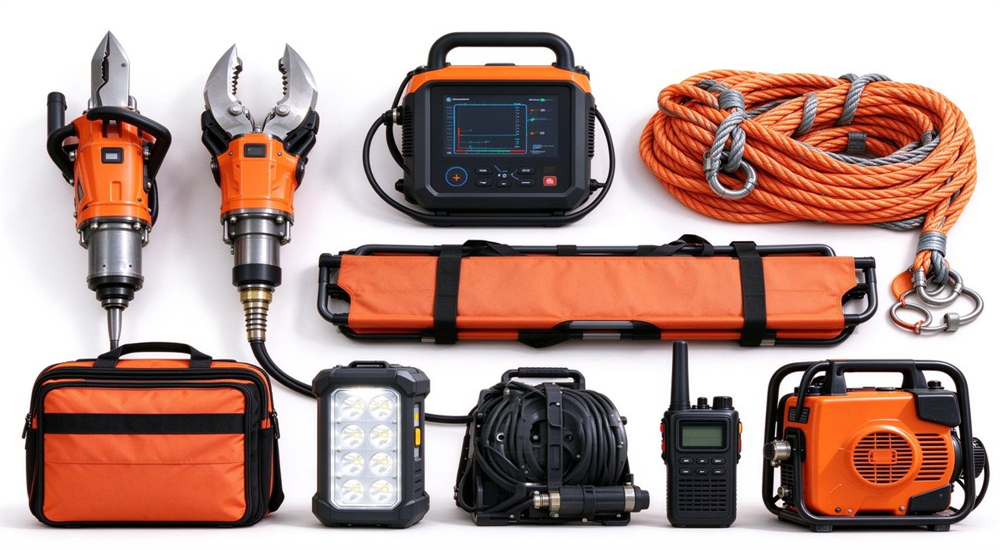
YRF Textile — Earthquake rescue equipment wholesale, life detectors, hydraulic rescue tools, rope gear and rescue PPE
Liens amicaux :
droits dauteur © Custom Disaster - Relief Bedding: Tents, Sleeping Bags, Blankets Tous les droits sont réservés
léquipe professionnelle au service !