A rescue line thrower gets a rope to a person in water faster than anyone can swim. The right choice depends on your typical rescue distance, launch position (shore, bridge or boat), and whether your team has trained operators. This guide covers four types — manual throw bags, pneumatic launchers, professional rescue launchers and project-configured kits — with real specs, operation steps and maintenance advice.
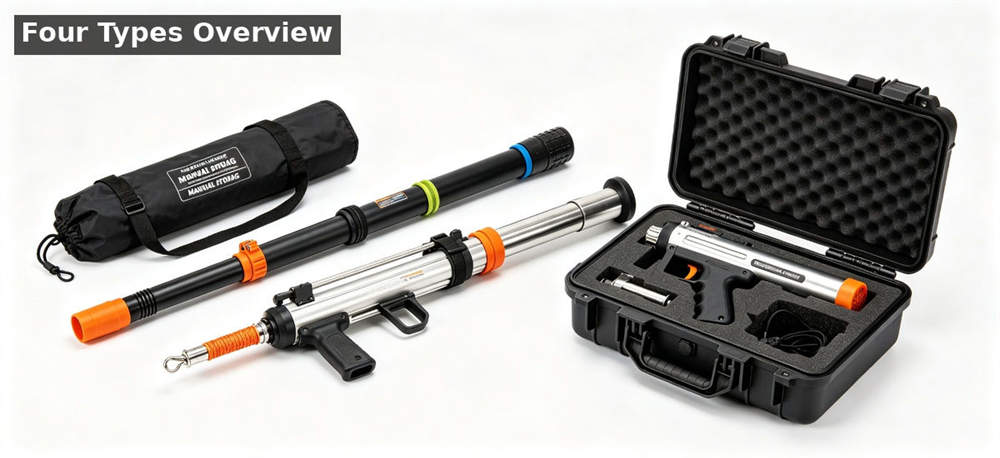
Quick range guide: Manual throw bags cover up to 30m and need no power. Pneumatic launchers reach 80–180m but need compressed air and trained operators. Professional launchers reach 150–230m for fire and coast guard teams. Match the type to your distance first, then check rope, spares and transport.
Most procurement needs fall into one of four categories. Start with your maximum rescue distance, then narrow by launch position and operator training.
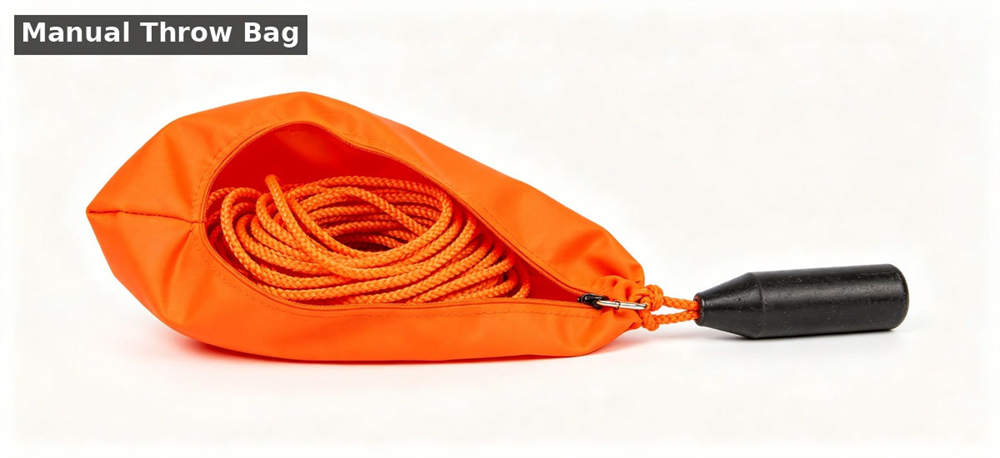
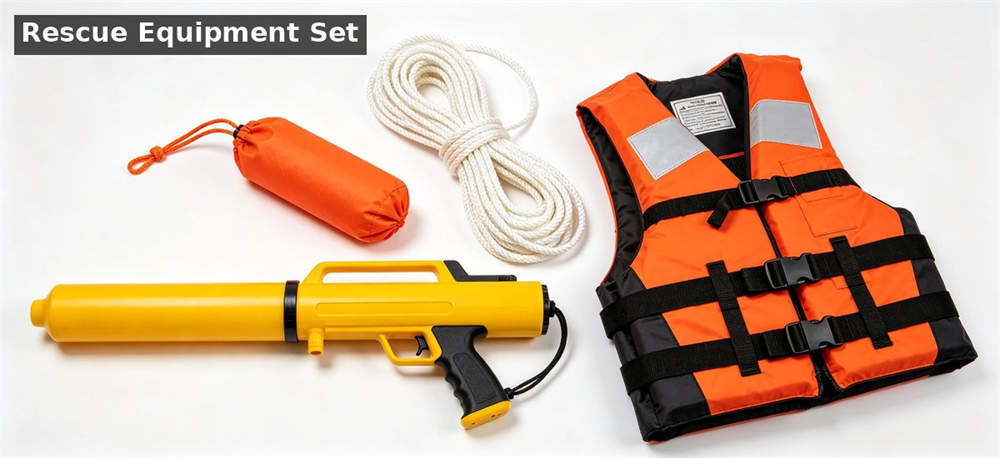
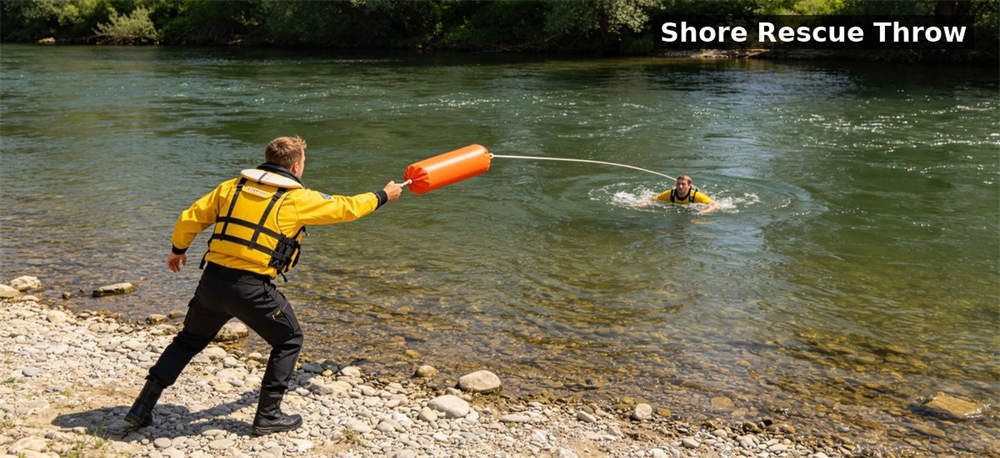
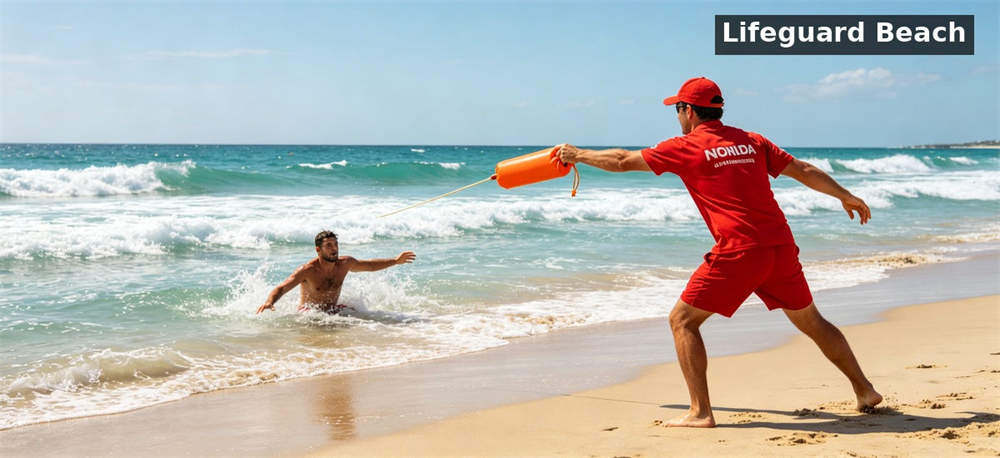
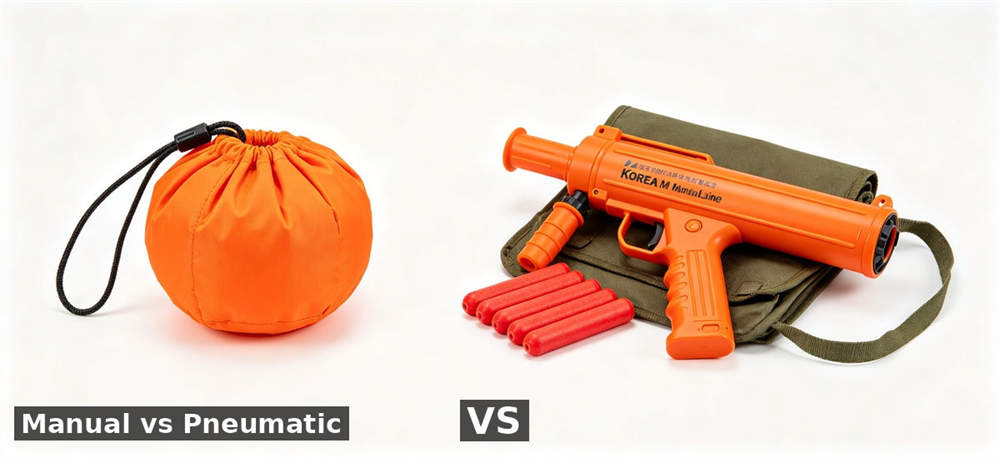
The simplest and most affordable type. A floating rope packed into a small bag with a weighted end. The operator throws by hand and the rope pays out behind it.
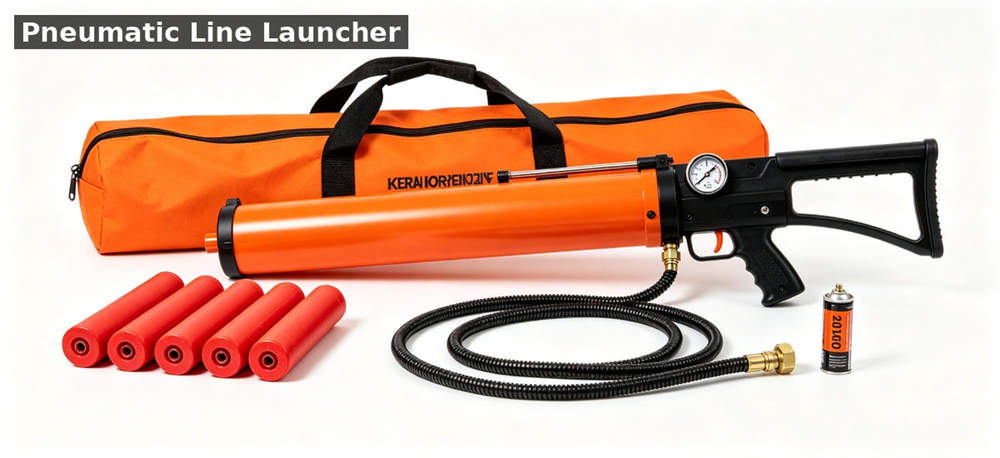
Compressed-air powered launchers that fire a projectile trailing a floating rope. The most common type for marine and fire-rescue use.
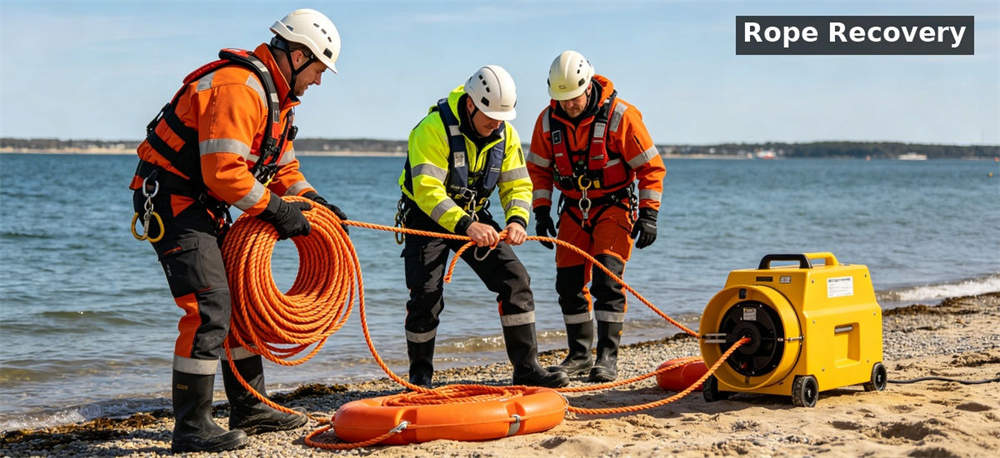
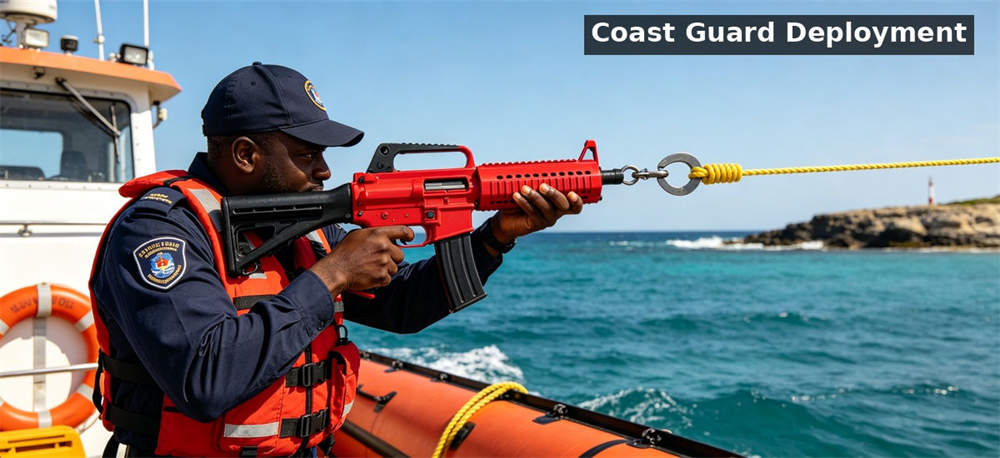
Heavy-duty launchers built for professional fire, coast guard and military rescue teams. Aluminium-alloy body, higher pressure, longer barrel and more durable construction.
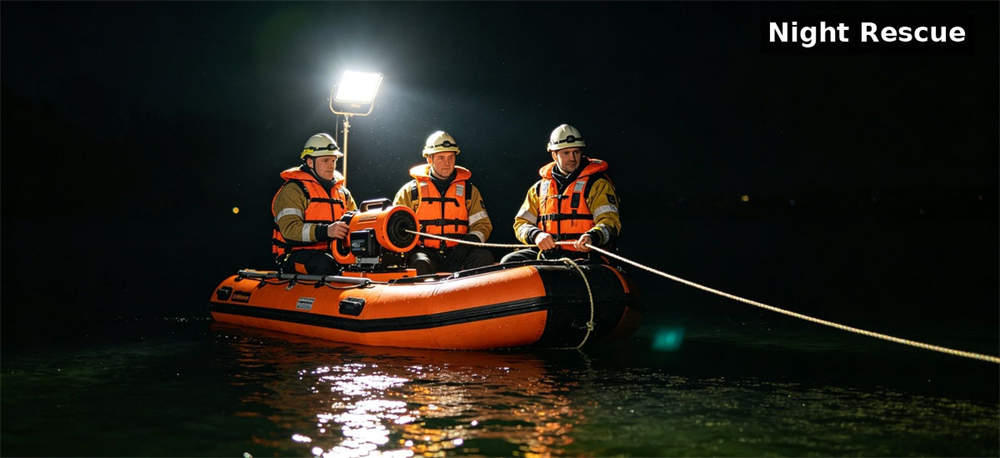
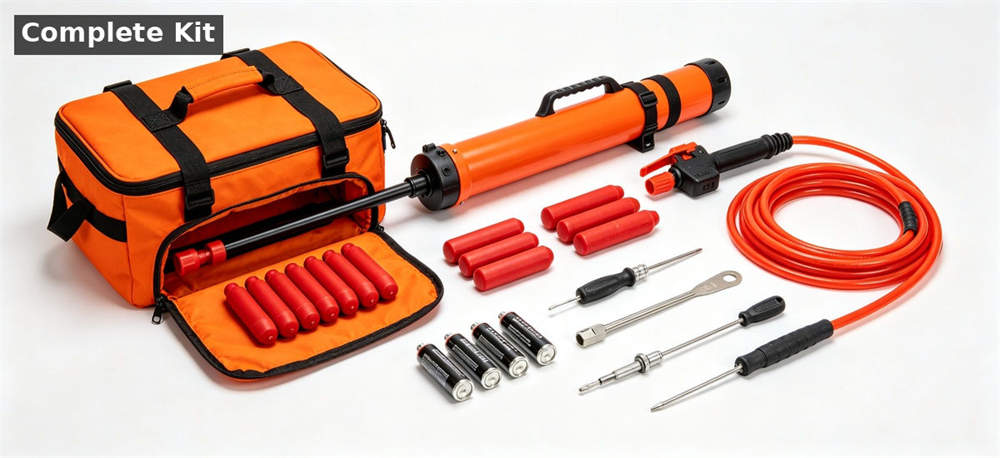
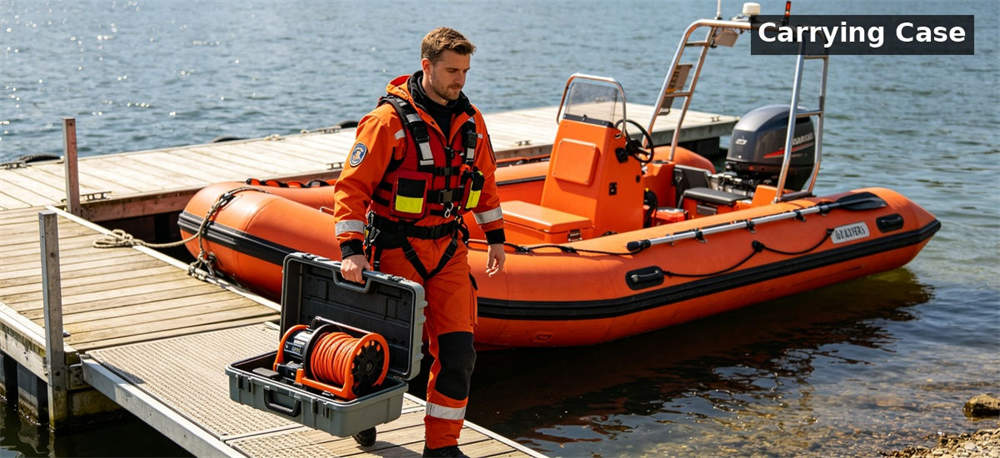
Built to a specific task specification — a combination of launcher, multiple projectile types, spare ropes, tools, pressure components and a carrying case.
|
Feature |
Manual Throw Bag |
Pneumatic Launcher |
Professional Launcher |
Project Kit |
|
Range (water / land) |
20–30m / 25–35m |
80–120m / 100–180m |
100–150m / 150–230m |
Depends on launcher |
|
Weight (complete) |
0.4–0.8kg |
5–8kg |
8–12kg |
10–20kg in case |
|
Power source |
Human force |
Compressed air / CO2 |
Compressed air |
Depends on type |
|
Operator training |
Basic instruction |
Required |
Certified required |
Required |
|
Best for |
Shore, kayak, lifeguard |
Boat, fire, coast guard |
Fire dept, military, offshore |
Tenders, full-team equip |
|
Maintenance level |
Very low |
Medium (O-rings, cylinder) |
Medium-high |
Depends on type |
Answer these three questions before requesting a quotation:
Quick selection guide:
• Maximum rescue distance under 30m, shore-based → Manual Throw Bag
• Distance 30–150m, boat or shore, have trained operators → Pneumatic Launcher
• Distance over 150m, professional fire/coast guard team → Professional Rescue Launcher
• Government tender, need ready-to-deploy complete set → Project-Configured Kit
• Both short and long distance needed → Manual bag + Pneumatic launcher combination
• Unsure of exact distance → Start with pneumatic (covers most scenarios)
Not sure which type fits your rescue scenario? Send us your task distance and launch position — we'll recommend a configuration within 24 hours.
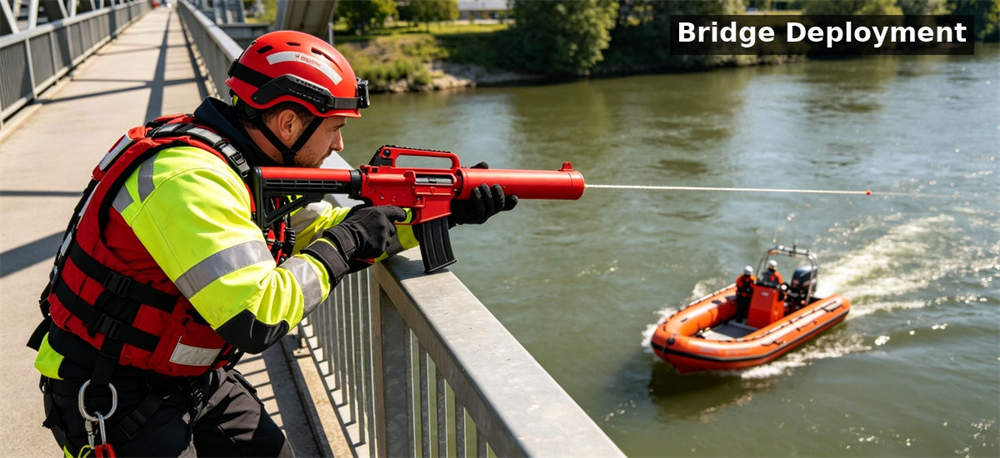
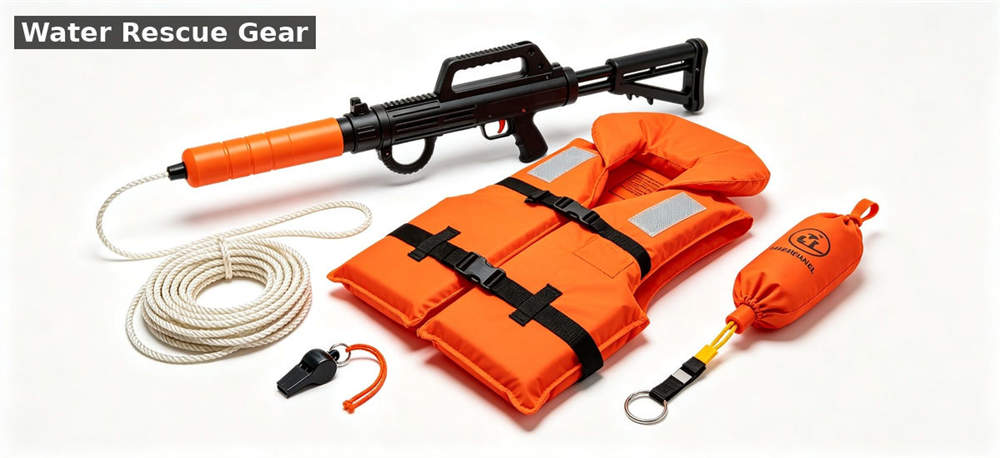
Line throwers work as part of a full water rescue system. Your team also needs flotation, protective clothing and footwear.
Pneumatic Rescue Line Throwers
Complete Water Rescue Equipment
Flood Disaster Relief Products
The range printed in a catalogue is the best-case result. Real rescue range depends on these five factors — understand them before you select a model based on numbers alone.
Practical tip: When comparing two launchers by range, always check the test conditions (pressure, angle, wind, projectile type). A "200m range" claim at 5MPa with no wind is not the same as a "120m range" at 3MPa in 15km/h wind.
The rope is the part that actually saves a life — the launcher just delivers it. Choosing the wrong rope means the launcher works perfectly but the line fails when it matters.
|
Material |
Floats? |
Typical Strength (8mm) |
UV Resistance |
Best For |
|
Polypropylene (PP) |
Yes (best) |
15–20kN |
Good |
Water rescue line throwers (most common) |
|
Polyethylene (PE / HMPE) |
Yes (treated) |
25–40kN |
Excellent |
Professional launchers, high-load rescue |
|
Nylon (PA) |
No (sinks) |
20–30kN |
Fair |
Land-based line transfer only, NOT for water rescue |
|
Polyester (PES) |
No (sinks) |
18–25kN |
Very good |
Static lines, not for thrower water rescue |
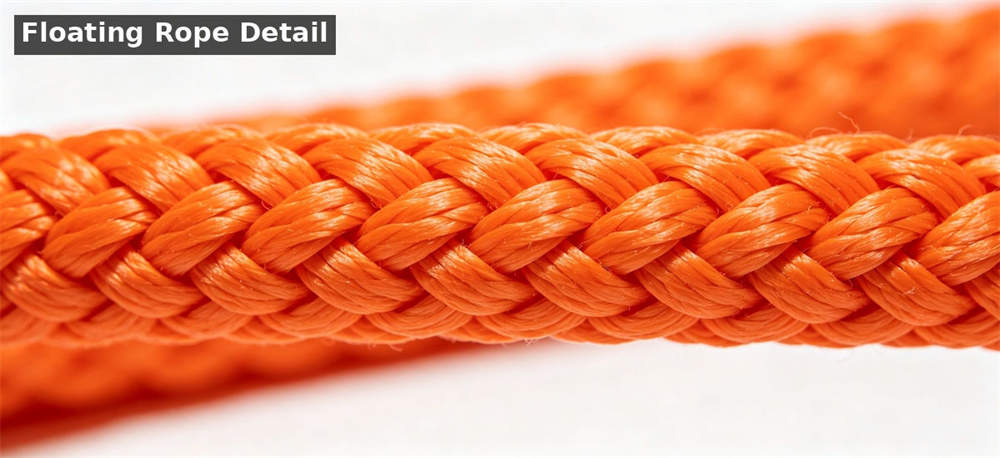
Important: Always confirm the rope is specified as floating for water rescue. A sinking rope is worse than useless — it can pull a person under water. Nylon and polyester ropes sink and should not be used for water rescue line throwers.
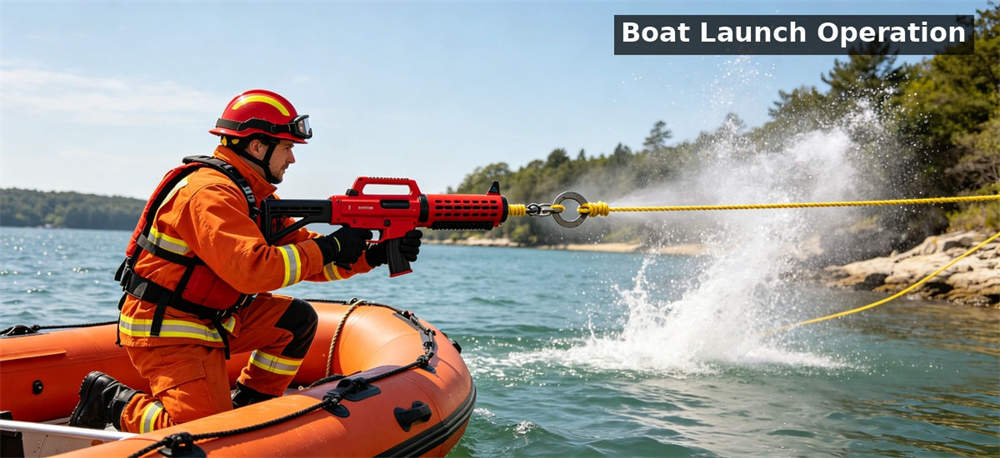
Follow these steps for safe and consistent operation. Exact procedures vary by model — always follow the manufacturer's manual for your specific unit.
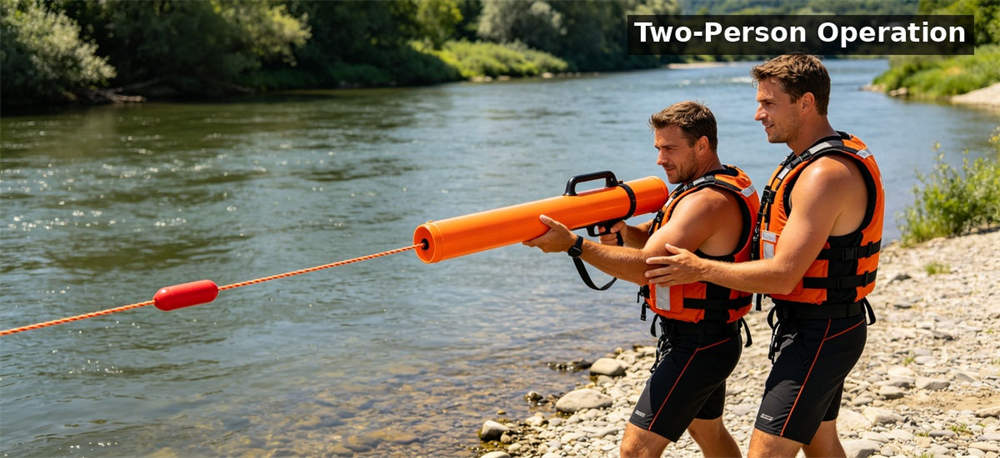
Safety: Never fire at a person. Always check the backblast area behind the launcher — compressed air release can injure bystanders within 2 metres. Keep fingers away from the barrel opening. Wear eye protection during operation. Pressure cylinders must be inspected and tested at the intervals specified by the manufacturer and local regulations.
Pneumatic and professional launchers are pressurised equipment firing projectiles at high speed. These rules apply every time, no exceptions.
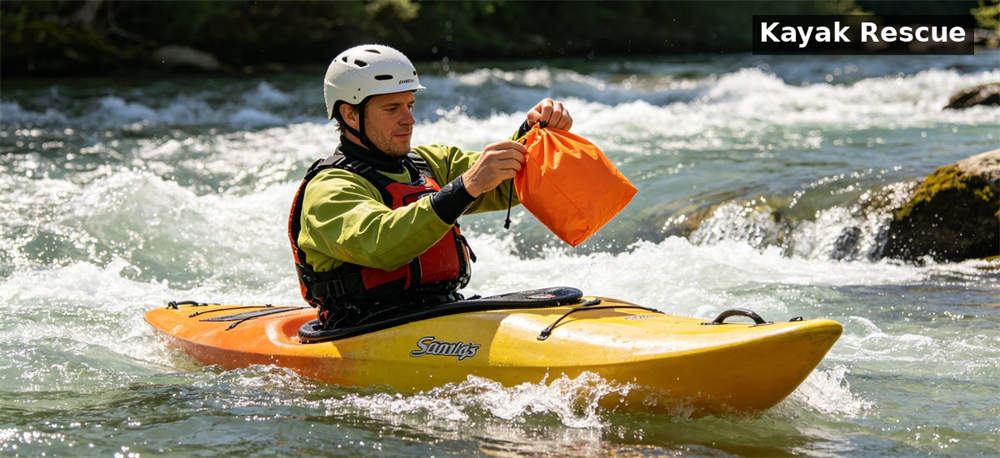
4. Let the rope pay out. Do not grip the rope tightly — it must flow freely from the bag.
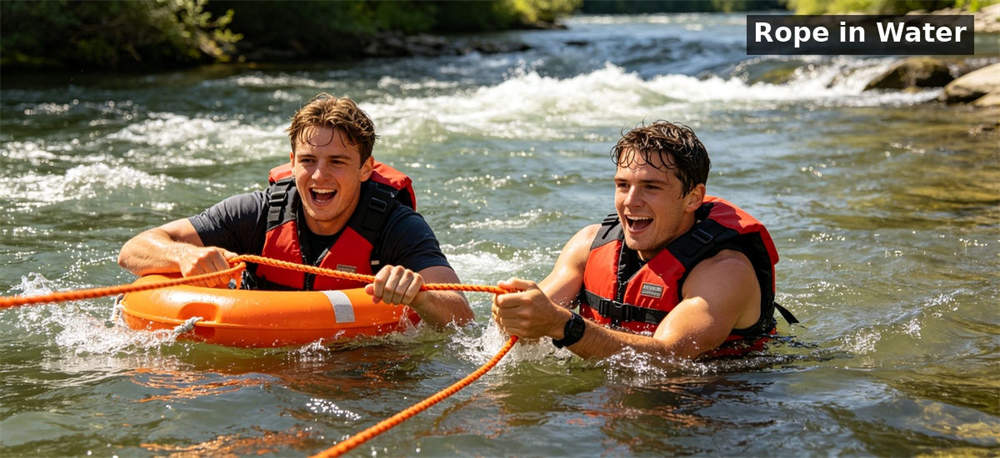
5.After the throw. The person in the water grabs the rope and you pull them to safety or anchor the line.
6.Repack immediately. After use, repack the rope carefully (do not stuff it randomly) so it is ready for the next throw. A poorly packed bag will tangle mid-throw.
|
Problem |
Possible Cause |
Solution |
|
Range much shorter than rated |
Low cylinder pressure / worn O-ring / wrong projectile |
Check pressure gauge, replace O-rings, confirm projectile matches model |
|
Rope tangles during launch |
Rope coiled too tightly / rope dirty or stiff |
Lay rope in figure-8 pattern, wash rope with mild detergent, replace if stiff |
|
Projectile does not exit barrel |
Projectile jammed / pressure too low / barrel obstructed |
Do not look down barrel. Depressurise safely, remove projectile, inspect barrel |
|
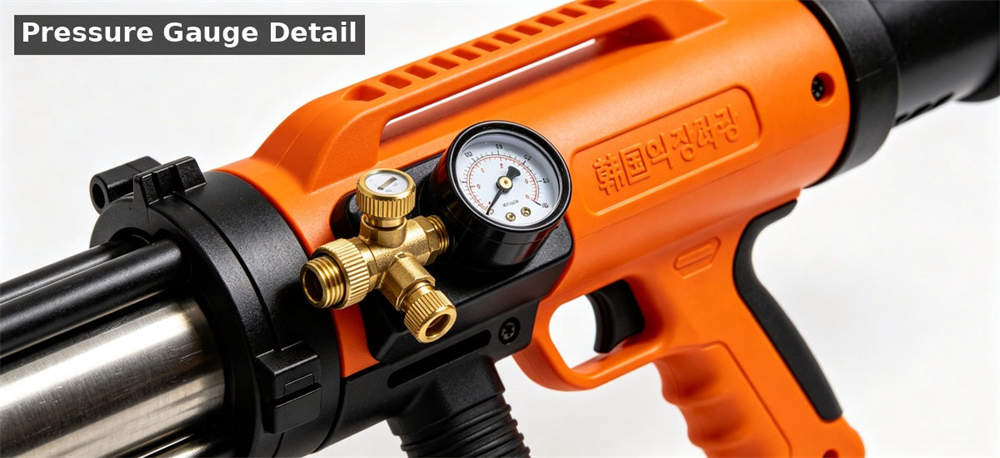
Pressure gauge reads zero after charging |
Faulty gauge / cylinder valve not open / leak at connection |
Check valve is open, tighten connection, replace gauge if faulty |
|
Air hissing from barrel after firing |
Worn barrel seal / O-ring damaged |
Replace barrel seal and O-ring set, test before next use |
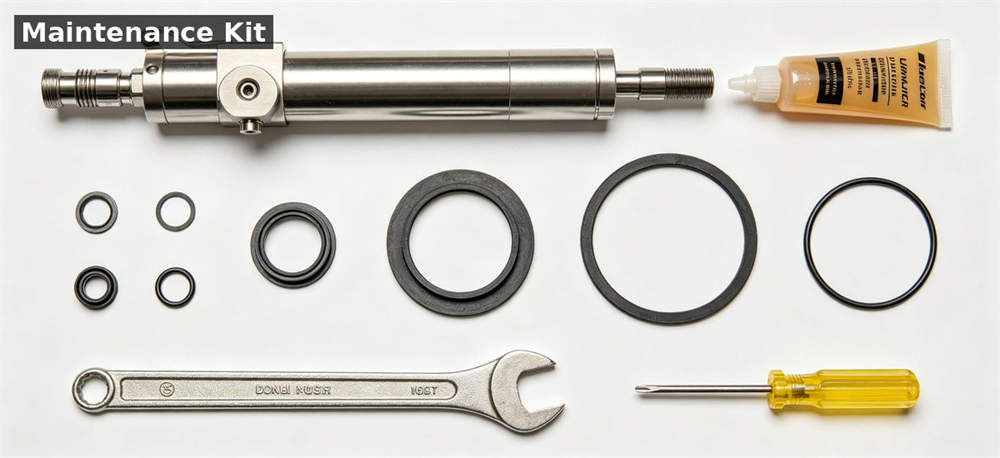
When ordering a pneumatic or professional launcher, confirm the complete set includes all of the following. A launcher body alone is not a deployable rescue set.
Item
Purpose
Typical Qty
Launcher body
Main firing unit
1
Pressure cylinder or CO2 cartridges
Power source
1–2
Rescue buoy projectile
Floating head for person-in-water
2–3
Grappling hook projectile
Vessel or building access
1–2
Standard weighted projectile
General line transfer
2
Floating rescue rope
Main line, 100–200m
1–2
Spare rope
Replacement after damage
1
Tool kit
Field maintenance and seal replacement
1
Spare O-rings and seals
Consumable replacement parts
1 set
Instruction manual
Operation and safety guide
1
Carrying case
Transport and storage protection
1
Pneumatic and professional launchers contain pressure components that may be classified as dangerous goods for transport. Confirm the following before production:
Important: Provide the destination, transport method and pressure-component information at the quotation stage so the applicable documents and shipment plan can be confirmed. Do not assume a standard shipping method works for all destinations.
What is the typical range of a rescue line thrower?
Manual throw bags reach 20–30m. Pneumatic launchers reach 80–120m on water and 100–180m on land. Professional launchers reach 100–150m on water and 150–230m on land. These are tested at 45° angle in no-wind conditions. Real-world range is reduced by wind, current and operator experience. Always add a 20% safety margin when selecting based on range.
In practice the terms are often used interchangeably. "Line thrower" is the more common term in rescue and fire service, covering both manual and powered devices. "Line launcher" typically refers to powered (pneumatic or cartridge) devices. Both describe equipment that fires a projectile trailing a rescue rope across water or a gap.
No. Pneumatic launchers use pressurised components and fire projectiles at high speed. Untrained operation can cause injury, property damage or equipment failure. Most professional models require certified operator training. Include training in your procurement plan if your team does not already have certified operators. Manual throw bags can be used with basic instruction.
What rope material is best for water rescue?
Polypropylene and polyethylene are the most common because they float. High-strength polyethylene (HMPE) offers higher strength-to-weight ratio but may sink unless treated. Nylon is strong but absorbs water and sinks — not recommended for water rescue line throwers. Always confirm the rope is specified as floating for water rescue use.
6mm rope gives the longest range (lowest air drag) but minimum strength. 8mm is the balanced choice for most pneumatic launchers — good range plus enough strength for two-person rescue. 10mm has the highest strength but shortest range, for professional heavy-load use. Thicker rope creates 10–15% more air drag than thin rope at the same pressure.
Inspect before each use for cuts, fraying, UV damage or shock loading. Replace immediately if more than 10% of strands are broken in any 10cm section, or if the rope has been under a shock load (person falling). As a general cycle, replace every 2–3 years even if unused, because UV and age weaken fibres. Floating ropes should be tested for buoyancy annually.
How often do O-rings and seals need replacing?
Every 50 launches or every 6 months, whichever comes first. O-rings degrade from pressure cycling, ozone and age. A degraded seal causes pressure loss, reduced range and can fail completely during operation. Always keep a spare seal kit on hand — they are inexpensive and a failed seal makes the launcher unusable.
Compressed-air cylinders can be refilled at any facility with a high-pressure compressor (dive shops, fire departments, industrial gas suppliers). CO2 cartridges are typically replaced rather than refilled. Confirm the cylinder type before ordering — refillable cylinders have lower long-term cost, disposable cartridges are simpler for remote locations.
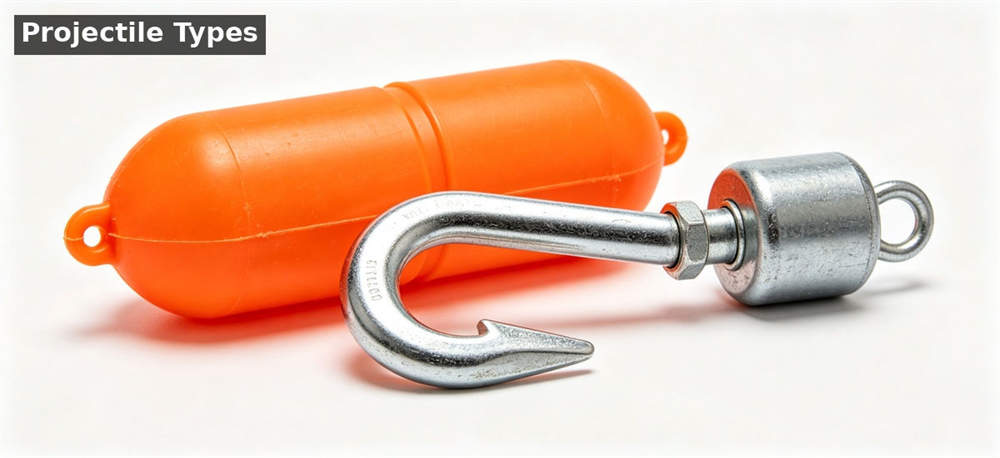
A rescue buoy is a floating projectile designed for person-in-water rescues — it floats so the person can grab it and the line stays on the surface. A grappling hook is a weighted hook projectile for vessel-to-vessel line transfer, building access or securing to structures. Most launchers accept both types, and a complete kit should include at least one of each.
What wind speed is too high for accurate operation?
Above 30km/h (18mph), projectile accuracy becomes unreliable and range drops significantly. A 10km/h crosswind already reduces effective range by 15–25%. If you regularly operate in windy coastal or open-water locations, choose a model with a heavier projectile and practise wind compensation during training.
1–2 minutes for a trained operator: retrieve projectile, inspect, repack rope, recharge cylinder if needed, reload projectile. Professional launchers may take 2–3 minutes due to larger components. Manual throw bags take 1–2 minutes to repack the rope carefully. Always factor reload time into your rescue plan — a single shot may not be enough.
Requirements vary by country and application. Pressure cylinders require periodic hydrostatic testing per local regulations. Some countries require CE marking for imported pressure equipment. For professional fire and coast guard use, confirm the specific standards your organisation requires. We can help arrange third-party test reports based on your project requirements.
Can I customise the rope length and colour?
Yes. Rope length, diameter, colour and material can be customised for most models. Common lengths are 100m, 150m and 200m. High-visibility colours (orange, yellow) are recommended for water rescue. Custom configuration may affect lead time — confirm your requirements at quotation stage.
Open cartons from different positions in the container. Verify: launcher body matches ordered model, all kit items are present (use the checklist above), cylinder is undamaged and at correct pressure, rope is correct length and diameter, projectiles are undamaged, instruction manual is included, carrying case is functional. Record any defects with photos and carton numbers.
Store in a cool, dry place away from direct sunlight and heat. Pressure cylinders should be stored at moderate temperature (not above 50°C or below -20°C). Ropes should be clean and completely dry before storage. Launchers should be in their carrying cases. Inspect all units before each flood or rescue season — do not just count cartons, open and verify condition.
What is the service life of a launcher body?
With proper maintenance and seal replacement, a pneumatic launcher body typically lasts 8–12 years. Aluminium professional launchers can last 10–15 years. The cylinder has a separate service life set by pressure regulations (usually 10–15 years before mandatory retirement). Ropes and projectiles are consumables and need replacement every 2–3 years or after damage.
Manual throw bags have a low minimum quantity. Pneumatic and professional launchers typically have a higher minimum due to pressure component sourcing and configuration. Project kits are built to order. Exact minimums depend on the model, configuration and customisation — confirm at quotation stage.
Yes. O-rings, seals, ropes, projectiles, cylinders and carrying cases are all available as separate spare parts. Always order spares by the exact model number to ensure compatibility. We recommend stocking 1 seal kit and 1 spare rope per launcher to avoid downtime.
What is the typical lead time?
Standard manual throw bags: 7–15 working days. Standard pneumatic launchers: 15–25 working days. Professional launchers and custom project kits: 25–40 working days depending on configuration. Custom logo or colour adds 5–10 working days. Emergency rush orders for standard models can sometimes start production within 72 hours — confirm stock and capacity first.
Can one launcher use both land and water projectiles?
Most pneumatic and professional launchers accept multiple projectile types. The same launcher body can fire a rescue buoy (water), grappling hook (vessel/building) or standard weighted head (general line transfer). Confirm the projectile options for the specific model you are ordering — not all models accept all types.
If a cylinder fails its periodic hydrostatic test or shows external damage (dents, corrosion, bulging), it must be removed from service immediately. Do not attempt to repair or use a failed cylinder. Replacement cylinders are available — order by exact model number. Failed cylinders should be disposed of according to local regulations for pressure equipment.
Send your task type, maximum rescue distance, launch position (shore/boat/bridge), operator training status, required projectile types, quantity, destination and any test or certification requirements. We will return matched model options, configuration details and the remaining quotation inputs.
INTERNAL LINK CARD AREA - target page and URL pending
YRF Textile · Rescue Line Throwers and Rope Launchers · Made in China · info@yrftextile.com · WhatsApp +86 13702995607
Liens amicaux :
droits dauteur © Custom Disaster - Relief Bedding: Tents, Sleeping Bags, Blankets Tous les droits sont réservés
léquipe professionnelle au service !