For a broader overview of emergency relief blanket material classifications and specification selection, you may also read the companion article on this site: How to Choose High-Quality Extreme Cold Emergency Relief Blankets | 2026 Professional Buying Guide, which provides a complete reference chain from foundational knowledge to procurement execution.
I. Two Types of Procurement Entities and Their Shared Challenges
Standing at different positions, the priorities for the same batch of government-stockpiled emergency relief blankets often differ significantly.
Government emergency and disaster-prevention departments operate under a core constraint of procedural compliance: budget approval chains, tender announcement periods, acceptance filing—every step must withstand post-audit scrutiny. Procurement for national or provincial stockpile warehouses typically requires that product categories and quantities align with the distribution standards defined in emergency response plans, and that acceptance documents correspond one-to-one with budget line items.
NGOs and international aid organizations follow a logic driven more by execution efficiency. Donors often stipulate procurement timelines and project completion milestones, meaning supplies must reach the destination country and be distributed within a specific time window. Many organizations reference the material procurement standards of international humanitarian bodies such as UNHCR and ICRC, requiring suppliers to provide OEKO-TEX and similar certifications for harmful substance safety—particularly to protect vulnerable groups, including children and the elderly, among beneficiaries.
Both entity types face the following shared challenges:
(1)Tension between time pressure and procedural compliance: The response window after a disaster is extremely short, but bypassing procedures entirely carries equally serious risks—any documentation gap can evolve into a compliance liability.
(2)Balancing quality and service within limited budgets: Driving down unit price is straightforward; controlling total procurement cost is not.
(3)High cost of identifying reliable suppliers: Without a systematic screening framework, procurement teams often rely solely on prior working relationships.
(4)Persistent audit and accountability pressure: Government projects are subject to audit agency spot checks; NGO projects require regular donor reporting. Neither entity type can afford even minor lapses in document management.
II. The General Procurement Process: Five Stages from Needs Confirmation to Contract Signing
Stage One: Needs Identification and Definition
"We need 10,000 blankets" is not a needs statement. A complete needs statement should include: the use scenario (indoor gymnasium / tent camp / temporary prefab housing / government warehouse, etc.); target population and scale (number of people to be sheltered, proportion of special-needs groups such as children, elderly, and injured); duration of use (short-term / medium-term / long-term resettlement); climate and environment (day-night temperature range, humidity, altitude); budget framework; and compliance requirements (required certifications, donor supplementary conditions).
Stage Two: Budget and Approval
Confirm the funding source (government budget, international donation, project grant) and budget ceiling, complete internal approval procedures, and lock in the available amount and procurement authorization scope.
Stage Three: Market Research and Technical Solution Design
Gain an understanding of the market's available specifications, standards, and price ranges for bulk procurement of emergency relief blankets, and form an initial draft of "technical specification outline + scenario configuration plan + supply source strategy." For medium-to-large procurement projects, this stage should produce a formal draft emergency relief blanket technical specification document to serve as the basis for the technical annex of tender documents.
Stage Four: Tendering / Inquiry / Competitive Negotiation
Based on procurement value, sensitivity, and the organization's internal regulations, select from open tendering, invitation tendering, framework agreement drawdown, or competitive negotiation.
Stage Five: Contract Signing, Execution, and Acceptance
Confirm delivery milestones, acceptance standards, and warranty terms; establish a complete archive to provide a basis for audit and project review.
III. Simplified Procedures Under Emergency Conditions: Documentation Matters More Than Process
Most countries and aid organizations permit accelerated or simplified procurement procedures once a formal state of emergency has been declared: shortened tender announcement periods, reduced numbers of invited suppliers, drawdown from qualified supplier registries under strict conditions, and in extreme cases, single-source procurement.
Extensive project post-mortems show that subsequent disputes typically stem not from "using a simplified procedure" but from "failing to leave sufficient records explaining why."
Even under extreme time pressure, emergency procurement of emergency relief blankets under emergency conditions should at minimum preserve three types of records:
(1)Needs statement document: Briefly describe the scale of the disaster, estimated number of people requiring shelter, the supply shortfall situation, and the response time window.
(2)Supplier selection rationale: Why this supplier was chosen over others—prior working relationships, existing framework agreements, or being the only entity with sufficient stock at the time of the disaster all constitute valid grounds.
(3)Price reasonableness record: Even if the price comparison was conducted verbally, it should be put in writing within 24 hours, noting which sources were compared and the basis for the final selection.
Why Does Sourcing Emergency Relief Blankets from China Still Offer Advantages in Emergency Conditions?
Many projects only discover severe local stockpile shortages when emergency procurement is triggered. China is one of the world's most important manufacturing and export bases for humanitarian aid project emergency blankets. Production capacity is concentrated and inventory flexibility is high; in many situations, large-batch stock or urgent production runs can be arranged more quickly than through scattered local manufacturers. Chinese integrated suppliers with export experience are typically able to rapidly prepare export compliance documents, aligning with the timeline requirements of NGO or government projects.
IV. How to Establish Clear Technical Specifications and Service Requirements for Emergency Relief Blankets?
This is the stage most easily overlooked in the entire procurement process—and the one most likely to cause problems at the acceptance stage.
4.1 Technical Requirements (Hard Specifications)
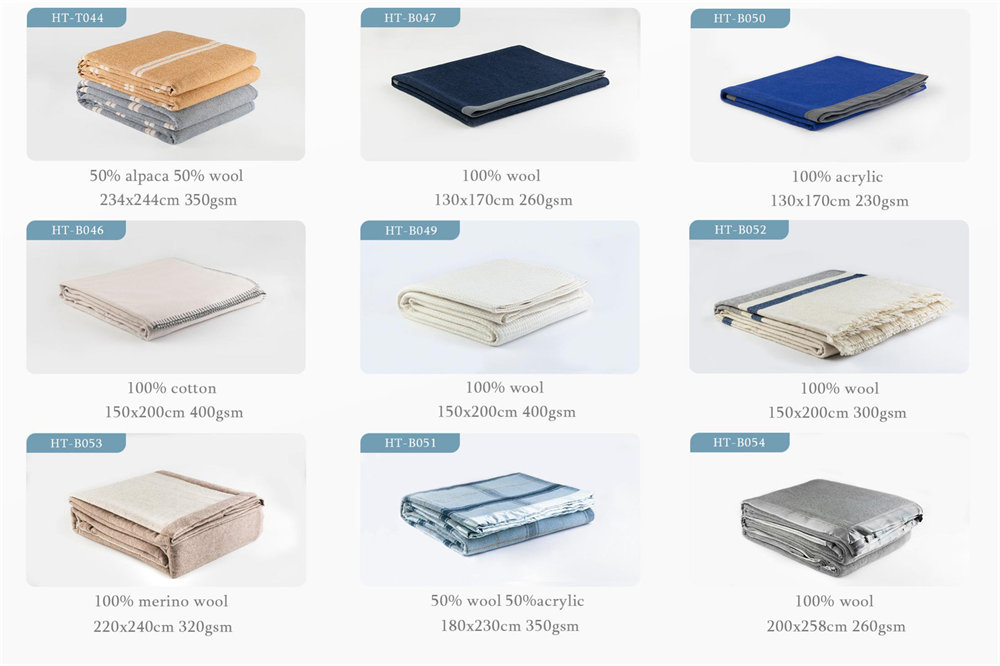
Material and blended ratio: A 60% polyester and 40% cotton blended fabric is recommended, achieving a balance between thermal insulation, breathability, and cleaning convenience. Pure cotton offers better breathability but higher weight and longer drying time; full polyester is lower cost with slightly better moisture resistance. Different materials suit different scenarios, and the selection rationale should be specified in the technical document.
Dimensions and tolerances: The recommended standard single-person size is 150×200cm, which accommodates most adults while serving dual use as both a blanket and mattress cover. The allowable tolerance range should be stated in the specification document (typically ±3cm) to avoid disputes arising from minor dimensional variances at arrival.
Weight per unit and insulation level: Unit weight directly determines thermal performance and portability. For temperate or subtropical disaster zones, standard configurations typically fall in a mid-range weight bracket; high-altitude cold-region resettlement projects are advised to use heavier configurations with higher insulation ratings. Specific weight per unit should be aligned with the supplier during the solution confirmation phase and clearly stated in the contract, including allowable deviation.
Fire-retardant performance: In enclosed or semi-enclosed resettlement sites, fire-retardant performance is a non-negotiable hard specification. The relevant domestic standard is GB/T 17927 (test methods for combustibility of bedding articles); for international aid projects, EN ISO 12952 (textiles—burning behavior of bedding articles, European standard) may be referenced. Both standards are subject to annual updates; when drafting tender technical annexes, it is advisable to confirm the applicable current valid version and note the specific test method code number, rather than writing only "passes fire-retardant standard," which is too vague.
Harmful substances and hygiene safety: For NGO projects and resettlement scenarios that include children and elderly persons, suppliers should be required to provide OEKO-TEX Standard 100 certification, confirming that harmful substance testing of the product meets the standard and mitigating risks of skin irritation or health concerns from prolonged contact.
Moisture resistance and storage stability: In long-term government stockpile blanket rotation cycle management, products should be required to maintain specified performance characteristics over the prescribed storage period in vacuum-compressed packaging, with no significant mold, insect damage, or odor. This directly impacts the annual procurement frequency and budget planning for government stockpiling projects, and the recommended storage shelf life and inspection requirements should be clearly specified in the contract.
4.2 Service Requirements (Soft Factors)
The following should also be written into procurement documents: delivery batch schedule and timeline (whether split delivery is supported); packaging and labeling requirements (outer packaging language, batch numbers and traceability information); compliance documentation list (types of test reports, certificate of origin format, declaration of conformity); and response time limits for after-sale and batch quality issues.
4.3 Special Population Considerations
For resettlement scenarios involving large numbers of children, elderly persons, or injured individuals, the technical specification document should additionally state: product fabric must not contain obvious irritating chemical substances; edges and corners must be smooth with no loose threads; a skin irritation test report may be considered as an optional supplementary requirement.
V. Supplier Screening: How to Quickly Build a Qualified Supplier List in an Unfamiliar Market?
When screening emergency relief blanket suppliers, start from hard information that lets suppliers prove themselves, rather than relying solely on sales representatives' self-introductions.
Basic qualification verification: Factory business license and lawful production credentials; ISO 9001:2015 quality management system certification (verify specific version number and validity date); if OEKO-TEX certification is held, verify the certificate number and whether it is within the validity period; fire-retardant testing must be issued by a qualified third-party laboratory, not solely an internal inspection record.
Production capacity and delivery capability assessment: When inquiring with suppliers, simultaneously ask about the maximum single-product monthly production capacity and current available capacity; whether there is documented experience with large-batch bulk supply of emergency relief blankets (a de-identified project reference description may be requested); whether urgent orders can be given production priority, and what the minimum lead time is for rush orders.
Why Prioritize an Integrated One-Stop Chinese Supplier?
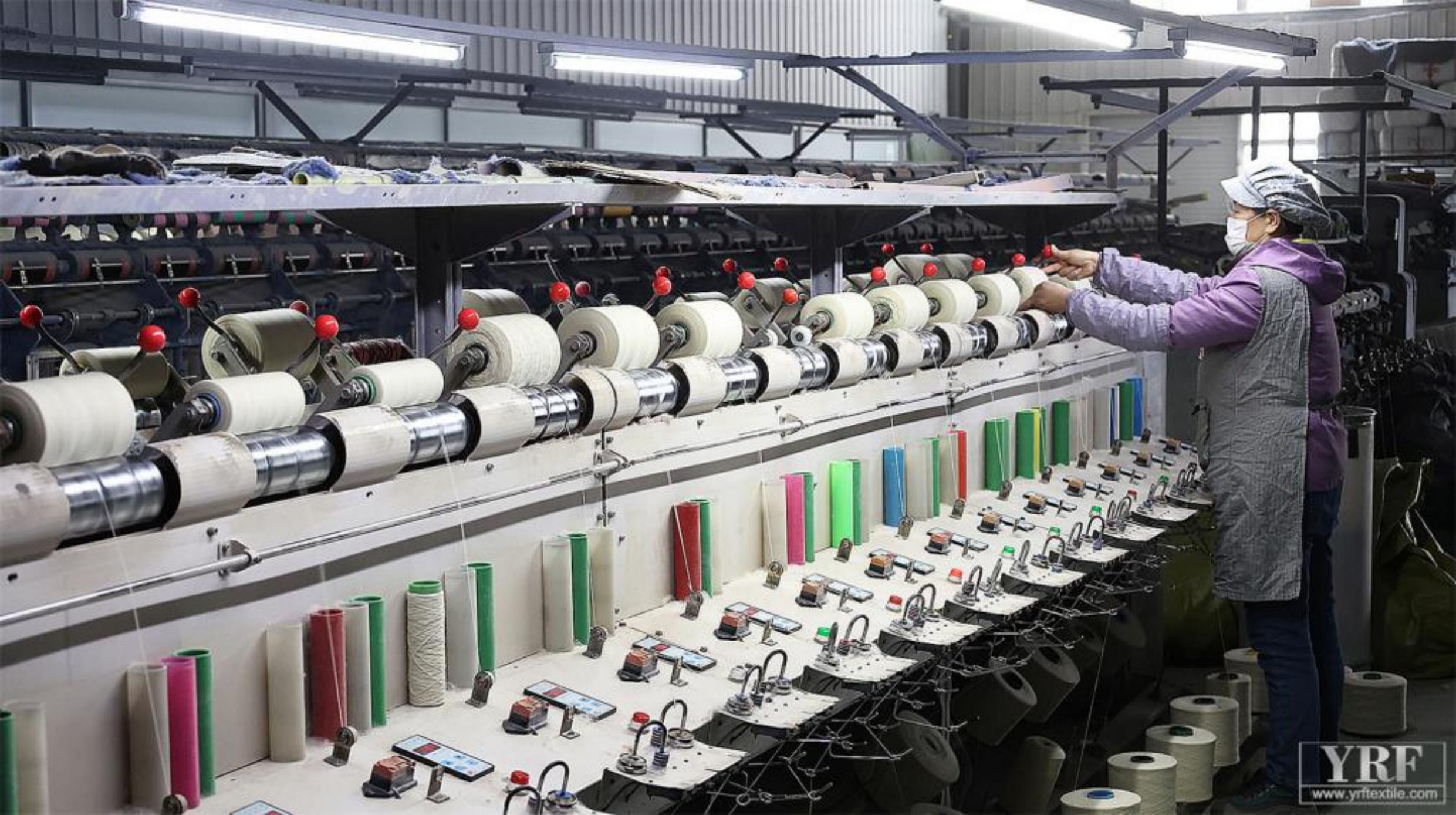
The core advantage of sourcing emergency relief blankets from China lies in: the complete textile industry chain concentrated within major manufacturing clusters, with short supply chains from raw materials to finished goods and high production capacity flexibility. Integrated suppliers with export service capability can typically provide complementary items such as emergency tents, moisture-proof mats, emergency sleeping pads, and first-aid supplies simultaneously, reducing the number of factories procurement teams must coordinate with and the number of customs clearance batches—particularly valuable for time-sensitive aid projects.
VI. Tendering and Negotiation Strategy
Selection Logic for Common Procurement Modes
For government bulk procurement of emergency relief blankets, the choice of procurement mode typically depends on project value and urgency:
Open tendering is appropriate for larger-value routine stockpiling projects not under emergency conditions, enabling adequate market competition and favorable price outcomes. Framework agreements are suitable for government departments with medium-to-long-term stockpiling needs or NGOs with recurring procurement requirements—a qualified supplier registry is established first, then drawdown occurs quickly when disaster strikes. Once a framework agreement is in place, emergency response time can be compressed from several weeks to a matter of days. Competitive negotiation / inquiry is appropriate for medium-scale projects with clear technical specifications and moderate time pressure. Single-source procurement is only used when there is a genuinely unique feasible supplier or under extreme emergency conditions, and must be accompanied by sufficient written justification.
Negotiation Should Not Focus Only on Price
During emergency relief blanket procurement contract negotiations, focusing solely on unit price is the approach most likely to cause downstream losses. More important negotiation focal points include: precise confirmation of technical specifications (dimensional tolerances, weight allowable deviation); specific milestone dates in the split delivery schedule; sampling inspection ratios and mechanisms for handling non-conforming products; and a pre-arrival notification obligation 3–5 days before delivery to allow time to arrange acceptance personnel.
Opportunity points for suppliers and distributors: Proactively participating in framework agreement construction typically delivers more long-term value than bidding project by project. Once included in a government or NGO qualified supplier registry, procurement teams can quickly and compliantly draw on those suppliers during emergency response, without needing to restart a full tender process.
VII. Contract Terms, Delivery, and Acceptance Arrangements
Key Contract Terms Checklist
The following are core items that must be explicitly agreed upon in every emergency relief blanket procurement contract:
(1)Technical specifications and tolerances: Clearly specify dimensions (150×200cm, ±3cm allowance), weight per unit (state measured value and allowable deviation), material composition (e.g., 60% polyester / 40% cotton), and key performance criteria (fire-retardant level referencing standard code number).
(2)Sampling inspection ratio and method: Agree on the sampling inspection ratio upon arrival (e.g., 3–5% per batch), the inspection item list, and the criteria for determining non-conformance.
(3)Delivery arrangements: Quantity per batch, estimated arrival dates, and penalty terms for delayed delivery.
(4)Non-conforming product handling: Response time limit upon discovery of batch quality issues (recommended not to exceed 5 business days), which party holds the choice between replacement and refund, and which party bears the logistics cost.
(5)Warranty period: Clearly state the warranty start date (based on the arrival acceptance date), the warranty term, and the types of defects covered.
Arrival Acceptance Checklist
The following item-by-item confirmation checklist is recommended, rather than relying solely on visual inspection:
Appearance and workmanship: Inspect a sample of units for damage, stains, obvious loose threads, or severe color variation.
Dimensions and weight: Measure dimensions against contract specifications and confirm deviations are within tolerance.
Material and fire-retardant re-verification: For projects with specific weight-per-unit and fire-retardant requirements, arrange for a third-party laboratory to re-test arrived samples and confirm consistency with factory test reports.
Packaging and labeling: Check packaging integrity, batch labels, language labeling accuracy, and the seal status of vacuum-compressed packaging.
Quantity verification: Verify that the actual quantity delivered matches the packing list and contract; record any discrepancies and contact the supplier promptly.
Problems found at the acceptance stage can still be remedied. Once supplies are fully warehoused and distributed, the cost of attribution and re-procurement multiplies significantly.
The Practical Value of Two-Stage Delivery
For projects involving 5,000 units or more, a two-stage delivery approach is recommended: the first delivery covers approximately 15–20% for on-site trial distribution, with feedback collected from end users; after making minor adjustments based on feedback, the main delivery is completed as planned. This approach can effectively reduce the risk of discovering problems only after the entire batch has arrived, without significantly extending the overall timeline.
VIII. Government Procurement vs. NGO Procurement: Differences in Priorities and Communication Strategy
Government emergency and disaster-prevention departments procuring national emergency stockpile blankets are most concerned with: complete procedural documentation, provable standards compliance, and a one-to-one correspondence between acceptance documents and budget line items. When communicating with government procurement teams, suppliers should proactively provide a complete qualification document package—business license, production license, test reports, certification certificates—as well as quotations and contract appendices organized in a format that maps to budget line items.
NGOs / international aid organizations are more focused on procurement efficiency, beneficiary safety standards, and whether cross-border customs clearance compliance documents can be provided in full (certificate of origin, health certificate, declaration of conformity, etc.). For NGO procurement teams, more valuable than a price quote is often a supplier proactively stating: "We have supported similar international aid projects, and here is the typical customs clearance document checklist we usually prepare"—this kind of information significantly reduces execution pressure on procurement teams and reflects the supplier's credibility in terms of project experience.
IX. Five Typical Errors and How to Avoid Them
Error One: Focusing Only on Unit Price, Ignoring Technical Specification Compliance
The procurement team compares only price lists without verifying whether weight per unit and fire-retardant levels meet project requirements. When supplies arrive, they fail acceptance or generate large volumes of complaints during use.
Prevention: Lock in key technical specifications in tender / inquiry documents. Any bid that falls below specification thresholds should be excluded from the evaluation process, making technical compliance a prerequisite for bid validity.
Error Two: Emergency Procurement Without Documentation
In emergency conditions, all procedures are abandoned. During subsequent audits, the team cannot explain why a specific supplier was chosen, and decision-makers face enormous compliance pressure.
Prevention: Even with a simplified process, retain a needs statement document, supplier selection rationale, and price reasonableness explanation. Even verbal price comparisons must be documented in writing within 24 hours.
Error Three: Failing to Verify Production Capacity and Lead Times
The factory's current production capacity and order backlog are not assessed before contract signing. The team discovers near the delivery date that on-time full-quantity delivery is not feasible.
Prevention: During the inquiry phase, directly ask about current available production capacity and require a reference delivery description for a recent large-batch project. Build a tiered late-delivery penalty structure into the contract.
Error Four: Vague Contract Terms, Unclear Responsibility Boundaries
Only total price and total quantity are agreed upon, without specifying dimensional tolerances, weight deviations, or non-conforming product handling procedures. When problems arise, both parties disagree on the facts.
Prevention: Use the key terms checklist in Section VII to write "criteria for determining non-conformance" and "which party holds the choice between replacement and refund" as explicit line items in the contract.
Error Five: Over-specification, Significantly Inflating Comprehensive Cost
The technical specification document sets standards far exceeding actual use scenario requirements—for example, requiring arctic-grade insulation for a short-term resettlement project in a temperate region. This drives procurement unit cost well above actual needs and reduces budget efficiency.
Prevention: Use a "baseline configuration + upgrade option" selection approach. First define a minimum viable configuration that covers the vast majority of scenarios, then design an upgrade option for high-risk areas or extreme climates. Avoid one-size-fits-all over-specification that causes unnecessary cost waste.
X. Qualified Supplier Capability Checklist
Before selecting an emergency relief blanket procurement supplier, the following capability dimensions are recommended for item-by-item verification:
(1)Qualification and compliance capability: Holds ISO quality management system certification (verify specific version number); can provide third-party fire-retardant test reports and OEKO-TEX certification; can provide all compliance documents in formats required by the project.
(2)Production capacity and delivery capability: Stable production capacity for medium-to-large orders (thousands to tens of thousands of units); can provide an urgent order production scheduling plan and commit to a latest delivery date in the contract.
(3)Quality control capability: Has complete incoming material inspection, in-process sampling inspection, and finished product outbound inspection procedures; supports third-party factory inspection and buyer-stationed supervision.
(4)Customization and product complement capability: Supports customization of dimensions (e.g., single-person 150×200cm), weight per unit, color, packaging format, and labeling; can simultaneously provide moisture-proof mats, emergency sleeping pads, emergency tents, first-aid supplies, and other complementary supplies.
(5)Export service capability: Holds export qualifications; is familiar with destination country customs clearance requirements; can provide multilingual documents; supports full-container sea freight and multi-destination distribution.
(6)Documentation and project coordination capability: Can provide technical documents, test reports, and acceptance coordination materials in formats required by procurement teams; for NGO projects, can assist in preparing audit report appendices required by donors.
XI. YRF's Role in Similar Projects
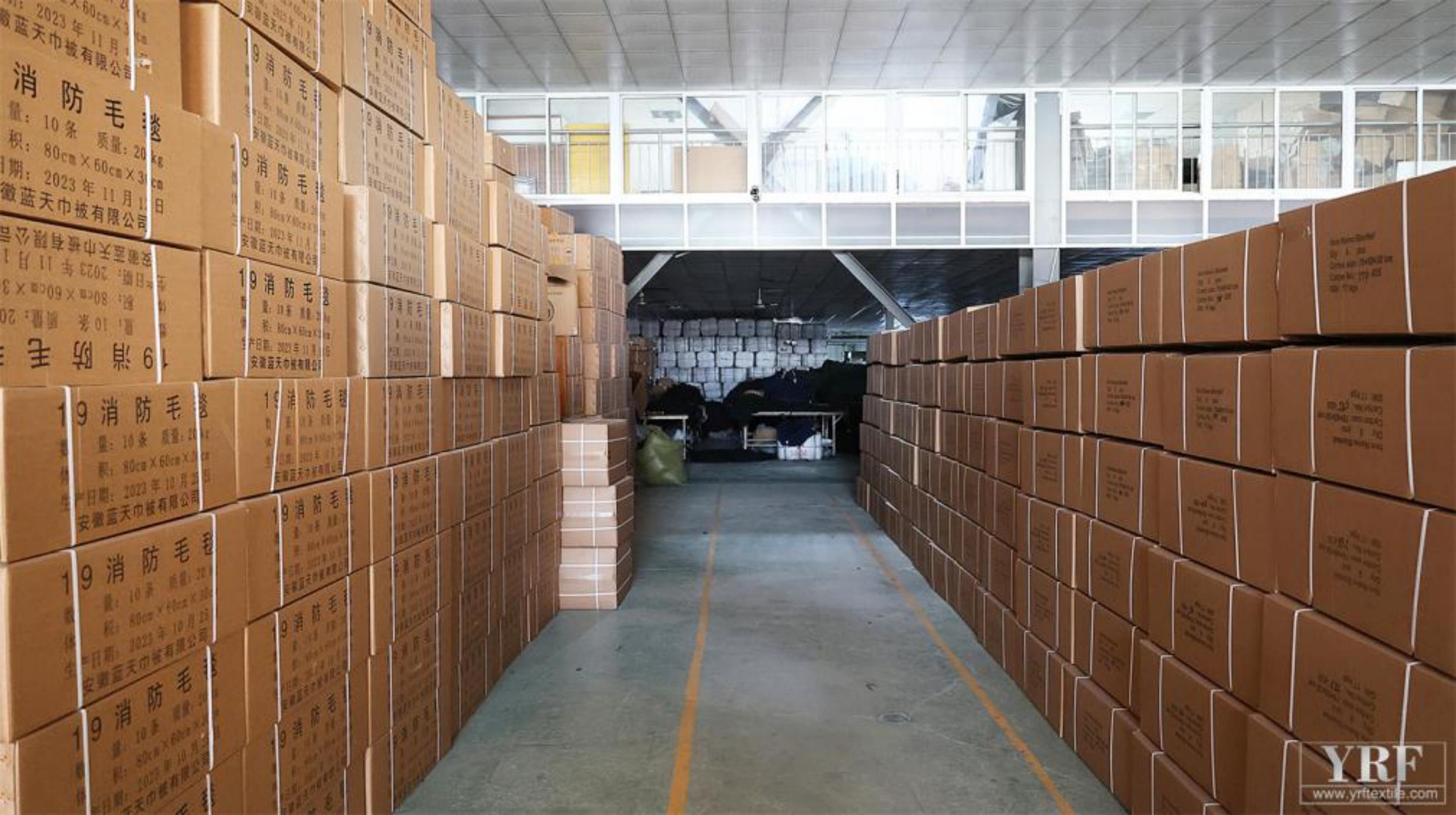
YRF Emergency Relief Supplies is a one-stop source manufacturer in China specializing in emergency relief supplies. In the area of bulk supply of emergency relief blankets and related complementary supplies, YRF offers the following reference support capabilities:
Solution phase: Based on the project's population scale, resettlement scenario, climate zone, and budget framework, YRF can assist in drafting a technical specification outline. For procurement teams in the process of drafting tender document technical annexes, YRF can provide anonymized technical clause examples for internal discussion and benchmarking purposes, without involving any specific client information.
Product conformance: The emergency relief blankets supplied by YRF hold OEKO-TEX harmful substance safety certification and ISO quality management system certification, with third-party fire-retardant test reports available. The single-person 150×200cm size is a standard in-production specification, supporting customization of the 60% polyester and 40% cotton blended fabric ratio, weight per unit, and color; vacuum-compressed packaging is standard, suitable for large-volume warehousing and cross-border transportation.
Execution phase: Supports split-batch delivery; can coordinate with third-party factory inspection and buyer-stationed sampling; has full-container sea freight experience and can assist in preparing certificates of origin, OEKO-TEX certificate copies, packing lists, and other cross-border customs clearance compliance documents. For NGO aid projects with time constraints, an urgent production scheduling plan can be provided after assessing current production capacity.
Complementary supplies: Emergency tents, moisture-proof mats, emergency sleeping pads, first-aid supplies, and other complementary items can be provided on a one-stop basis, reducing the number of factories procurement teams must coordinate with and the number of customs clearance batches, lowering overall project coordination costs.
YRF has accumulated delivery experience across project types including national stockpiling and NGO cross-border aid. For teams planning government bulk procurement of emergency relief blankets or large-scale international aid projects, a project overview may be submitted through the contact window on this site. YRF can provide a reference material configuration outline and key considerations to help reduce the exploratory workload during the tender preparation phase; all final arrangements are subject to the formal contract signed by both parties.
For a comprehensive overview of China's emergency relief supply providers, you may refer to this site's article: Top 10 Emergency Relief Blanket Manufacturers in China | 2026 Official Purchase Recommendation.
Main keyword: emergency relief blanket
Long-tail keywords: government emergency stockpiling and NGO relief projects, bulk procurement of emergency relief blankets, emergency relief blanket technical specification document, government-stockpiled emergency relief blankets, humanitarian aid project emergency blankets, emergency procurement of emergency relief blankets under emergency conditions, sourcing emergency relief blankets from China, government bulk procurement of emergency relief blankets, 60% polyester and 40% cotton blended fabric, emergency relief blanket procurement contract, bulk supply of emergency relief blankets, emergency relief blanket procurement supplier, national emergency stockpile blankets, cross-border customs clearance compliance documents, government stockpile blanket rotation cycle
Liens amicaux :
droits dauteur © Custom Disaster - Relief Bedding: Tents, Sleeping Bags, Blankets Tous les droits sont réservés
léquipe professionnelle au service !