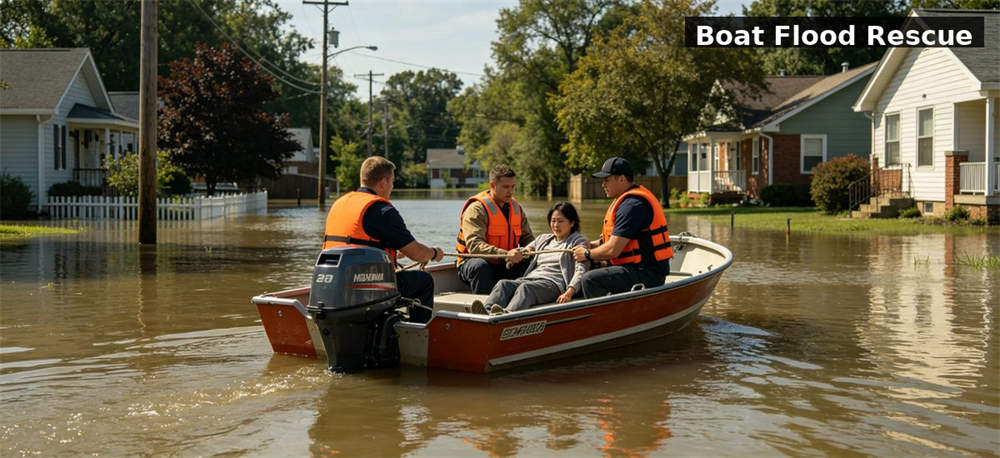
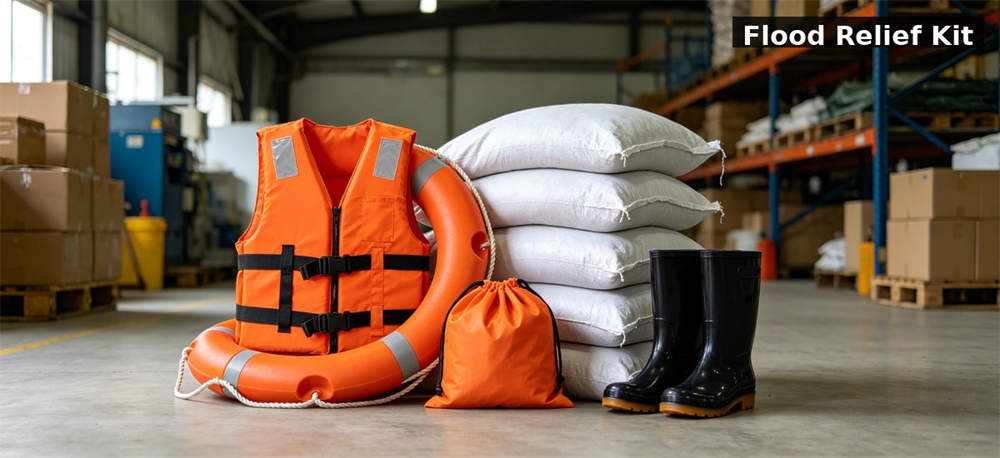
Flood response needs five different product groups: wearable flotation (life jackets), throwable flotation (lifebuoys), throwing lines (throw bags), water exclusion (sandbags) and personnel protection (rain boots). Each group has its own specifications, sizing and acceptance method. We supply all five from stock production, with bulk quantities available for government tenders, humanitarian programmes and emergency stockpiles.
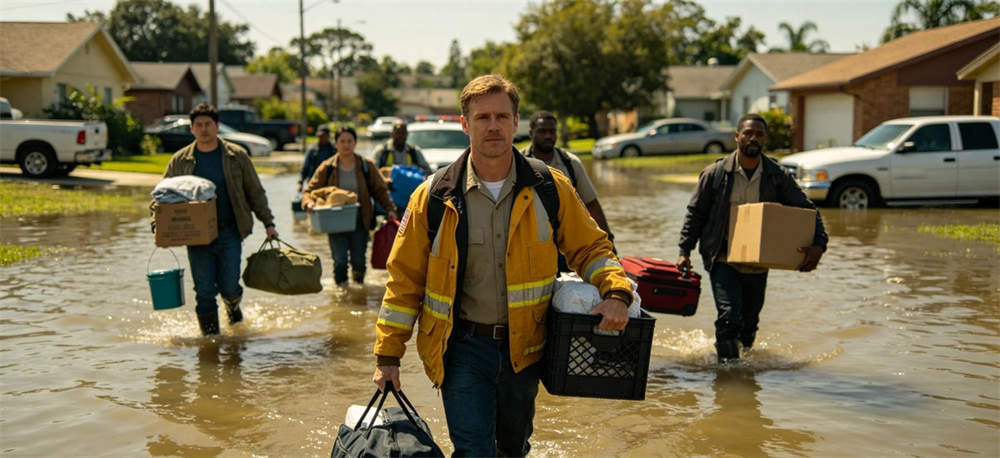
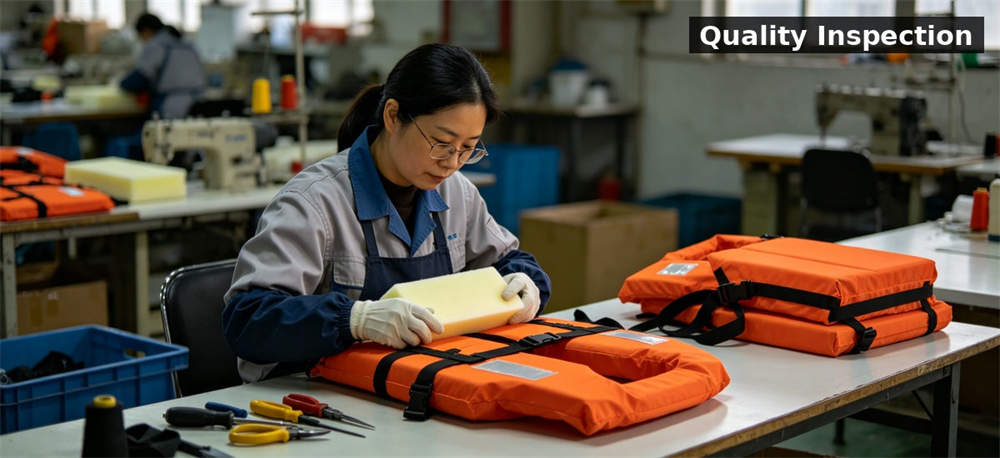
All products are manufactured to common international standards — life jackets to ISO 12402, lifebuoys to SOLAS/CCS, sandbags to flood-control specifications. We can help arrange third-party test reports based on your project requirements. Standard colours and sizes are available from our regular production schedule; custom colours and logos can be arranged for institutional orders.
Compare these categories to build a complete flood response kit.
Water Rescue EquipmentFlood Disaster Relief Products (Current)
Life Jackets Lifebuoys
Five product groups, five different jobs. Match your flood scenario first, then check the detailed comparison below.
|
Parameter |
Life Jacket |
Lifebuoy |
Throw Bag |
Flood Sandbag |
Rain Boots |
|
Primary function |
Wearable flotation |
Throwable flotation |
Throwing rescue line |
Water exclusion/barrier |
Foot protection |
|
Key spec |
Buoyancy 50-150N |
Buoyancy ≥14.5kg |
Rope 15-31m, floating |
Size 30×66cm, 15-25kg fill |
Height 32-40cm, PVC |
|
Standard |
ISO 12402 |
SOLAS/CCS |
No universal standard |
Flood-control spec |
EN ISO 20345 (safety) |
|
Allocation |
By wearer and size |
By site/vehicle |
By rescuer/team |
By site length |
By wearer and size |
|
Typical weight |
0.5-1.2kg |
2.5-4.3kg |
0.9-1.2kg |
0.15-0.3kg empty |
1.6-2.0kg/pair |
|
Colour |
Orange/yellow hi-vis |
Orange/white |
Orange/blue |
White/orange/green |
Black/yellow/green |
|
Packing |
1 pc/bag, 50/carton |
1 pc/bag, 10/carton |
1 pc/bag, 30/carton |
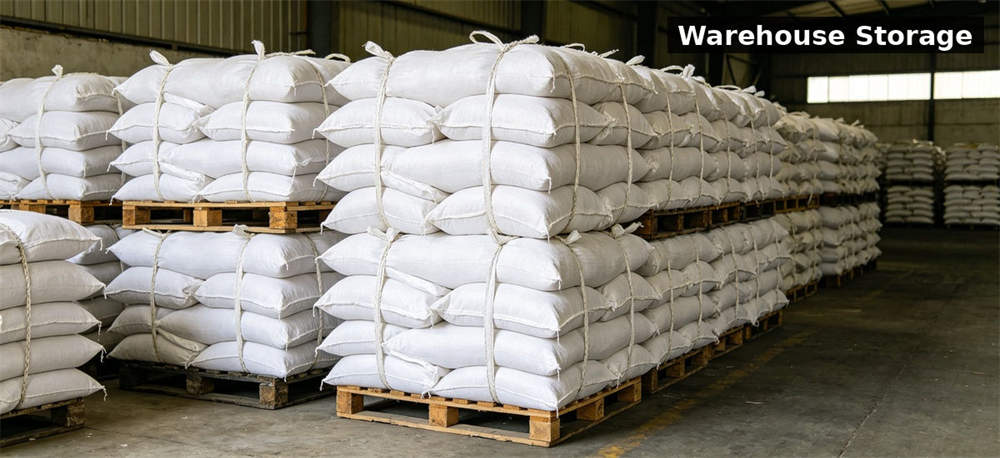
100/bundle, 500/carton |
1 pair/box, 10 pairs/carton |
|
Best for |
Rescuers, boat crews |
Bank-side, fixed posts |
Mobile rescue teams |
Levees, doorways, barriers |
All flood personnel |
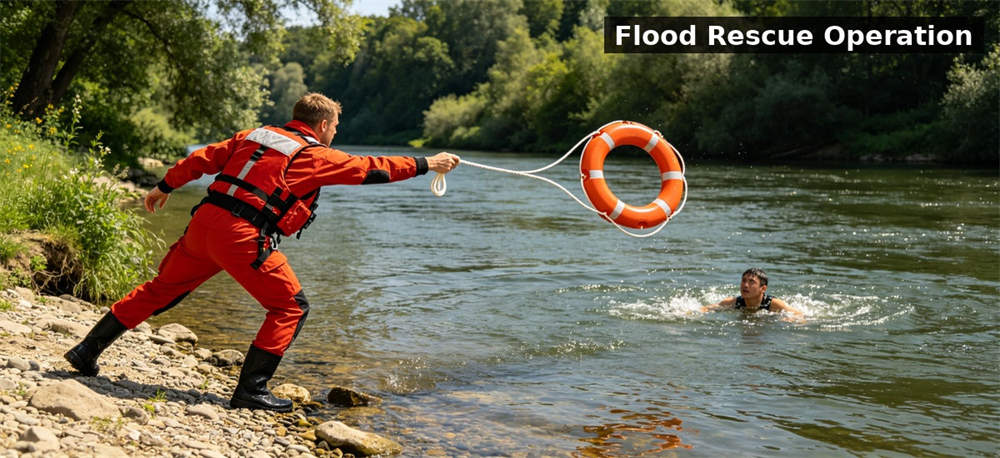
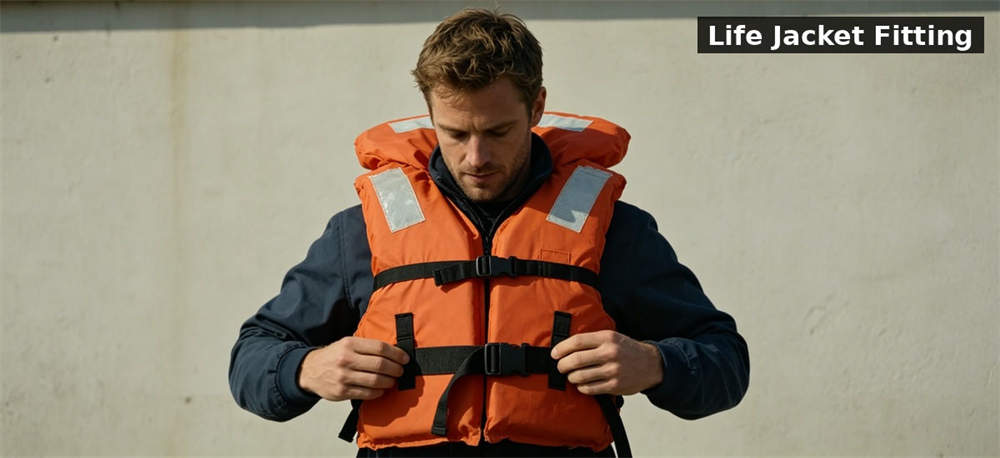
Life jacket buoyancy is measured in Newtons (N). Higher numbers mean more flotation. The right level depends on the water conditions and the wearer.
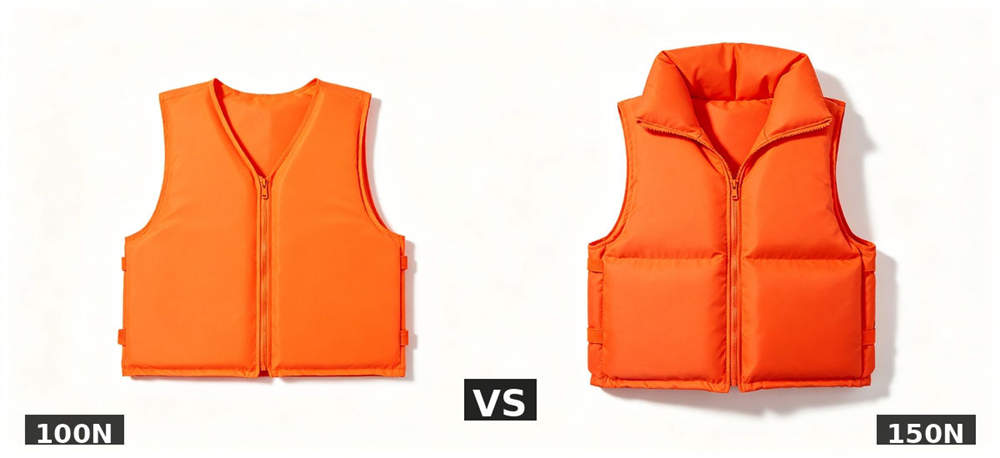
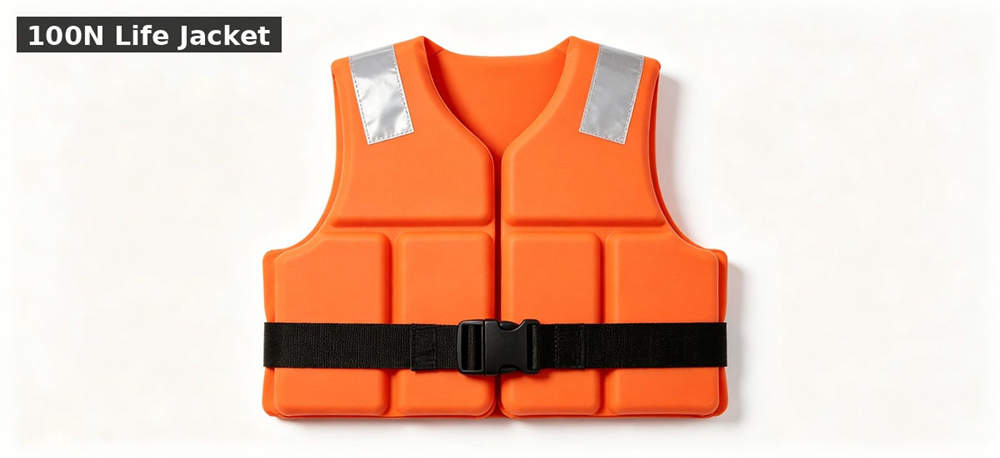
The 100N model provides approximately 10.2kg of buoyancy, suitable for calm inland water, canals and near-shore areas where the wearer can swim. It uses EPE foam inside an Oxford cloth cover, with adjustable side straps and quick-release buckles. Standard features include 360° reflective tape and a rescue whistle. One size fits most adults (chest 80-120cm). This is the most common model for community flood response teams and general-purpose water rescue.
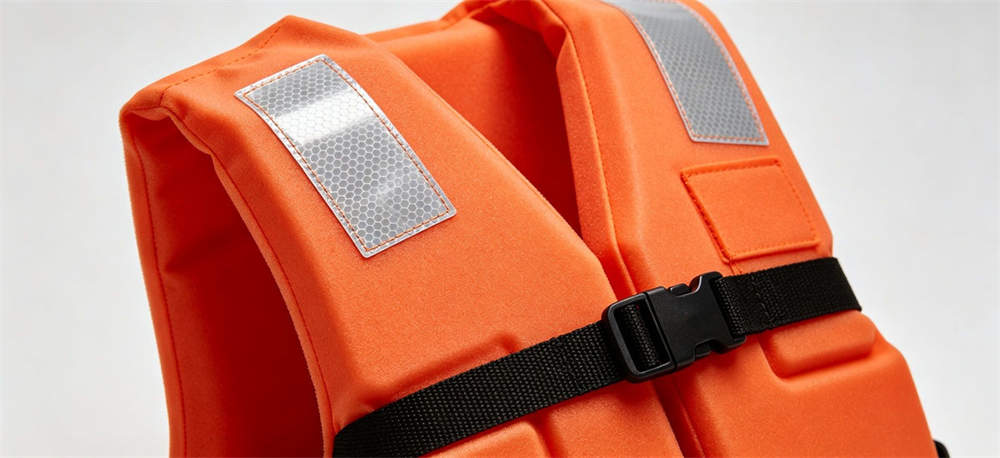
Specifications: Buoyancy 100N (ISO 12402-4), weight ~0.6kg, orange, one-size adjustable, EPE foam + Oxford cloth.
The 150N model provides approximately 15.3kg of buoyancy, designed for moving water, offshore conditions and wearers who may be unconscious. It can turn an unconscious person face-up in the water. Thicker foam panels and a collar support the head. Includes crotch strap to prevent the jacket from riding up, reflective tape and whistle. Suitable for professional rescue teams, flood response in fast-flowing water and boat crews.
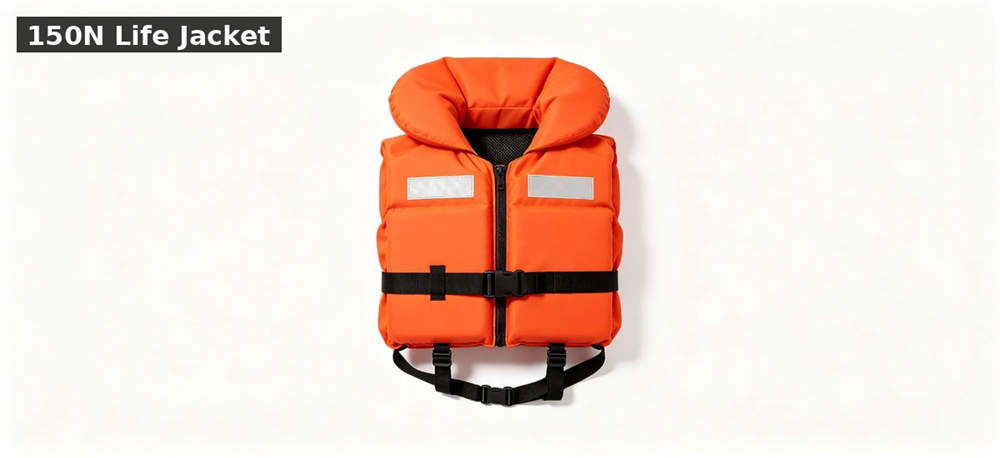
Specifications: Buoyancy 150N (ISO 12402-3), weight ~1.0kg, orange, sizes S/M/L/XL, EPE foam + Oxford cloth, crotch strap included.
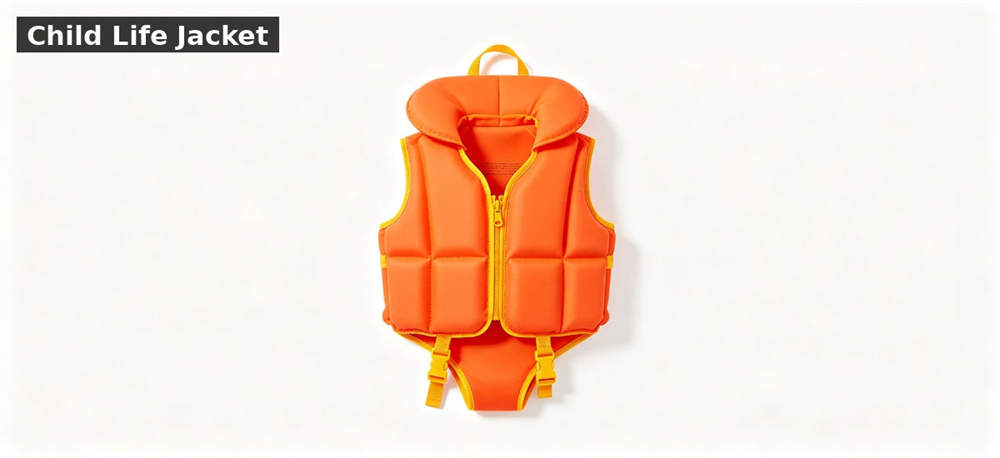
Child-sized models use smaller foam panels and a crotch strap as standard to keep the child upright. Available in two sizes: infant (10-20kg body weight) and child (20-40kg). Higher visibility colours and a grab handle on the collar help rescuers pull the child from the water. Schools, community programmes and humanitarian projects often include child sizes in flood stockpiles.
Specifications: Buoyancy 50-100N by size, weight 0.3-0.5kg, orange/yellow, infant/child sizes, head support collar.
A lifebuoy is a throwable ring designed to be tossed from the bank or a boat. The standard adult size is consistent worldwide.
The standard adult lifebuoy has an outer diameter of 710mm, inner diameter of 440mm and thickness of 105mm. It provides at least 14.5kg of buoyancy — enough to support an adult in water for 24 hours. The shell is high-density polyethylene (HDPE) filled with closed-cell polyurethane foam. Four equal-spaced reflective strips around the ring aid night visibility. This is the standard model for flood response, ships and fixed rescue stations.
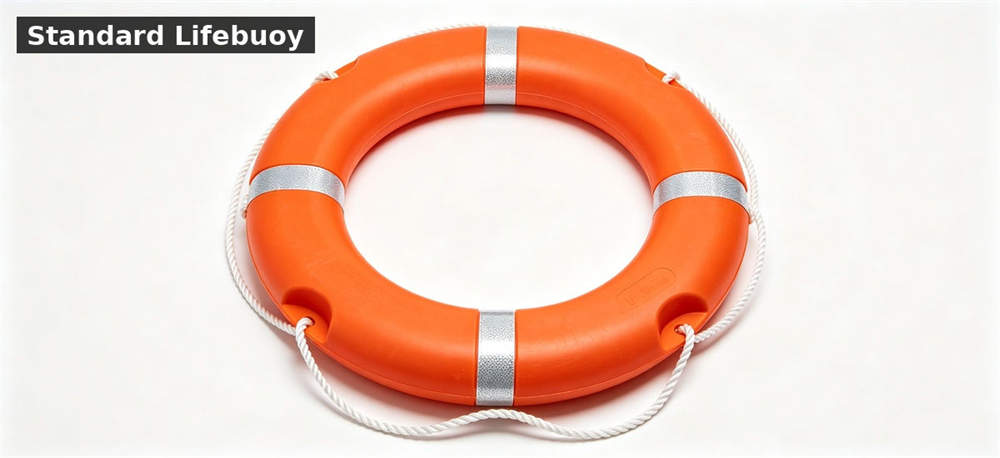
Specifications: OD 710mm / ID 440mm / thickness 105mm, buoyancy ≥14.5kg, weight 2.5kg, HDPE shell + PU foam, orange, CCS/SOLAS.
The heavier 4.3kg model includes a self-igniting light and orange smoke signal for night and daytime visibility. When the lifebuoy enters the water, the light activates automatically and the smoke signal releases orange smoke for 15-20 minutes. Used on commercial vessels and offshore installations. For flood response, the standard 2.5kg model is usually sufficient unless the project specifically requires signalling devices.
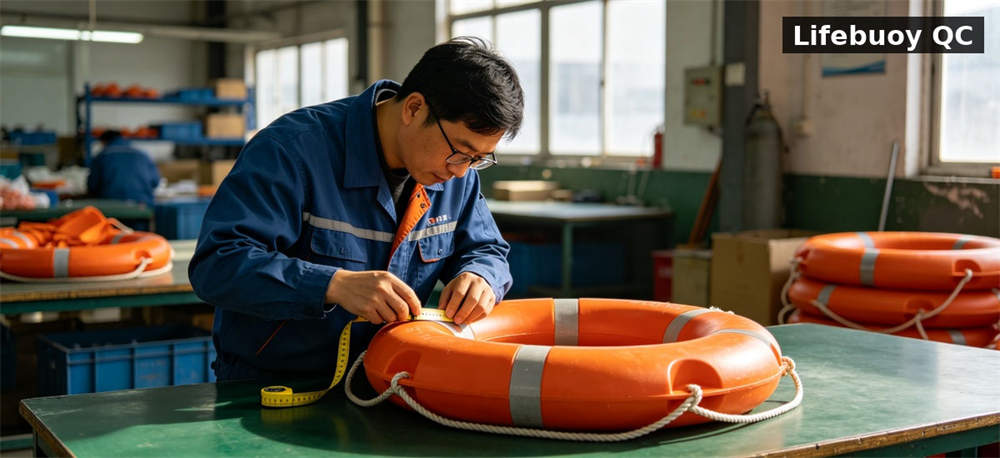
Specifications: OD 710mm / ID 460mm / thickness 110mm, buoyancy ≥14.5kg, weight 4.3kg, self-igniting light + smoke signal, HDPE + PU foam.
Most projects order the lifebuoy with a 30m floating line attached. The line is polypropylene (floats in water), 8mm diameter, coiled and stored in a line pouch next to the lifebuoy bracket. Wall brackets and rail mounts are available for fixed installations. For flood stockpiles, we recommend the lifebuoy + 30m line + bracket as a complete set.
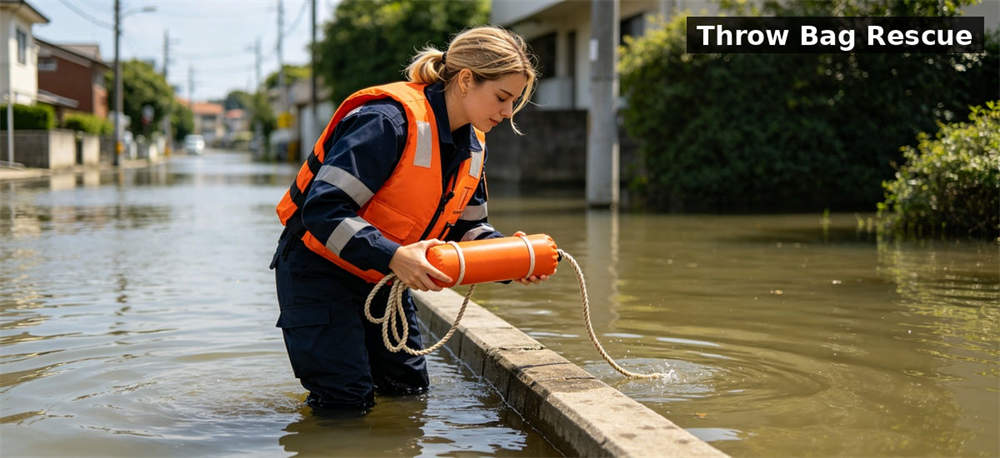
A throw bag is a compact bag containing a floating rope, designed to be thrown to a person in the water. The rescuer holds one end of the rope, the bag carries the other end to the victim.
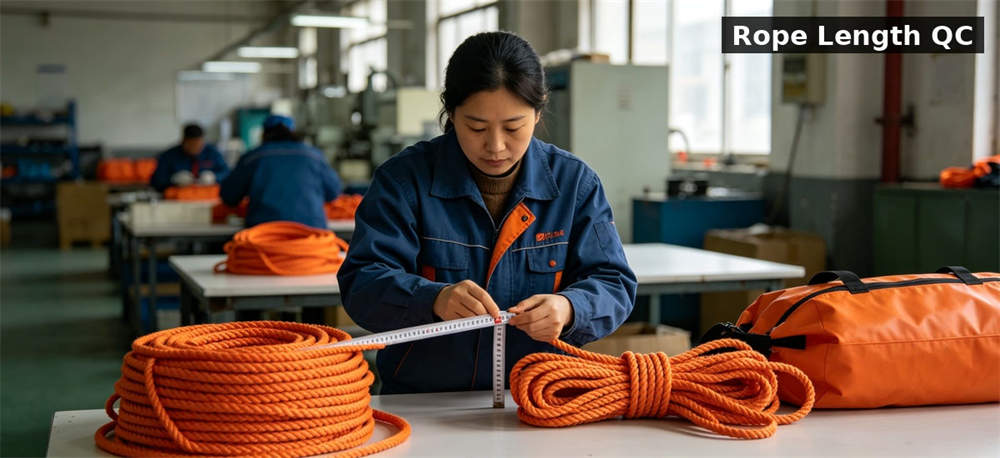
The 15m model is compact enough to wear on a belt or store in a rescue vest pocket. It uses 6mm diameter polypropylene floating rope with a minimum breaking strength of 12kN (1200kg). The bag body is waterproof Oxford cloth with an 18mm EPE foam disc in the base so the bag floats if dropped in water. Ideal for kayak rescue, swift-water teams and individual rescuers who need mobility.
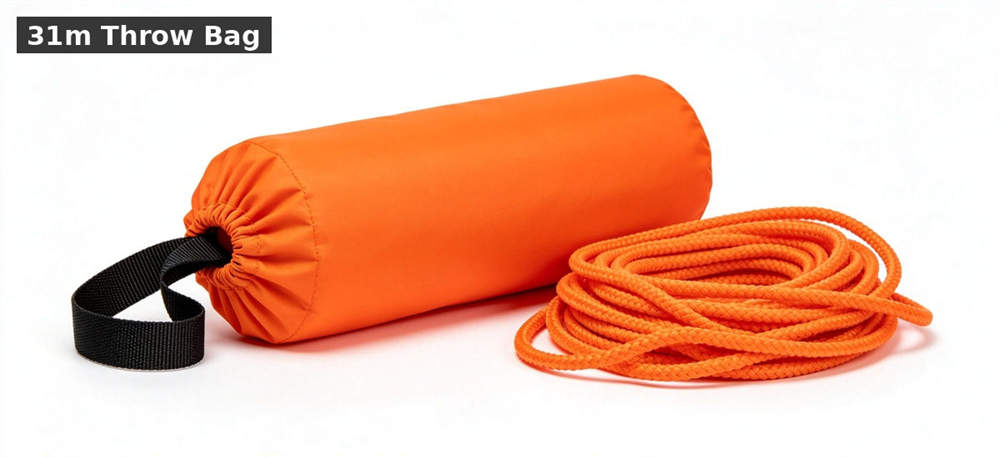
Specifications: Rope 15m × 6mm PP floating, bag weight ~0.7kg, waist belt included, orange, breaking strength ≥12kN.
The 31m model is the most common length for flood rescue and bank-side operations. It uses 8mm diameter polypropylene floating rope. The larger bag holds more rope and includes a quick-draining mesh panel. The foam base keeps the bag afloat. This is the standard model for community flood teams, fire departments and humanitarian stockpiles. Effective throwing distance is approximately 20-25m (the full 31m allows for rope pay-out and recovery).
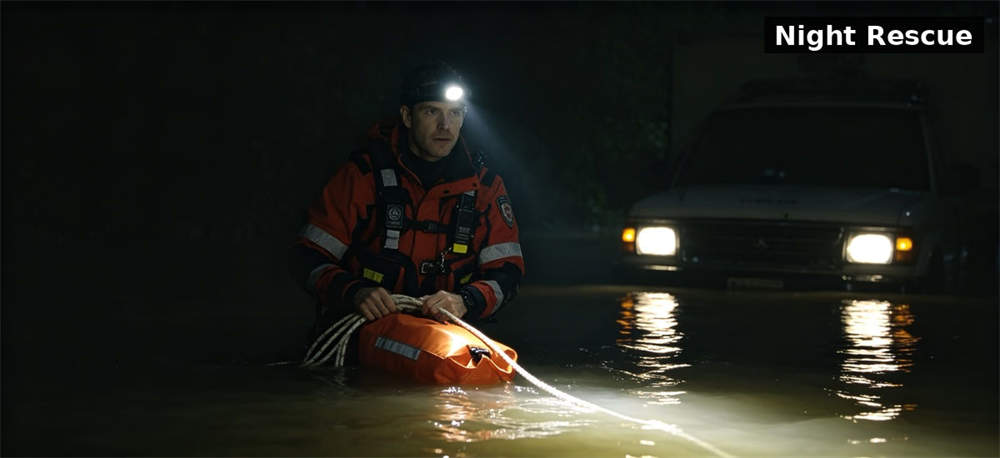
Specifications: Rope 31m × 8mm PP floating, bag weight ~0.95kg, 30cm × 13.5cm, orange/blue, breaking strength ≥12kN, EPE floating base.
For night operations or low-visibility conditions, the reflective rope model uses 6mm or 8mm rope with reflective strands woven in. The rope glows under torchlight or vehicle headlights, making it visible during evening rescues. Otherwise identical to the standard 31m model. Recommended for teams that may operate after dark.
Specifications: Rope 31m × 8mm reflective PP floating, bag weight ~1.0kg, high-visibility orange, reflective rope.
Sandbags are the most common tool for temporary water exclusion. Two main types are available: traditional fill-your-own bags and water-absorbent bags that expand on contact with water.
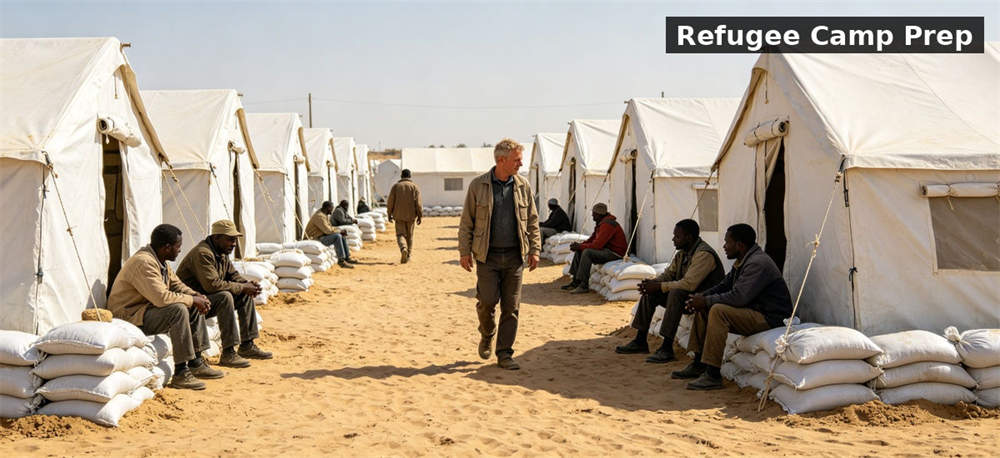
The standard flood sandbag is made from woven polypropylene (PP), 80-100g/m², with a folded and stitched bottom. Size 30cm wide × 66cm long. Fill with sand or soil to two-thirds full (approximately 15-20kg) — do not overfill, as overfilled bags do not stack well and leave gaps. Close the top by tying with twine or using the attached drawstring. UV-treated for outdoor storage. This is the most economical and widely used model for flood barriers, doorway protection and levee reinforcement.
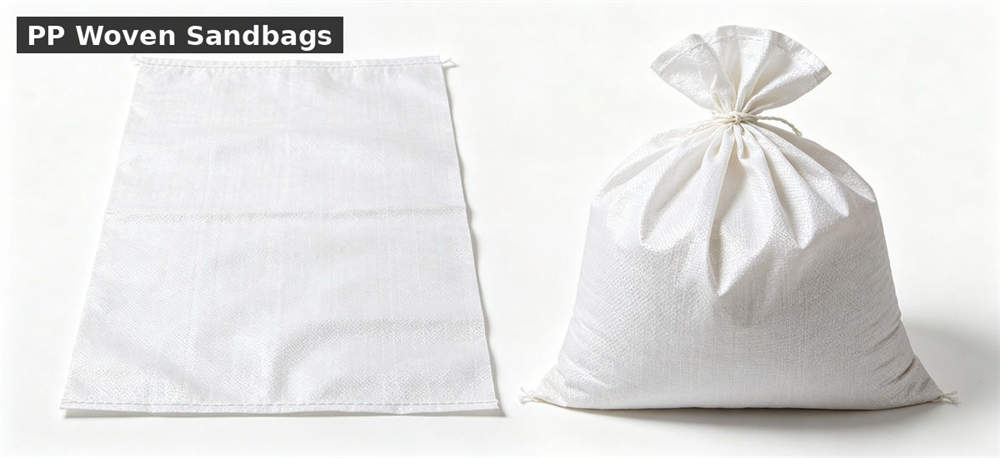
Specifications: 30×66cm, PP woven 80-100g/m², fill 15-20kg (2/3 full), UV treated, tie closure, white/orange/green, 100 bags/bundle.
The canvas model uses 100-120g/m² cotton canvas or organic silicone-coated canvas, which is more durable and reusable than PP woven. Size 40cm × 70cm, fills to 25-30kg. Heavier duty for long-term deployment or areas with rough handling. Canvas bags breathe better and are less likely to split when dropped, but they are more expensive and can rot if left wet for long periods. Suitable for military, professional rescue and repeated-use scenarios.
Specifications: 40×70cm, canvas 100-120g/m², fill 25-30kg, drawstring closure, olive green/tan, reusable.
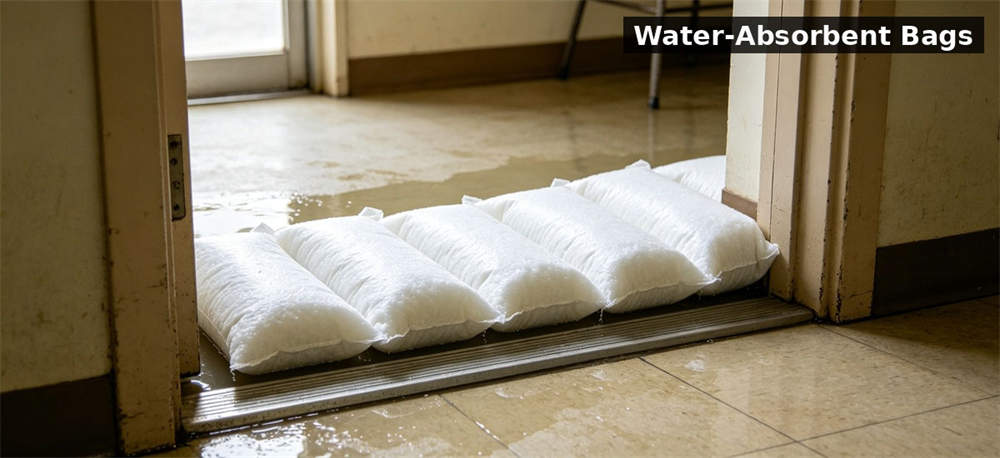
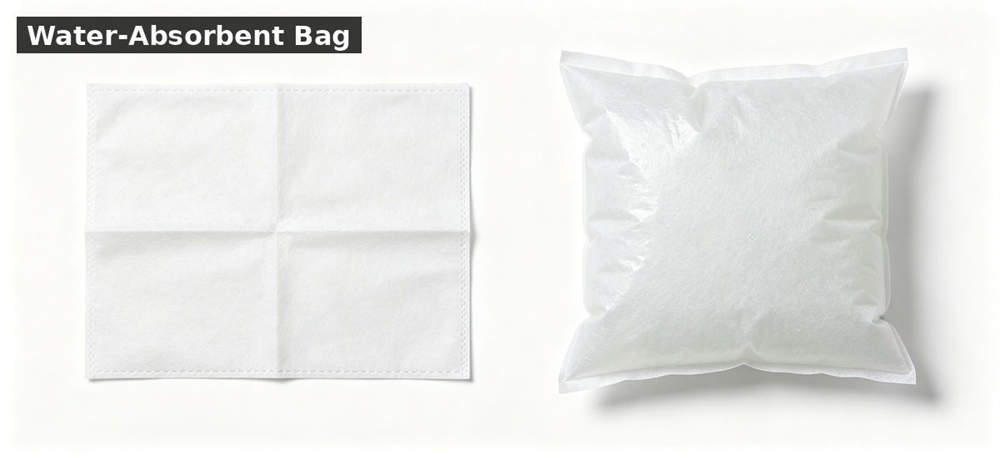
The expansion bag contains super-absorbent polymer (SAP) granules. Dry weight is approximately 500g. When placed in water, it absorbs up to 24kg of water within 3-5 minutes and expands into a solid barrier. No sand or filling required — simply place the bag in position and add water. Ideal for rapid deployment where sand is not available, or for indoor use (doorways, basement entrances) where carrying sand is impractical. After use, unexpanded bags can be stored dry; expanded bags are disposed of as waste.
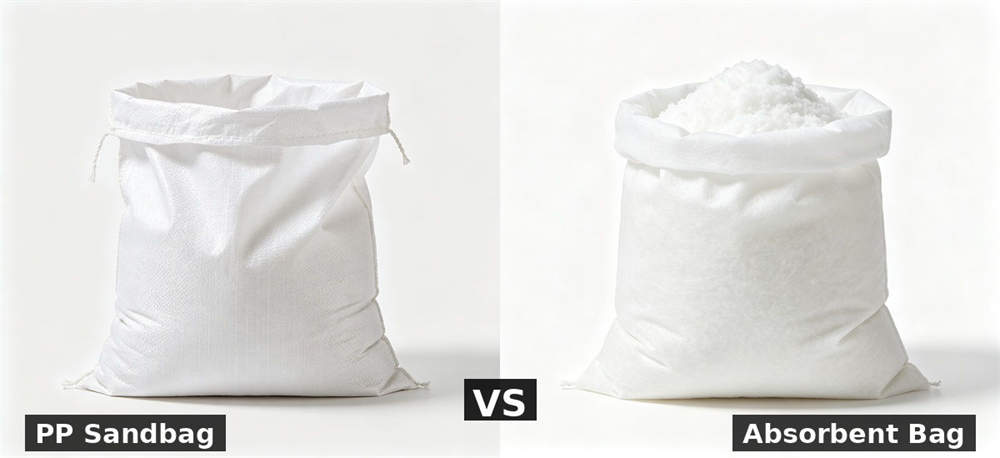
Specifications: 40×60cm, SAP 180-200g, dry weight 500g, expanded weight 24kg±2kg, non-woven fabric, no sand needed.
For a standard flood barrier (pyramid stack, 1 bag high per row, each row offset): approximately 6-10 bags per linear metre for a 30cm-high barrier. A 10-metre doorway barrier needs about 60-100 bags. A 50-metre levee section needs about 300-500 bags. Always order 10-15% extra for breakage and placement errors. Water-absorbent bags cover the same length but need water on site to activate.
Rain boots protect feet from water, mud and contaminants during flood operations. PVC is the standard material — waterproof, easy to clean and resistant to common chemicals.
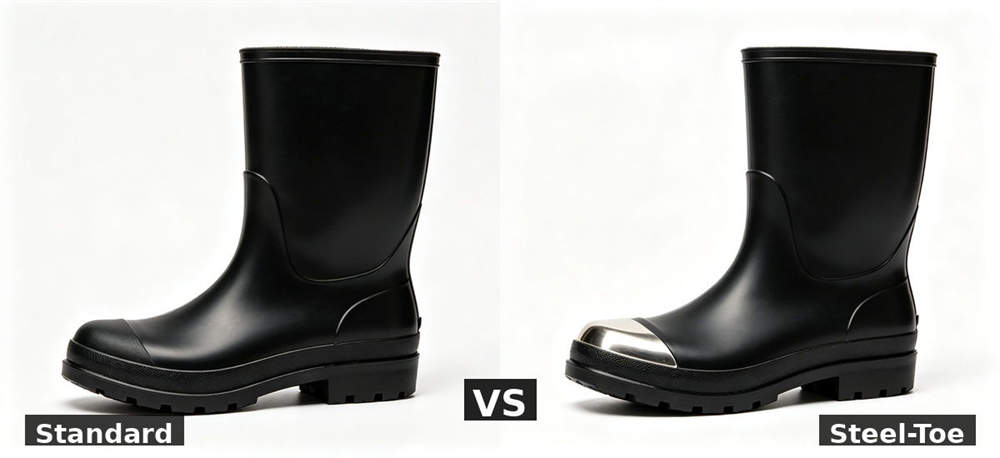
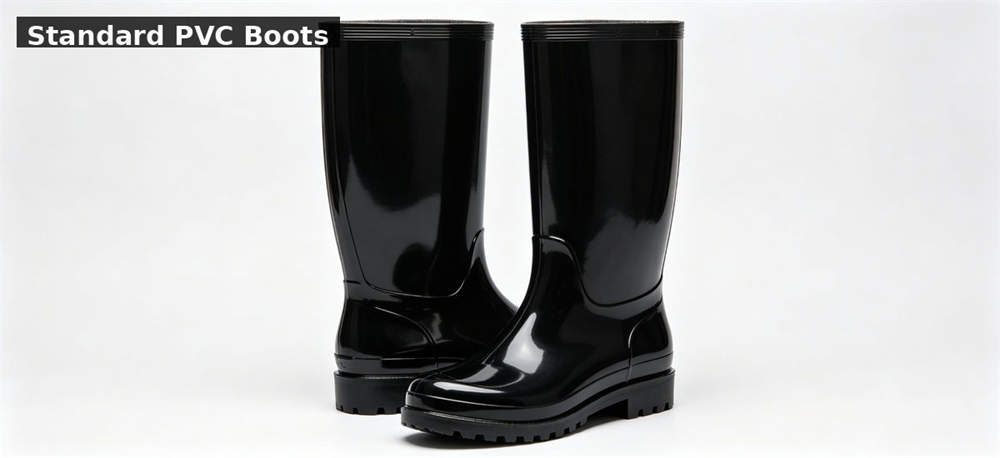
The standard flood boot is 100% PVC upper and sole with a quick-dry polyester lining. Shaft height 38cm (mid-calf to knee), suitable for shallow water and mud. Non-slip sole with deep tread pattern. Sizes EU 38-46. Weight approximately 1.6-1.8kg per pair. This is the standard model for general flood response, humanitarian distribution and community stockpiles.
Specifications: 100% PVC, shaft 38cm, sizes 38-46, weight ~1.7kg/pair, non-slip sole, black/yellow/green, polyester lining.
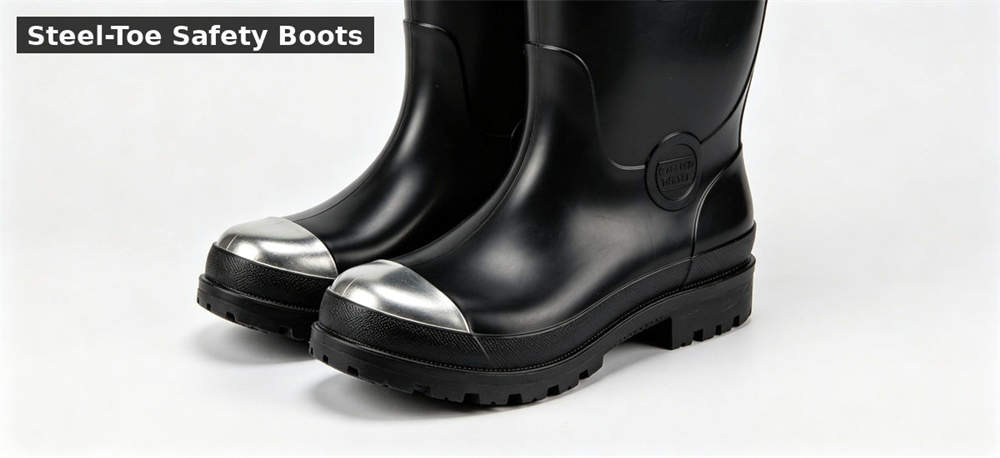
The safety model adds a steel toe cap (200J impact resistance) and steel mid-sole (puncture protection) for areas with debris, broken glass or sharp objects. Meets EN ISO 20345 S5 standard. Same 38cm PVC shaft and non-slip sole. Slightly heavier at ~2.0kg per pair. Recommended for urban flood response, industrial areas and demolition sites where foot injury risk is higher.
Specifications: 100% PVC, shaft 38cm, steel toe 200J + steel mid-sole, EN ISO 20345 S5, sizes 38-46, weight ~2.0kg/pair, black.
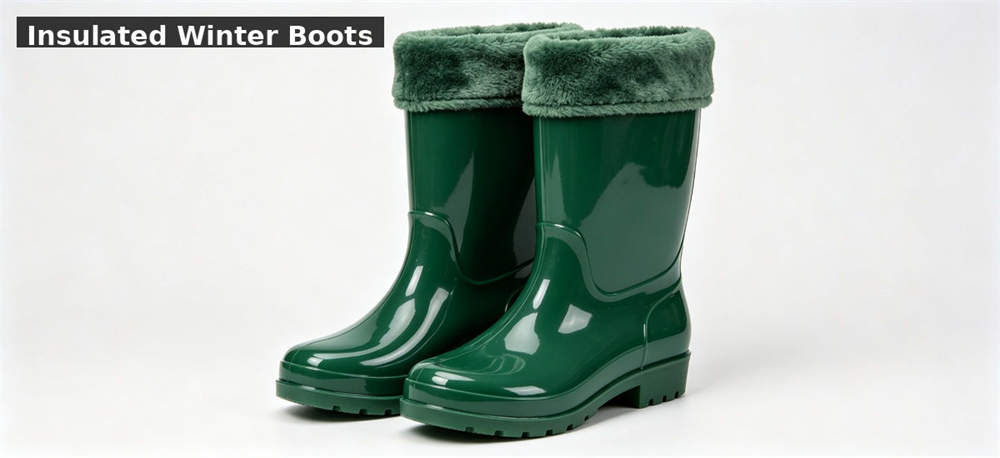
For cold-weather flood response, the insulated model has a 40cm shaft and a removable fleece or foam liner. The liner adds warmth without sacrificing waterproofing. Slightly wider fit to accommodate thick socks. Sizes EU 38-46. Recommended for winter flood operations, cold-climate stockpiles and long-duration outdoor deployment.
Specifications: 100% PVC, shaft 40cm, removable fleece liner, sizes 38-46, weight ~1.9kg/pair, non-slip sole, black/green.
For a mixed adult team, use this typical size ratio: EU 38:39:40:41:42:43:44:45:46 = 1:2:3:4:5:5:4:3:2. Sizes 41-43 account for about 50% of demand. Always order 10% extra in the most common sizes (41-43) for replacement. For all-male teams, shift the ratio toward larger sizes (42-45).
20 × 100N life jackets, 5 × lifebuoys with 30m line, 10 × 31m throw bags, 500 × PP sandbags (30×66cm), 20 × standard PVC rain boots, 2 × spare blowers and repair kits. Store in a central location with clear labelling by product group.
200-500 × PP sandbags per building entrance (depending on width), 10 × water-absorbent expansion bags for indoor use, 10 × standard rain boots, 5 × 100N life jackets for entry teams. Sandbags stacked in pyramid formation at doorways; expansion bags placed inside at threshold.
1000+ × PP sandbags (30×66cm) per 100m section, 10 × 150N life jackets for workers near water, 5 × lifebuoys at intervals along the bank, 10 × throw bags for rescue teams, 20 × steel-toe rain boots for debris areas. Sandbags filled on site with local soil.
500 × PP sandbags for drainage channels and tent protection, 50 × standard rain boots for distribution, 20 × 100N life jackets for water collection teams, 10 × lifebuoys near water points. Sandbags placed around tent perimeters and along drainage paths.
15 × 150N life jackets (professional grade), 10 × 31m throw bags, 5 × reflective rope throw bags (night ops), 5 × lifebuoys with brackets, 15 × steel-toe rain boots, 200 × PP sandbags for station protection. Throw bags and life jackets stored on rescue vehicles.
Stock all five groups in ratio: 30% life jackets, 15% lifebuoys, 15% throw bags, 30% sandbags, 10% rain boots. Store in dry warehouse, inspect life jackets and lifebuoys annually, replace sandbags every 3-5 years (UV degradation), rotate rain boot stock every 5 years. Labelled by product group and expiry date.
|
Factor |
Life Jacket |
Lifebuoy |
|
How used |
Worn on the body |
Thrown to person in water |
|
Who needs it |
Anyone entering the water |
Fixed at bank, boat, pier |
|
Response time |
Must be worn before entering water |
Grabbed and thrown in seconds |
|
Buoyancy |
50-150N (5-15kg) |
≥14.5kg |
|
Mobility |
Wearer can swim/move |
Victim holds on, waits for rescue |
|
Cannot substitute |
A lifebuoy cannot be worn |
A life jacket cannot be thrown effectively |
Both are needed in a complete flood response kit: life jackets for rescuers who enter the water, lifebuoys for bank-side rescue of people already in the water.
|
Product |
Quantity |
Unit Weight |
Total Weight |
Cartons |
Total Volume |
|
100N life jackets |
100 pcs |
0.6kg |
60kg |
2 cartons |
0.8m³ |
|
Lifebuoys (2.5kg) |
20 pcs |
2.5kg |
50kg |
2 cartons |
1.2m³ |
|
31m throw bags |
30 pcs |
0.95kg |
28.5kg |
1 carton |
0.4m³ |
|
PP sandbags (empty) |
2000 pcs |
0.15kg |
300kg |
4 cartons |
2.0m³ |
|
Standard PVC rain boots |
50 pairs |
1.7kg |
85kg |
5 cartons |
1.5m³ |
|
Total |
2200 items |
— |
523.5kg |
14 cartons |
5.9m³ |
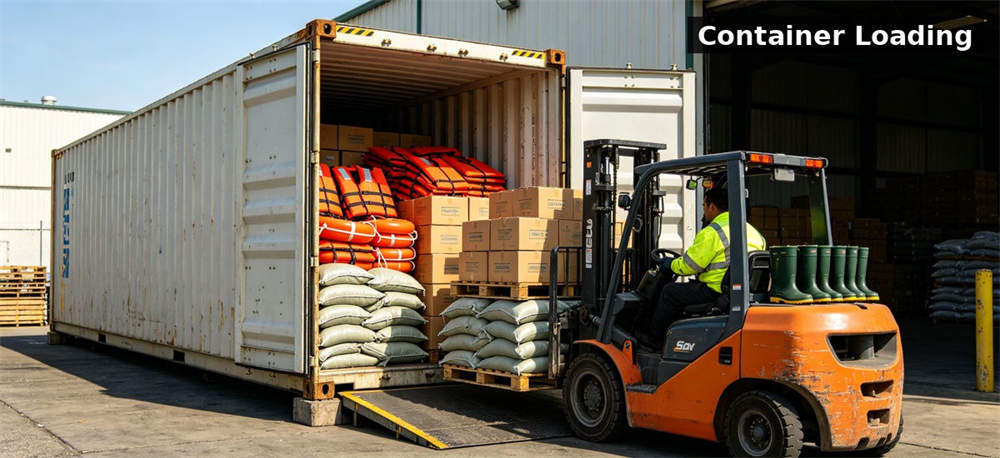
A 20ft container holds approximately 28-33m³. This 100-person kit fills about 18-21% of one 20ft container, leaving room for additional products like folding beds, blankets and emergency lighting. We can help you mix products to fill the container efficiently.
Packing, Labelling and Delivery
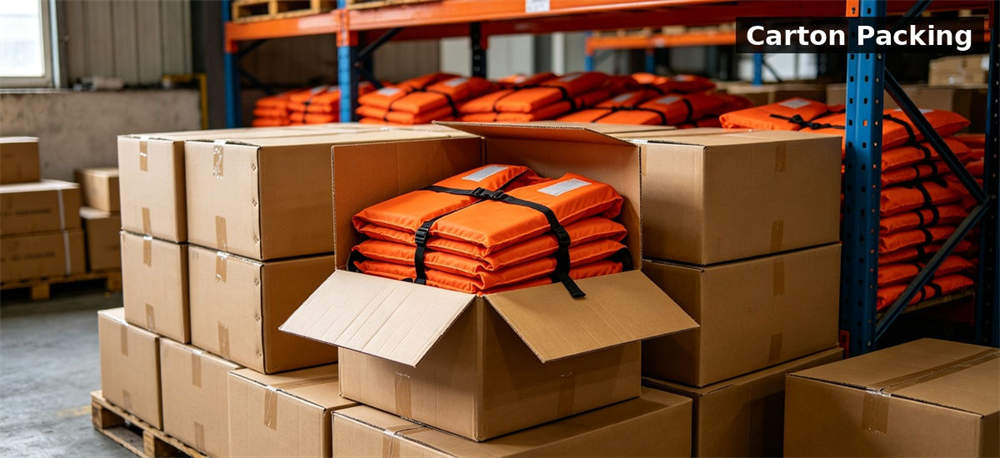
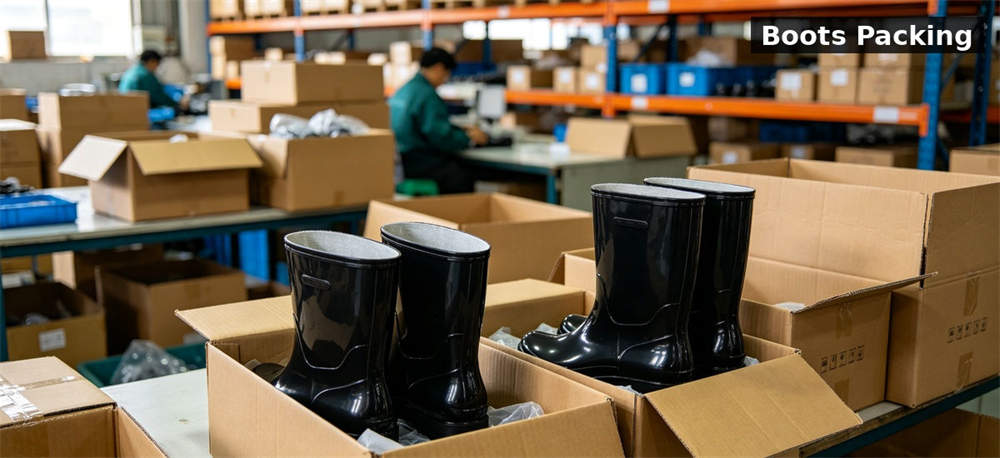
Each product group has its own packing unit: life jackets individually bagged then 50 per carton, lifebuoys individually bagged then 10 per carton, throw bags individually bagged then 30 per carton, sandbags bundled 100 per bundle then 500 per carton, rain boots 1 pair per box then 10 pairs per carton. Cartons are labelled with product name, quantity, size (if applicable), destination and carton number. For institutional orders, we can print project-specific labels and multilingual markings (English, French, Spanish, Arabic).
Standard production lead time is 15-25 working days for stock colours and models. Custom colours, logo printing or special sizes add 10-15 working days. For emergency rush orders, we can start production within 72 hours of confirmation. Final delivery dates are confirmed in the contract.
We can help arrange third-party test reports based on your project requirements. Commonly requested standards include:
Batch traceability is available: each production lot records fabric/material supplier, production date and test results. For large tenders, we can provide a batch document pack with each shipment.
What is the difference between a 100N and 150N life jacket?
A 100N life jacket provides about 10.2kg of buoyancy, suitable for calm inland water where the wearer can swim. A 150N jacket provides about 15.3kg, designed for moving water and can turn an unconscious person face-up. For general flood response, 100N is usually sufficient; for professional rescue teams in fast water, choose 150N.
No. A life jacket is worn on the body and allows the wearer to move and swim. A lifebuoy is thrown to a person already in the water, who holds on and waits for rescue. Both are needed: life jackets for rescuers entering the water, lifebuoys for bank-side rescue.
How long is the rope in a standard throw bag?
The most common length is 31m (8mm diameter floating PP rope). Effective throwing distance is about 20-25m — the full length allows for rope pay-out and recovery. A 15m waist-mounted model is available for rescuers who need mobility.
Does the throw bag rope float?
Yes. All our throw bag ropes are polypropylene (PP), which floats in water. This is critical — if the rope sinks, it can get caught on underwater obstacles and the victim cannot reach it. The bag itself also floats thanks to an EPE foam disc in the base.
How many sandbags do I need per metre?
For a standard 30cm-high pyramid barrier, about 6-10 bags per linear metre. A 10m doorway barrier needs 60-100 bags. Always order 10-15% extra for breakage. Fill each bag to two-thirds full — overfilled bags do not stack well and leave gaps.
PP woven sandbags are empty and must be filled with sand or soil on site (15-20kg each). Water-absorbent bags contain SAP polymer, weigh 500g dry, and expand to 24kg when placed in water — no sand needed. PP bags are cheaper and reusable if emptied; absorbent bags are more expensive but faster to deploy where sand is unavailable.
What size rain boots should I order for a mixed team?
Use this ratio: EU 38:39:40:41:42:43:44:45:46 = 1:2:3:4:5:5:4:3:2. Sizes 41-43 account for about 50%. Order 10% extra in sizes 41-43. For all-male teams, shift toward larger sizes (42-45).
Steel-toe boots (200J impact protection) are recommended for urban flood areas with debris, broken glass or sharp objects. For general flood response in mud and shallow water, standard PVC boots are sufficient. The safety model meets EN ISO 20345 S5 and also has a puncture-resistant mid-sole.
How should I store flood products long-term?
Store in a dry, well-ventilated warehouse away from direct sunlight. Life jackets: flat, do not fold. Lifebuoys: off the ground, no heavy items on top. Throw bags: rope dry and loosely coiled. Sandbags (empty): in original bundles, UV-protected. Rain boots: upright, do not fold. Inspect all products annually.
Life jackets: 5-8 years (foam degrades). Lifebuoys: 8-10 years (HDPE is durable). Throw bags: 3-5 years (rope degrades). PP sandbags: 3-5 years (UV degrades even indoors). Rain boots: 5-8 years (PVC can dry-crack). Rotate stock and replace based on annual inspection.
Can I customise colours or print logos?
Yes. Standard colours are orange (life jackets/lifebuoys), white/orange/green (sandbags), black/yellow/green (rain boots). Custom colours and logo printing require a production run and add 10-15 working days. Provide artwork in vector format. Institutional orders often add project labels and multilingual markings.
Check the buoyancy label (100N/150N) is legible. Squeeze the foam — it should feel firm, not crumbly. Pull all straps and buckles to ensure they hold. Check reflective tape is not peeling. Verify the whistle works. If any item fails, retire the jacket.
What is the standard lifebuoy size?
The standard adult lifebuoy is 710mm outer diameter, 440mm inner diameter, 105mm thick, providing at least 14.5kg buoyancy. It weighs 2.5kg (standard) or 4.3kg (with light and smoke signal). This size is consistent across SOLAS, CCS and most national standards.
Uncoil the rope completely, rinse with fresh water and dry thoroughly. To repack, feed the rope into the bag in loose layers (not coiled) — this allows it to deploy without tangling. Leave the last 30cm of rope outside the bag, attached to the rescuer's belt or wrist. A properly packed bag deploys smoothly in one throw.
Tell us your team size, deployment scenario (urban/rural/riverbank), expected water conditions and destination climate. We will recommend the right product mix, calculate quantities and container loading, and provide a complete specification sheet. Standard products are available from our regular production schedule; custom colours and logos can be arranged for institutional orders.
We can help arrange third-party test reports based on your project requirements. Send your requirements to info@yrftextile.com or message us on WhatsApp for a quick response.
Ready to specify your flood relief order? Send us your team size, scenario and product list, and we will return a matched proposal with quantities, sizes and delivery timeline.

INTERNAL LINK CARD AREA - target page and URL pending
|
Download our flood products catalogue |
Chat with us on WhatsApp |
 |
 |
|
5 product groups with full specifications |
Fast response during working hours |
YRF Textile · Flood Disaster Relief Products Supplier · China
Liens amicaux :
droits dauteur © Custom Disaster - Relief Bedding: Tents, Sleeping Bags, Blankets Tous les droits sont réservés
léquipe professionnelle au service !