In our 20 years of supplying firefighter clothing, the most common mismatch is buying a "firefighter set" with one size for everything. A firefighter who wears size L clothing may need size M gloves, size 42 boots and a 58 cm helmet. This page helps you choose from 6 types of firefighter clothing, then fit the complete set — garment, helmet, gloves and boots — so every piece works together on the wearer.
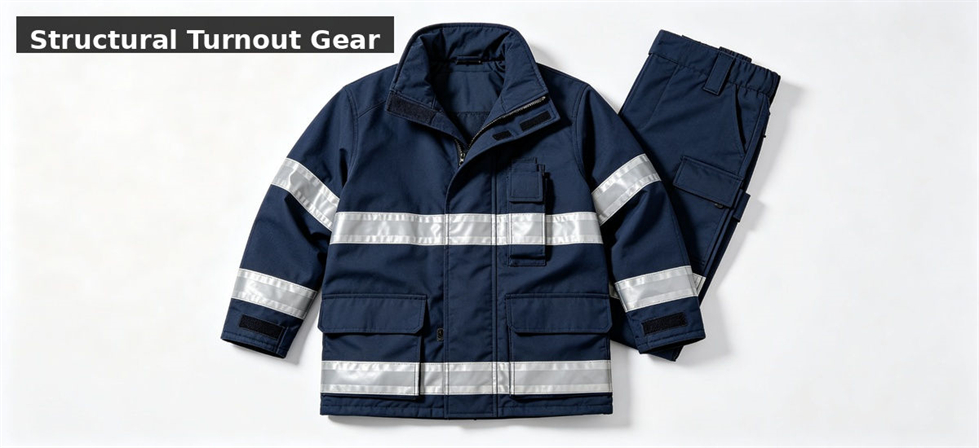
Each clothing type has its own standard, fabric weight and use case. Structural turnout gear is for building fires. Wildland clothing is for long walks in forest fires. Station uniforms are for daily work only — they cannot be used for fire entry. For detailed product specs on helmets, gloves, boots and escape rope, see our Fire Safety Equipment page. This page focuses on clothing selection, complete-set fitting and size allocation.
Quick selection guide:
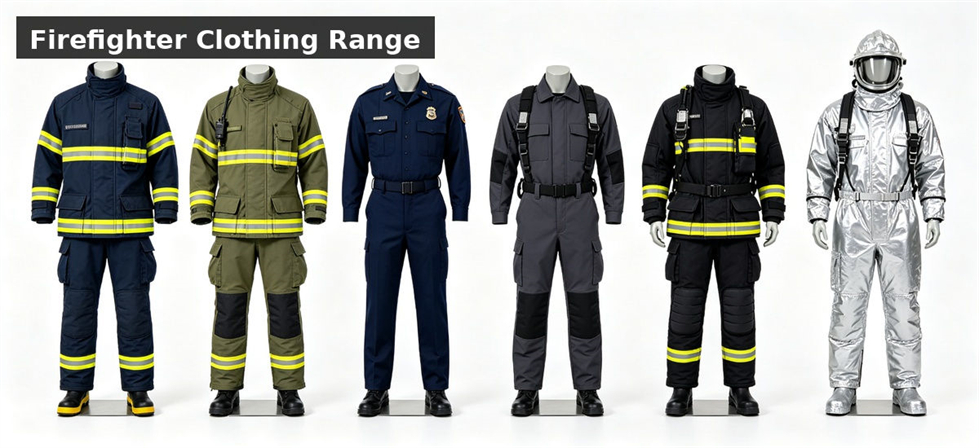
6 Types of Firefighter Clothing and When to Use Each
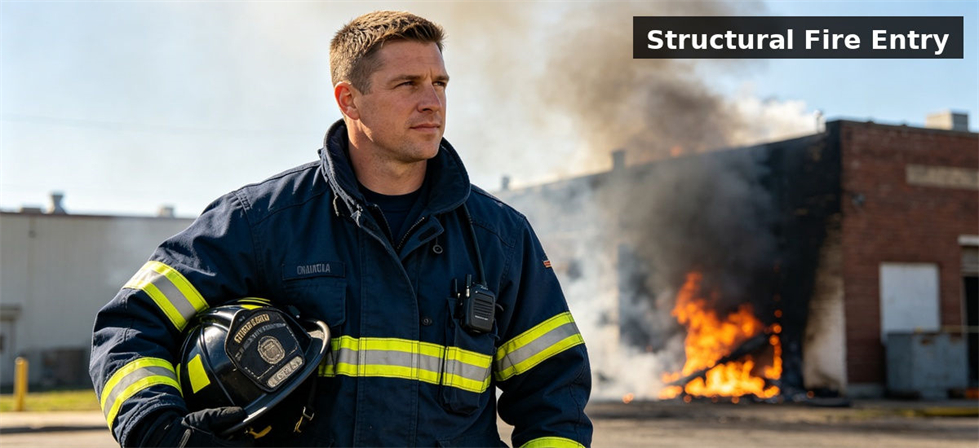
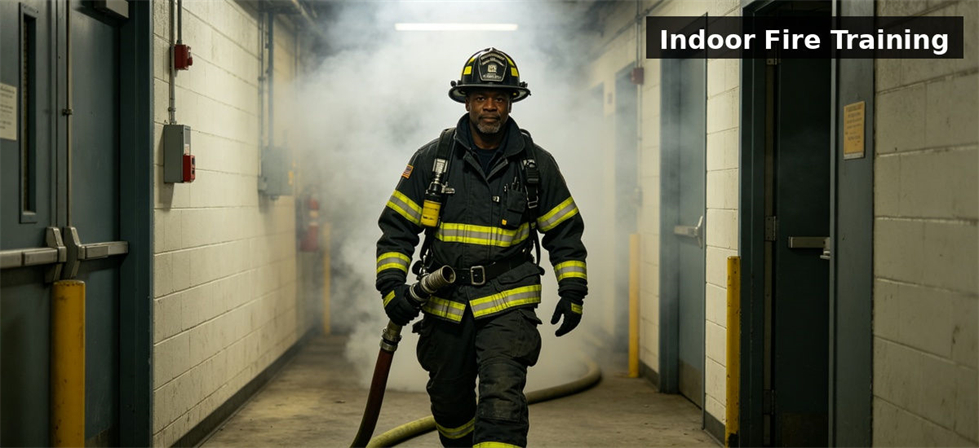
Use for: building fire entry, interior attack, search and rescue in structural fires.
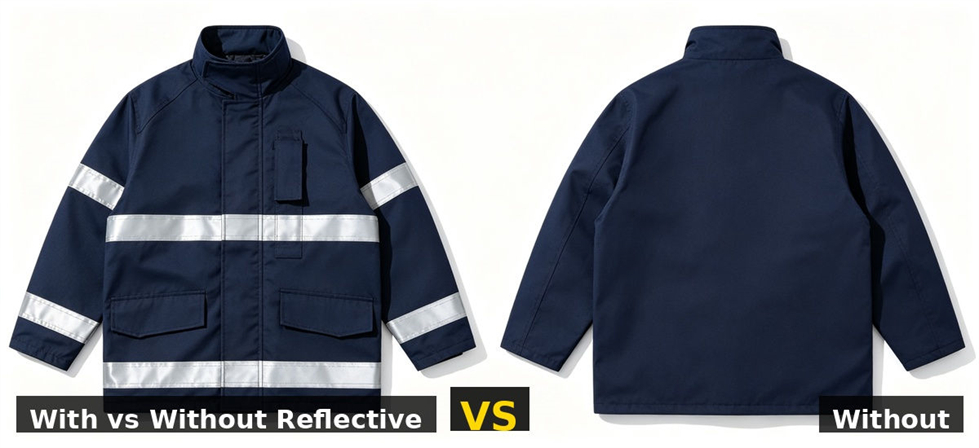
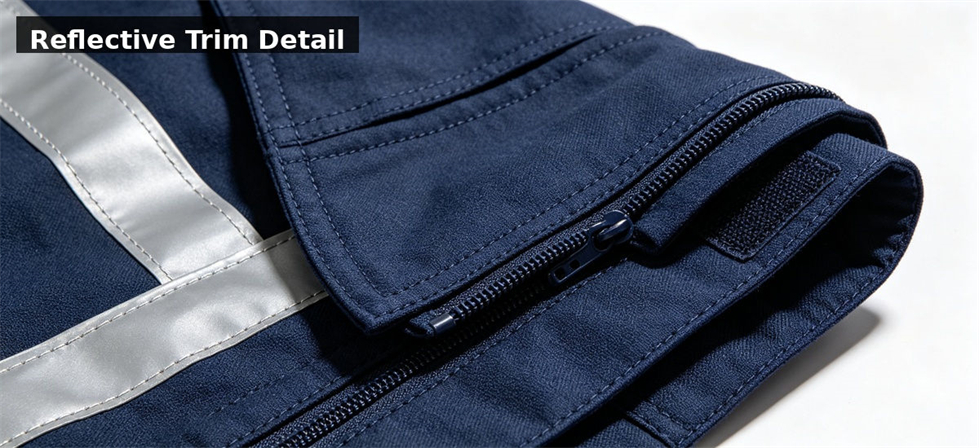
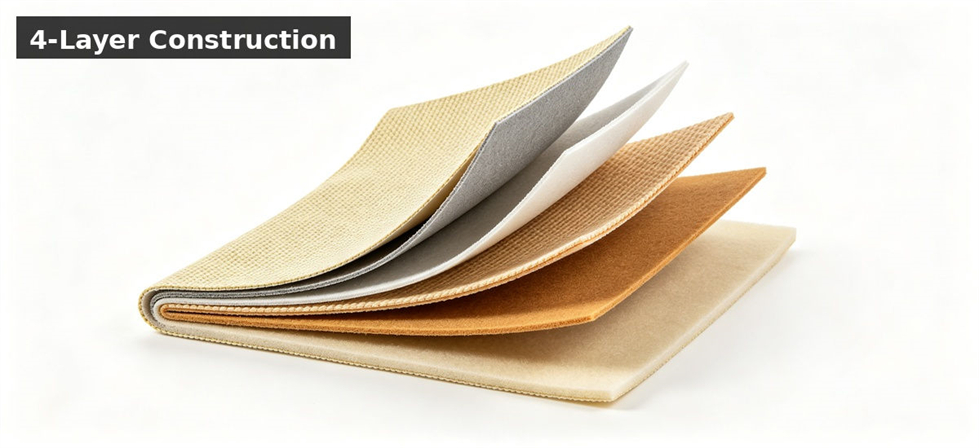
Construction: 3-4 layers — outer shell (100% aramid, 200-260 g/m²), moisture barrier (PTFE membrane), thermal liner (aramid felt), comfort layer. Total weight: 4.8-5.8 kg per set. Coat-and-pants design with zipper and storm flap overlap. Reflective trim: 3M or equivalent, 5 cm width on sleeves, torso and legs.
Standards: EN 469 (European) or NFPA 1971 (US). EN 469 has protection levels X1/X2 (water penetration), Y1/Y2 (heat) and Z1/Z2 (water vapor) — check the level on the certificate, not just the standard name.
Ordering tip: a rescue or station garment with reflective trim is NOT a substitute for structural turnout gear. Reflective strips do not provide thermal insulation. See full specs on our Fire Safety Equipment page.
Not sure which EN 469 protection level your tender requires? Send us the standard clause and wearer size distribution — we help match layer construction and certification level. View structural turnout gear models →
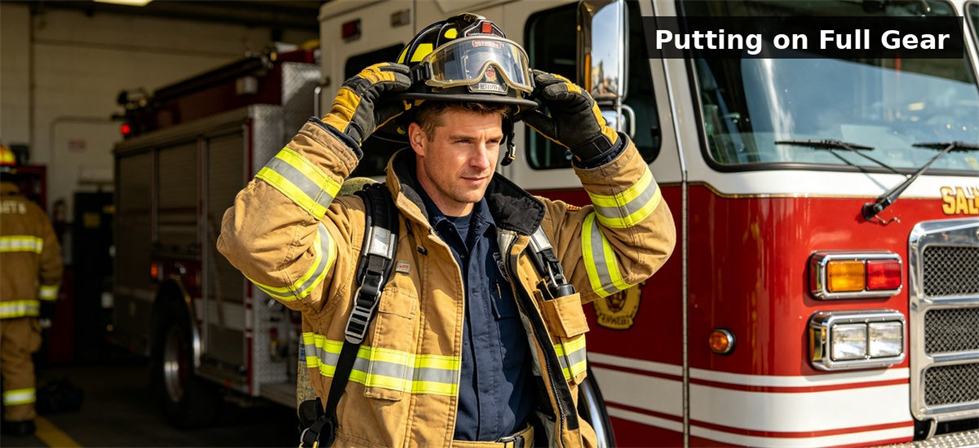
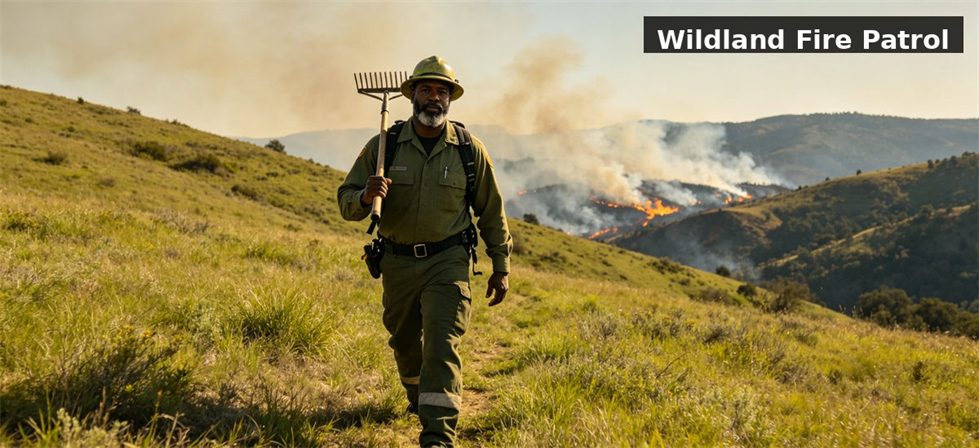
Use for: forest fires, grassland fires, vegetation fires, long patrols and mop-up operations.
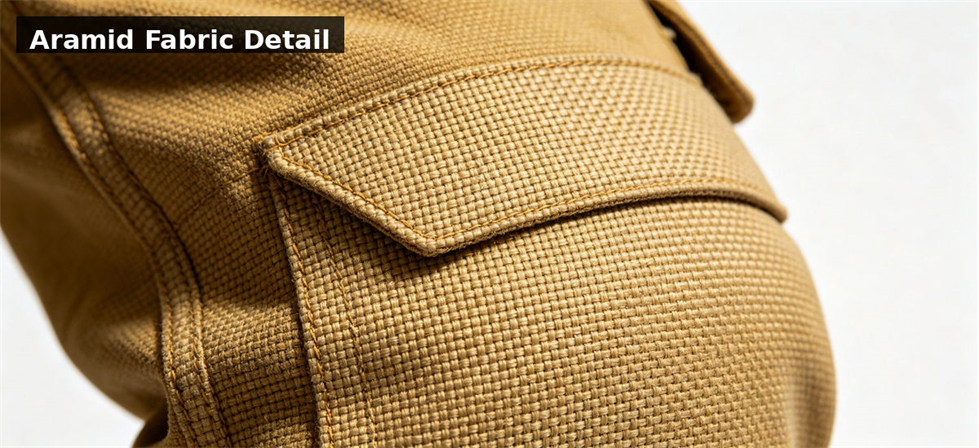
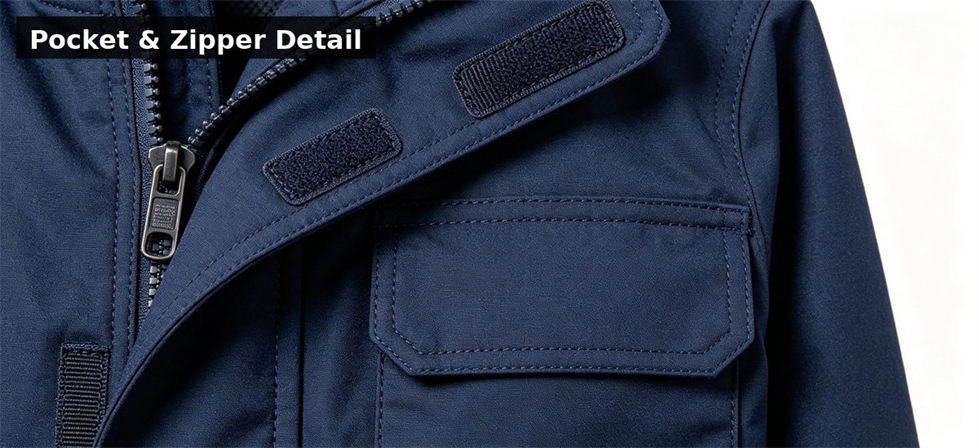
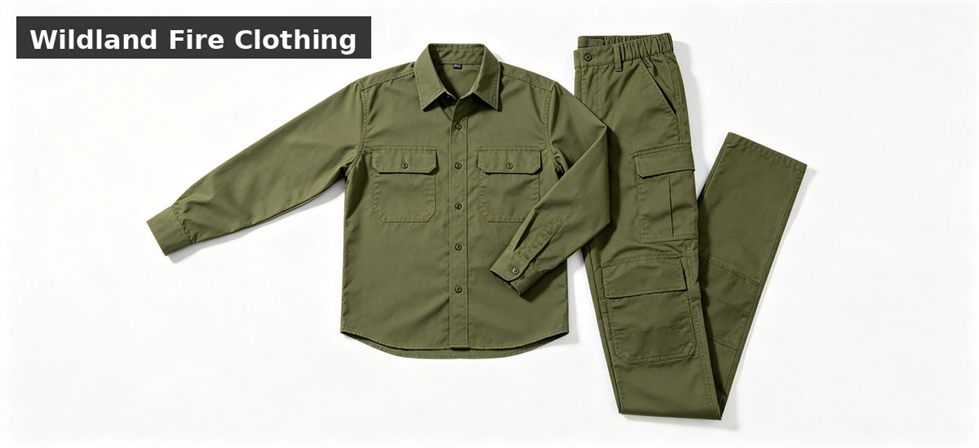
Construction: 2-layer design, aramid or aramid-cotton blend, 180-220 g/m². Lighter than structural gear (2-3 kg per set) with more ventilation. Shirt and pants or one-piece coverall. Reinforced knees and elbows. Cargo pockets for tools and gear.
Standards: EN ISO 11612 (heat and flame) or NFPA 1977 (wildland firefighting).
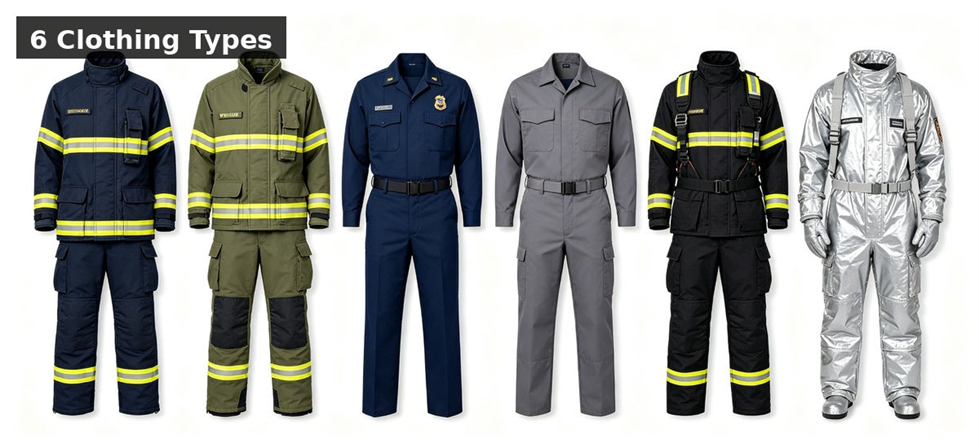
Key difference from structural: wildland clothing prioritizes mobility and breathability over maximum heat insulation. It is NOT safe for interior structural fire entry. A structural suit is too heavy and hot for all-day wildland work — the reverse is equally unsafe.
Fitting tip: test samples during walking, bending and climbing slopes, worn over the actual base layers your crew uses.
For wildland programs, breathability and weight matter more than maximum TPP — tell us your patrol duration and terrain, and we help select the right fabric weight.View wildland clothing models →
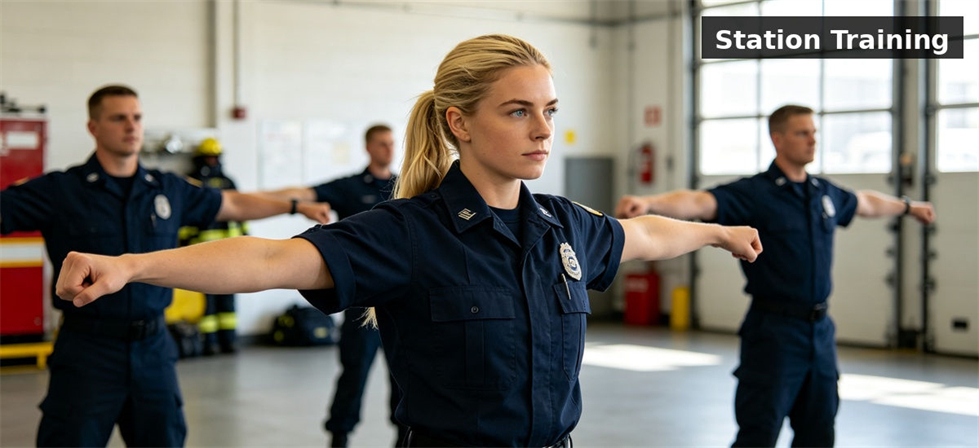
Use for: routine station work, training, classroom sessions, public events and identification. NOT for fire entry or hazardous operations.
Construction: cotton or polycotton (65/35) blend, 200-250 g/m². Shirt and pants, or coverall. Multiple pockets, department logo or ID placement. Available in custom colors.
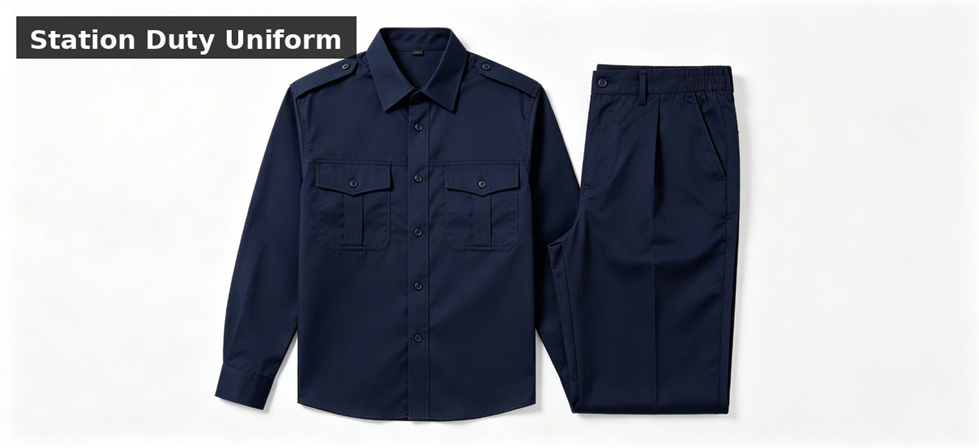
Why it cannot replace fire gear: station uniforms have no fire-resistant coating or thermal liner. In a fire, cotton or polycotton can burn or melt against the skin. They are designed for comfort during daily work, not heat protection.
Ordering tip: keep station uniform labels and documents separate from protective gear labels. This prevents receiving teams from issuing the wrong clothing for an operational task.
Station uniforms are a separate line item with their own size ratio and care labels — confirm colors and logo placement early, as custom dyeing adds lead time. View station uniform options →
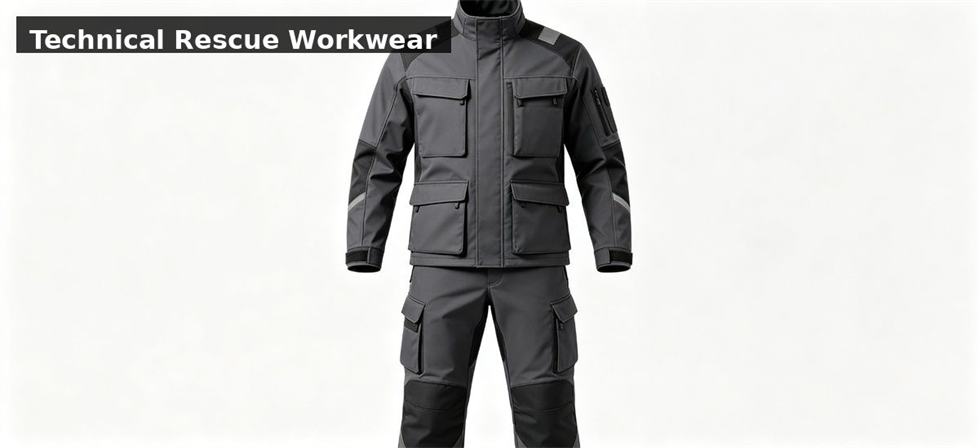
Use for: rope rescue, vehicle extrication, urban search and rescue, confined space, tool-intensive operations.
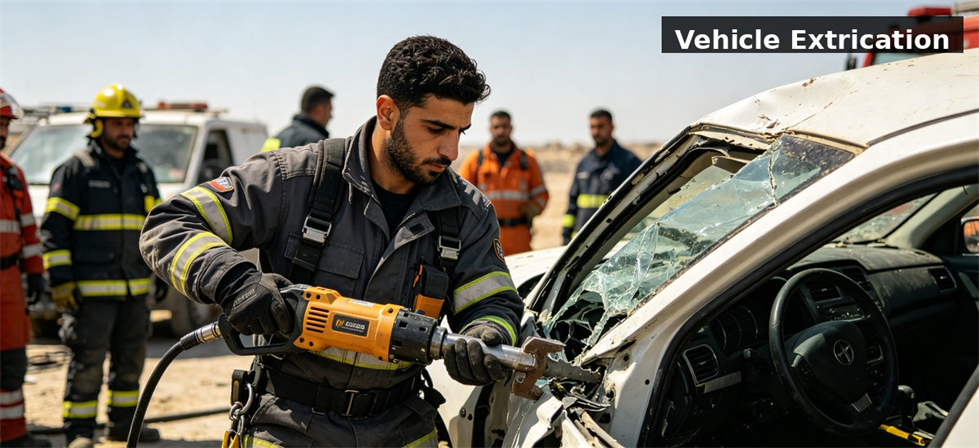
Construction: abrasion and tear resistant fabric, often aramid blend or modacrylic-cotton. Reinforced knees, elbows and seat. Multiple tool pockets. Stretch panels for mobility. Designed for agility and tool handling, not high heat.
Standards: EN ISO 11611 (welding/heat) or EN 388 (mechanical risk, cut level 2-4 depending on model).
Key checks: test reach, crouching, harness or belt interface, and glove compatibility. A jacket that restricts arm movement is unsafe during rescue work.
For technical rescue teams, send us the harness model your crew wears — we check that jacket hem and belt do not interfere with the harness connection.View rescue workwear models →
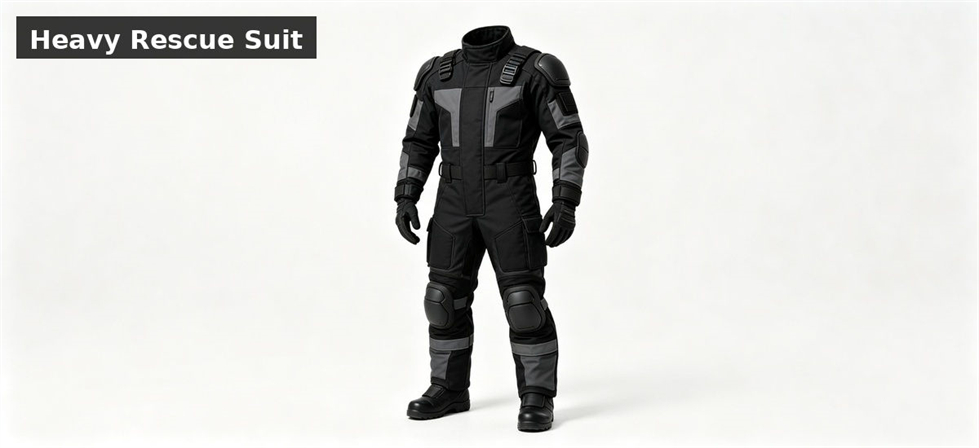
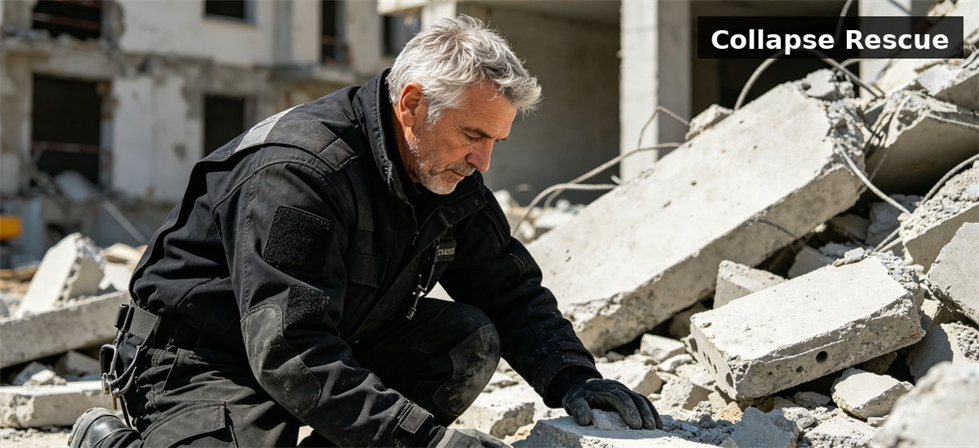
Use for: operations with higher mechanical risk than standard technical rescue — heavy extrication, structural collapse, debris fields.
Construction: more extensive reinforcement and padding than standard rescue wear. Protected zones typically include shoulders, elbows, knees, shins and seat. Heavier than technical-rescue workwear but lighter than structural turnout gear. Closure system designed for quick donning.
Important: heavy-rescue suits do NOT provide structural-fire heat protection. Do not import thermal performance claims from turnout gear. Confirm the exact protected zones, padding thickness and weight before ordering.
Heavy-rescue suits sit between technical rescue and structural gear in weight and protection — confirm the protected-zone map (shoulders, elbows, knees, shins, seat) matches your operational tasks. View heavy-rescue suit models →
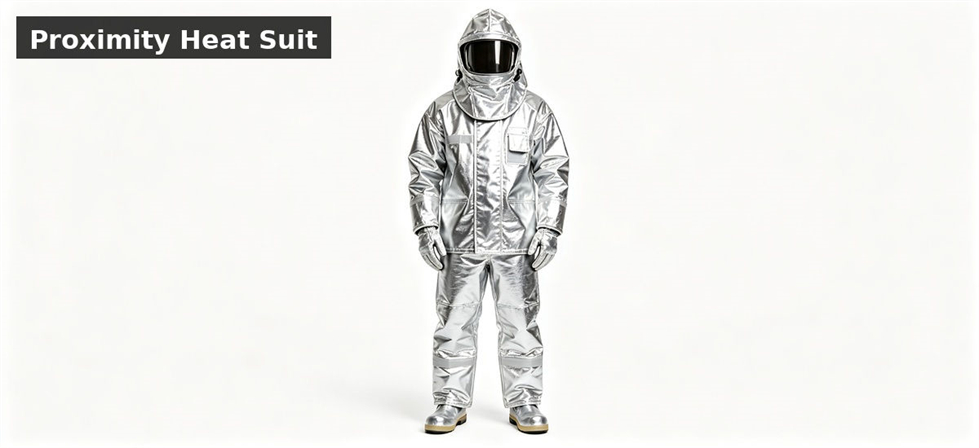
Use for: approach to high-radiant-heat sources, aircraft rescue, industrial fire response where direct flame contact is limited but radiant heat is extreme.
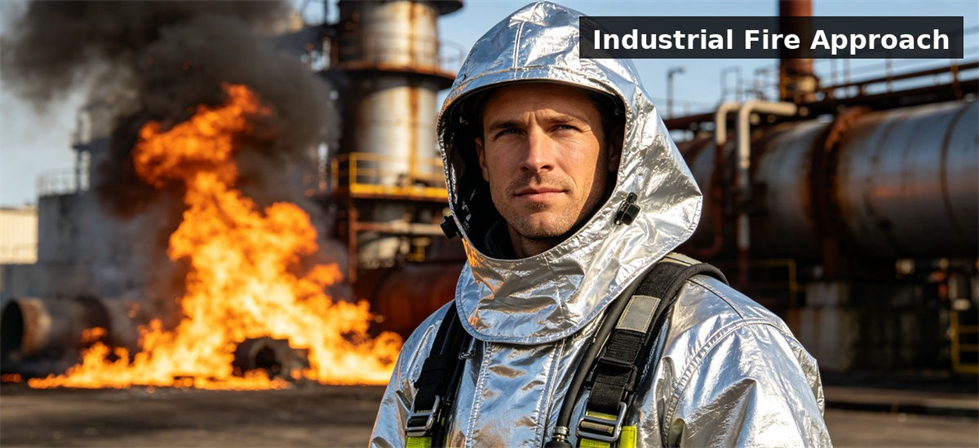
Construction: aluminized outer shell (reflects radiant heat), with insulating layers underneath. Full coverage including hood, gloves and boot covers. This is a specialized product — confirm availability and lead time before including in a tender.
Key checks: confirm the complete garment configuration (hood, coat, pants, gloves, boot covers), the heat test method and scope, and movement restrictions. A shiny aluminized appearance does NOT by itself prove performance — ask for the test report.
Note: proximity suits are different from structural turnout gear. They are not designed for interior fire entry with direct flame contact.
Proximity suits are a specialized, low-volume product — confirm availability and test scope before specifying them in a tender, as lead times are longer than standard turnout gear. View proximity suit options →
Firefighter Clothing Comparison Table
|
Clothing type |
Typical fabric |
Weight |
Key standard |
Best for |
NOT for |
|
Structural turnout |
Aramid 3-4 layer, PTFE membrane |
4.8-5.8 kg/set |
EN 469 / NFPA 1971 |
Building fire entry |
All-day wildland walking |
|
Wildland fire |
Aramid-cotton, 2 layer |
2-3 kg/set |
EN ISO 11612 / NFPA 1977 |
Forest fire, long patrols |
Interior structural fire |
|
Station uniform |
Cotton or polycotton 65/35 |
1.2-2.0 kg/set |
No fire standard |
Daily station work, training |
Any fire entry |
|
Technical rescue |
Aramid blend, reinforced |
2.5-3.5 kg/set |
EN ISO 11611 / EN 388 |
Rope rescue, extrication |
High heat exposure |
|
Heavy rescue |
Reinforced with padding |
3.5-4.5 kg/set |
EN 388 (higher cut level) |
Collapse, heavy extrication |
Fire entry or high heat |
|
Proximity suit |
Aluminized outer + insulation |
5-8 kg/set |
EN 14867 / project spec |
High radiant heat approach |
Interior fire entry |
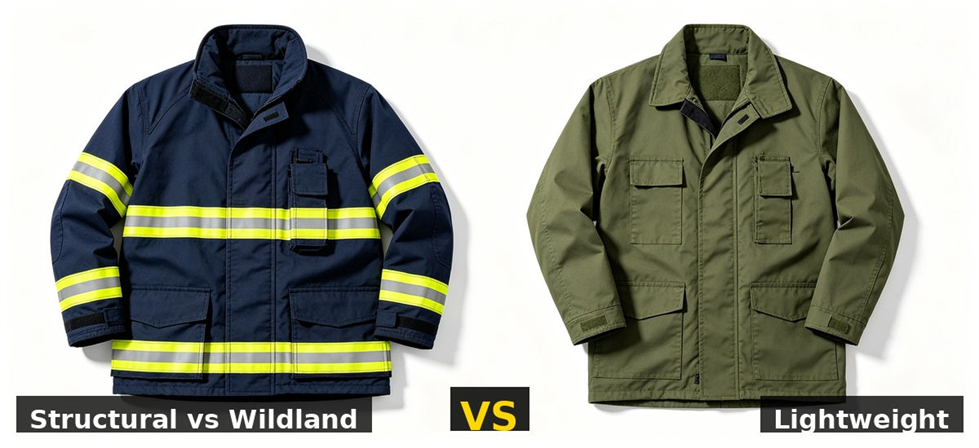
These are industry-typical ranges based on wholesale supplier data. Exact values depend on the selected model and must be confirmed against the physical sample and test report. Lighter is not always better — a 2 kg wildland suit does not have the thermal insulation of a 5 kg structural suit. Always match the weight and layers to the actual task.
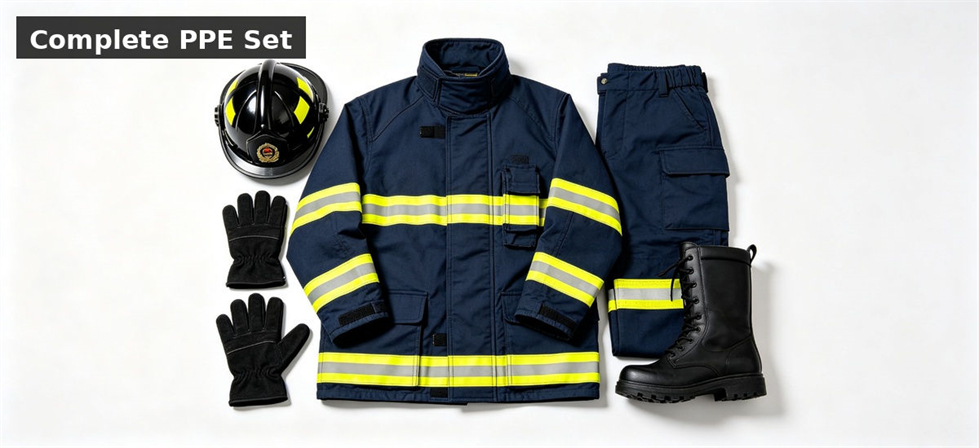
Complete Set Fitting: 7-Step Test Before Bulk Order
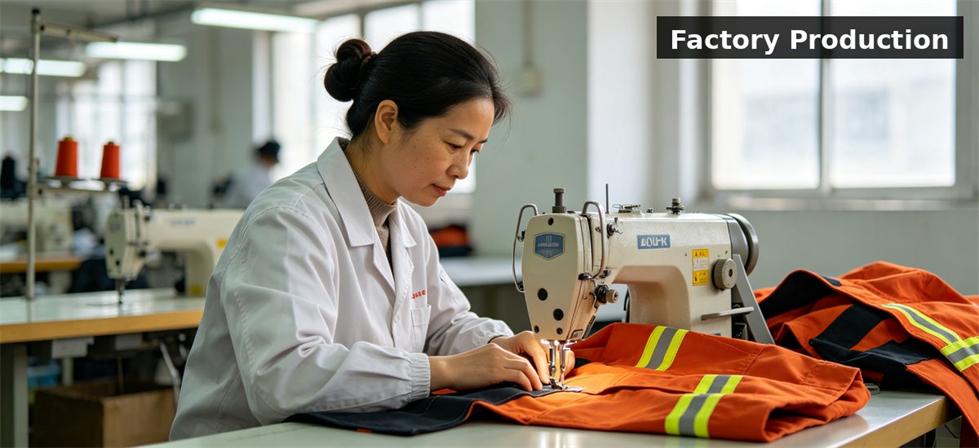
Each piece may pass its own test, but the set can fail when worn together. Test the complete set — base layers, garment, hood, helmet, face protection, gloves and boots — using these 7 steps. A standing photo records appearance but does not replace movement testing.
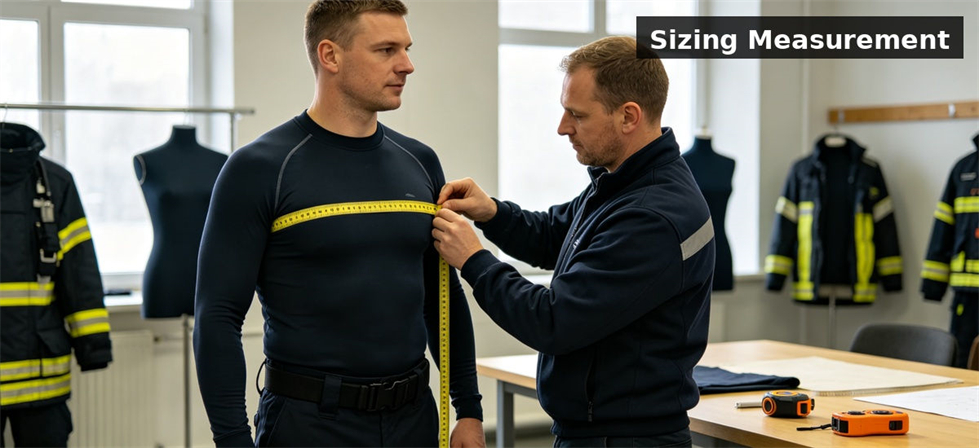
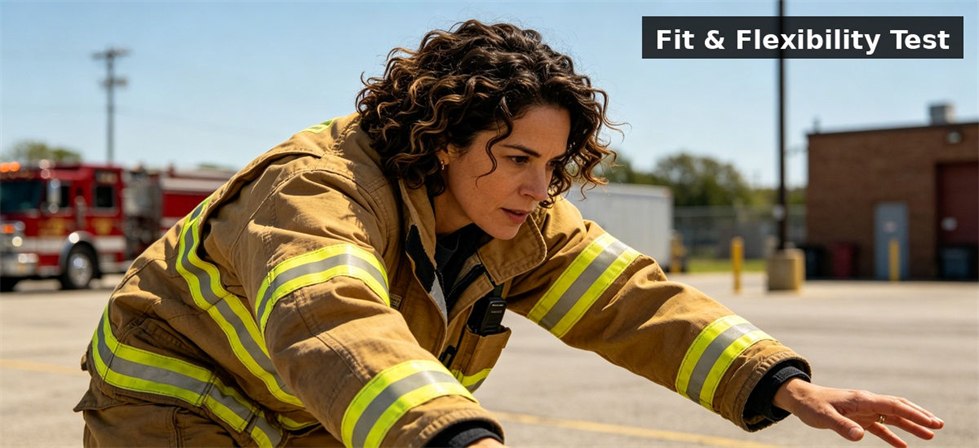
Record the wearer's measurements, every component model/size, base layers worn, any fit issues found, and the correction needed. If you change any component — helmet, shield, glove, boot or garment structure — retest the affected interfaces. Common problems include: coverage gaps at neck or wrist, restricted vision from helmet brim, wrist pressure from tight cuffs, bunched trouser hems inside boots, and unstable helmet accessories (lights, radios).
Sizing and Allocation: Measure Each Component Separately
Garment size does not determine glove, boot or helmet size. A firefighter in size L clothing may need M gloves, 42 boots and a 58 cm helmet. Measure each component independently:
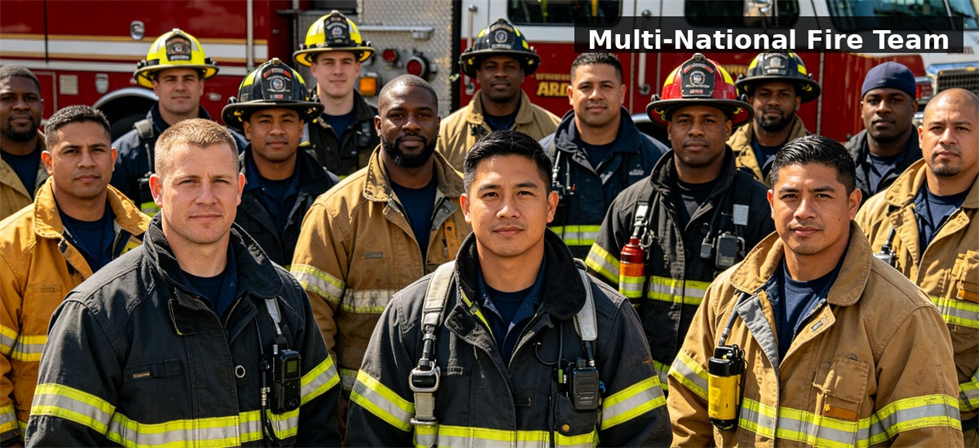
Collect actual wearer data — do not guess. A typical fire department distribution is approximately S:M:L:XL = 1:3:4:2, but this varies by region and population. Retest boundary sizes (S and XXL) — these are where fit problems most often occur. The approval creates an allocation sheet matching each wearer or role to garment size, helmet size, glove size and boot size.
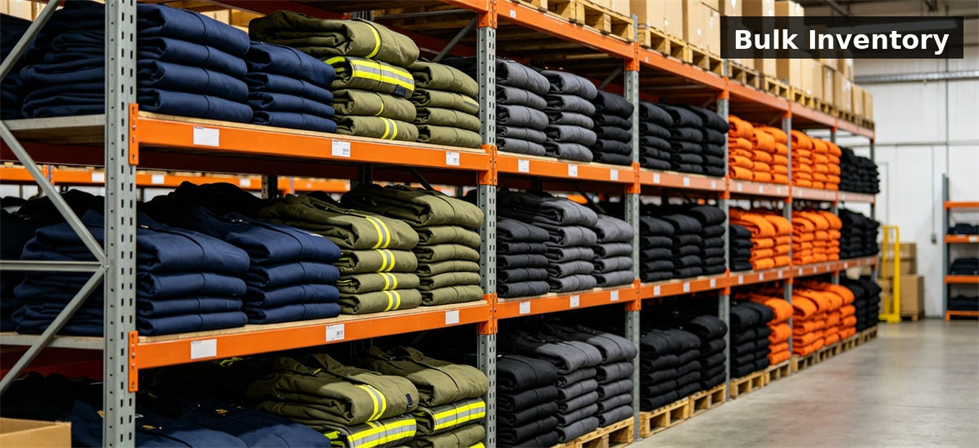
Garments, gloves and boots have different wear rates and size-exchange patterns. Helmet accessories (visors, straps) may need separate replenishment. Adding one flat percentage to complete sets can leave shortages in critical sizes and excess in others. Typical spare ratios: garments 10%, gloves 15% (highest wear), boots 10%, helmets 5% (longest life). Adjust based on your crew's actual usage.
Certificates, Test Reports and Documents
Each clothing type needs its own specification, material list, size chart, applicable test report or certificate scope, label artwork, care instructions and packing data. A test report for one model or fabric weight does not cover another model — even if they look similar.
We can help arrange third-party test reports based on your project requirements. Common standards include EN 469 (structural), NFPA 1971 (US structural), EN ISO 11612 (wildland/heat), EN 388 (cut/abrasion), and EN 14867 (proximity). The buyer selects the standard and laboratory based on the destination market, and testing costs are covered by the buyer. Testing can be coordinated as part of the sample approval process — we recommend testing before bulk production to avoid costly rework.
Clothing type
Key tests
Sample check focus
Structural turnout
Flame, convective heat, radiant heat, contact heat, tear, abrasion, water penetration
Layer construction, fabric weight, reflective trim placement, zipper and flap overlap
Wildland
Flame, heat shrinkage, tear, abrasion, colorfastness
Breathability, pocket placement, reinforcement at knees/elbows
Station uniform
Tear, colorfastness, shrinkage (no fire test required)
Fabric weight, logo placement, size consistency, care label
Technical / heavy rescue
Abrasion, cut (EN 388 level), tear, puncture, mobility
Reinforcement placement, stretch panels, pocket access with gloves
Proximity suit
Radiant heat, conductive heat, full-set movement restriction
Aluminized layer integrity, complete set (hood/gloves/boots), visibility
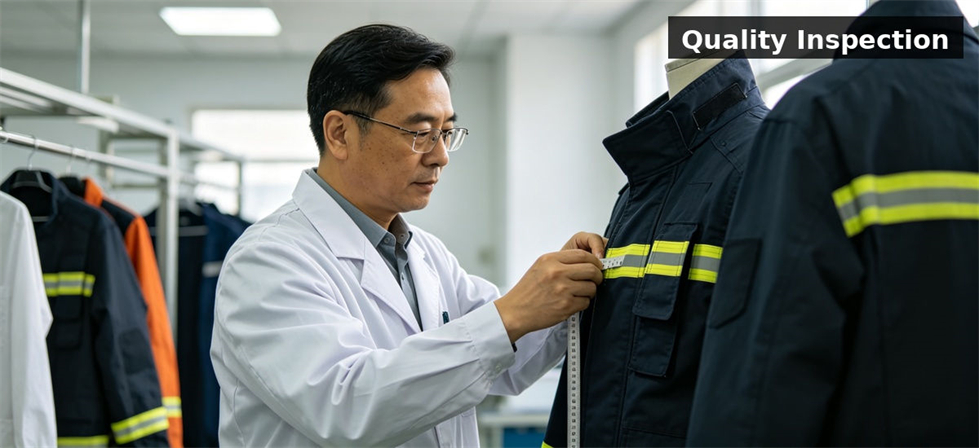
Before bulk production, approve one sealed sample set for reference. Bulk sampling then checks quantity, size ratio, critical dimensions, appearance, stitching, labels and cartons against the same baseline. We recommend AQL 2.5 sampling — for a 500-unit order, inspect 50 units. Any material, component or construction change requires a new sample, updated quotation and re-approval.
Packing, Lead Time, Samples and MOQ
Choose the packing method that matches your distribution plan:

Typical packing: garments 10 sets per carton, helmets 6 per carton (with padding), gloves 20-50 pairs per carton, boots 10 pairs per carton (max 25 kg gross). Mixed cartons need an inner packing list.
MOQ and lead time depend on model, quantity, customization, tests and packing. Standard production lead time: 7-15 working days for in-stock components, 25-40 working days for custom color/logo or large orders, 35-50 working days for custom material or certification (test report time included). Emergency rush orders can start production within 72 hours for standard models with in-stock components (subject to factory capacity). Final lead time is confirmed in the contract.
We provide samples for quality evaluation before bulk orders. In-stock standard samples ship in 3-5 working days; the sample fee depends on the product type and model (we provide the specification sheet and quotation at no cost, while the physical sample itself is charged). Fully custom samples (custom color, logo, size) take 20-35 working days and are quoted based on complexity; mold or plate fees may apply for custom logos. Sample cost can be credited against a confirmed bulk order; the exact terms are confirmed in writing at order placement. Courier costs are paid by the buyer.
Send us for a quote: (1) roles and duty types, (2) clothing types needed, (3) destination standard or tender requirement, (4) wearer measurements and size distribution, (5) base layers and accessories, (6) complete-set fitting test requirements, (7) tests and certificates needed, (8) logo or identity marking, (9) quantity and spare strategy, (10) packing method (by wearer / by component / by destination), (11) delivery destinations, (12) sample and acceptance plan. We will return itemized specs, model quotation, sample plan, certificate scope and packing proposal.
Key Procurement Points to Confirm
Firefighter Clothing Bulk Procurement FAQ
Can one universal size be used for a complete firefighter set?No. Garments use height, chest and waist. Gloves use hand circumference and length. Boots use internal foot length and calf circumference. Helmets use head circumference. A firefighter in size L clothing may need M gloves, size 42 boots and a 58 cm helmet. Measure every component separately for every wearer.
No. Station uniforms are cotton or polycotton (200-250 g/m²) with no fire-resistant coating or thermal liner. In a fire they can burn or melt against the skin. They are for daily station work, training and identification only. Fire entry requires EN 469 or NFPA 1971 certified structural turnout gear with aramid outer shell and thermal liner.
Why does every component need separate sizing?
Because body, hand, foot and head proportions vary independently. A tall firefighter may have small hands. A short firefighter may need a wide boot calf. Using the garment size to guess glove or boot size leads to high exchange rates and ill-fitting PPE. Typical exchange rates drop from 20-30% (guessed sizing) to under 5% (measured sizing).
How should a complete-set sample be fitted?
Follow the actual putting-on order: base layers, garment, hood, helmet, face protection, gloves, boots. Then run the 7-step movement test: arm raise, forward reach, bend, crouch, head turn, walking steps, and gloved buckle/tool operation. Record the wearer's measurements, every component model and size, base layers worn, any fit issues, and the correction needed. A standing photo is not enough.
Which interfaces need a complete-set check?
Six critical interfaces: (1) collar and hood — no neck exposure during head turns; (2) helmet brim and visor — no vision blockage; (3) sleeve and glove cuff — no wrist exposure during arm raise; (4) trouser hem and boot shaft — no gap or bunching when crouching; (5) helmet accessories — lights and radios must not shift or block vision; (6) buckles and zippers — must be operable while wearing gloves.
Does one component test report prove the complete set is compliant?
No. A garment EN 469 report covers that garment model and fabric only. It does not cover the helmet, gloves or boots. The complete-set fit record covers combined coverage, movement and interfaces — but it does not replace individual component performance test reports. Every component needs its own certificate matching its exact model and material.
How are size ratios built for a bulk order?
Collect actual wearer measurements first — do not guess. A typical fire department ratio is S:M:L:XL = 1:3:4:2, but this varies by region. Retest boundary sizes (S and XXL) where fit problems are most common. Then total each approved component size separately and add component-specific spares: garments 10%, gloves 15%, boots 10%, helmets 5%.
Can each wearer's components be packed together?
Yes. For small fixed teams, use one allocation ID linking the wearer's name or ID to garment size, helmet size, glove size, boot size and carton number. For large departments or stock programs, packing by component and size with a separate allocation sheet is more efficient. Choose the method based on how your receiving team will distribute the gear.
How is mismatch prevented across multiple destinations?
Finalize an allocation file before packing. It maps each destination (station, warehouse or team) to component model, component size, quantity, optional accessories and carton number. Receiving staff count complete allocations before opening cartons for inspection. This prevents Station A receiving 10 spare helmets while Station B lacks the matching glove sizes.
How are missing parts or wrong sizes recorded at receiving?
Use AQL 2.5 sampling — for a 500-unit order, inspect 50 units. For each issue, record: carton number, component type, size ordered vs size received, photos, and inspected quantity. Any batch failing the sample check should be held for full inspection before accepting delivery. Do not sign off on a shipment with unresolved size or component shortages.
Can every component share one cleaning process?
No. Structural turnout gear is machine-washable with specific detergent and temperature limits. Helmets are wiped with a damp cloth (not submerged). Gloves may be hand-washed or replaced depending on material. Boots are cleaned with a brush and mild soap, not soaked. Each component has separate care, inspection and retirement rules — follow the manufacturer's instructions for each model.
When are MOQ, price and lead time confirmed?
After clothing types, models, size ratio, quantity, customization (color/logo), test requirements, certificates, packing method and delivery schedule are all defined. MOQ and lead time vary by model and component availability. Stock changes weekly. Rush orders (72-hour production start) are possible only for standard models with in-stock components. Final lead time is confirmed in the contract — always confirm before issuing a PO.
Structural turnout gear has 3-4 layers (aramid outer + PTFE membrane + thermal liner + comfort layer), weighs 4.8-5.8 kg, and is designed for short-duration high-heat building fire entry. Wildland clothing has 2 layers (aramid-cotton blend), weighs 2-3 kg, prioritizes breathability and mobility for all-day forest fire work. Structural gear is too hot for wildland; wildland gear lacks thermal insulation for structural fire entry. They are not interchangeable.
Can you arrange third-party testing and certification?
Yes. We can help arrange third-party test reports based on your project requirements — EN 469, NFPA 1971, EN ISO 11612, EN 388, EN 14867 and others. The buyer selects the standard and laboratory based on the destination market, and testing costs are covered by the buyer. We recommend testing before bulk production as part of sample approval, to avoid costly rework.
What do the EN 469 level suffixes (Xf, Xr, Y, Z) mean?
Xf = flame heat resistance (Xf2 higher), Xr = radiant heat resistance (Xr2 higher), Y = water penetration resistance (Y2 higher), Z = water vapor resistance (Z2 higher but less breathable). A certificate reading only "EN 469" without suffixes may mean minimum levels. Most structural tenders require Xf2/Xr2; Y2 matters for hose-stream operations; Z level should balance breathability for your climate.
How long does structural turnout gear last and when should it be retired?
NFPA 1851 recommends structural gear be retired no more than 10 years from manufacture date, regardless of use. Inspect after every fire exposure for contamination, charring, shrinkage or seam failure. Advanced inspection at least annually by a trained person. Contaminated gear must be decontaminated before reuse. Heavy-use gear in busy departments may need retirement in 5-7 years. Keep a written inspection log for every set.
|
Compare firefighter clothing options |
Quick real‑time chat for urgent project questions |
 |
 |
|
Review 6 clothing types with specs |
Discuss samples, fitting and allocation |
YRF Textile · Firefighter Turnout Gear and PPE Clothing for Bulk Procurement · China · info@yrftextile.com
Liens amicaux :
droits dauteur © Custom Disaster - Relief Bedding: Tents, Sleeping Bags, Blankets Tous les droits sont réservés
léquipe professionnelle au service !