Essential Read: Are You a Factory or a Trading Company? Can We Arrange a Factory Audit?
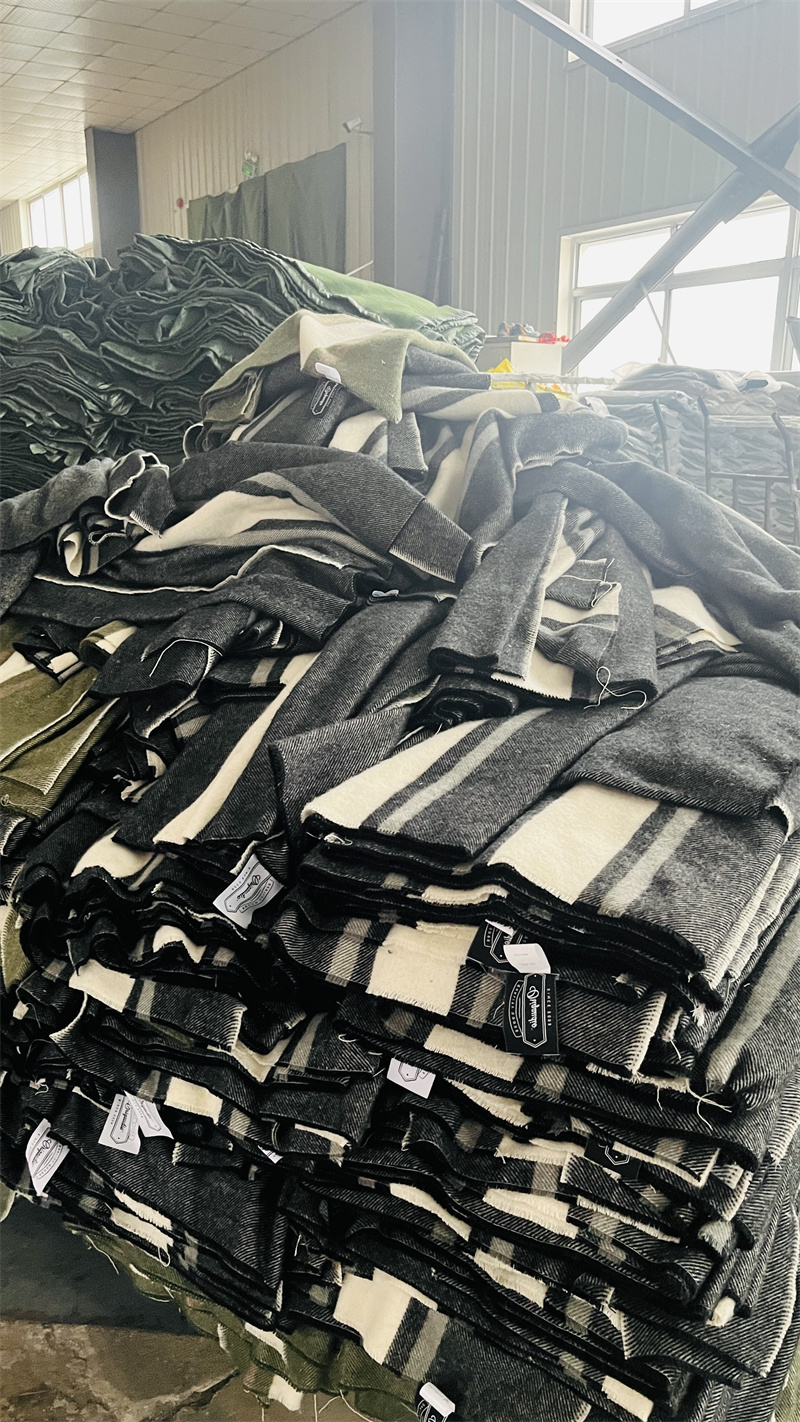
YRF Emergency Relief Supplies operates with its own manufacturing facility as the core, while integrating a stable network of upstream and downstream partner factories to form a complete supply chain—from raw materials to finished goods and outbound shipment. The facility is equipped with modern production equipment and multiple dedicated production lines for emergency relief blankets, capable of fulfilling orders ranging from small trial batches of a few hundred units to large-scale government emergency stockpile projects of hundreds of thousands of units.
Three audit options are available:
Online Video Audit: A live-stream or recorded walkthrough of the main production lines, quality inspection stations, and warehouse can be arranged with 3–5 business days' advance notice, enabling initial due diligence without travel.
Third-Party Agency Audit: Audits by internationally recognized inspection bodies such as SGS, BV, or Intertek—or by agencies appointed by the buyer—are fully supported. Audit fees are typically borne by the buyer; it is recommended to confirm the schedule and inspection checklist scope at least 2–4 weeks in advance.
On-Site Visit: Government procurement representatives, NGO logistics officers, and compliance reviewers are welcome to visit in person, subject to advance appointment of 1–2 weeks to allow proper preparation.
For government tender projects or international aid procurement framework supplier qualification reviews, business registration certificates, production licenses, and relevant quality inspection certificates can be provided simultaneously to support supplier due diligence documentation requirements.
Q1: Pricing, Quotation Logic & Minimum Order Quantity
What factors affect the price of emergency relief blankets? What is the MOQ?
The unit price of emergency relief blankets is directly tied to multiple variables, which is why a standardized uniform quotation cannot be provided outside of a project context. Material configuration (pure cotton, polyester-cotton blends, wool blends, or aluminized composite coatings), weight range and thickness grade, size specifications (standard single-person or extended oversized versions), degree of customization (whether custom branding or specific colors are required), and order quantity all directly affect the final price structure.
Understanding quotation logic through three tiers is typically more practical:
Small Batch Trial Order Tier (usually with a few hundred units as a reference starting point): Unit price is relatively higher, suitable for completing sample verification and small-scale field testing prior to full-volume procurement. Standard Project Batch Tier (typically in the thousands to tens of thousands of units): Corresponds to standard project unit pricing and represents the typical range for most government emergency stockpile blanket procurement and NGO aid projects. Large-Scale Framework Agreement Tier (targeting annual contracts, national strategic reserves, or multi-country aid programs): Comprehensive pricing plans and priority capacity arrangements can be discussed after evaluating total volume and cooperation duration.
For orders requiring custom colors and rescue organization logos, the minimum order quantity is typically 1,000 units, ensuring process stability and batch consistency. For specific quotations, please provide project background information (volume range, specification direction, destination country, and delivery timeline) to enable a configuration proposal with meaningful reference value.
Q2: Lead Times, Production Capacity & Emergency Rush Delivery
Can large quantities of emergency blankets be delivered quickly for urgent disaster relief projects?
Standard production lead times are jointly affected by order volume, specification configuration (whether customization is involved), and current production capacity—no fixed number of days applies to all scenarios. Small batch trial orders typically have shorter lead times than medium-to-large batch orders; customized versions require more time than standard versions. Specific lead times will be listed in the contract after the configuration is confirmed and shall be governed by the contract terms as the final reference.
In terms of capacity, the factory is equipped to handle medium-to-large emergency relief supplies bulk orders, with reasonable reallocation of production lines across similar product categories. When extreme disasters cause sudden demand surges, priority scheduling, additional shifts, and industry cluster collaboration can be used to support emergency rush delivery of disaster relief blankets to a certain degree. However, actual rush capacity is jointly constrained by specific order quantities, raw material inventory, and logistics conditions, and must be jointly assessed at the beginning of the project before confirmation.
For government disaster preparedness stockpiling and NGO aid procurement, the earlier communication is initiated, the easier it is to reserve capacity and pre-stock materials, effectively reducing fulfillment risk during last-minute emergency orders. If annual framework procurement of emergency blankets is to be incorporated into a long-term contract, advance negotiation of capacity reservation and priority scheduling arrangements is recommended.
Q3: Product Certifications, Testing Reports & Applicable Standards
What certification and testing requirements must emergency relief blankets meet? What reports can be provided?
For standard products, OEKO-TEX harmful substance safety testing reports and ISO quality management system certification documents are currently available, meeting the baseline compliance requirements for most government procurement and international aid projects. Routine testing covers fiber composition identification, color fastness testing, tensile breaking strength and tear strength tests, formaldehyde content, and pH safety testing. Relevant emergency supplies quality inspection reports can be provided alongside samples during the inquiry stage.
If the tender documents or technical specifications designate specific standard codes—such as procurement standards for United Nations aid project blanket supply, import certification requirements for specific destination countries, or specific format reports required for government stockpile emergency blanket project acceptance—targeted testing and certification can be arranged accordingly, with specific timelines and costs depending on the test items required.
For international projects with humanitarian aid blanket compliance certification requirements, it is recommended to confirm the complete document checklist from the donor or destination country regulatory authority before initiating procurement, to ensure that all reports conform to the project acceptance standards in format, language, and content. The validity of all certifications above is subject to the current documents at the time of actual project verification.
Q4: Custom Specifications, Colors, Branding & Packaging
Can emergency relief blankets be customized with specific colors and rescue organization logos? What packaging options are available?
(1)Color and Branding Customization
Custom-specified colors (such as UN blue, ICRC standard color, national civil defense designated colors, etc.) and rescue organization logo printing are supported. Custom-color emergency relief blankets have a minimum order quantity of 1,000 units. Logos can be applied by printing or weaving, with the specific process confirmed based on fabric material and design complexity. Artwork must be confirmed in writing by the buyer before mass production to ensure color tolerance and placement meet the standards.
(2)Specification and Size Customization
Both standard single-person and extended oversized versions are available, and non-standard size customization is also supported for specific populations (such as smaller dimensions for children or wider versions for multi-person shared use). Weight can be configured between lightweight and high-warmth options as required; specific weight ranges should be clearly specified in the technical requirements document as the unified basis for production and acceptance inspection.
(3)Packaging Options
Standard versions offer a compression vacuum-packed emergency blanket solution, reducing individual unit volume by approximately 70%, with approximately 50 units per standard carton, significantly improving warehouse storage density and container loading efficiency. This packaging method is particularly suitable for bulk emergency supplies warehouse storage, substantially reducing inventory footprint and logistics costs.
For projects with special packaging requirements (such as multilingual labels, batch barcode traceability, neutral unbranded packaging, or custom outer carton markings by project code), these can be itemized in contract annexes to ensure that goods arrive ready for direct distribution or warehousing.
(4)Neutral and White-Label Packaging
Neutral, unbranded packaging is supported, applicable for distributor white-label operations or government procurement compliance requirements that call for removal of supplier identification. If a specific institutional logo is required, please provide written authorization and design files. No national or institutional official emblems will be used without authorization.
Q5: Export Compliance and Product Applicability Statement
Are emergency relief blankets subject to trade controls? Are there any special export restrictions?
Emergency relief blankets are classified as civilian protection textile supplies and do not fall under weapons, ammunition, or dual-use controlled items listed in export control regulations. Under normal circumstances, no special export license is required, and they can be directly used for government post-disaster resettlement procurement, NGO humanitarian aid distribution, and emergency supplies stockpiling across cross-border procurement scenarios.
For cross-border export documentation, commercial invoices, packing lists, certificates of origin (CO), OEKO-TEX testing reports, and other customs clearance documents required by the destination country can be provided as needed. Assistance can be offered to confirm whether conformity verification or compliance declarations in specific formats are required, based on the import regulations of the buyer's country.
For projects under the United Nations and international organization aid supplies procurement framework, a combination of supplier qualification documents meeting project requirements can be provided to satisfy donor compliance review needs. If the destination country has special import requirements for textile aid supplies (such as harmful substance threshold standards or mandatory label language), it is recommended to verify these before confirming the procurement plan to avoid delays in customs clearance and project acceptance milestones.
Q7: Transportation, Container Loading & Customs Clearance Support
When sourcing emergency relief blankets from China, how are logistics and customs clearance coordinated?
Sourcing emergency relief blankets from China offers several substantive advantages in logistics coordination. Below are key considerations when planning a procurement plan:
(1)Direct Impact of Compression Packaging on Container Loading Efficiency
Choosing the compression vacuum-packed emergency blanket solution reduces individual unit volume by approximately 70%, with approximately 50 units per standard carton. The volume of goods carried in the same container space increases significantly, making it an effective way to reduce the per-unit logistics cost for large-scale cross-border shipments. During the quotation and logistics planning stages, it is recommended to clearly distinguish between compressed and non-compressed versions, as the difference in container utilization between the two significantly affects freight estimates and total logistics budget calculations.
(2)Trade Terms and Responsibility Boundaries
Commonly used trade terms include FOB (factory responsible up to pre-shipment), CIF (including freight and insurance), and DAP (door-to-door delivery). It is recommended that the contract clearly specify trade terms and define the start and end points of cargo insurance, to avoid disputes over liability attribution after delivery. All terms are subject to the final signed contract between both parties.
(3)Customs Clearance Documentation Support
Commercial invoices, packing lists, certificates of origin (CO), OEKO-TEX testing reports, and quality inspection certificates can be provided according to destination country requirements. Documentation is primarily in English; if other language versions are needed, confirmation should be made in advance. For destination countries with special customs requirements (such as pre-clearance certification requirements in specific regions), it is recommended to confirm the document checklist before contract signing to allow sufficient preparation time.
(4)Multi-Batch Shipments for Urgent Projects
For time-sensitive disaster emergency blanket bulk shipment projects, assistance with planning multi-batch container loading and dispatch solutions can be provided to reduce the impact of single-batch delays on overall project timelines. Specific plans must be developed in conjunction with destination port capacity and vessel schedules.
Q8: After-Sales Service, Warranty & Complaint Handling Mechanism
If quality issues arise upon arrival of emergency relief blankets, how are they handled?
Warranty Principle: For quality issues caused by manufacturing defects, responsibility is accepted within the warranty period specified in the contract. The resolution method (supplementary shipment, replacement, or reasonable compensation) is governed by the contract terms. The warranty period reference range for textile emergency supplies is recommended to be clearly specified in the contract during the negotiation stage, with the contract agreement as the final reference.
Issue Handling Process: When a quality dispute arises, please provide the batch number, problem description, and photographic or video documentation to enable rapid identification of batch information and production milestones. A clear determination of responsibility boundary is made by distinguishing manufacturing quality issues (our responsibility), transport damage (handled by freight forwarder or insurer), and wear from use beyond designed operating conditions (outside warranty coverage). Once the nature of the issue is confirmed, resolution is completed within the timeframe and by the method stipulated in the contract—responsibility is not shirked, and additional liability for damage caused by abnormal use is not accepted.
For government procurement emergency blanket acceptance or compliance reviews in international aid projects, third-party inspection agencies or buyer internal review processes can be coordinated, with batch production records and outgoing inspection reports provided to ensure that resolution conclusions are technically substantiated and support project audit archiving requirements.
Q9: Small Batch Trial Orders, Samples & Co-Development
Is it possible to start with a small trial order or customized samples? Can new specifications be co-developed?
Sample Support: Standard samples can be provided for the buyer's internal review and technical specification verification. Sample production lead times are typically much shorter than full production lead times. Whether a sample fee and shipping arrangement apply is recommended to be confirmed at the start of communication to allow reasonable planning of project milestones.
Small Batch Trial Orders: Placing a smaller quantity order before committing to full-volume procurement is supported, helping procurement teams verify actual product performance in real-use or small-scale distribution scenarios. Small batch unit prices are typically higher than bulk production prices due to the inability to fully realize economies of scale at low volumes—this is standard industry practice, and it is recommended that trial order costs be budgeted separately when planning project finances.
Co-Development: For long-term cooperation intent customers with a clear project background—such as special high-warmth standard configuration needs for cold-region disaster emergency blankets, or specification development for refugee camp dedicated insulation blankets tailored to specific vulnerable populations—exclusive specifications or full supplies configuration plans can be jointly designed. The development process requires time and resource investment from both parties, with specific arrangements to be negotiated based on project scale and timeline.
If currently participating in government tender or NGO aid project bidding, it is recommended to initiate sample communication at least 4–6 weeks before the bid closing date, reserving sufficient time for sample confirmation and internal approval processes.
NGOs and International Aid Agencies: It is recommended to initiate supplier conceptual consultation at the project inception stage, particularly for one-stop projects involving emergency blankets bundled with tents, folding beds, and moisture-proof mats. Early planning can significantly reduce the coordination complexity of multi-category container loading and customs clearance.
Distributors and System Integrators: Please share the target market, client type (government, public welfare, or engineering procurement), and expected project scale in advance. This enables assistance in designing disaster relief supplies product portfolio solutions better suited for tender bidding and long-term market operations, along with discussions on regional cooperation and long-term supply strategies.
For comprehensive emergency supplies configuration solutions involving emergency blankets bundled with tents, folding beds, moisture-proof mats, first aid kits, and other related supplies, please refer to the relevant category guides on this site for one-stop configuration ideas.
Next Steps: Recommended Actions for Procurement Teams
After reviewing this FAQ, the following steps are recommended to advance procurement preparation:
(1)Prepare a one-page project requirements summary, including usage scenario, target population scale, climate conditions, destination country, timeline milestones, and approximate budget range, serving as the foundational document for inquiry initiation and tender technical clause drafting.
(2)Confirm the destination country document checklist in advance, cross-referencing Q3 and Q5 content to verify with the destination country's competent authority or donor the required certification formats and report combinations, avoiding customs clearance or acceptance delays caused by non-conforming documentation upon arrival.
(3)Request samples from candidate suppliers and conduct comparative testing, evaluating key indicators including weight, dimensions, compression packaging volume, color fastness, and fabric tear strength, using test results as the basis for final contract technical specification documents.
(4)Lock in key contract clauses, including production standards and allowable tolerances, batch delivery milestones, sampling ratios and non-conforming product handling procedures, warranty period, and price adjustment trigger conditions, with the contract as the final binding reference.
(5)Initiate supplier communication, listing YRF Emergency Relief Supplies as one of the candidate suppliers and further verifying fitness for specific project requirements through sample comparison and factory audit—decisions should not be made based solely on written descriptions.
For further information on the emergency relief blanket comprehensive technical analysis and systematic procurement process, please refer to the article on this site: Complete Guide to Emergency Relief Blankets | 2026 Selection Standards · Stockpile Configuration · Procurement Practice Guide.
Main Keyword: Emergency Relief Blanket
Long-Tail Keywords: government emergency stockpile blanket、emergency relief blanket bulk procurement、compression vacuum-packed emergency blanket、long-term stockpiling of emergency relief blankets、emergency rush delivery of disaster relief blankets、custom-color emergency relief blankets、emergency supplies quality inspection reports、humanitarian aid blanket compliance certification、United Nations aid project blanket supply、United Nations and international organization aid supplies procurement、moisture-proof and mold-prevention storage solutions、national emergency supplies stockpile blanket、disaster relief supplies product portfolio、government procurement emergency blanket acceptance、emergency relief supplies bulk orders、cold-region disaster emergency blankets、refugee camp dedicated insulation blankets、sourcing emergency relief blankets from China、disaster emergency blanket bulk shipment、emergency blankets bundled with tents folding beds and moisture-proof mats、international aid projects requiring one-stop supplies configuration、emergency relief blanket comprehensive technical analysis
Précédent :
China Factory B2B Wholesale Turkey Flood Disaster Prevention & Disinfection Equipment (Turkey Market): 99% Sterilization Rate + Full Configuration Solution, ISO Certified for Emergency ScenariosSuivant :
Chinese Factory B2B Wholesale Myanmar Flood Evacuation Equipment (Myanmar Market): 5-Second Packing + 30-Second Deployment + 200KG Load-Bearing, ISO Certified for Emergency Evacuation ScenariosLiens amicaux :
droits dauteur © Custom Disaster - Relief Bedding: Tents, Sleeping Bags, Blankets Tous les droits sont réservés
léquipe professionnelle au service !