Catégories
dernier blog
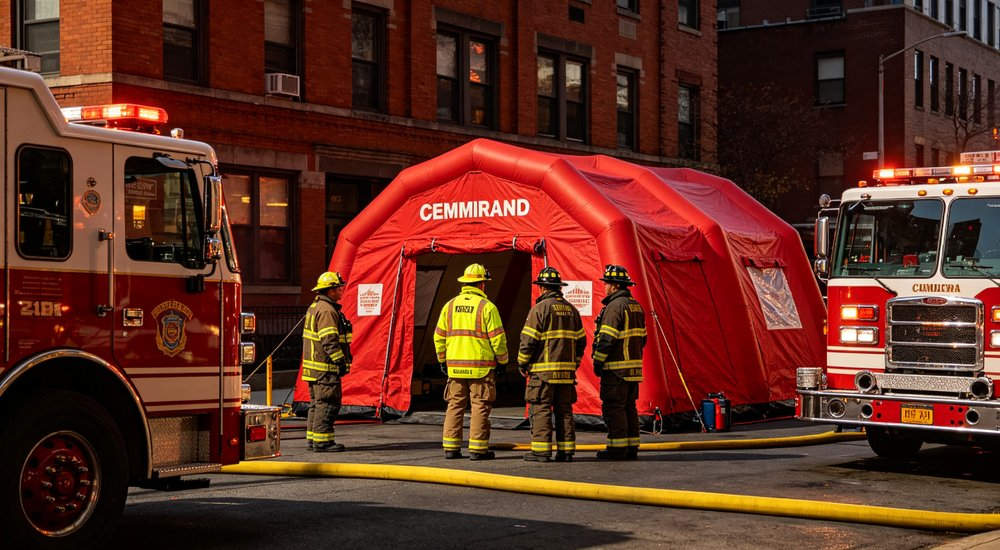
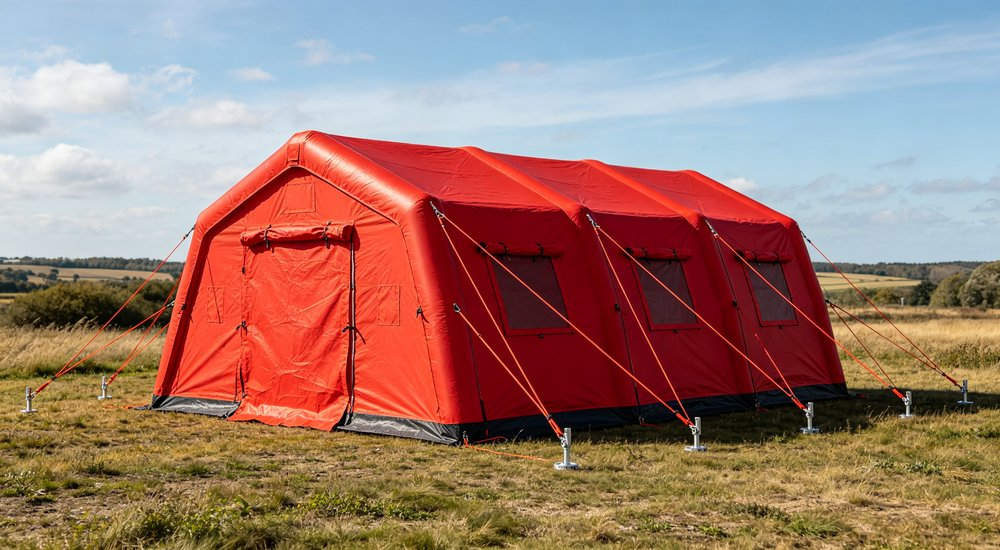
A fire rescue inflatable tent is a red, air-beam shelter built specifically for incident command post, firefighter rest, and on-scene medical support roles.
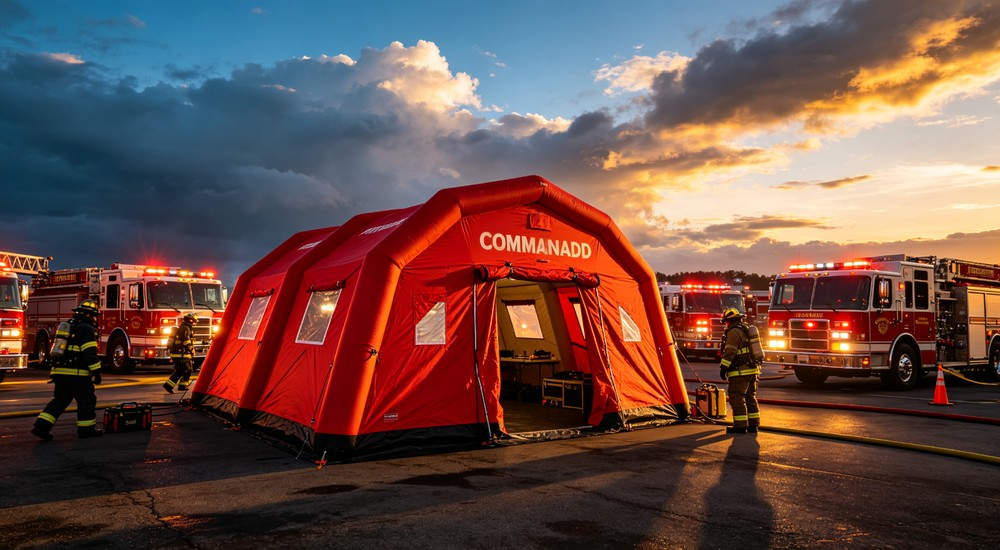
Engineered for rapid deployment at emergency scenes — immediate shelter for incident command, medical triage, and personnel rest.
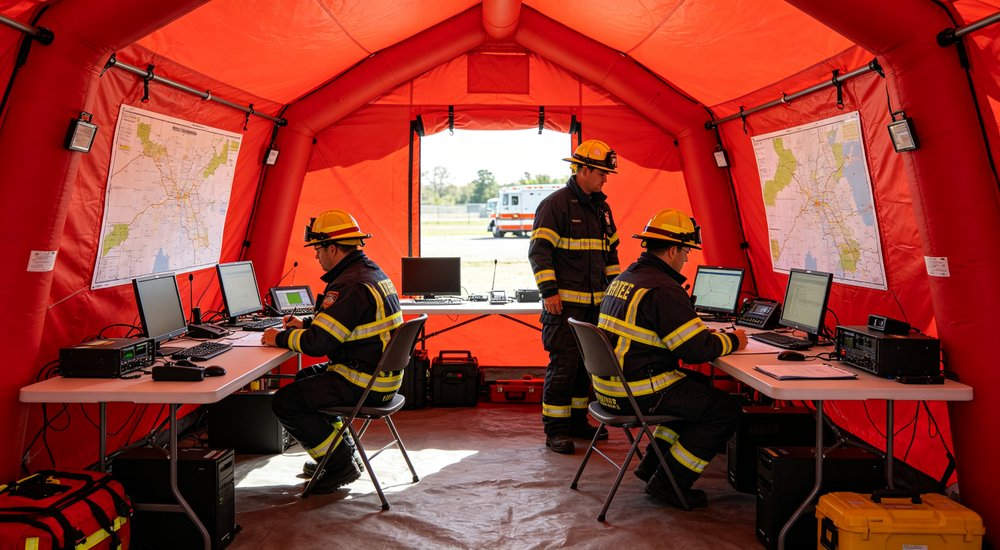
Configurable interior layouts for command centers, medical stations, and multi-agency coordination hubs.
Single-person inflation in 5-8 minutes — critical when every second counts during active fire operations.
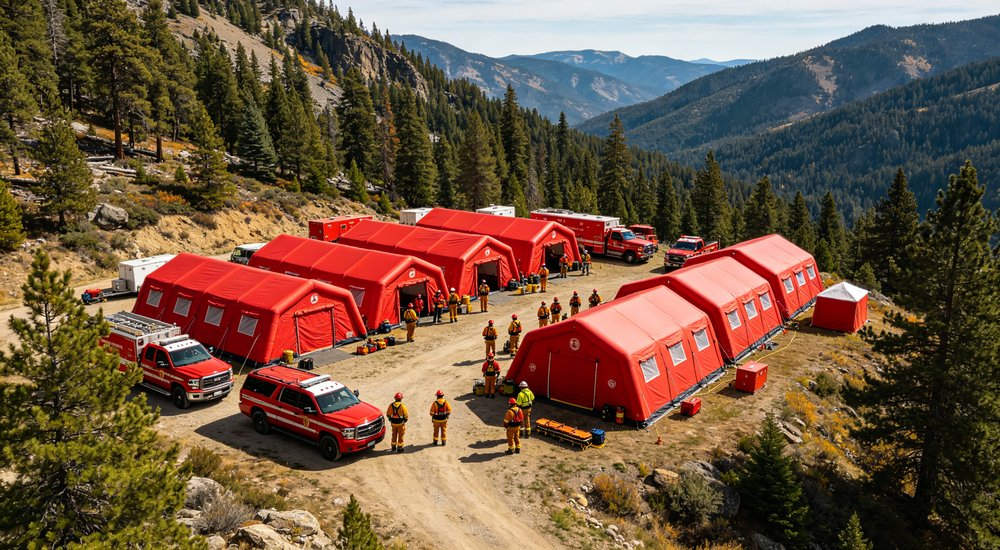
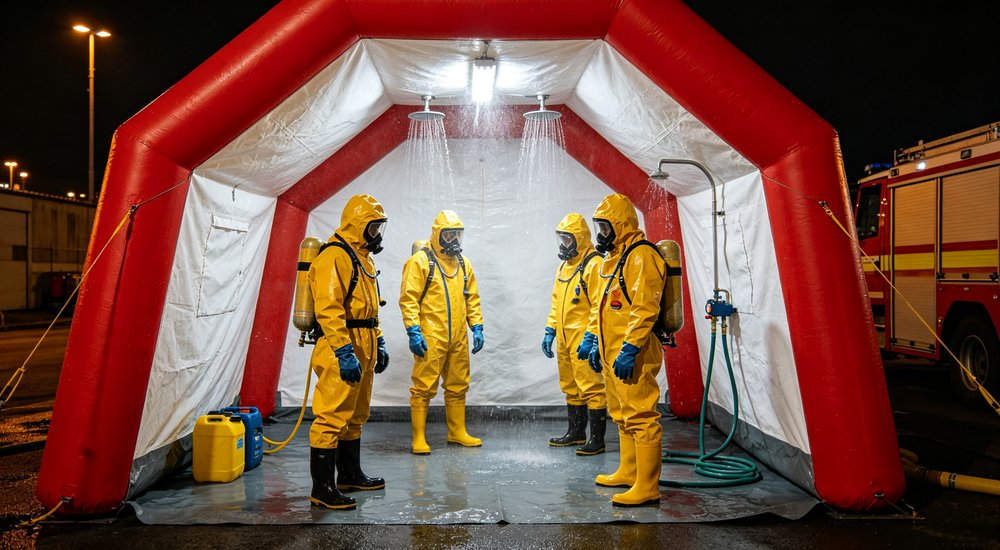
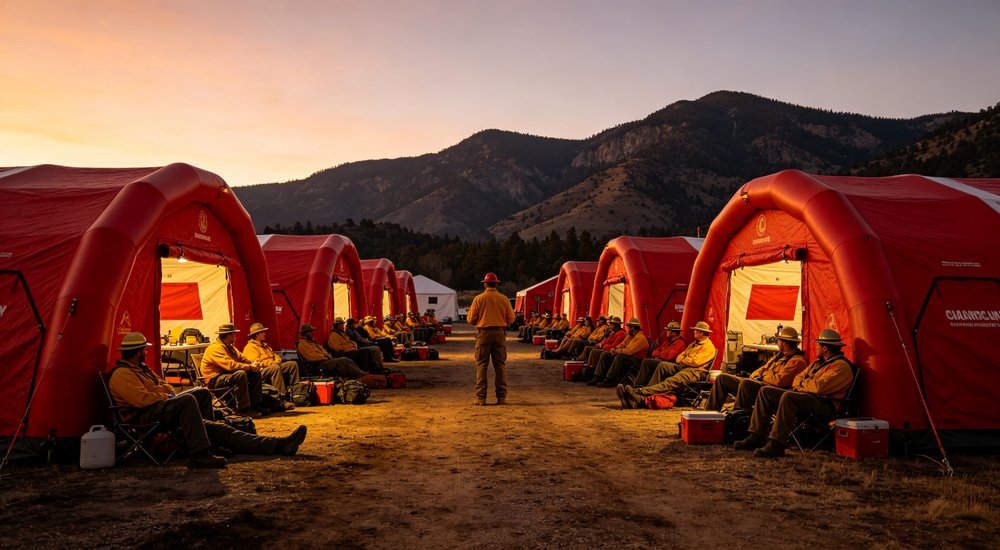
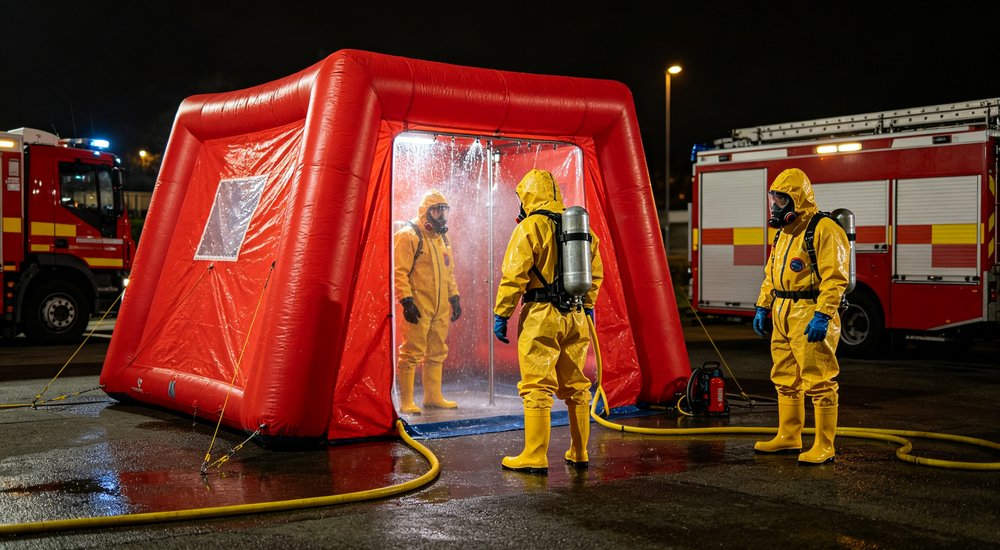
Deployed across urban fires, wildfire command posts, and emergency command tent setups for multi-agency response, chemical spill decontamination, and multi-agency emergency responses.
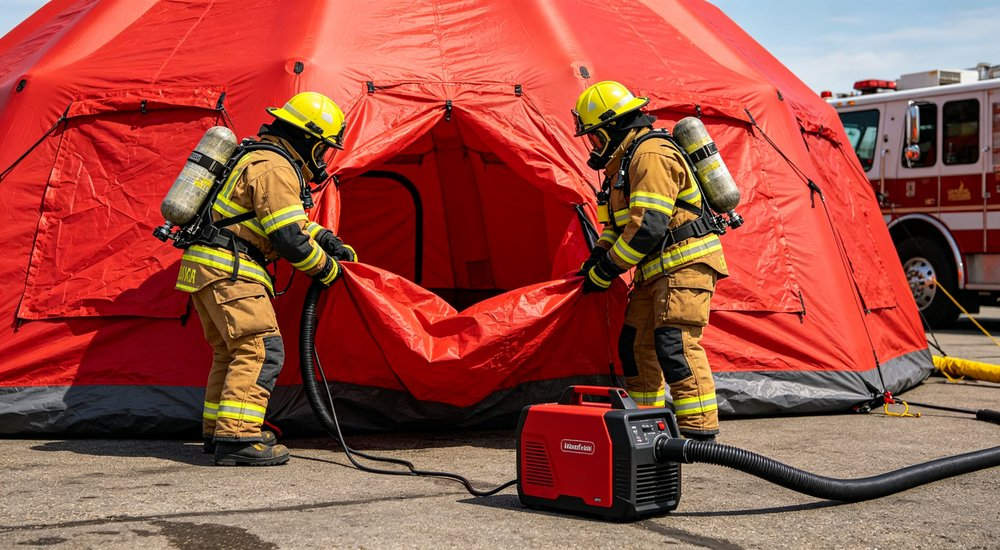
Single-person inflation in 5-8 minutes — critical when every second counts during active fire operations.
Deployed across urban fires, wildfire command posts, and emergency command tent setups for multi-agency response, chemical spill decontamination, and multi-agency emergency responses.
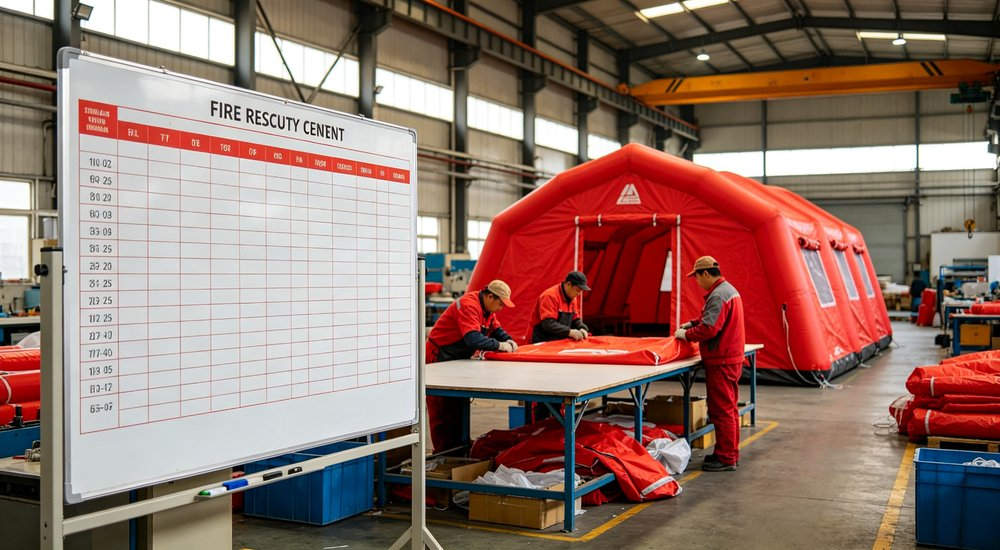
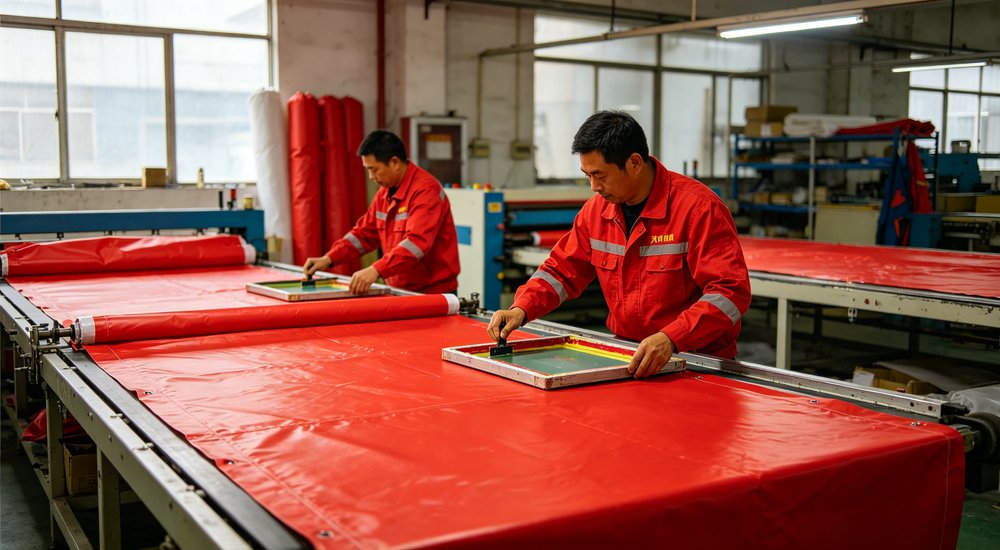
As a fire department tent manufacturer producing shelters since 2008, we supply rapid deployment command posts to fire brigades, emergency management agencies, and government procurement programs. The high-visibility red fabric, reflective strips, and fire-retardant coating make it a purpose-built emergency command shelter that stands out on any scene.
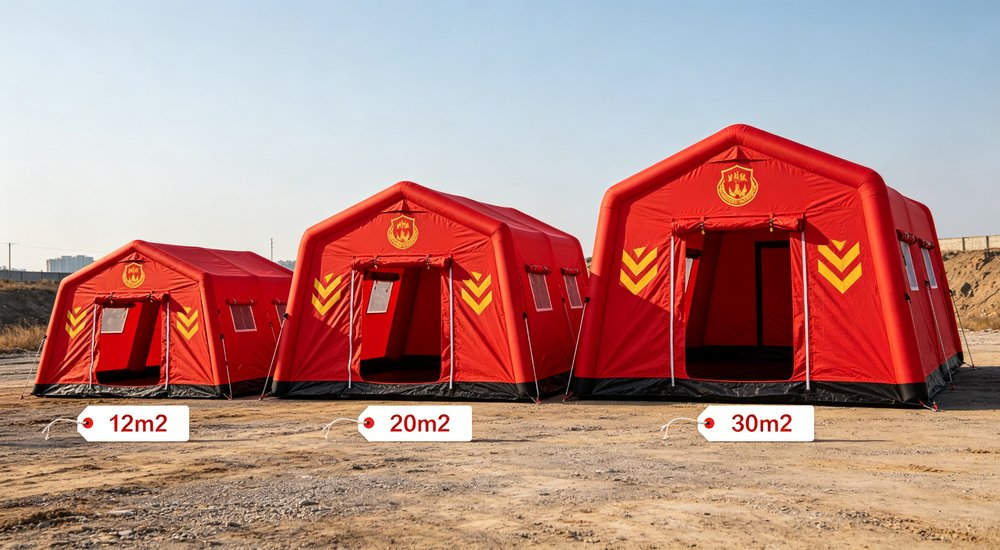
Standard sizes run from 12m² (4×3m) for a single firefighter tent to 30m² (6×5m) for a full mobile command center tent.
Two to three people can inflate and secure a 12–20m² unit in 10–20 minutes using an electric pump. Working pressure is 0.3–0.8 bar depending on wind conditions.
Short answer: A fire rescue inflatable command tent is not a camping tent painted red. It combines air-beam speed-of-deployment with mission-specific features: high-visibility RAL 3020 red fabric, 3M reflective strips along the roof and doors, NFPA 701 / CPAI-84 fire-retardant coating, cable entry ports for communications gear, and built-in LED lighting. Red inflatable shelter pricing starts around $1,200 for a basic 12m² unit and reaches $4,500+ for a fully equipped 30m² command post. Always compare complete configurations, not just the shell.
|
1. What is a fire rescue inflatable command tent? |
7. Ground, heat, smoke and anchoring |
|
2. Why rapid inflation matters on fire scenes |
8. What a complete fire command set includes |
|
3. Where fire rescue tents deploy |
9. Why two brigade projects differ |
|
4. Not the same as camping or generic shelters |
10. What to tell suppliers |
|
5. Fire command vs standard inflatable tent (table) |
11. What a good supplier reply looks like |
|
6. How to pick the right size |
|
|
15+ |
60+ |
8,000+ |
ISO 9001 |
|
Years Since 2008 |
Countries Served |
Units Delivered |
Certified Factory |
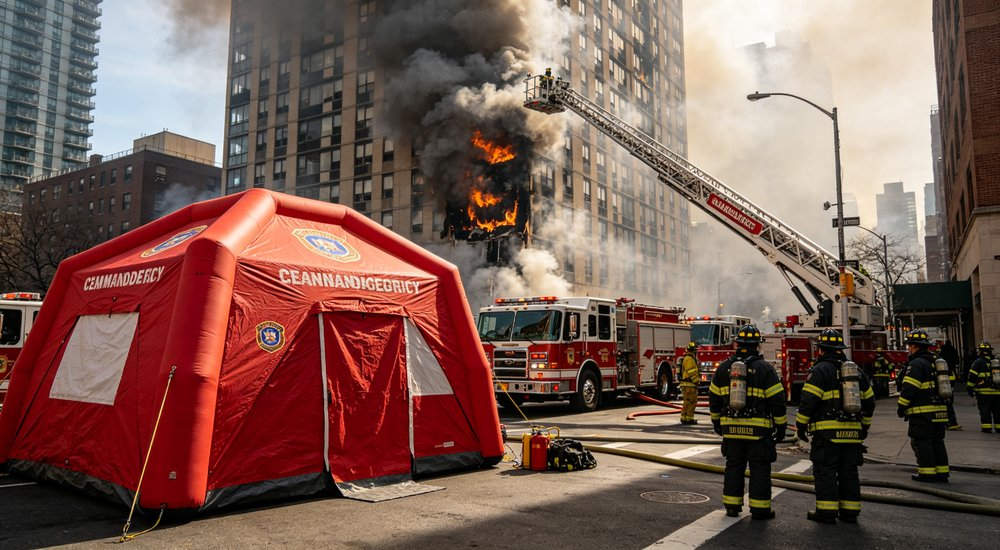
A 12m² unit takes 10–15 minutes with two people. A 30m² command post takes 15–20 minutes. Electric pumps cut setup time in half compared to manual inflation. Times exclude anchoring and equipment setup. This fire command tent is also known as an inflatable fire shelter, designed specifically for fire department rapid response operations. Fire departments worldwide rely on this rapid deploy fire tent as their primary inflatable fire shelter for on-scene command and triage operations.
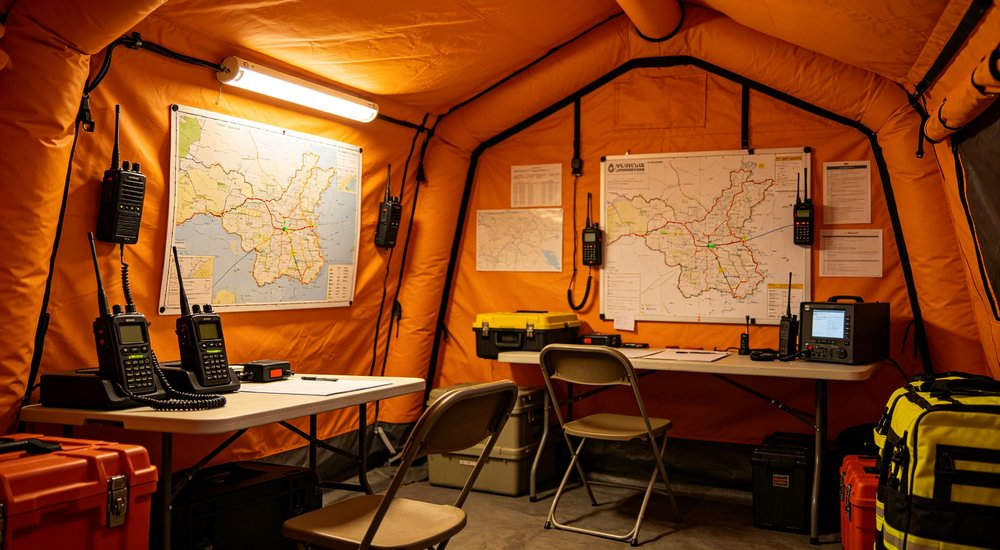
Interior command configurations include dedicated communication stations, tactical planning areas, and medical triage zones.
The air beam fire tent design achieves a fire tent setup time of just 5-8 minutes with a single operator using an electric pump. When learning how to choose fire rescue tent dimensions, consider personnel count, equipment storage, and fire command tent size requirements for your specific operational scenario. Standard fire rescue tent wind rating reaches 60-80 km/h with proper guy line tension and ground anchoring on asphalt or grass surfaces. For fire department tent procurement, specify your rapid deploy tent for fire brigade requirements including inflation time, interior height, and accessory compatibility. This emergency command tent serves as the central coordination hub for incident commanders during structural fires, wildfires, and multi-agency emergency responses. Fire departments worldwide choose this rapid deploy fire tent for its proven reliability in real-world emergency operations across diverse climate conditions.
Standard units handle 60–80 km/h with proper guy lines. Heavy-duty models reach 100 km/h. Fire scenes often involve unpredictable wind shifts near flames, so always anchor with stakes and guy ropes at 45° angles.
Yes. All red command tent fabric meets NFPA 701 and CPAI-84 flame resistance standards. The PVC coating self-extinguishes when the flame source is removed. Request the actual test report with any quotation.
Internal cable ports (2–4) pass through sealed grommets for radio, data, and power cables. Pre-installed hanging points hold equipment racks. A flat map-display area on one wall accommodates incident boards or digital screens
Additional buyer notes: custom fire department logos and unit markings can be printed on tent walls (MOQ 50+ units). Folded tents must be cleaned and fully dried before storage to prevent mold on the red PVC surface.
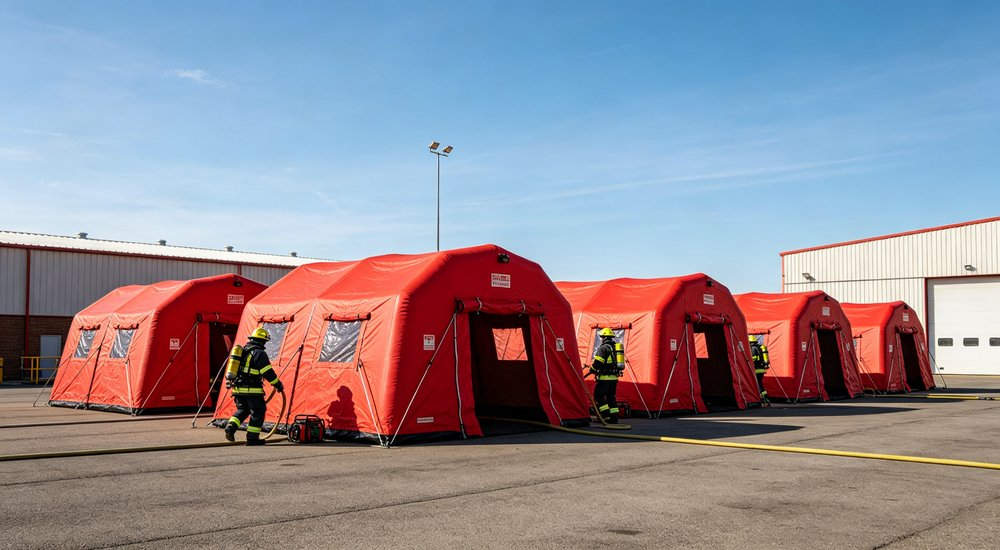
A fire rescue inflatable tent replaces rigid poles with pressurized air beams.
When the beams reach 0.3–0.8 bar, they support the red PVC cover and create a weather-sealed interior. This is the basic structure — the fire-specific features are what separate a fire scene command tent from a generic shelter.
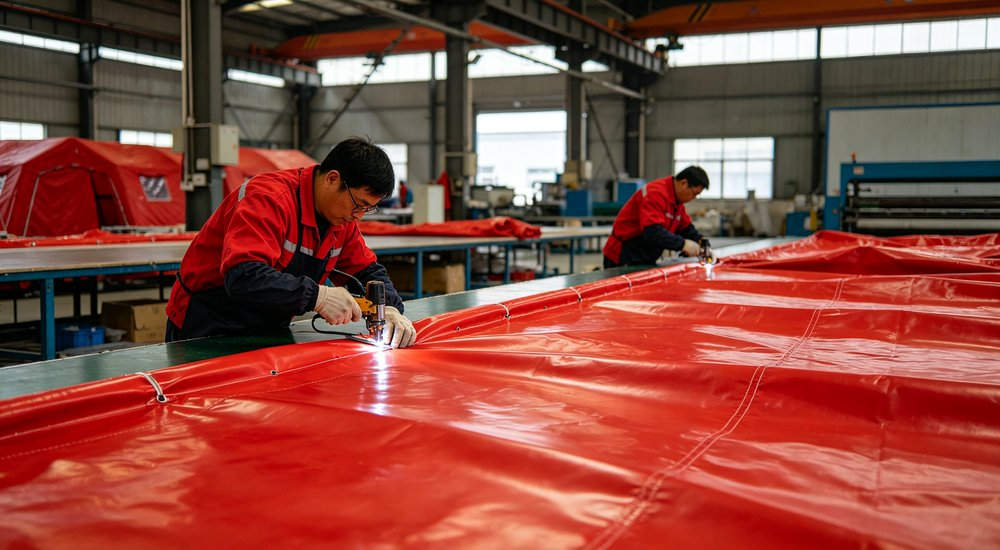
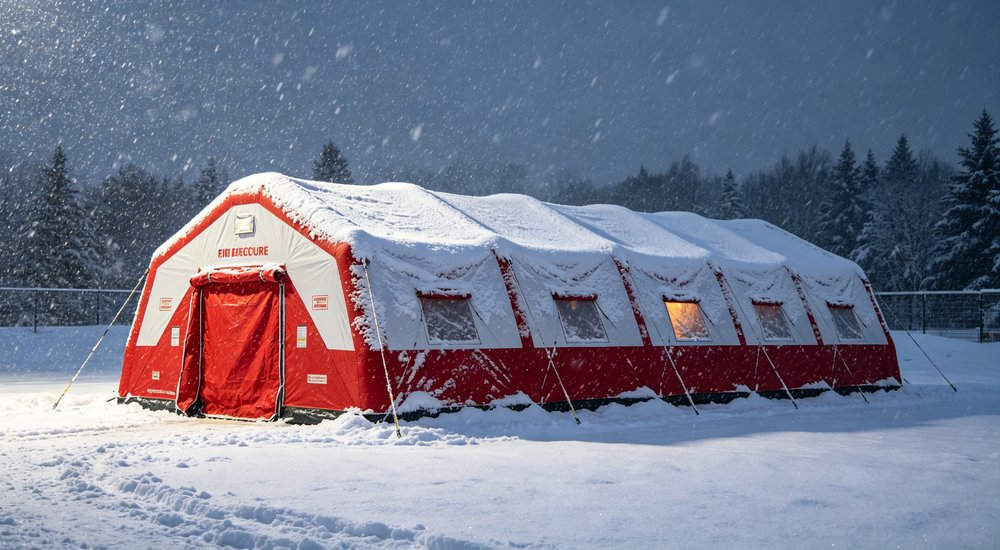
Weather resistance is a key design consideration, with waterproof coatings and wind-rated anchoring systems providing reliable shelter in rain, snow, and high wind conditions.
After the event, deflate, fold, and pack. A 12m² unit packs to 0.8–1.2m³ and weighs 50–75kg. A 30m² unit packs to 1.5–2.5m³ and weighs 130–190kg. Most fire brigade inflatable tent deployments need 2–3 people to carry and set up.
Key fire-specific features to verify: red fabric color code (RAL 3020 or Pantone 485C), reflective tape placement, fire-retardant certification, cable port count, and equipment mounting points.
The word "fire" in the product name does not automatically guarantee all these features — confirm each one in writing
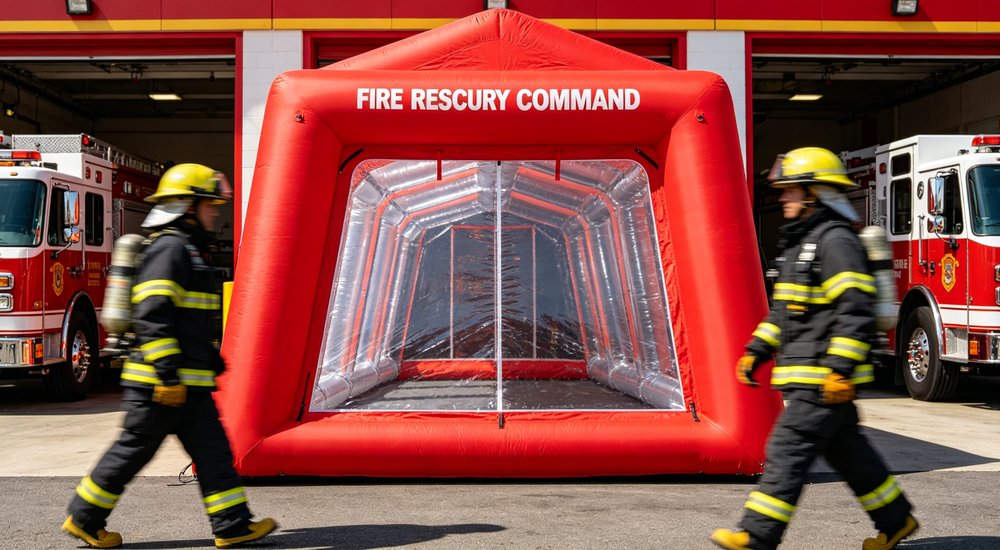
On a fire scene, minutes matter. A rapid deployment command post needs to be operational before crews are fully committed.
Air-beam construction eliminates the hours of frame-tent assembly — no poles to count, no joints to tighten, no roof panels to hoist. Two firefighters can have a 16m² command shelter ready in 12–15 minutes.
The high-visibility red color ensures the command post is easily identifiable at complex emergency scenes with multiple agencies and vehicles present
The high visibility rescue tent design uses RAL 3020 / Pantone 485C red fabric so the command post is visible across a smoke-filled scene. Night reflective emergency tent tape (3M Scotchlite or equivalent) runs continuously along the roof edge and both door perimeters, so crews approaching from any direction can locate it in the dark.
|
Specification |
Detail |
Notes |
|
Fabric color |
RAL 3020 / Pantone 485C red |
High-visibility red, not generic red |
|
Fabric weight |
280–420 g/m² PVC-coated polyester |
Heavier gauge for fire-scene durability |
|
Reflective strips |
3M Scotchlite or equivalent |
Along roof edge + both door perimeters |
|
Fire retardant |
NFPA 701 / CPAI-84 certified |
Self-extinguishing, no drip |
|
Working pressure |
0.3–0.8 bar (4–12 psi) |
0.5 bar typical for fire scenes |
|
Size range |
12–30 m² (custom up to 60 m²) |
12m² entry, 20m² standard, 30m² large command |
|
Setup time |
10–20 min, 2–3 people |
With electric pump |
|
Cable entry ports |
2–4 sealed grommets |
For radio, data, power cables |
|
Built-in lighting |
LED, low-voltage DC |
No exposed high-voltage wiring |
|
Temperature range |
-20°C to +50°C |
Ambient only; not for direct flame contact |
|
Wind resistance |
60–100 km/h |
With proper anchoring and guy lines |
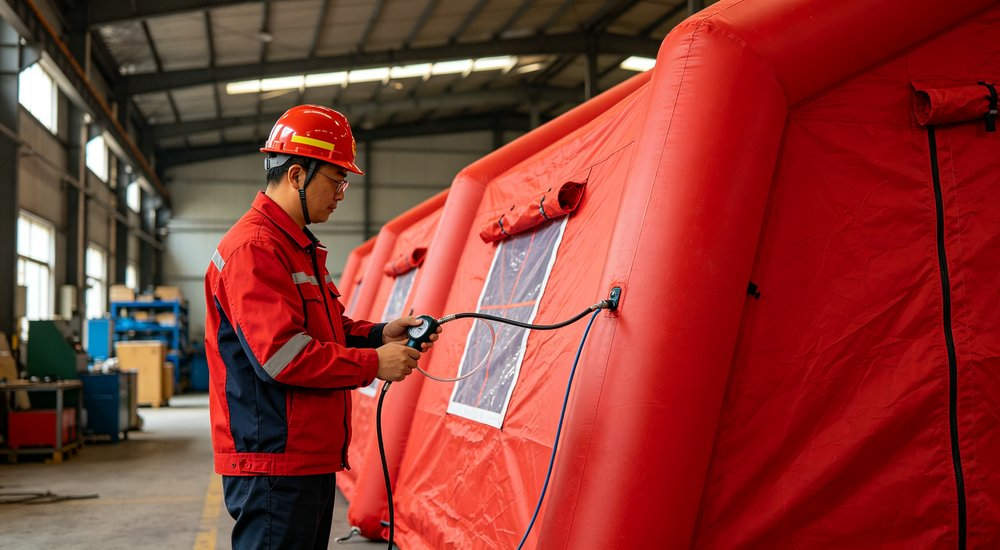
The air-beam system uses multiple independent chambers. If one beam is punctured by flying debris, the others hold the structure upright. Ask every supplier: how many independent air chambers?
Where are the inflation points? What valve type is used? How do field crews identify a pressure drop?
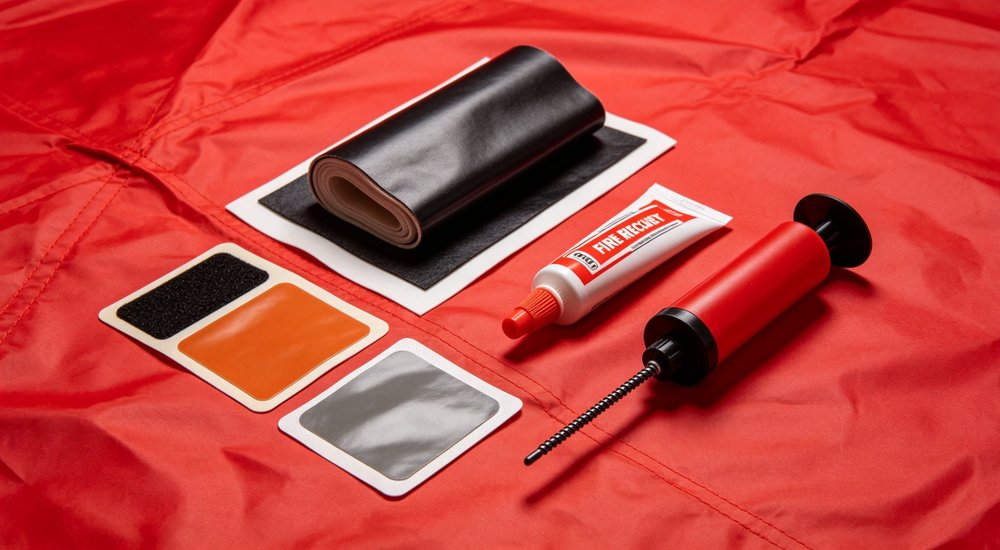
Do not copy pressure values or chamber counts from one brand to another. Also know: how to locate a small leak, what can be patched on scene with the included repair kit, and how to retest the patch before the next deployment.
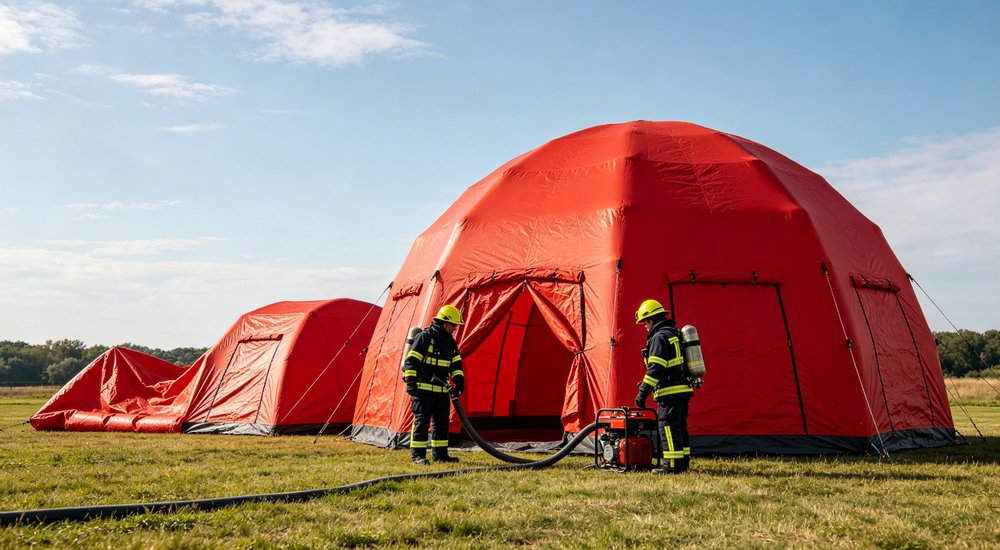
A firefighter rest tent serves as a cool-down and rehab zone for crews working long shifts. An incident command tent holds the IC, communications, and mapping.
A smaller emergency operations tent can serve as a triage point for civilian injuries. These are three different jobs that may all use the same red air-beam shell — but the interior configuration differs.
These fire rescue inflatable tents are designed to integrate seamlessly with standard fire department equipment, including communication systems, medical supplies, and lighting rigs.
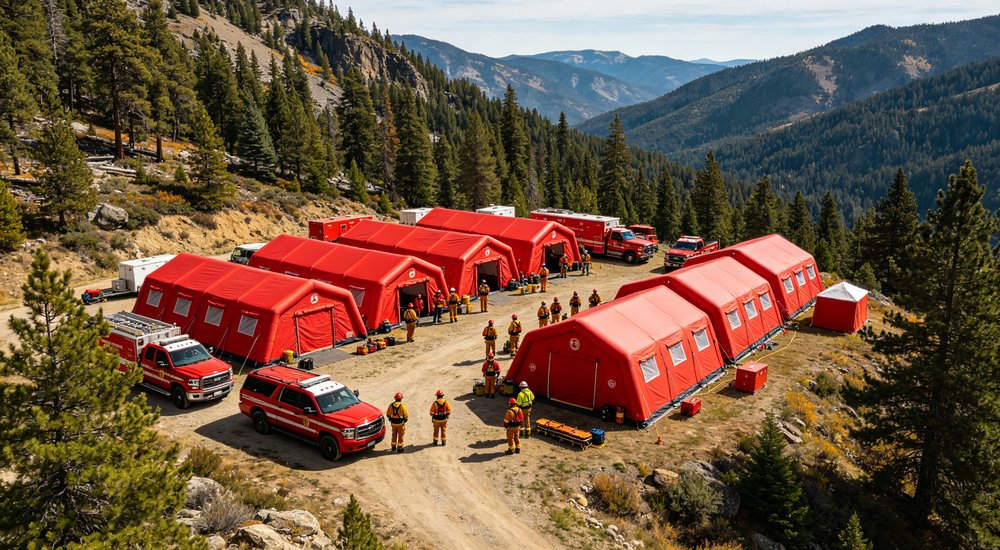
Additional views demonstrate the structural integrity and deployment flexibility of these professional fire command tents across various emergency scenarios.
For command duty, the interior needs desks, a map-display wall, cable routing, and equipment hanging points. For rest duty, it needs seating, a water station, and gear storage.
For medical triage, it connects to a medical inflatable tent via a tunnel adapter. For decontamination follow-up, it links to a decontamination tent. A frame-style tent is an alternative when no power is available for the pump.
Compare the shell and the mission equipment separately, then confirm what the final delivery includes. A red fabric cover does not by itself make a command post — it needs the cable ports, mounting points, and lighting configured for the job.
Add communication racks, HVAC, or partition walls only when you have the staff, power, and procedures to use them. Over-specifying the shell while under-specifying the command equipment is a common buying mistake.
A camping inflatable tent is designed for 2–4 overnight users, light backpacking, and weekend trips.
A fire department tent is built for repeated field deployment, heavy crew use, and identification under smoke and low light. The red color, reflective strips, and fire-retardant coating are not decorative — they are operational requirements.
A similar air-beam shape does not mean the same structural rating.
Check: internal clear height, air-beam diameter, door width for SCBA-equipped crews, floor load rating, anchor point count, and whether the reflective tape is sewn on or just stuck on. Generic shelters often skip the reflective system entirely.
A camping tent is inadequate when you need to run radio cables, hang equipment racks, or be visible at 200 meters through smoke. Conversely, a full command-post tent may be overkill for a picnic shelter or sports-event tent.
Fire service buyers should also verify repeat-order compatibility. Departments place multi-year orders.
Will replacement valves, repair patches, and door zippers match the original batch? A product designed for occasional consumer use will not give you the component continuity or documentation that a government procurement cycle requires.
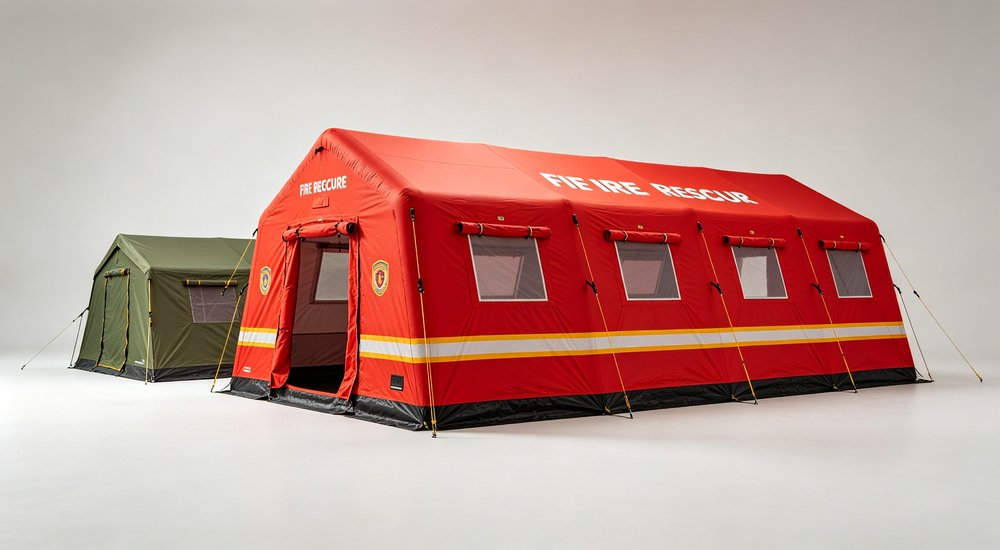
Both use air beams and fold into carry bags. But a red command tent and a standard white or green emergency shelter serve different identification and safety needs. The table below shows where the fire-specific design adds value.
Procurement specialists compare these inflatable options against traditional pole tents, evaluating total cost of ownership, storage footprint, and deployment speed.
|
Feature |
Fire Rescue Command Tent |
Standard Inflatable Tent |
|
Fabric color |
RAL 3020 / Pantone 485C high-visibility red |
White, green, or generic blue |
|
Reflective strips |
3M Scotchlite along roof + door perimeters |
None or minimal |
|
Fire retardant rating |
NFPA 701 / CPAI-84 certified, self-extinguishing |
Basic or unspecified |
|
Cable entry ports |
2–4 sealed grommets for comms/power |
None (cut your own) |
|
Equipment mounting |
Pre-installed hanging points + map wall |
None |
|
Interior lighting |
Built-in low-voltage LED, flicker-free |
Optional, separate purchase |
|
Visibility through smoke |
Red + reflective, visible 200m+ in low light |
Poor in smoke/darkness |
|
Typical price (12–20m²) |
$1,200 – $3,000 |
$800 – $2,000 |
|
Best for |
Fire scenes, incident command, crew rehab |
General emergency, camping, events |
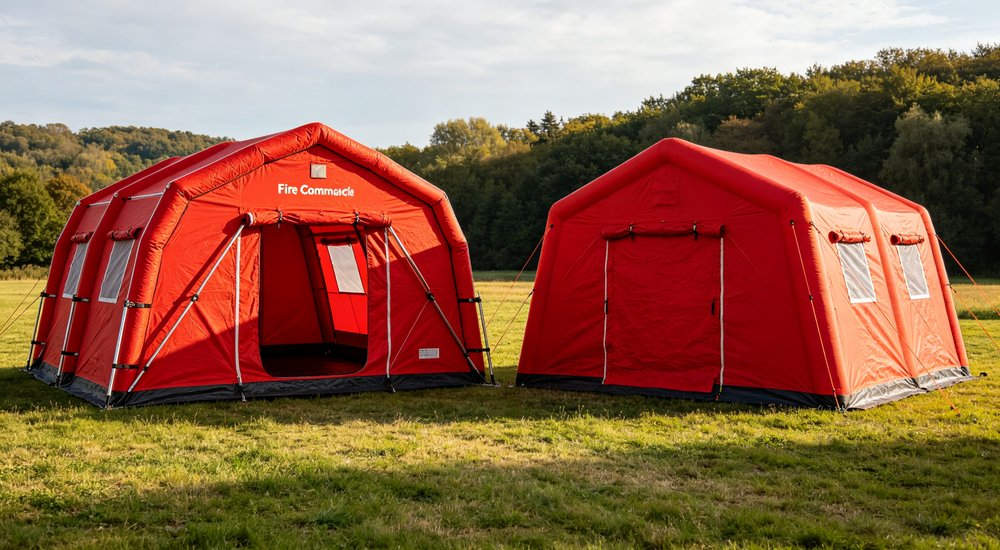
The price difference buys you identification, fire safety, and communication infrastructure. If your crews need to be found in smoke or darkness, the red + reflective system is not optional.
If the tent is only for storage or a quiet base camp far from the incident, a standard unit may suffice. See how frame tents compare for fixed sites, and see medical tent configurations for combined operations.
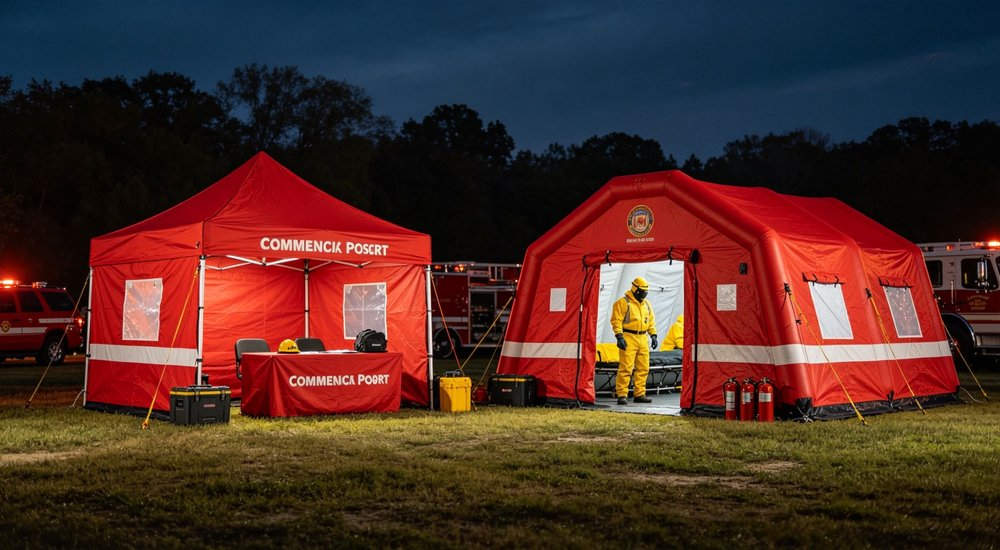
External length and width do not equal usable command space.
Air beams occupy corners, doors swing inward, desks and radio racks take floor area, and gear bags stack against walls. The same 20m² can feel crowded with four operators and equipment racks, or spacious with two.
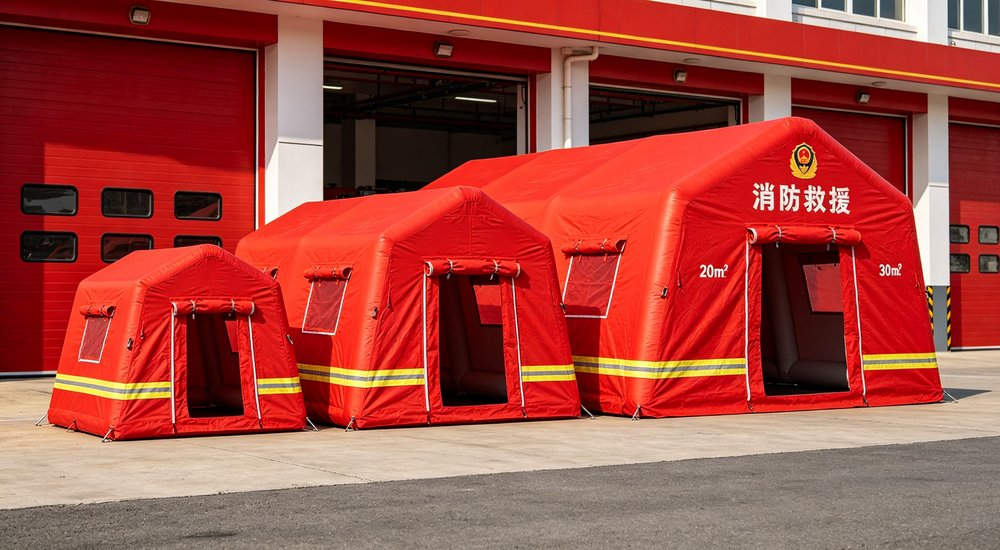
Weather resistance is a key design consideration, with waterproof coatings and wind-rated anchoring systems providing reliable shelter in rain, snow, and high wind conditions.
Additional views demonstrate the structural integrity and deployment flexibility of these professional fire command tents across various emergency scenarios.
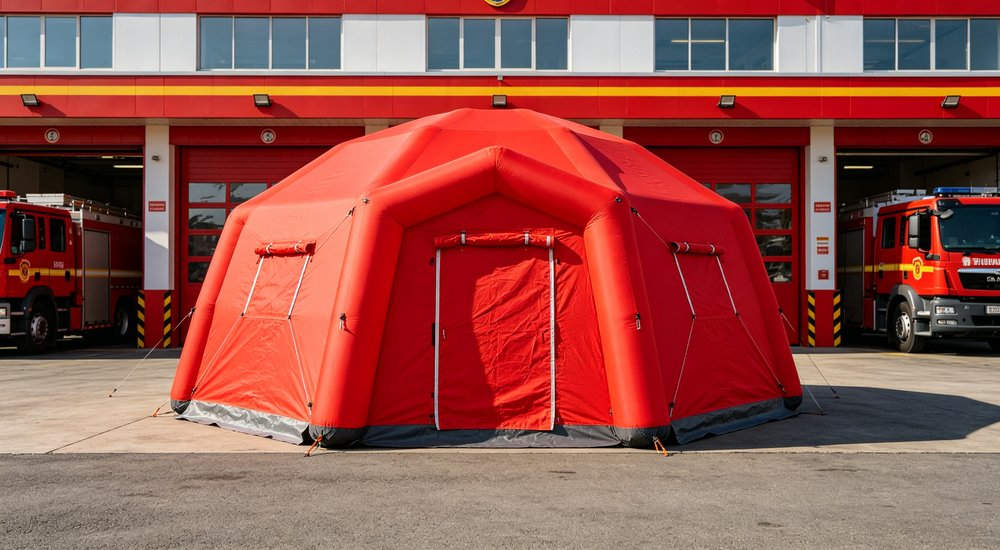
The high-visibility red color ensures the command post is easily identifiable at complex emergency scenes with multiple agencies and vehicles present.
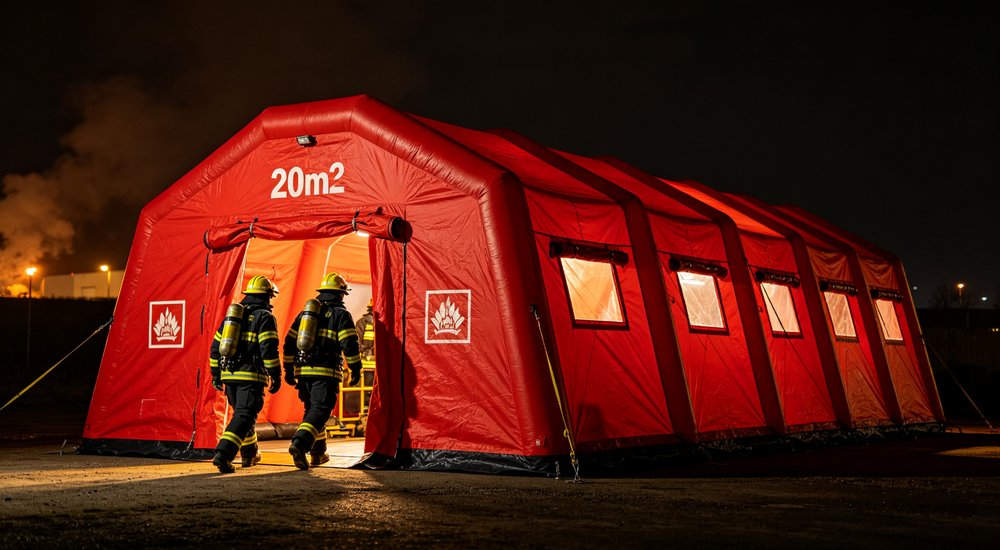
Draw a simple plan before choosing: where does the incident commander sit? Where do radios and data terminals go? Which wall holds the map display?
Where does the cable run enter? Which exit serves crews entering from the hot zone? Leave a clear aisle between the command desk and the door — crews in full gear move differently than office staff.
Ask the supplier for internal dimensions, air-beam positions, door clear width, and floor load rating.
A "fits 8 people" claim without a layout drawing tells you nothing about whether four operators, a radio rack, and a map board will actually fit.
Request a marked floor plan for the proposed size. It should show the command desk, equipment positions, cable route, map wall, and both exits. This reveals whether a larger tent solves a real space problem or just increases packing weight.
Quick sizing guide: 12m² fits 2–4 operators or a single rehab station. 20m² fits 4–6 command staff with equipment racks. 30m² handles a full mobile command center with multiple workstations and a map wall. Custom 40m²+ units suit multi-agency incidents.
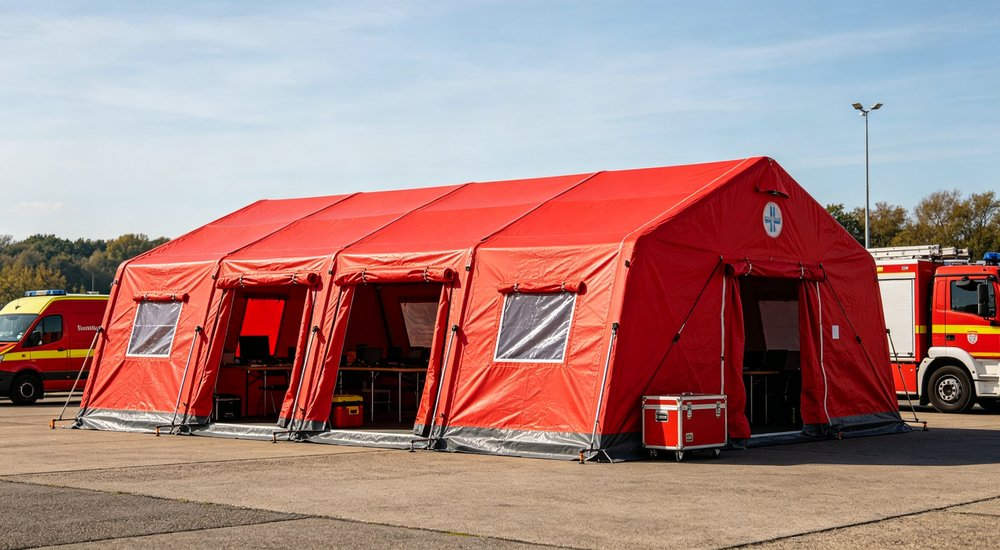
Fire scenes are not grassy fields. You may set up on asphalt parking lots, gravel driveways, cleared brush, or debris-strewn pavement.
Stakes work on soil and grass. On asphalt or concrete, use weight bags or water barrels — you cannot drive stakes. On debris or broken ground, confirm the floor liner can handle rough surfaces.
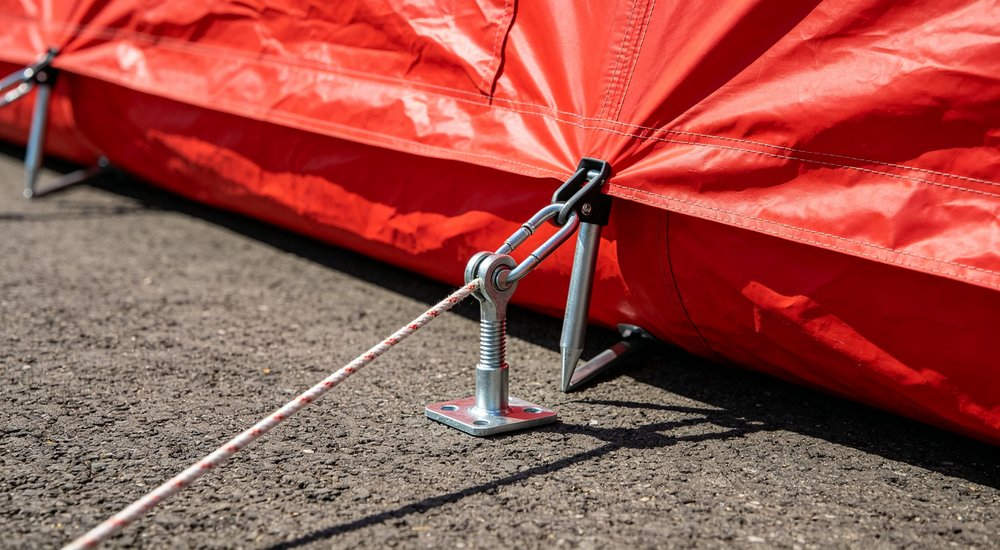
These fire rescue inflatable tents are designed to integrate seamlessly with standard fire department equipment, including communication systems, medical supplies, and lighting rigs.
Additional views demonstrate the structural integrity and deployment flexibility of these professional fire command tents across various emergency scenarios.
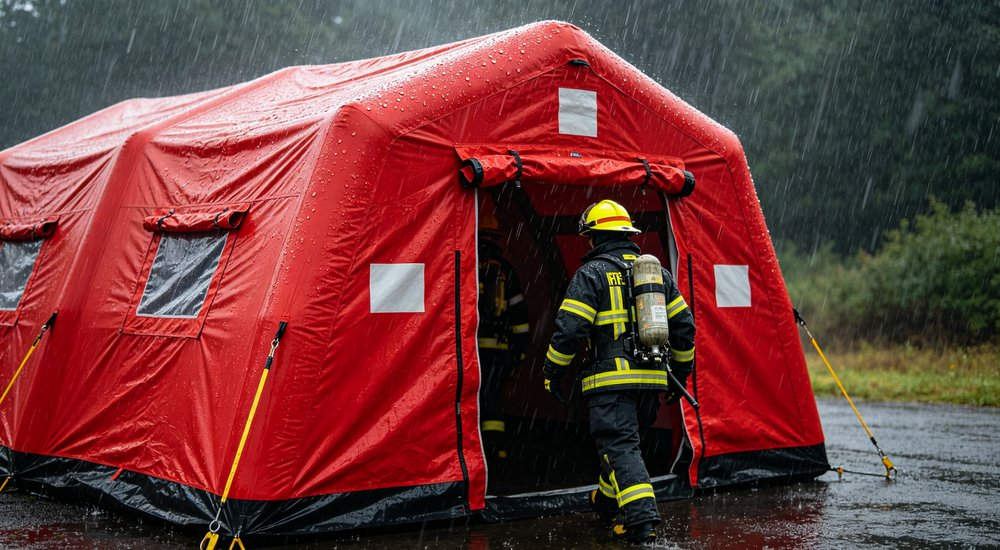
State the expected conditions to your supplier: ambient temperature near the fire, smoke exposure, wind direction shifts, and whether the tent will be within 50 meters of active flame. The PVC fabric handles -20°C to +50°C ambient.
It is not a heat shield for radiant exposure. Position the tent upwind and at a safe distance from the fire front.
Smoke management: the tent is not air-filtered. For heavy smoke conditions, add a positive-pressure ventilation fan and a fresh-air intake on the upwind side. Monitor CO and particulate levels inside — the red walls do not protect against toxic atmosphere.
Fast evacuation: all units have at least two exits. Door straps release quickly. In a flare-up, crews exit without waiting for deflation. Practice the exit drill during setup training.
Ask the supplier for an anchoring plan matched to your likely ground type.
The reply should separate included stakes and ropes from required ballast or site prep. It should also state which conditions require a different configuration — do not leave crews to discover anchoring problems on scene.
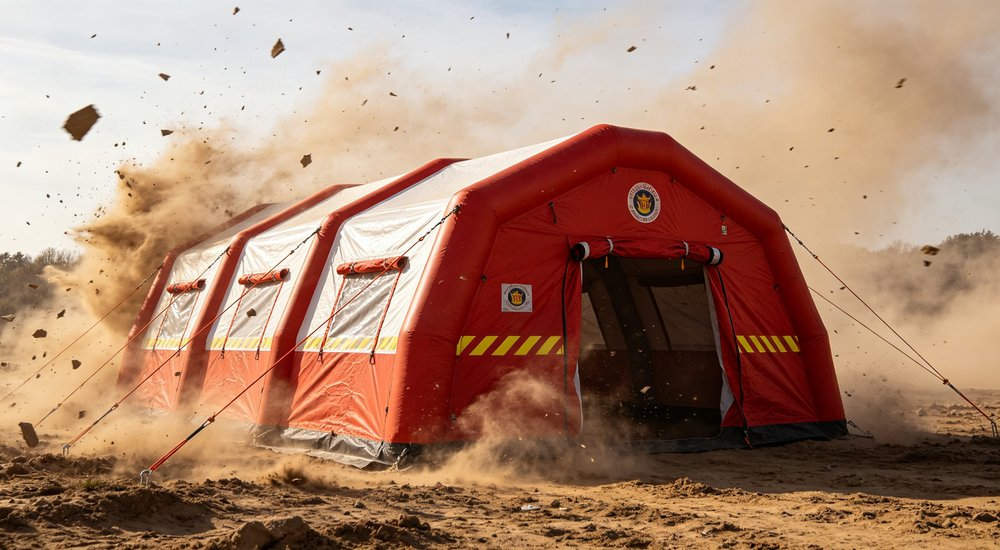
As a shelter factory supplying fire departments and emergency services since 2008, we ship complete configurations worldwide.
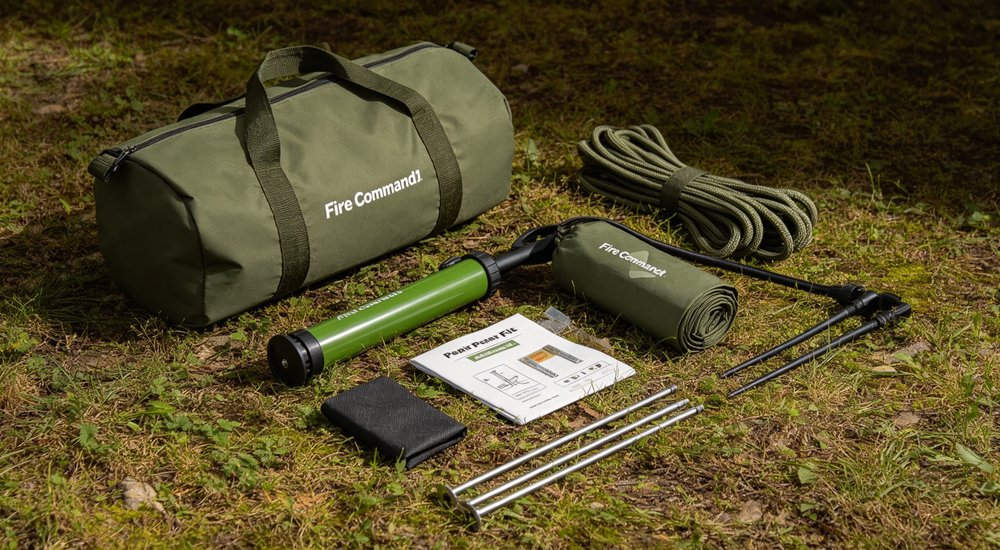
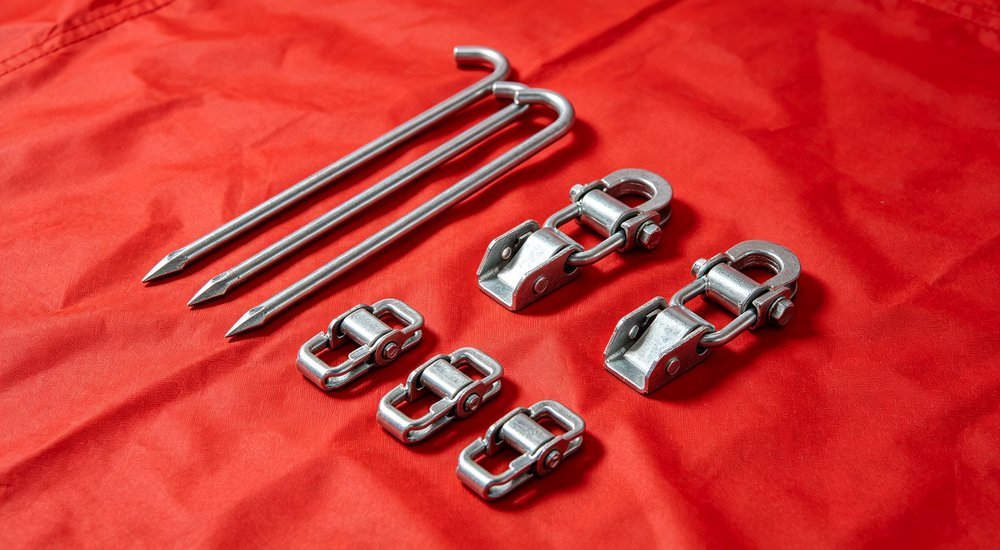
Standard contents: tent body with integrated air beams, electric pump (600W or 1900W), inflation/deflation valves, safety valves, anchoring kit (stakes + guy ropes), repair kit (patches, glue, valve wrench), storage bags, and labeled parts list.
Procurement specialists compare these inflatable options against traditional pole tents, evaluating total cost of ownership, storage footprint, and deployment speed.
Additional views demonstrate the structural integrity and deployment flexibility of these professional fire command tents across various emergency scenarios.
Fire-scene upgrades that are not always included: floor liner (reinforced for boot traffic), internal equipment hanging rack, map-display board, cable entry grommets (2–4), LED light strips, ventilation fan, and partition walls.
Confirm which of these are standard vs optional in any quoted price.
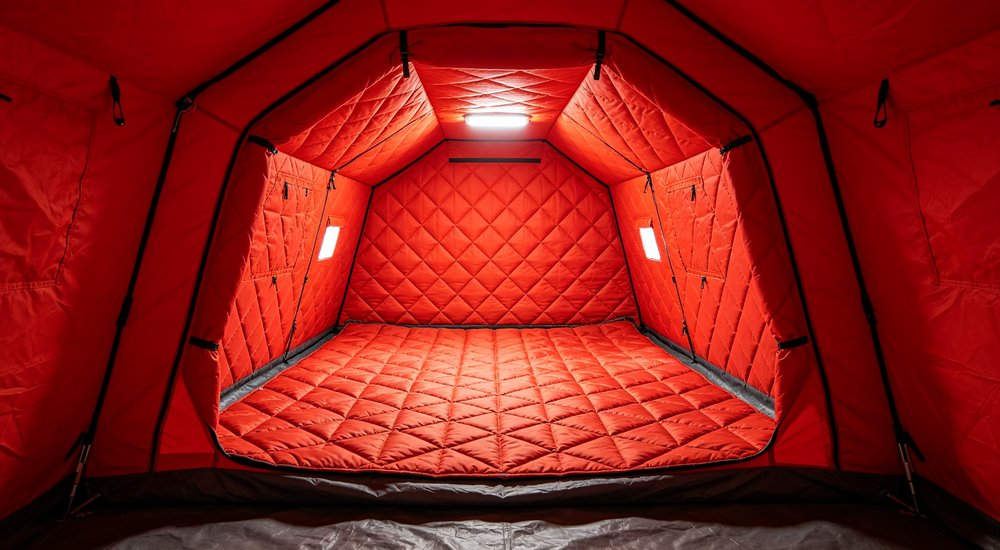
A fire command tent needs more than four walls. A properly equipped mobile command post includes:
Check that each component has its own bag or carton. Confirm the pump matches the valve type.
Confirm repair patches are cut from the same red fabric. A good packing list maps every bag to the tent configuration so nothing is missing at 2 a.m. on a fire scene.
MOQ & lead time: Standard red models typically MOQ 5–10 units, 15–30 days. Custom reflective tape layout or logo printing requires MOQ 50+, 30–45 days. Confirm these before placing a department order.
Project A — Urban structural fire command: A 20m² red command tent in a city parking lot. It needs two cable ports, a radio rack, map board, LED lighting, and reinforced floor.
Crews arrive in full gear, so door clearance must fit SCBA. Anchoring uses weight bags on asphalt.
Weather resistance is a key design consideration, with waterproof coatings and wind-rated anchoring systems providing reliable shelter in rain, snow, and high wind conditions.
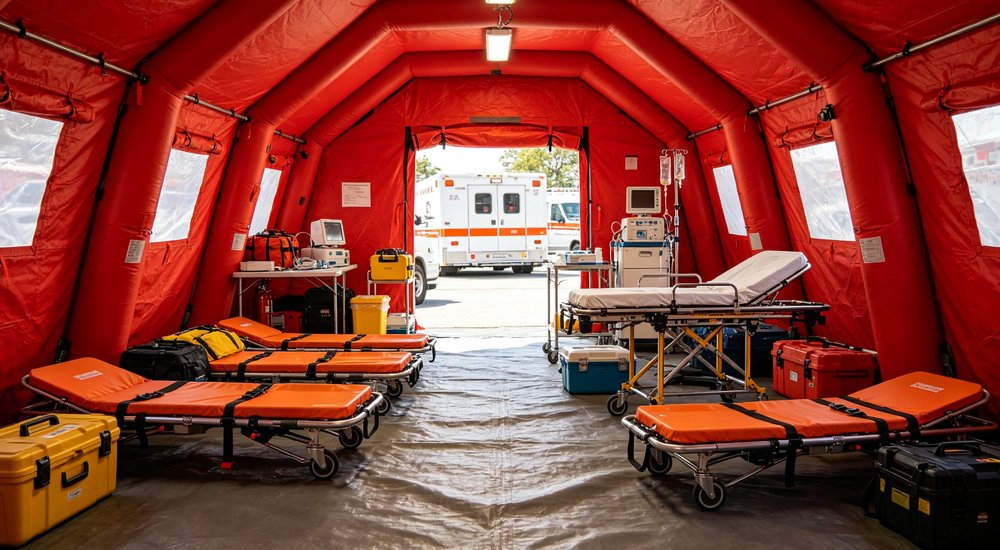
Project B — Wildland / rural rehab tent: A 12m² unit at a remote brush fire. It needs seating, water storage, gear bags, and UV protection.
No comms rack — this is a rest tent, not a command post. Anchoring uses long stakes in sandy soil. A generator powers a light.
Both are red inflatable tents, but the interior, anchoring, and power requirements differ completely.
A command configuration does not need a water cooler station, and a rehab tent does not need cable ports. Start with the job, not the tent model.
Project C — Multi-agency incident: A 30m² unit linking to a medical tent and a decontamination tent via tunnel adapters.
It needs wider doorways, partition walls, and multiple cable entries for different agencies' radios. This is a modular system, not a single tent.
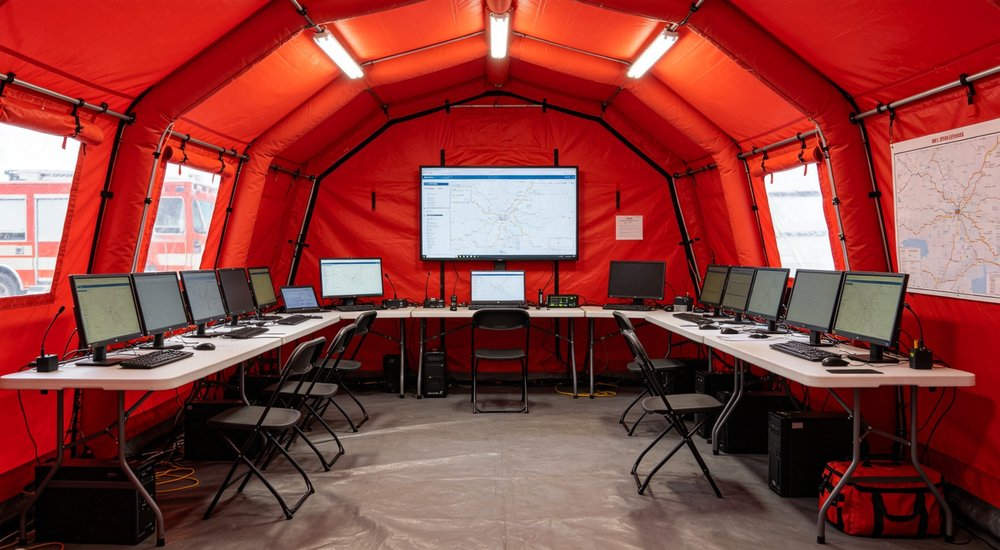
State: primary role (command / rest / medical / triage), likely ground surface (asphalt / grass / sand / debris), number of personnel inside, equipment list (radios, racks, map boards), expected deployment duration, and order quantity.
Add: wind conditions, temperature range, whether smoke exposure is likely, and transport method (truck / container).
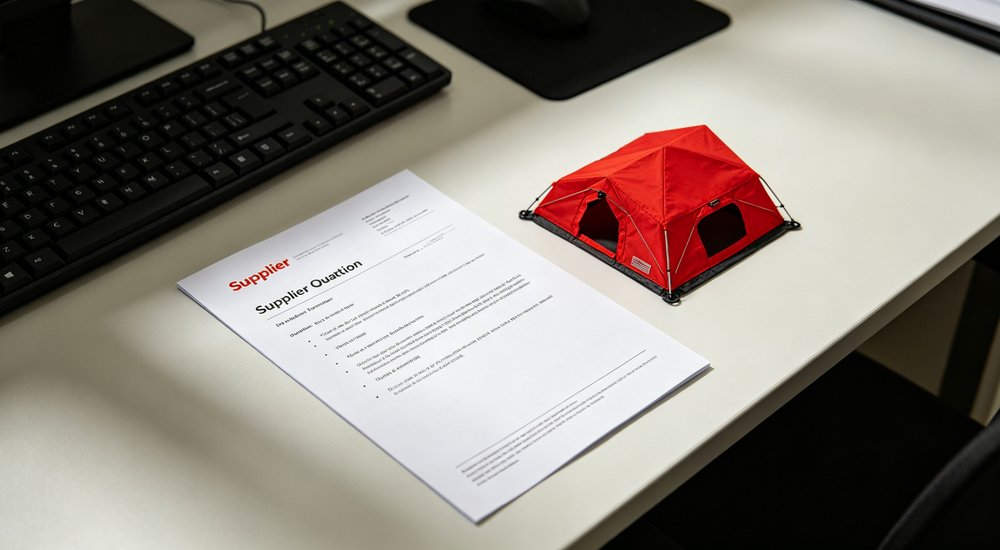
Request from the supplier: recommended size, internal dimensions, air-beam and chamber description, complete component list, standard vs optional scope, packing breakdown, available certifications, and any conditions they cannot meet. MOQ, lead time, and fire ratings depend on the confirmed configuration.
When comparing quotes, verify every supplier answered the same task. One quote may include the pump, floor liner, reflective strips, and repair kit.
Another may list each as an optional extra. A clear comparison exposes these differences before price becomes the deciding factor.
In your inquiry, always ask about: fire-retardant certification (NFPA 701 / CPAI-84 test report), reflective tape brand and placement, cable port count, MOQ (standard red 5–10 units, custom 50+), lead time (15–30 days standard, 30–45 days custom), and spare parts availability for multi-year fleet orders.
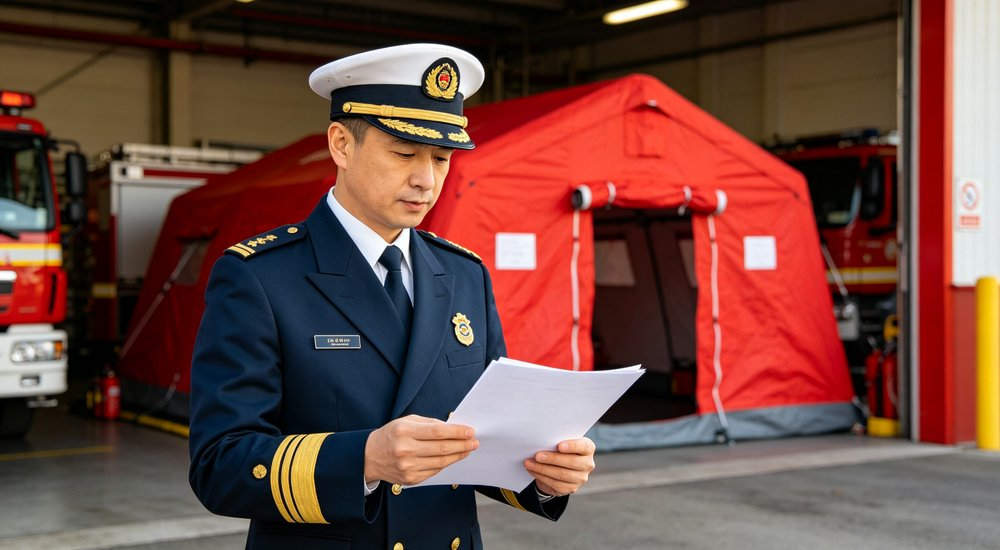
A good reply starts with a specific recommendation for your stated task: suggested size, internal layout, cable port count, anchoring method for your ground type, and which accessories are included. Every recommendation connects back to the job you described.
It separates included, optional, and site-supplied items line by line. Pump, hoses, valves, repair material, storage bags, reflective tape, lighting, and comms equipment each get their own line.
Never accept "complete set" without an itemized list. Certification documents must state the fabric lot and date they cover. Packing info shows bag count, grouping, dimensions, and weight.
Simple test: If you cannot yet say what happens inside the tent — who sits there, what equipment runs there, and how crews enter and exit — do not select a model from photos. Define the operation first.
|
Size |
Capacity |
Price Range (USD) |
Typical Use |
|
12m² (4×3m) |
2–4 operators |
$1,200 – $1,800 |
Single command post, crew rehab |
|
20m² (5×4m) |
4–6 command staff |
$1,800 – $3,000 |
Standard incident command, radio room |
|
30m² (6×5m) |
6–10 people |
$3,000 – $4,500 |
Full mobile command center, multi-agency |
|
40m²+ (custom) |
12+ people |
$4,500 – $6,500+ |
Modular command + rest + medical complex |
* Prices are indicative ranges for standard red configuration with reflective strips, LED lighting, pump, and repair kit. Custom logos, additional cable ports, or modular tunnel connections add cost.
Compare complete sets, not just the tent shell. The inflatable fire tent price range varies by size, with standard models offering the best value for municipal fire department procurement budgets.
|
Configuration |
MOQ |
Lead Time |
Notes |
|
Standard red (RAL 3020), off-the-shelf layout |
5–10 units |
15–30 days |
Stock red fabric, standard reflective layout |
|
Custom reflective strip layout |
20+ units |
30–40 days |
Special tape routing or added strips |
|
Custom department logo / unit marking |
50+ units |
30–45 days |
Printing on walls and carry bags |
|
Custom size / cable port configuration |
10+ units |
35–50 days |
New pattern and chamber layout required |
|
Size |
Packed Volume |
Weight |
Units per 20ft Container |
Units per 40ft Container |
|
12m² |
0.8–1.2m³ |
50–75kg |
40–50 units |
90–110 units |
|
20m² |
1.0–1.5m³ |
75–110kg |
30–40 units |
70–90 units |
|
30m² |
1.5–2.5m³ |
130–190kg |
20–25 units |
45–55 units |
|
40m²+ |
2.5–4.0m³ |
190–290kg |
12–18 units |
30–40 units |
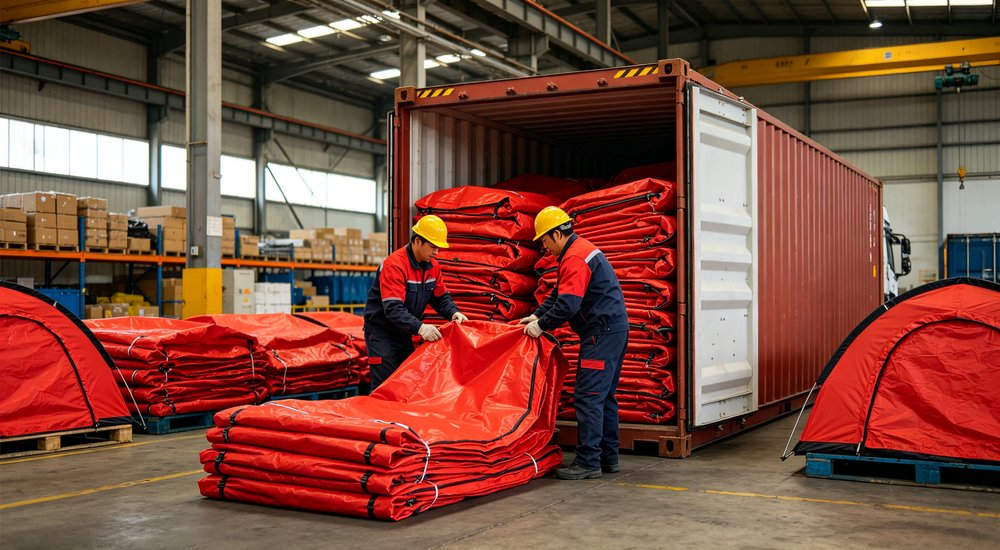
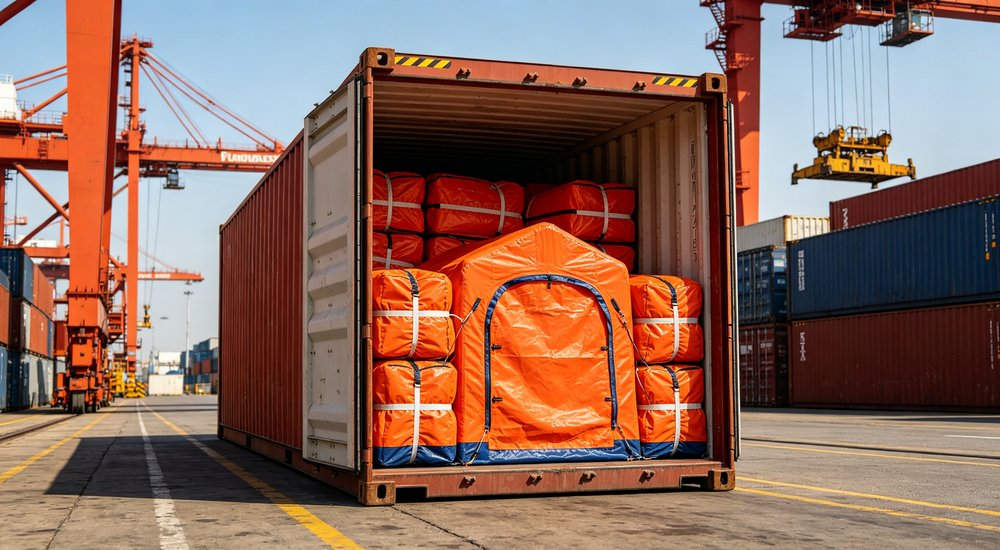
* Each unit packed in 1–2 heavy-duty carry bags with labeled parts. Pump, repair kit, and stakes packed separately. Detailed packing list provided with every order. FOB shipping from China.
The high-visibility red color ensures the command post is easily identifiable at complex emergency scenes with multiple agencies and vehicles present.
Additional views demonstrate the structural integrity and deployment flexibility of these professional fire command tents across various emergency scenarios.
These fire rescue inflatable tents are designed to integrate seamlessly with standard fire department equipment, including communication systems, medical supplies, and lighting rigs.
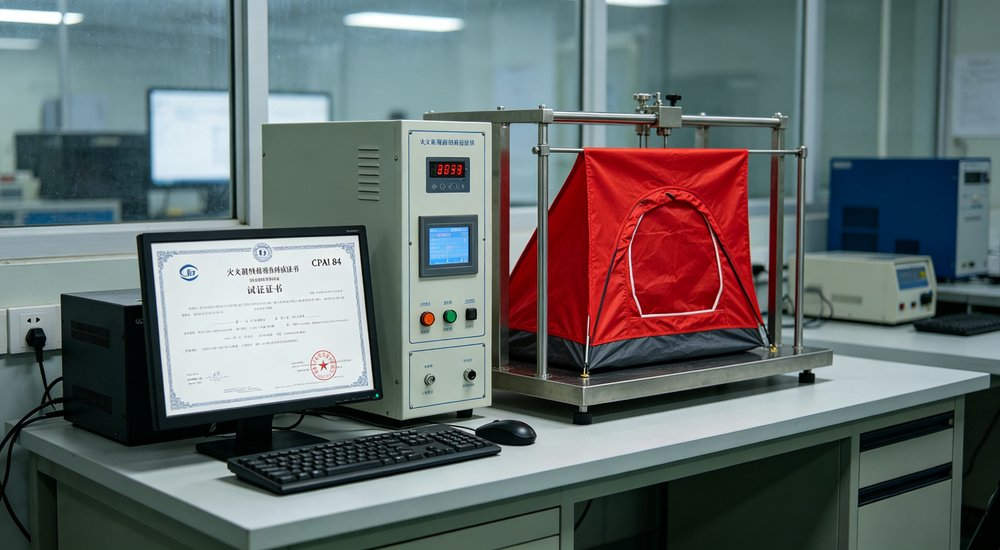
All fire rescue inflatable tents are tested for fire resistance and structural safety before shipment: Every inflatable tent fire safety certification includes CPAI-84 flame retardant testing and ISO 9001 quality management verification.
Procurement specialists compare these inflatable options against traditional pole tents, evaluating total cost of ownership, storage footprint, and deployment speed.
Additional views demonstrate the structural integrity and deployment flexibility of these professional fire command tents across various emergency scenarios.
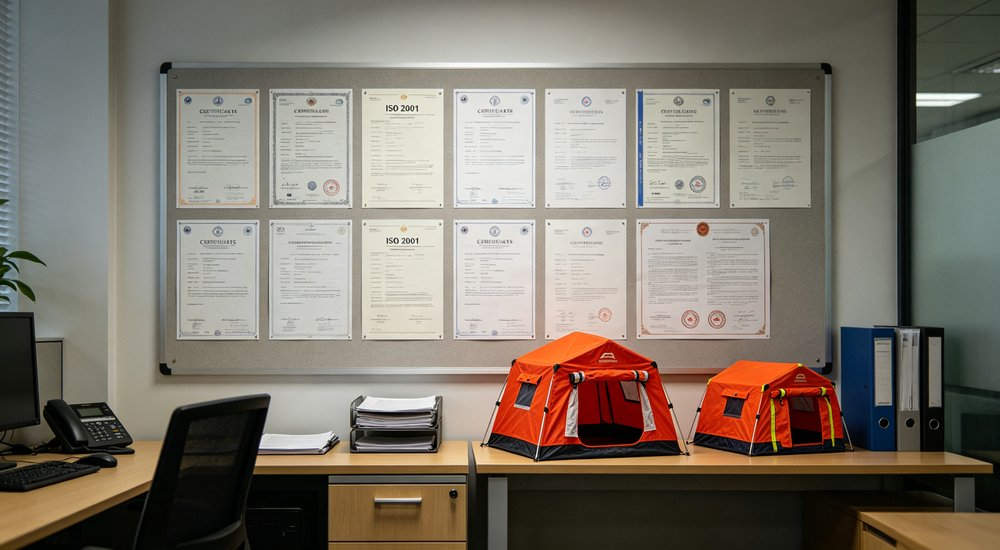
|
Certification / Test |
Standard |
What It Covers |
Status |
|
Flame resistance |
NFPA 701 / CPAI-84 |
Fabric self-extinguishing, no dripping |
Test report per fabric lot |
|
CE marking |
EU inflatable structure directive |
General structural safety |
Available on request |
|
ISO 9001 |
Factory quality management |
Production process control |
Certified facility |
|
Air retention test |
1.5× working pressure, 24h hold |
Each unit before packing |
Performed on every order |
|
Reflective tape test |
EN 471 / 3M specification |
Retroreflective brightness |
Supplier batch cert |

Properly coated red PVC fabric (RAL 3020 or Pantone 485C) with UV stabilizers resists fading for 3–5 years of regular outdoor use.
Fading depends on UV exposure, cleaning chemicals, and storage conditions. Ask the supplier for the UV resistance grade and whether replacement red fabric panels are available for touch-up.
Weather resistance is a key design consideration, with waterproof coatings and wind-rated anchoring systems providing reliable shelter in rain, snow, and high wind conditions.
Additional views demonstrate the structural integrity and deployment flexibility of these professional fire command tents across various emergency scenarios.
The high-visibility red color ensures the command post is easily identifiable at complex emergency scenes with multiple agencies and vehicles present.
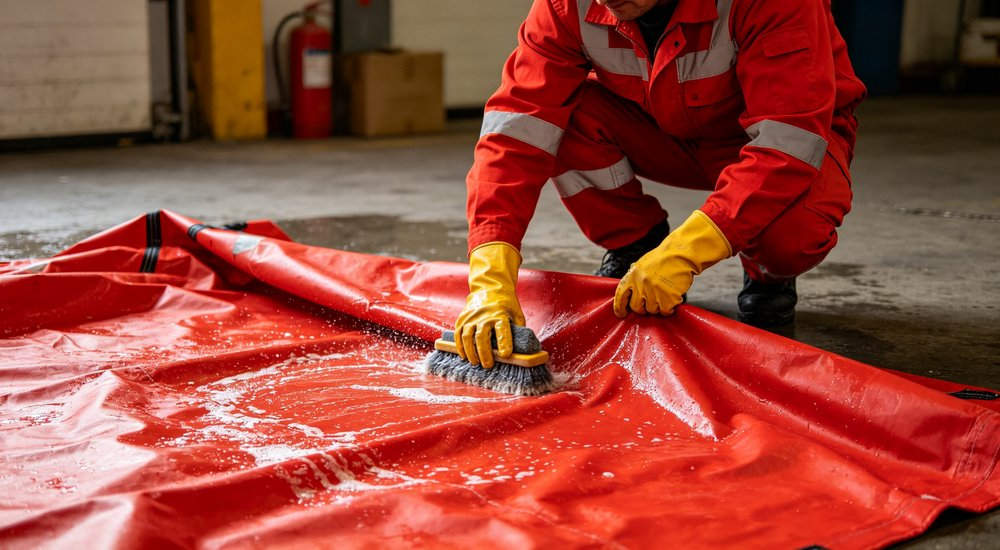
Additional views demonstrate the structural integrity and deployment flexibility of these professional fire command tents across various emergency scenarios.
These fire rescue inflatable tents are designed to integrate seamlessly with standard fire department equipment, including communication systems, medical supplies, and lighting rigs.
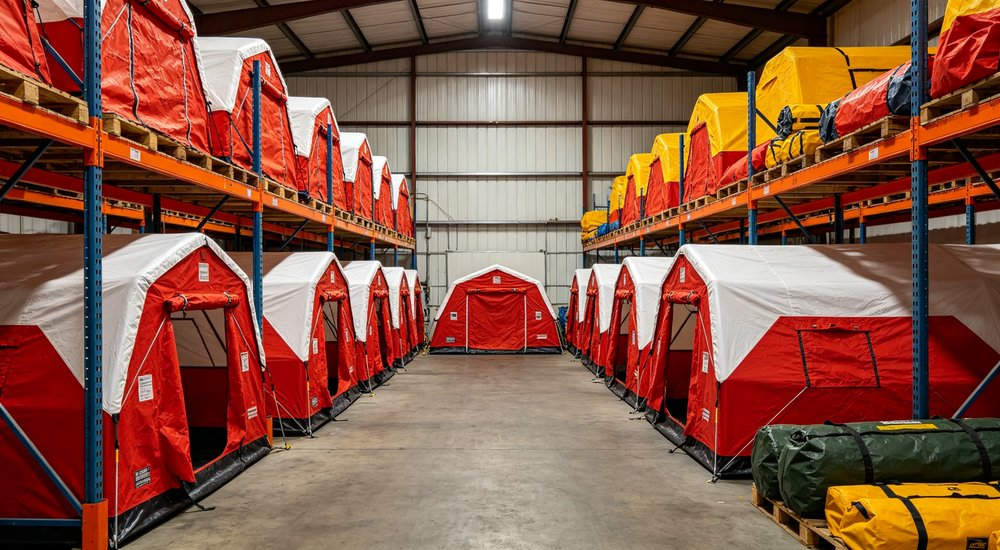
Additional views demonstrate the structural integrity and deployment flexibility of these professional fire command tents across various emergency scenarios.
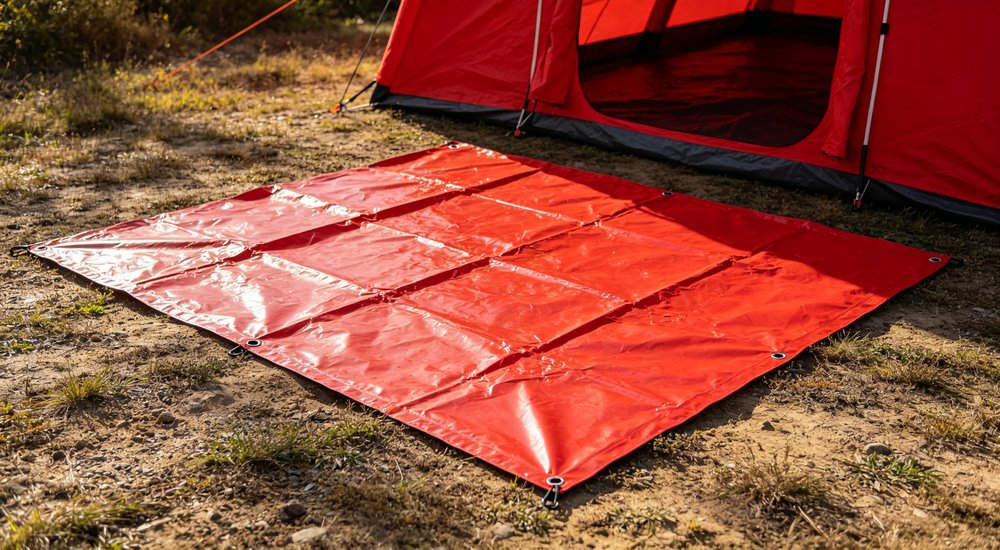
Procurement specialists compare these inflatable options against traditional pole tents, evaluating total cost of ownership, storage footprint, and deployment speed.
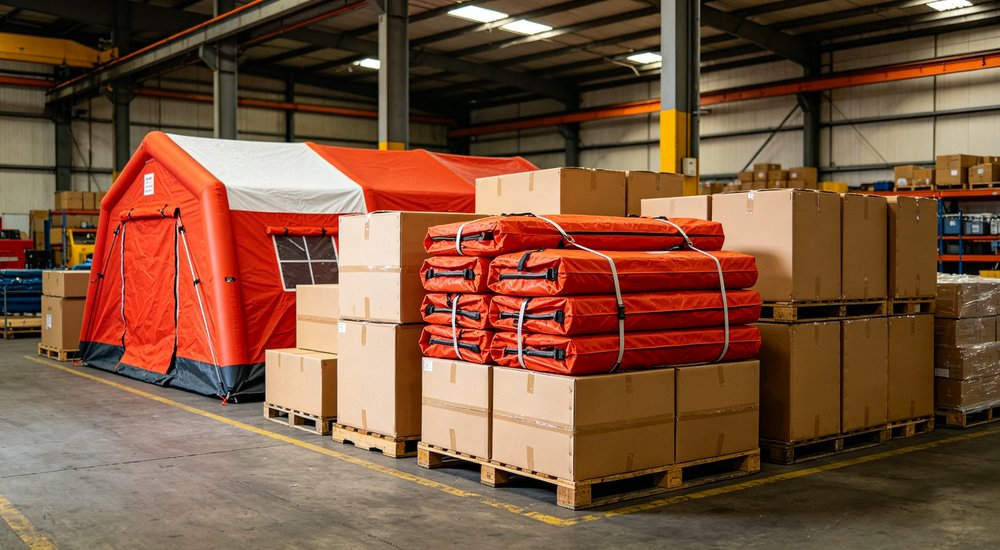
Additional views demonstrate the structural integrity and deployment flexibility of these professional fire command tents across various emergency scenarios.
Weather resistance is a key design consideration, with waterproof coatings and wind-rated anchoring systems providing reliable shelter in rain, snow, and high wind conditions.
PVC fabric is waterproof and resists direct water spray. Seams are heat-welded. However, prolonged heavy stream application can stress the fabric and increase weight. Position the tent upwind and away from direct hose streams when possible.
3M Scotchlite or equivalent reflective tape along roof edges and door perimeters is visible from 200+ meters at night under vehicle or scene lighting.
This helps crews locate the command post in low-visibility smoke or dark conditions. The tape is replaceable when worn or scuffed.
Yes. Standard units include 2–4 cable entry ports with sealed grommets for radios, data cables, and power lines.
Internal equipment hanging points and a flat map-display wall are pre-installed. Confirm the cable port count and types with your supplier before ordering.
The tent shell provides shelter from smoke but does not filter it. For heavy smoke, add ventilation fans, HEPA filtration, or a positive-pressure system.
The fire-retardant fabric resists flame spread but is not a heat shield. Always monitor air quality inside.
Fire rescue command tents use high-visibility red fabric (RAL 3020), reflective strips, NFPA 701 fire-retardant coating, dedicated cable ports, equipment mounting points, and map-display zones.
Regular inflatable tents lack these mission-specific features and are usually white or green without identification elements.
Standard PVC fabric is rated for -20°C to +50°C ambient temperature.
It should not be placed directly adjacent to flame fronts or exposed to radiant heat above 80°C. For proximity operations, choose a heat-resistant fabric upgrade or maintain a safe separation distance upwind of the fire.
Yes. Fire scenes generate smoke and heat buildup. A dedicated exhaust vent and fresh-air intake are recommended. Built-in LED lighting runs on low-voltage DC to reduce ignition risk. Confirm ventilation capacity matches your expected occupancy and equipment load.
All models have at least two exits (front and rear) with quick-release door straps. Full deflation and packing takes 15–30 minutes depending on size. In an emergency, crews can exit immediately through any open door without waiting for deflation.
Yes. Larger units (20m²+) can fit gear racks or storage benches for helmets, coats, gloves, and SCBA packs. Dedicate 2–3m² per firefighter for gear staging. Ask for interior dimensions and floor load rating to confirm.
Standard fabric meets CPAI-84 and NFPA 701 flame resistance. These are widely accepted by fire departments and government procurement. Request the actual test report from the supplier, not just a product description claiming compliance.
Yes. Modular units connect via tunnel sleeves or door-to-door adapters. A typical command setup pairs a command post with a rest tent or medical tent. Confirm connection sizes and sealing when ordering multiple units for a modular complex.
Liens amicaux :
droits dauteur © Custom Disaster - Relief Bedding: Tents, Sleeping Bags, Blankets Tous les droits sont réservés
léquipe professionnelle au service !