Catégories
dernier blog
Last updated: November 6, 2026
Hydraulic vs Manual Light Tower: Night-Site Lift and
Mast Guide
In the hydraulic vs manual light tower choice, four-head towers to 9m lean hydraulic, while 450kg masts run fine on a manual crank. Frequent nightly moves favor the one-person lever; fixed budget sites favor the quiet crank.
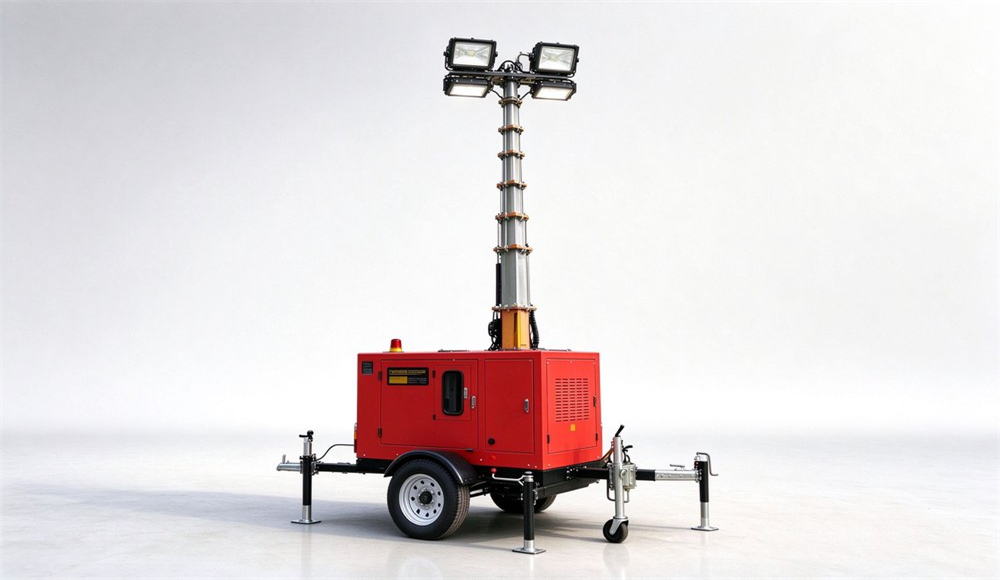
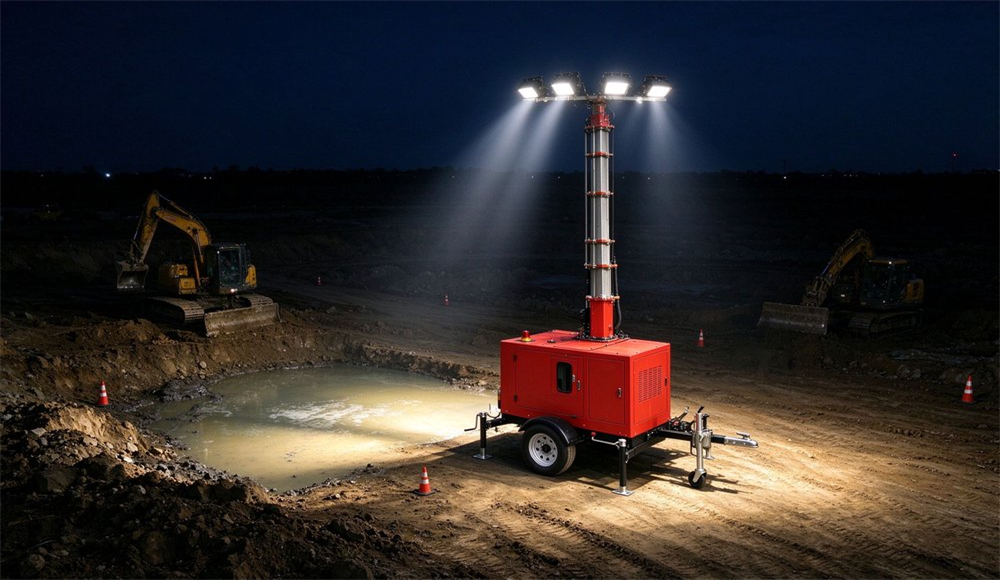
We weigh this trade-off in labor hours, not wattage. Raise a tower by hand ten nights a week and your crew loses close to half a shift on cranking alone. Raise it by lever and one operator finishes alone, then moves to the next face. On sites that never move for months, the math flips: the premium hydraulic system sits idle while the crank does its quiet, cheap job. That labor gap is the whole reason buyers compare the two lifts at all.
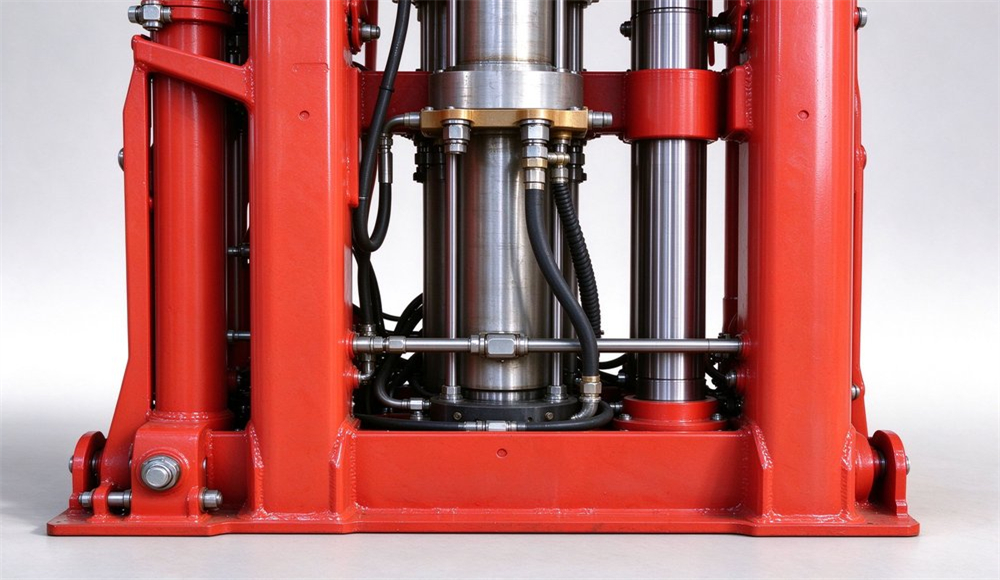
This guide compares two real series, not generic categories: the hydraulic tower and the manual-crank tower, both towable and diesel. Every parameter below follows the standard product configuration. Where the configuration gives no fixed figure — lift time, failure rate, price level — we keep the answer qualitative, and detailed technical specifications and custom parameters are confirmed with our sales team. Both towers carry the same four-head platform, so the comparison stays apples to apples.
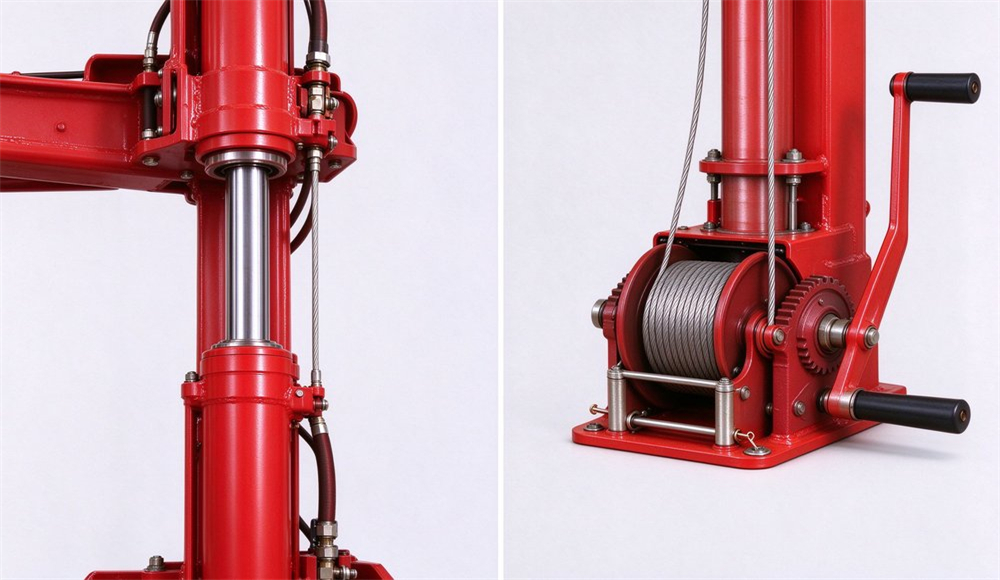
The two models share one trailer platform, chassis and engine: single axle, ball hitch, four swivel jacks, 165R13 wheels, 80km/h tow speed, wind rating level 8. The air-cooled diesel is identical — 7.5kW rated, 8kW max, about ten hours on a 25L or 40L tank. They differ in exactly one place: the mast lift system. That single difference shapes crew size, daily checks, maintenance points and payback across the whole fleet.
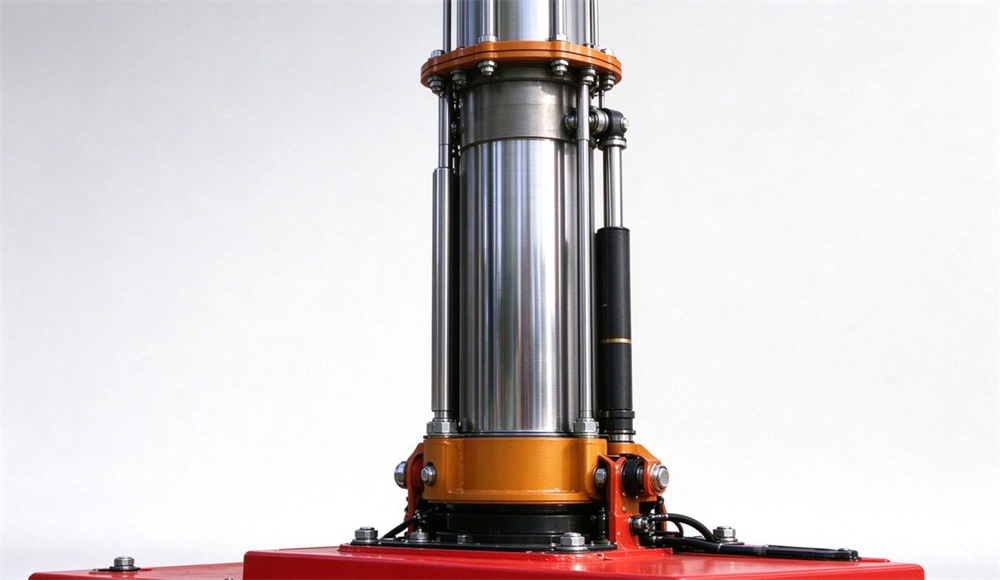
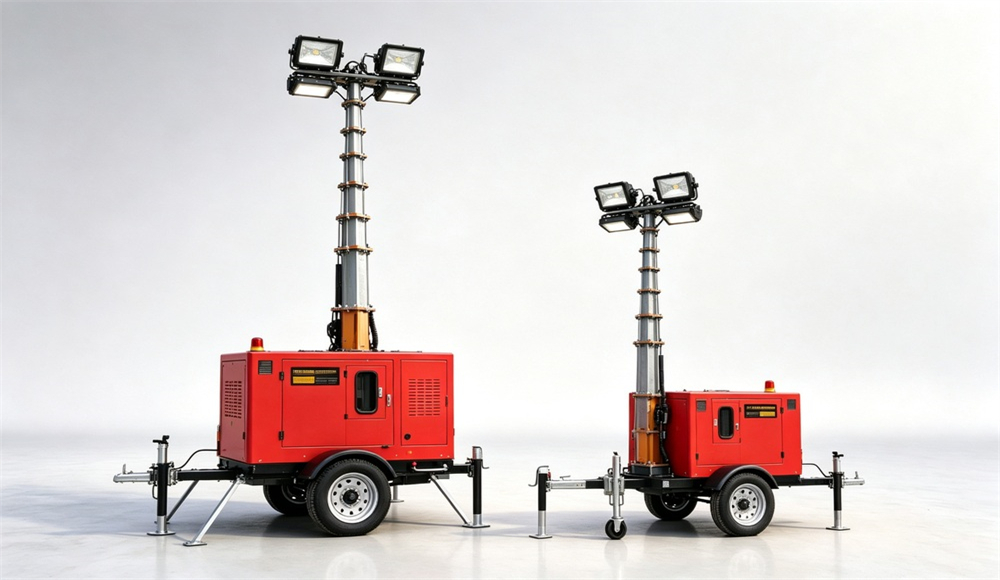
Identical platform, different lifting. That is the whole story in one line. The diesel engine, the trailer chassis, the four 1000W heads and the 7-9m mast envelope all carry over between the two systems. The only variable standing between them is how the tower reaches height: one pull of a lever versus minutes of hand cranking. This hydraulic vs manual light tower comparison exists because crew labor changes every night shift, and that single difference drives crew size, maintenance habits and long-term budget.
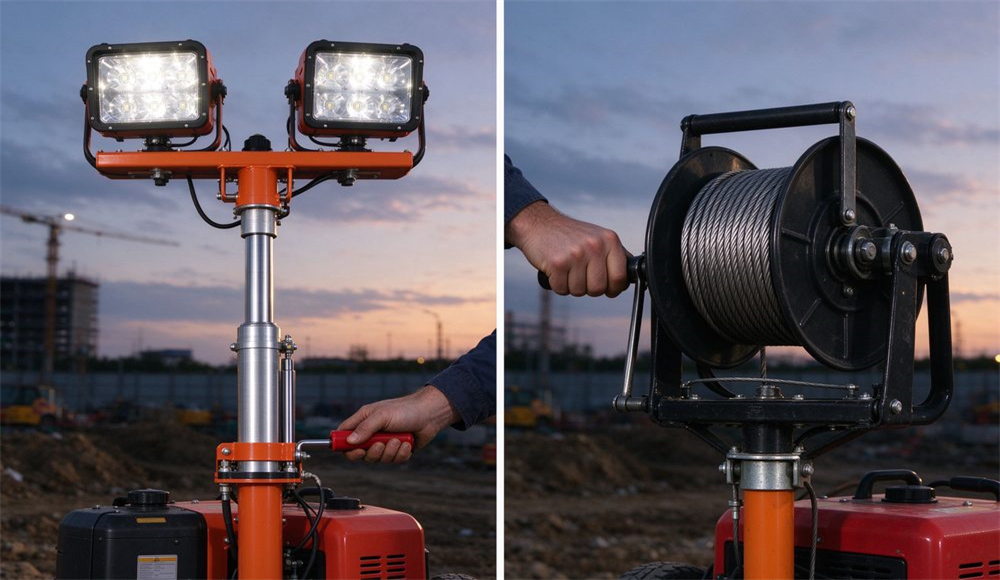
That is the 10-second answer to the hydraulic vs manual light tower question. Both systems ride the same diesel trailer and carry the same four 1000W metal halide heads, 4x105,000 lumens. The real difference is how the mast gets up: one lever pull raises the 9m hydraulic tower, while the manual model needs minutes of cranking at the winch drum. It is a labor decision, not a brightness contest: how many nights per week the mast goes up, and how many crew you station beside it. The ten sections below break the choice into mechanism, parameters, cost and site scenarios.
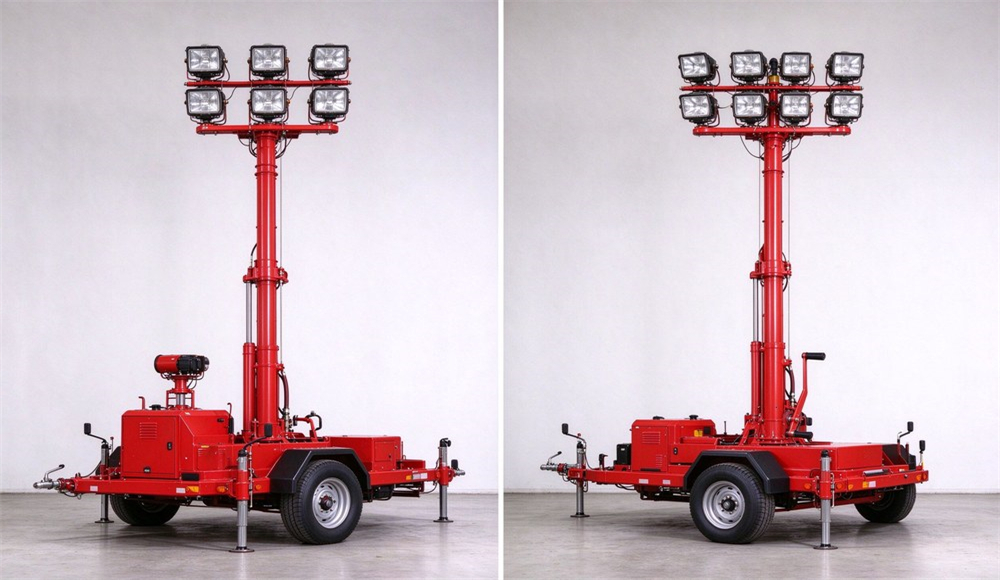
For towers carrying four 1000W lamp heads and rising to 9m, hydraulic lift wins. For light 450kg masts, manual crank is enough. This hydraulic vs manual light tower split is the decision buyers make before comparing lamps.
The watershed is not brightness. Both systems carry the same four 1000W heads at 4x105,000 lm. The watershed is labor: how many people stand at the mast, and for how long, every night shift.
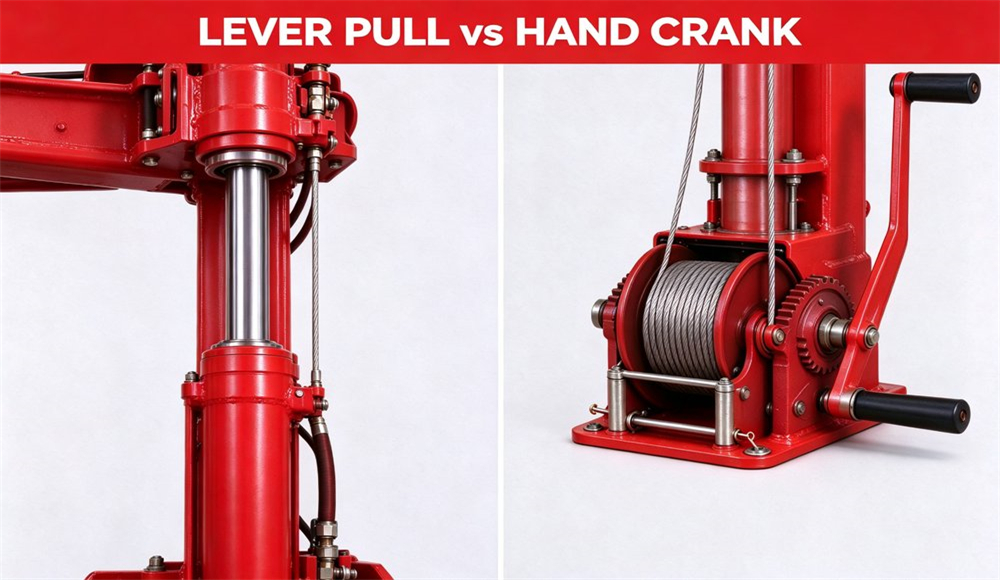
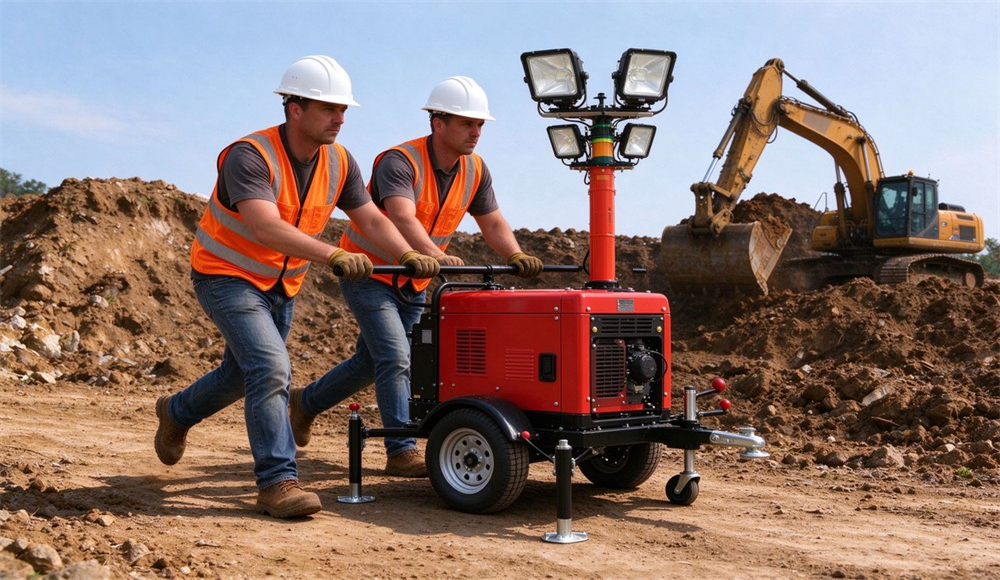
Size follows the lifting choice, not the other way around. The hydraulic mast tower sits heavier at 1050-1200kg, built around its power pack and telescoping cylinder, while the manual crank light tower stays near 450-480kg with no pump, no hoses and no oil seals. Both still carry the same four heads at 4x105,000 lm. Reading the two side by side, you can see why nightly road crews lean hydraulic and static storage yards lean crank — the weight gap is the trade you pay for speed.
This guide follows four steps: how each lift works, a 12-dimension comparison, cost structure and site scenarios, then twelve procurement questions. The hydraulic mast vs manual crank light tower guide below answers each with a listed figure.
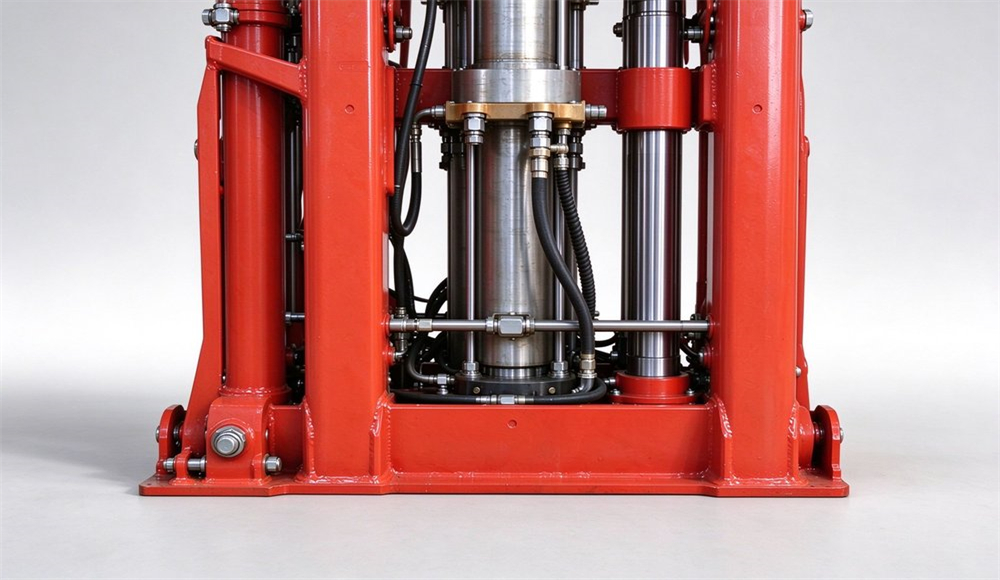
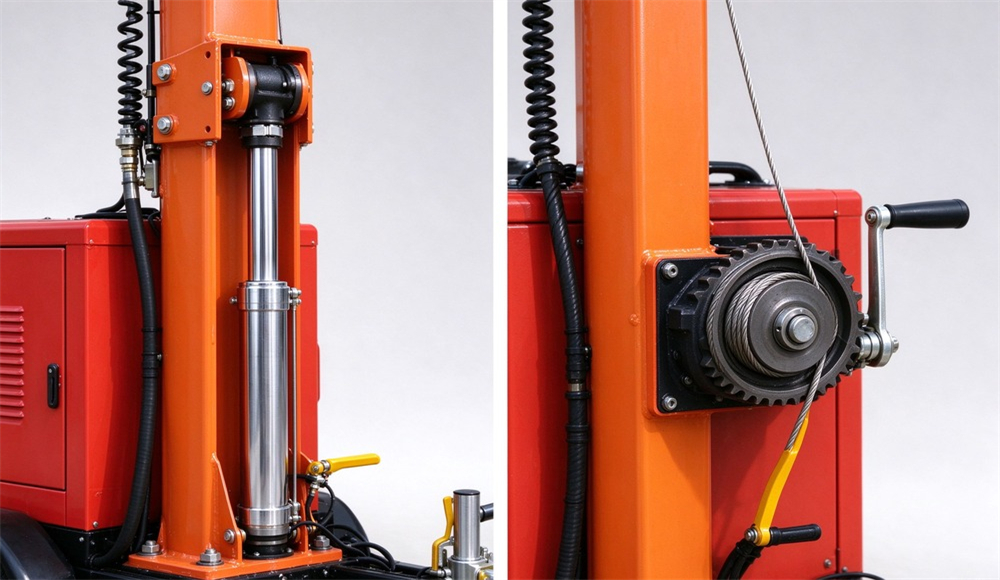
On the hydraulic side of the hydraulic vs manual light tower choice, lift runs on oil pressure. The diesel drives a hydraulic pump that pushes oil into a telescoping cylinder. One lever raises or lowers the whole 7-9m mast, section by section.
This hydraulic lifting light tower model carries four 1000W metal halide heads, outputs 4x105,000 lm, and weighs 1050kg at 7m or 1200kg at 9m. The mast rotates 360 degrees and each head tilts 90 degrees. In the hydraulic vs manual light tower comparison, these hydraulic light tower advantages show up as a heavier unit that buys you the lever: one operator lifts the full 9m stack in seconds, no cranking, no second hand. The same air-cooled diesel rated 7.5kW / max 8kW runs the pump, and the four swivel jacks hold the tower steady at wind level 8.
Hydraulic light tower advantages show on nightly jobs. One operator raises a heavy 9m mast with four hot heads, and lift speed stays consistent across shifts. These hydraulic light tower advantages mean no second crew member, no crank blisters, no tired arms.
The cost side: the pump, cylinder, hoses and seals raise price qualitatively and add oil-level checks. Compare the full spec on the hydraulic mobile light tower page.
For mobile hydraulic equipment safety logic at site level, see MSHA equipment safety guidance.
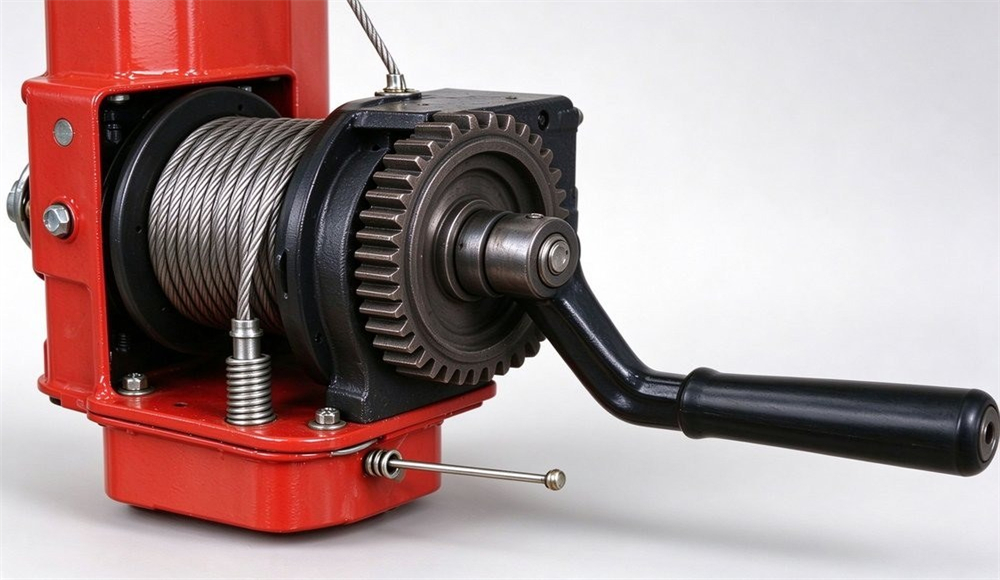
On the manual side of the hydraulic mast vs manual crank light tower choice, lift runs on a gear winch. Turn the handle and a gear drum winds a steel cable. The gear ratio saves hand effort at the cost of time.
This manual crank light tower reaches 7 or 9 meters on the shared 7m 9m mast system, carries the same four 1000W heads at 4x105,000 lm, and weighs only 450-480kg. A small trailer or forklift can position the whole unit.
The 450kg weight is the model's main selling point. It fits low-budget contractors and remote sites with limited diesel service, where the mast goes up once a week or less. The full lineup is on the diesel light tower page.
The trade-off: raising a 9m multi-section mast means continuous cranking — qualitatively, minutes of effort, ideally by a two-person crew. A safety pin locks each section. No power is consumed by lifting, but the manual crank lift time is the price of that simplicity. This single point is where the hydraulic mast vs manual crank light tower comparison decides a purchase.
For power practices at temporary worksites, see OSHA electrical safety guidance.
The table below compares twelve dimensions across the hydraulic vs manual light tower models, using listed specification data only. Every hydraulic mast vs manual crank light tower row below uses factory figures, not guesses. Dimensions with no listed figure — lift time, failure rate, price level — stay qualitative on purpose.
The chart above frames what buyers actually score. The table below turns the same comparison into twelve checkable rows: lift method, mast height, weight, engine power, runtime, noise, wind rating, tow speed, lamp output, fuel tank, maintenance points and typical site. Each row stays tied to listed figures where they exist; rows without a published value — lift time, failure rate — are kept qualitative on purpose. Scan top to bottom, then keep only the rows that matter to your own operation.
Hydraulic vs Manual Light Tower Dimension
Hydraulic model
Manual crank model
Hydraulic vs Manual Light Tower Verdict
Lift drive
Diesel pump + cylinder
Hand crank + winch + cable
Power vs muscle
Mast height
7m or 9m
7m or 9m
Same range
Lamp-head load
4x1000W = 4x105,000 lm
4x1000W = 4x105,000 lm
Equal load
Unit weight
1050kg (7m) / 1200kg (9m)
450-480kg
~2.3x heavier
Crew to lift
One operator
Two recommended
Saves a hand
Lift time
Qualitative: seconds
Qualitative: minutes
Frequent moves pick hydraulic
Complexity
Pump, hoses, seals
Winch, cable, pin
More parts hydraulic
Daily checks
Oil level, hose joints
Cable lubrication, pin
Hydraulic fears leaks
Wear items
Pump, seals
Cable, gear teeth
Stock spares by system
Purchase price
Qualitatively higher
Qualitatively lower
Budget picks manual
Wind rating
Level 8
Level 8
Identical
Suited for
Heavy heads, nightly moves
Light unit, fixed sites
Decide by weekly lifts
Twelve rows compress into one number that moves money: weight. The hydraulic unit sits 1050-1200kg because its power pack, pump and oil circuit add mass, while the manual crank light tower stays near 450-480kg with no hydraulic components at all. That gap decides trailer class, towing licence, forklift capacity and even which yard gate the unit can reach. The chart next to it shows the same split visually, so site teams can compare units at a glance before quoting.
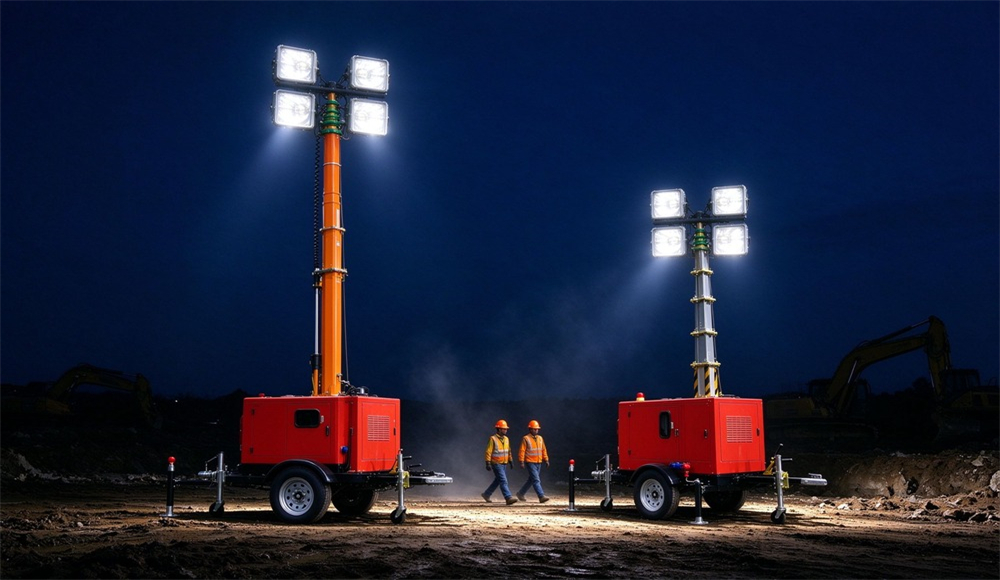
Two watersheds jump out. First, the weight gap — 1050-1200kg versus 450-480kg — changes how you tow, lift and unload, and whether a small trailer or a forklift is the tool of the day. Second, lamp load is identical: a crank tower can carry the same four 1000W heads at 4x105,000 lm, so brightness never decides the hydraulic vs manual light tower call. The real question behind which light tower lifting system is better is your move frequency: nightly road work leans hydraulic, fixed earthwork leans crank.
For site power connection rules, see NFPA 70.
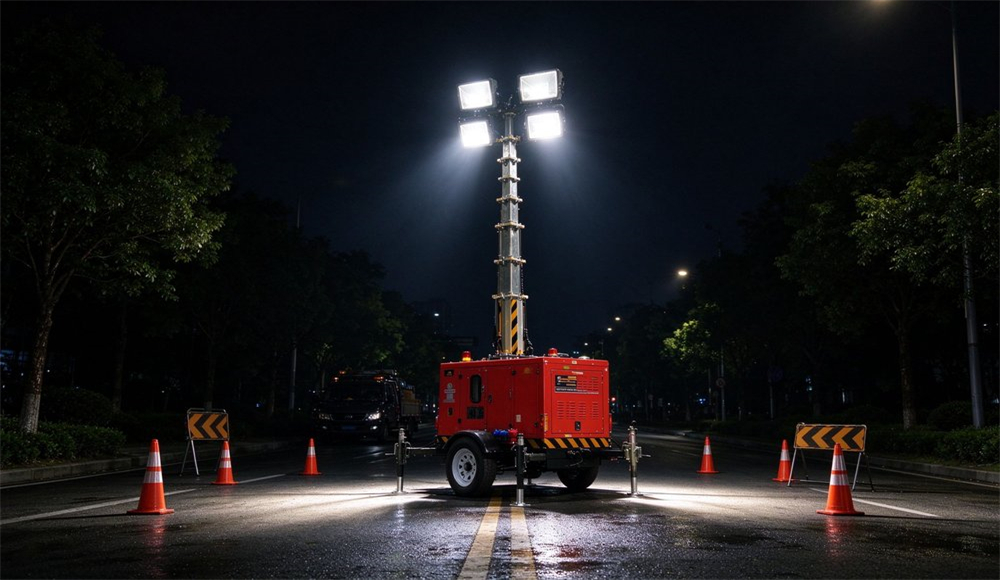
Readers asking which light tower lifting system is better can sort the twelve dimensions into four groups; the hydraulic mast vs manual crank light tower differences then test cleanly against your own project, turning the hydraulic vs manual light tower call into a concrete check. Once the four groups are scored, which light tower lifting system is better stops being a specification debate and becomes a weighted scorecard.
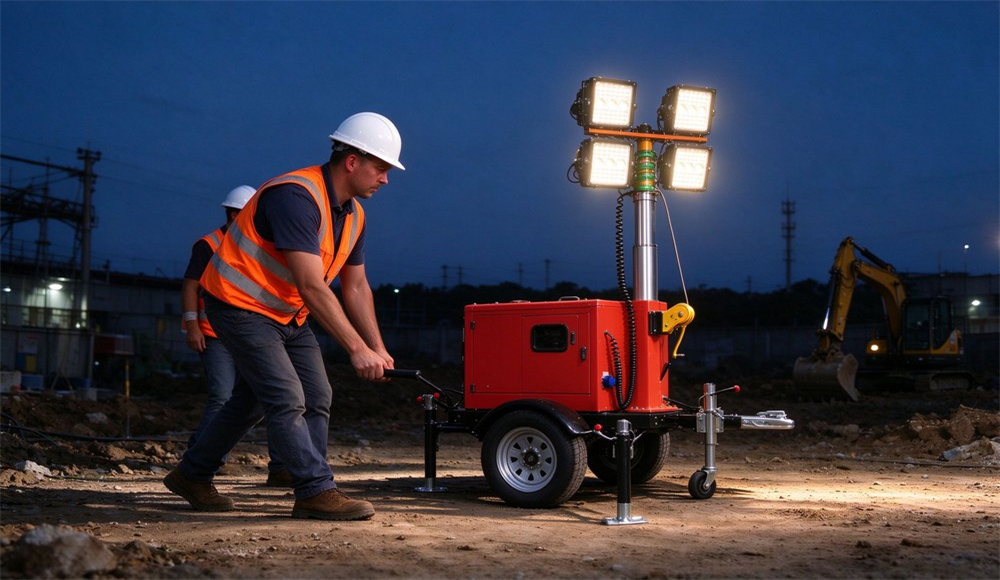
The power group covers lift drive, crew size and lift time. These hydraulic light tower advantages stack up when the mast rises several times a night. The structure group covers mast height, lamp-head load and complexity. The maintenance group covers daily checks, wear items and price level. The shared group — wind rating, trailer specs, fit direction — is identical on both.
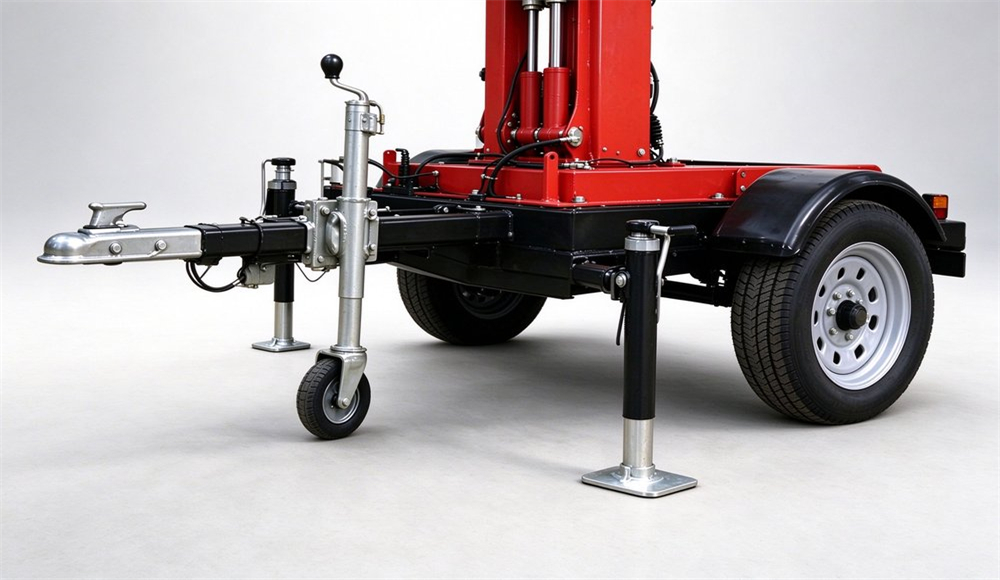
Why each group matters: the power group decides nightly lift efficiency. The structure group decides how heavy a mast you can run. The maintenance group sets long-term cost level. The shared group needs no debate at all.
Self-test your project: how many lifts per week? How heavy are the heads and what is the site headroom? How close is the spares channel? How is the unit towed to port? Those four answers are how you decide which light tower lifting system is better for your own fleet.
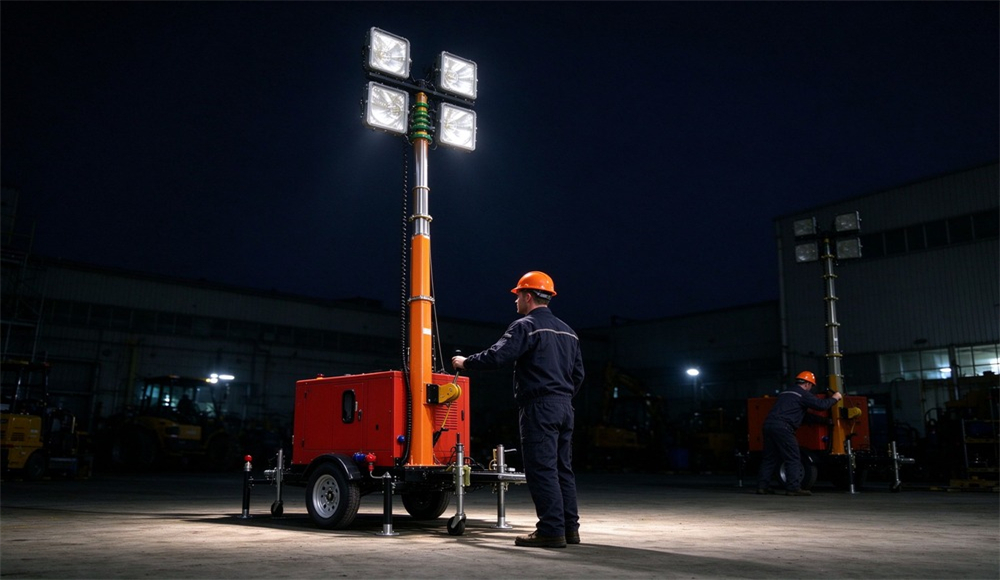
Buyers asking about manual crank light tower price factors should look at three layers, not the sticker — this hydraulic vs manual light tower comparison is really a cost comparison in disguise. The hydraulic mast vs manual crank light tower cost split hides in lift labor hours: one operator on the lever versus two hands on the crank, night after night. Weight also enters the math: the 1050-1200kg hydraulic unit needs a forklift to load, while the 450-480kg crank unit slides on by hand, which shifts unloading time between sites. That is why manual crank light tower price factors reward the fixed-budget buyer: the cheaper winch unit, spread over years of zero moves, beats the hydraulic premium on every static project.
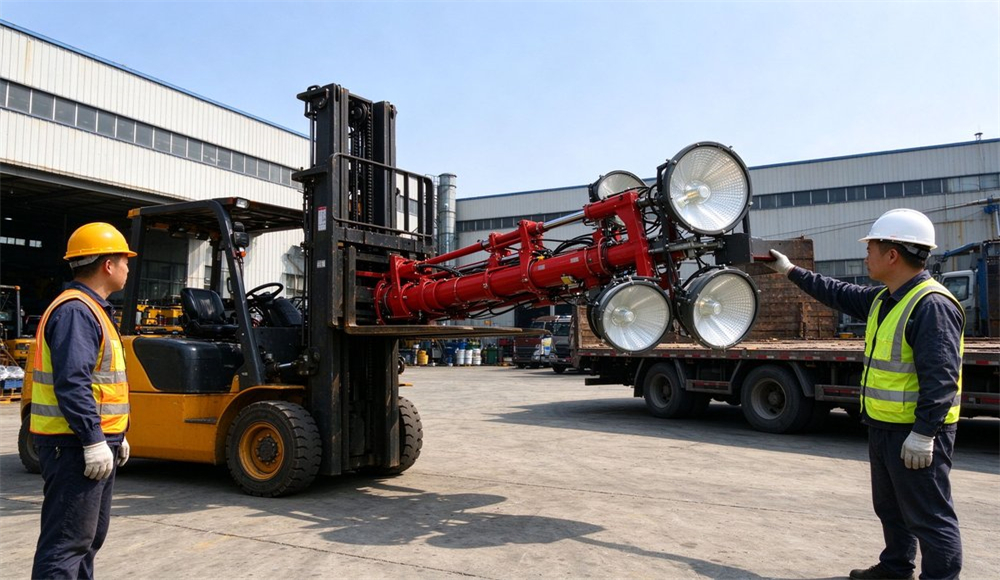
Fuel burns on the same platform for both: an air-cooled diesel rated 7.5kW, maximum 8kW, at about 72dB measured seven meters out. A 25L or 40L tank runs about ten hours on a full load. Fuel consumption does not split the two systems — both drink alike on the same engine. The real cost gap in the hydraulic vs manual light tower choice is lift labor hours, and that is exactly where which light tower lifting system is better gets decided: nightly moves pay back the heavier hydraulic unit, while fixed sites let the cheap crank winch earn its keep.
Magnitude logic: on nightly-move projects, crew labor and downtime often outweigh the purchase premium, qualitatively. On fixed sites, payback stretches. Ask three questions: lifts per year? crew and hours per lift? spares channel distance? That is how you decide which light tower lifting system is better on a budget. The budget answer follows.
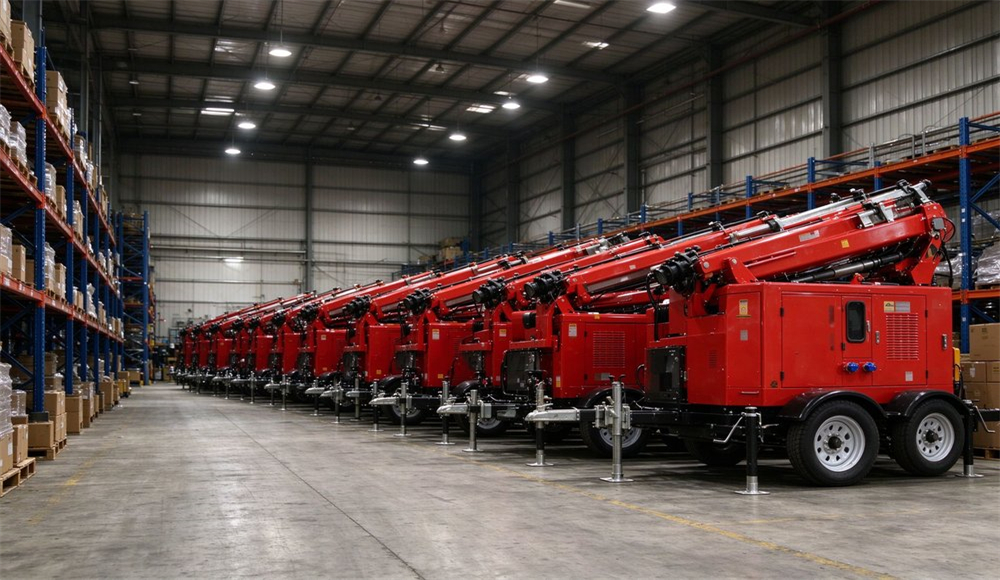
Maintenance is where the two systems part again over the years. The hydraulic side adds oil checks, seal inspection and pump wear points; the crank side adds cable checks, gearbox lubrication and drum braking. The cost table below stacks the three budget layers buyers forget: fuel, consumables and downtime. No prices are quoted here on purpose, since tariffs, dealer margins and local labour change the final number — only the structure of what you pay for is shown.
Cost layer
Hydraulic model
Manual crank model
Hydraulic vs Manual Light Tower Verdict
Purchase price
Qualitatively higher
Qualitatively lower
Confirm at quote
Fuel platform
7.5kW rated / 8kW max
Same diesel platform
Equal burn
Annual checks
Oil + seals
Cable + gear + pin
Different points
Lift labor
One operator
Two recommended
Hydraulic saves crew
Payback speed
Faster on frequent moves
Slower on fixed sites
Qualitative
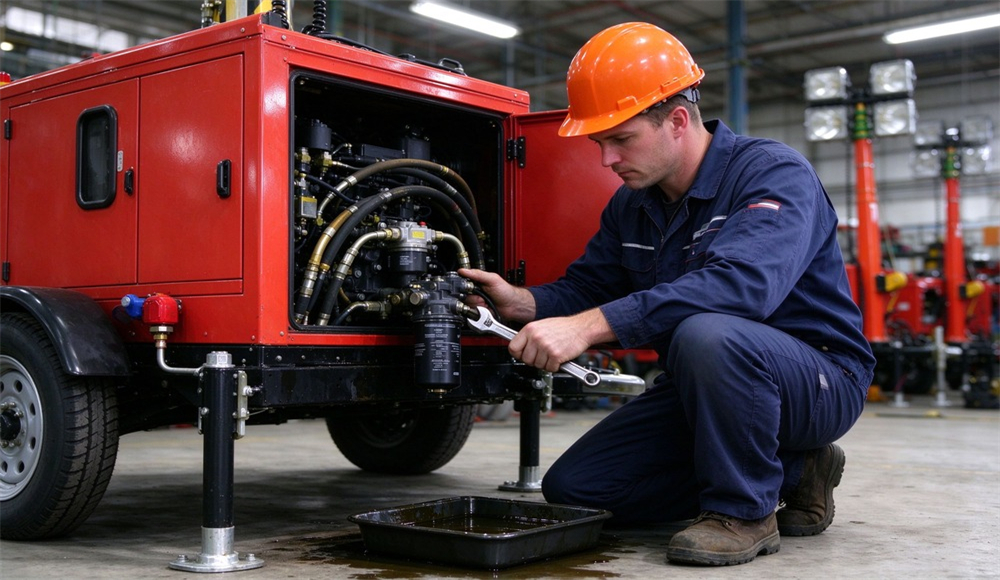
Choose hydraulic for nightly site moves, 9m towers with four 1000W heads, rental fleets where clients self-operate, and regions with high labor cost — the hydraulic mast vs manual crank light tower split leans hydraulic here. The hydraulic light tower advantages favor rental fleets where clients run the unit themselves. The full range is on the hydraulic mast light tower page.
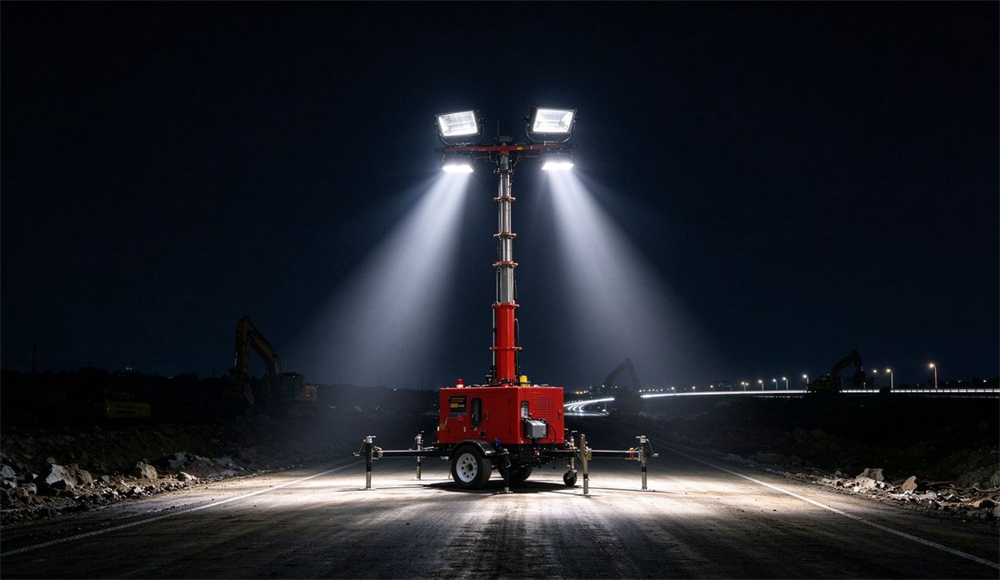
Choose manual crank for fixed worksites that sit for months, 450kg units moved by small trailer, small contractors on a tight budget, and remote sites with limited diesel service. The 7m mast suits low-headroom yards, the winch lifts once and stays put, and the 72dB@7m diesel stays quiet enough for adjacent neighbors. Where the hydraulic light tower advantages dominate nightly moves, the crank side wins instead when lift frequency drops below once a week; the lineup is on the manual crank light tower page.
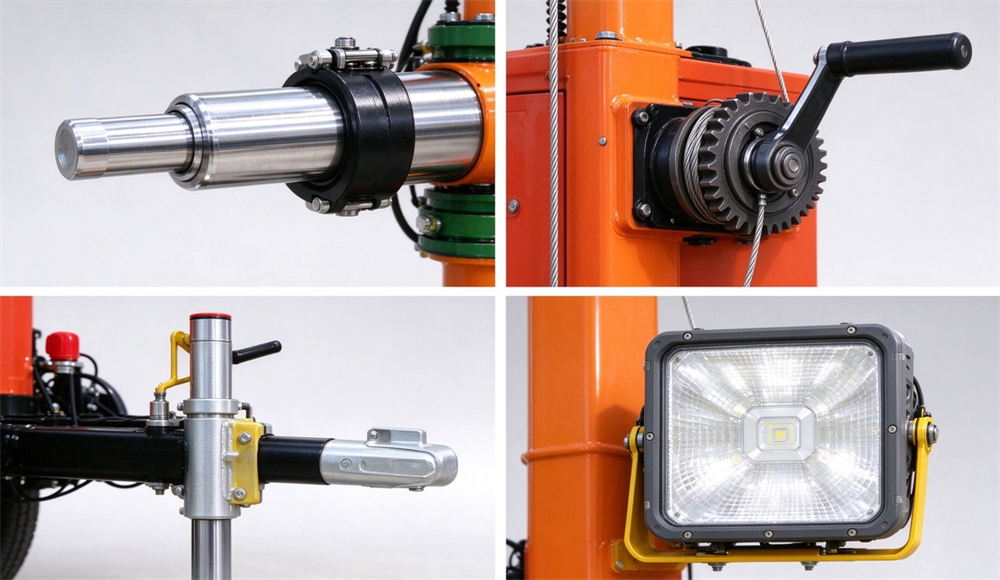
When in doubt, the hydraulic vs manual light tower decision comes down to one rule: count weekly lift frequency. Above a few lifts per night, pick hydraulic — the hydraulic mast vs manual crank light tower case leans the same way. Below one lift per week, pick manual. The trailers are identical anyway — ball hitch, 165R13 wheels, 80km/h tow speed, wind level 8.
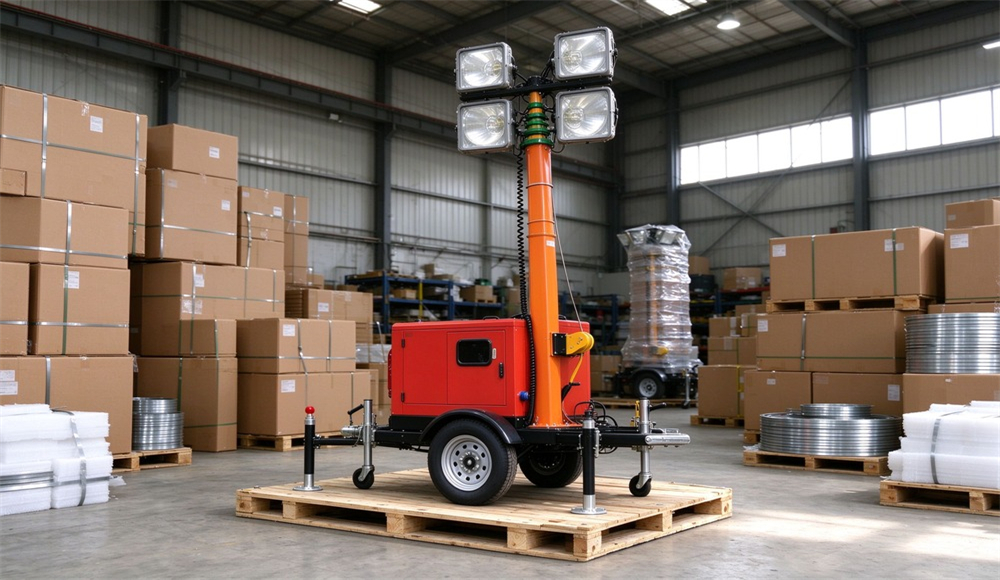
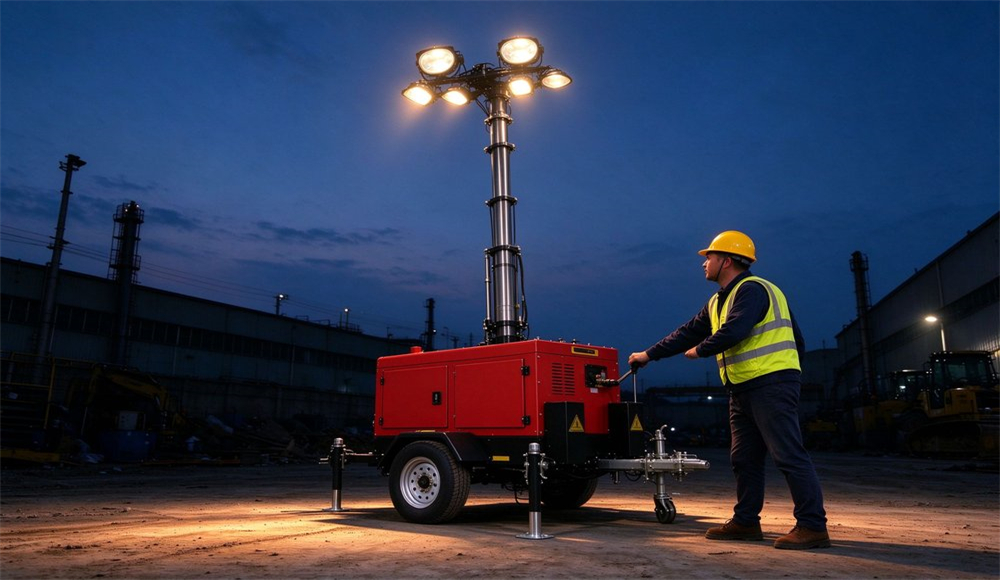
Road maintenance crews move nightly, so the hydraulic vs manual light tower answer here is clear: pick hydraulic. On nightly road jobs, the hydraulic light tower advantages outweigh the higher sticker price. A 9m mast clears high barriers, the trailer tows at 80km/h, and four 105,000-lumen heads cover a 2000-5000 square meter asphalt zone.
Night crews finish the face before sunrise. The collapsed mast tows out at the 80km/h road limit, and the next road section is lit again before morning traffic builds.
Earthwork sites hold still for months. A 450kg manual tower slides into position by hand beside the soil pile, lifting once or twice a week. Budget-sensitive earth contractors pick the crank — the lineup is on the manual crank diesel tower page.
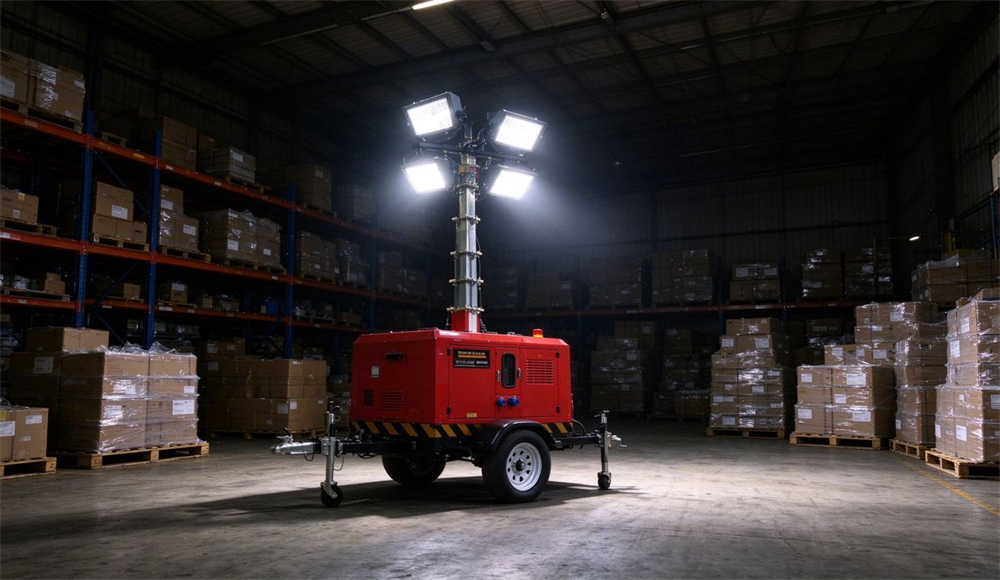
Inside factories and low warehouses, headroom is short and 72dB@7m noise must respect neighbors — in this corner of the hydraulic vs manual light tower choice, the 7m mast wins either way. Sealed lamp housings handle site dust, and wind rating sits at level 8 on four jacks. A manual crank unit fits here especially well, since the tower rises once and stays put for the interior job.
Specs tell you what the machine is; scenarios tell you where it earns its keep. The table below maps three real job families — night road maintenance, earthwork moving once or twice a week, and factory interiors under low ceilings — onto the same lifting choice. Each row names the move frequency, recommended lifting system and the evidence behind the pick. Read your own site type down the column, then compare the match with the table above.
Light Tower Model Scenario
Hydraulic Mast vs Manual Crank Light Tower Move Frequency
Recommended Light Tower Lifting System
Mast Height and Manual Crank Lift Time Evidence
Road maintenance
Nightly
Hydraulic
80km/h, 9m, 105,000 lm heads, 2000-5000 sq m zone
Earthwork
Once or twice a week
Manual crank
450-480kg, 7 or 9m
Factory / low headroom
Low
Manual or 7m hydraulic
72dB@7m, sealed lamp housings, 7m mast
The three scenarios above sit on one shared platform, which is why buyers can mix them in a single fleet. Night road crews run the hydraulic 9m unit, static yards run the manual crank 7m unit, and factory interiors pick whichever fits the ceiling. The collage next to it shows all three sites in one frame, so procurement teams can match a tender file to the right row without re-reading the chapter.
Read the table as a starting point, not a verdict. A rental fleet with mixed job sites will often split the order: hydraulic units for the crews that move nightly, manual crank towers for the yards that stay put for months. Spares channels, operator skill and local climate all tilt the same hydraulic vs manual light tower comparison further. Before you lock quantities, map your own move frequency onto these rows — it is the single number that decides which branch your fleet falls into.
Four branches cover nearly every public and private worksite we supply. Match your weekly lift count to the row below, and the lifting system picks itself: nightly movers get the hydraulic lever, monthly static sites get the quiet crank. Where your own operation sits in between, use the same four checks — lifts per week, crew size, tow distance and stored-spares access — before you shortlist any diesel light tower for tender.
Count how often your tower stands up each week — in the hydraulic vs manual light tower choice, that single number decides the branch. The same four-head lamp platform splits into four routes below; which light tower lifting system is better stops being a guess once your move frequency is on the table.
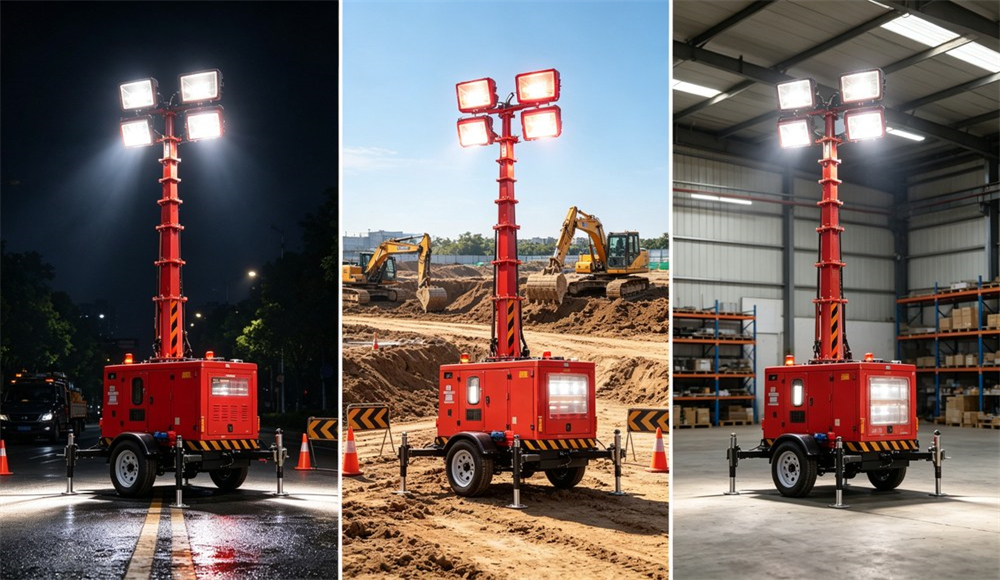
Nightly road crews pull the lever, not the crank: hydraulic light tower advantages pay back fast here, and this is where hydraulic mast vs manual crank light tower comparisons lean firmly hydraulic.
Fixed weekly or monthly points favor the crank: manual crank light tower price factors — no pump, no hoses, no seals — keep the budget lean on static jobs.
A 9m mast with 105,000-lumen heads and 80km/h tow speed moves crews between faces every shift; the question "which light tower lifting system is better" answers itself for fleet operators.
Inside warehouses and storage yards, the 450-480kg manual 7m tower rises once and stays put — cheap, simple, and quiet at 72dB@7m.
Run your own project down these four branches before you quote. When comparing hydraulic vs manual light tower specs, the lever wins on nightly moves and the crank wins on static sites — details carry through on the hydraulic mast range and manual crank diesel tower pages.
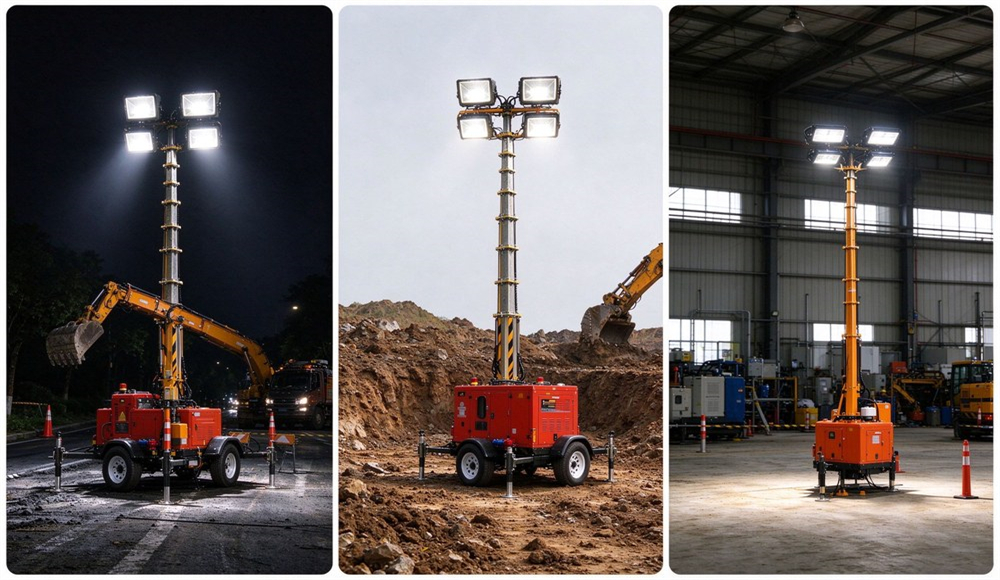
This FAQ answers twelve comparison questions on the hydraulic vs manual light tower, each with a listed figure, not a guess. After the last answer, which light tower lifting system is better for your own project should already be obvious.
1. Is the hydraulic vs manual light tower worth the extra cost?
On nightly-move jobs, saved crew time returns the premium. The hydraulic light tower advantages — one crew, fast setup — earn that return quickly. On fixed sites, payback stretches. Evidence: hydraulic units weigh 1050-1200kg versus 450-480kg for manual units.
2. How long to raise a manual crank light tower to 9m?
Qualitatively, minutes of continuous cranking on the multi-section mast. We recommend a two-person crew; there is no published exact minute figure.
3. Hydraulic vs manual light tower: which maintenance is cheaper?
Points differ rather than cost. Hydraulic checks oil and hose seals; manual checks cable lubrication, gears and the pin. Annual level is confirmed per configuration.
4. Can a manual crank light tower carry four 1000W heads?
Yes. The manual model carries four 1000W heads at 4x105,000 lm — the same load as the hydraulic model.
5. Hydraulic vs manual light tower: which fails more often?
Hydraulic systems fear oil leaks and aging seals; manual systems fear cable wear and gear fatigue. Stock spares by lift system.
6. Do I need power to raise a hydraulic lifting light tower mast?
Hydraulic lift runs on the diesel-driven pump; manual lift is pure hand effort. Both start on a 12V electric starter, rated 7.5kW / max 8kW.
7. Can I convert a manual crank light tower to hydraulic later?
Not economically. The chassis, mast profile and winch structure differ. Choose the lift system at purchase.
8. Which diesel light tower loads onto a truck more easily?
The trailers match, but the 450kg manual unit can be hand-positioned; the 1050kg+ hydraulic unit needs a forklift or crane.
9. Is the hydraulic vs manual light tower equally safe in high wind?
Yes. Both are rated wind level 8 on four swivel jacks; the manual unit adds a safety pin per section.
10. Does the hydraulic vs manual light tower cost more over its lifetime?
Purchase is qualitatively higher, but frequent-move projects earn it back through saved lift labor; lifetime cost figures are not quoted.
11. Is a mixed hydraulic vs manual light tower purchase reasonable?
Yes. Assign hydraulic to the nightly-move face and manual units to fixed backup points on the same lamp platform.
12. Which spares suit a hydraulic mobile light tower fleet?
Manual cable, gear and pin are common mechanical items. Hydraulic seals and hoses are stocked by system per order.
13. Which hydraulic mast vs manual crank light tower is quieter near homes?
In the hydraulic vs manual light tower choice, both share the same air-cooled diesel rated 7.5kW / max 8kW at 72dB@7m. The 450kg manual crank unit on a 7m mast suits low-headroom residential yards, since it rises once and stays put, avoiding repeated restart noise.
14. Should I choose a hydraulic or manual light tower for nightly moves?
For nightly moves, pick the hydraulic light tower: one-person lever lift beats cranking every shift. Manual crank light tower price factors only win back when the tower stands still most of the week.
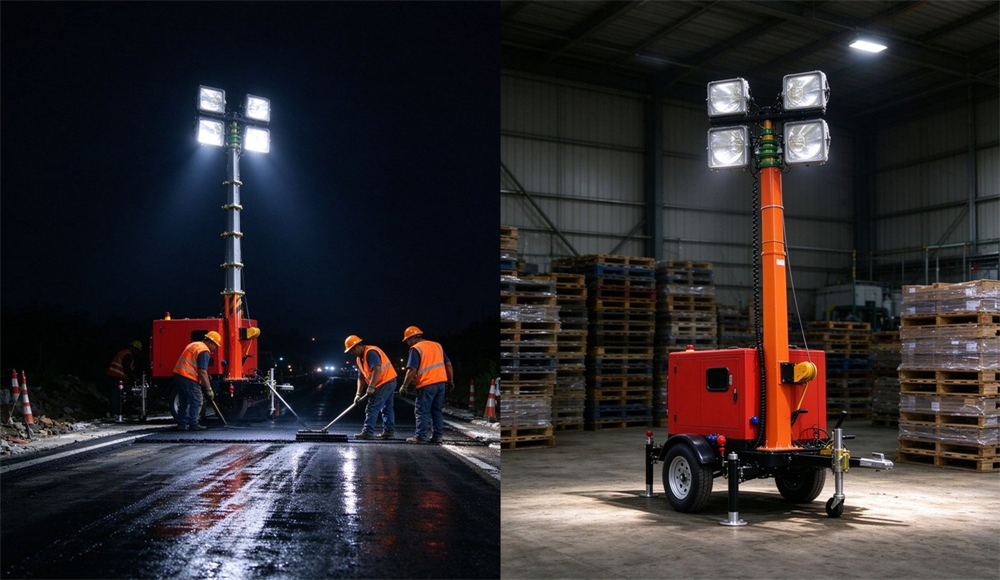
The same factory, the same lamp head, the same trailer: four 1000W heads at 105,000 lumens. This hydraulic vs manual light tower decision comes down to lift labor hours and move frequency — not brightness. Stated plainly, which light tower lifting system is better is answered on your weekly lift count: under one lift a week the crank tower wins, nightly moves favor the hydraulic unit. Frequent night moves pick the 1050-1200kg hydraulic tower on the 7m 9m mast system, where the hydraulic light tower advantages compound every shift. Fixed low-budget sites pick the 450-480kg manual tower.
Compare the hydraulic mast range or the manual crank diesel tower, and browse the full mobile light tower for construction range. We work with relief organizations worldwide. Weigh your weekly lift count, then settle your hydraulic vs manual light tower configuration.
The crank up light tower design keeps parts count low and repair simple, while hydraulic masts win on mast speed - typically raising 9 metres in under 60 seconds.
Liens amicaux :
droits dauteur © Custom Disaster - Relief Bedding: Tents, Sleeping Bags, Blankets Tous les droits sont réservés
léquipe professionnelle au service !