Catégories
dernier blog
Last updated: November 16, 2026
Hydraulic Rescue Tool Maintenance: Service
Schedule Guide
Hydraulic rescue tool maintenance keeps cutters, spreaders and rams ready for the next call.
This page lays out a practical maintenance schedule, the daily checks every crew should run, and the annual service steps that keep tools dependable in the field. This is how to maintain hydraulic rescue tools without losing a shift.

Table of Contents
1. Why Hydraulic Rescue Tool Maintenance Matters
2. Daily Checks Before Every Shift
3. Weekly Maintenance Tasks That Prevent Downtime
4. Hydraulic Fluid: Level, Type and Replacement
5. Blade and Cutting Edge Care
6. Hose, Coupling and Seal Inspection
7. Battery and Power Unit Maintenance
8. Pressure Testing and Annual Service
9. Winter Storage and Long-Term Care
10. How to Maintain Hydraulic Rescue Tools: A Simple Routine
Frequently Asked Questions
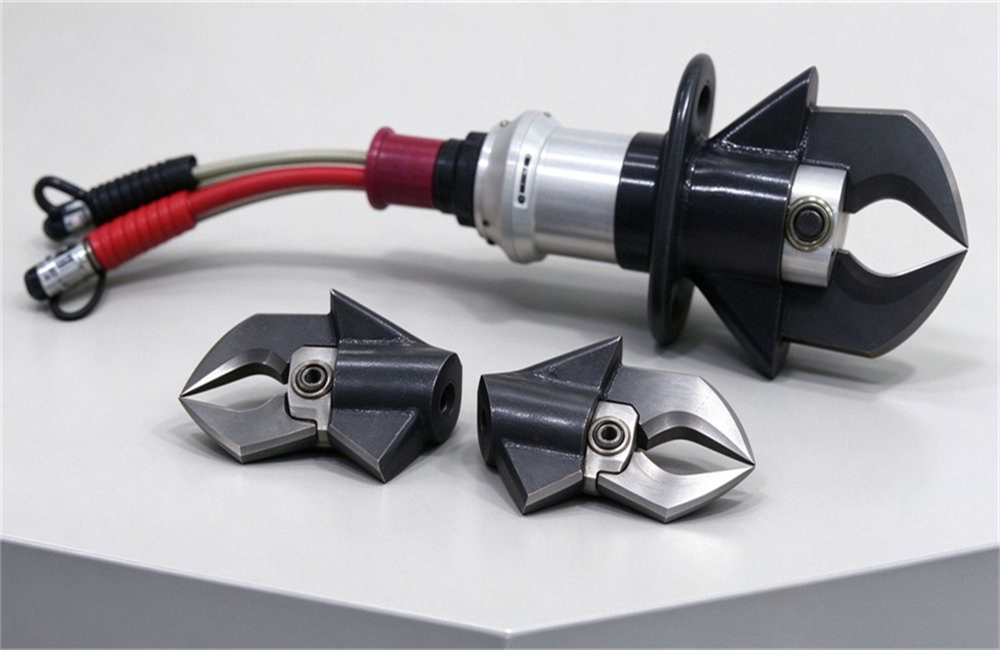
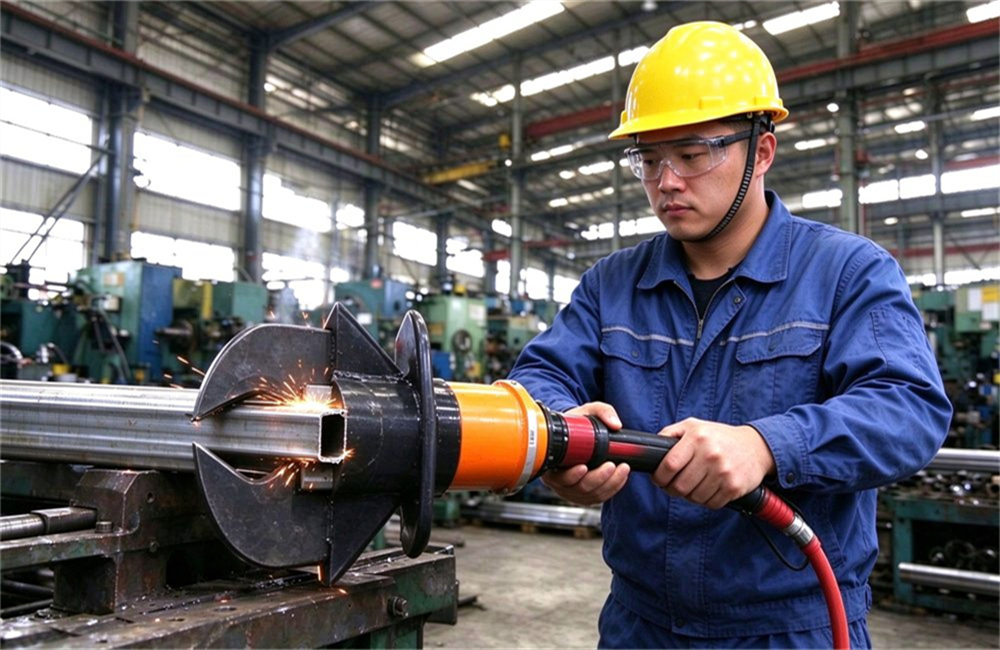
The spare blade set above is a small stockroom on wheels. When a cutting edge fails at a scene, the ten minutes spent swapping a genuine spare blade are nothing compared with the weeks of downtime a missing part can cause.
Keeping the right spares close to the tools is what turns a maintenance program from paperwork into readiness, and ordering spares with every annual service keeps the kit full without extra effort.
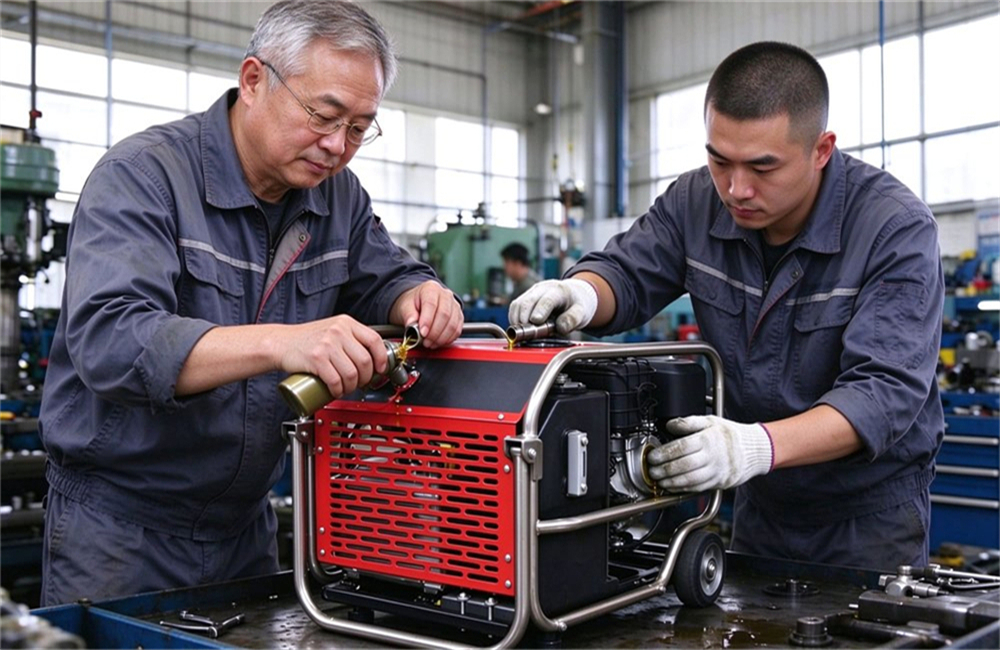
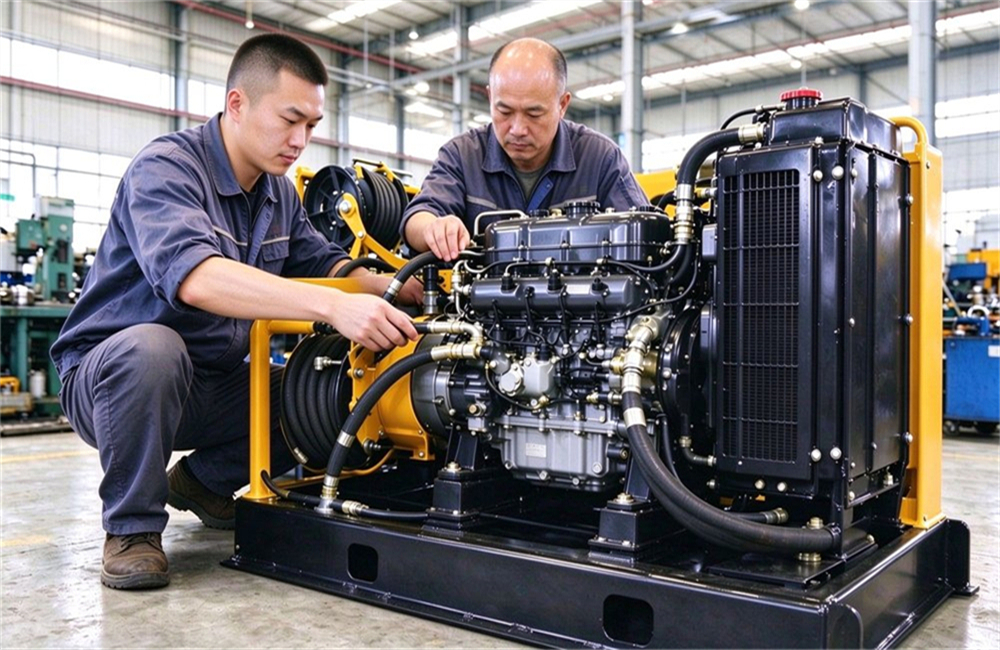
Every rescue tool in this guide starts its life on an assembly line like the one above. Factory assembly quality shows up later in maintenance: clean work, correct torques and proper seals mean fewer repairs during the working life of the tool.
That is why we match every tool with a service history, and why we support buyers with genuine parts and documented test results, so the hydraulic rescue tool maintenance schedule has a reliable starting point.
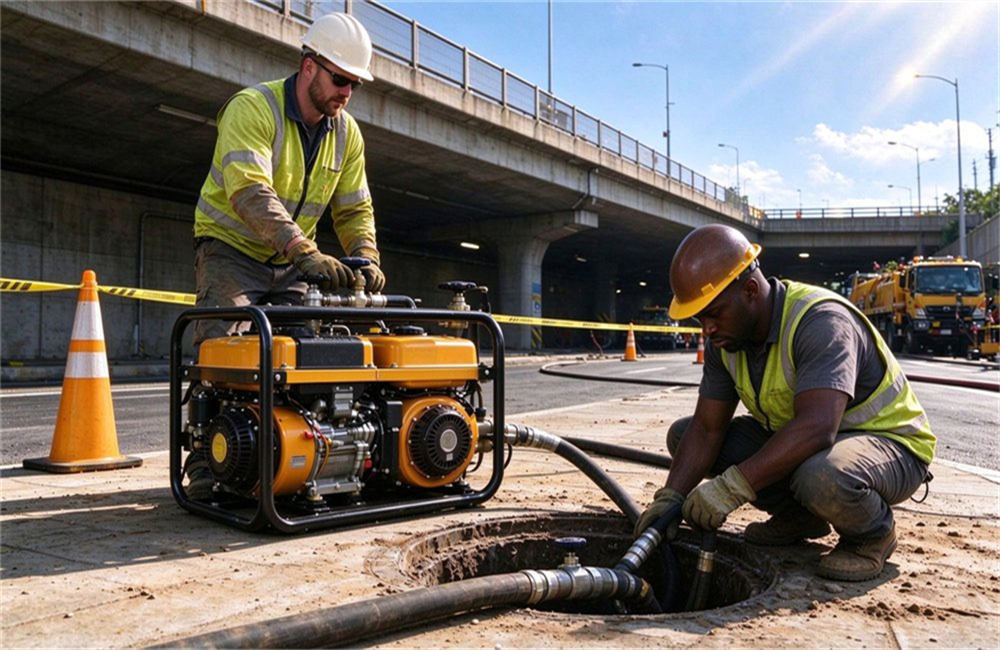
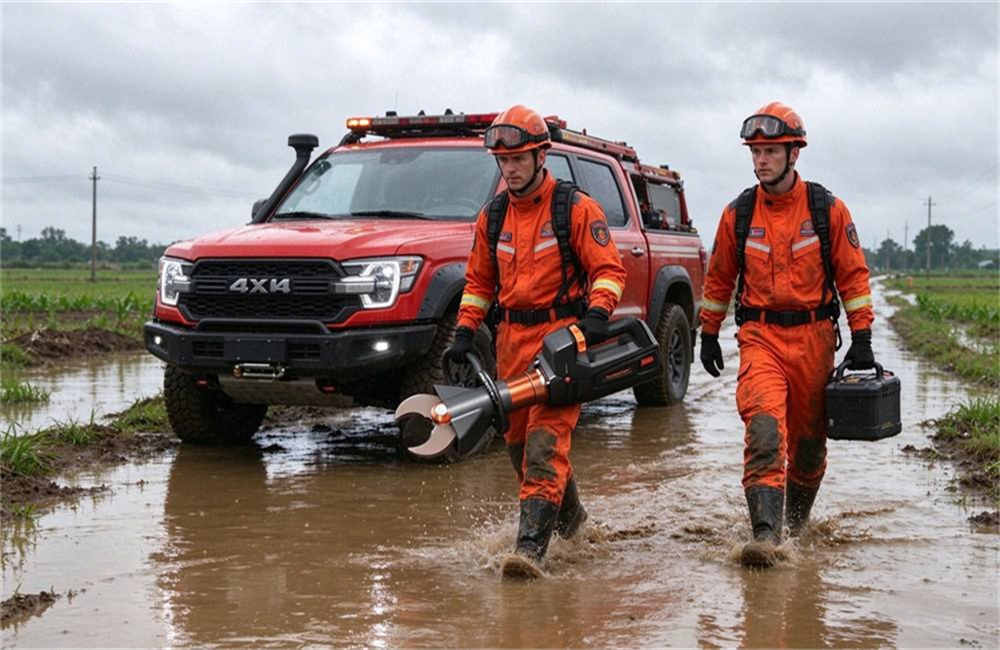
Tools care follows a simple daily and monthly routine. Battery-powered rescue tools have changed where and how crews work, as the scene above shows. Their maintenance story is shorter than a diesel unit's, but not free: packs need charge discipline, contacts need cleaning, and runtime needs tracking.
In flood response and rural calls, a charged spare pack is often the difference between a tool that works and one that watches. Battery care is covered in detail in the sections below.
The sections below walk through each part of the routine in order, starting with the checks every shift should run.

Hydraulic seals weep, dropping force and leaking fluid onto the scene.
Hoses develop micro-cracks that fail under full pressure.
Battery packs lose runtime and refuse to hold a charge.
Diesel power units struggle to start in cold weather.
None of these hydraulic rescue tool failures announce itself on a schedule. That is why a written maintenance routine, checked against the maintenance schedule, matters more than any single repair.
An unmaintained hydraulic rescue tool is a safety hazard. A dull blade forces the operator to push harder, which changes the cutting angle and can bind the jaws. A leaking coupling sprays oil onto gloves and the ground. A hose that fails under pressure whips unpredictably.
Replacing a tool that failed at a live rescue scene costs the most of all, in both money and trust.
Departments that run a disciplined hydraulic rescue tool maintenance schedule Teams that finish this hydraulic rescue tool maintenance program report fewer failures. consistently report fewer tool failures and longer fleet life. Maintenance is not an expense line; it is the cheapest insurance a rescue department can buy.

2. Daily Checks Before Every Shift
The daily check is the backbone of hydraulic rescue tool maintenance. Daily checks before every shift take about ten minutes per tool.
Hydraulic rescue tool maintenance takes about ten minutes per tool and should be done by the same crew that will use the tool, because familiarity is part of the inspection.
Hydraulic Rescue Tools Care: Visual Inspection Routine
Walk around the tool before picking it up This hydraulic rescue tool maintenance routine protects the whole fleet..
In daily hydraulic rescue tool maintenance, look for oil stains on the body, dents on the housing, and debris packed around the blades or pistons. Blade and cutting edge care starts right here. A tool that leaks oil or sits in mud is a tool that is already failing.
Blade Sharpening and Jaw Check
Blade sharpening starts with opening and closing the blades by hand if the tool is unpressurized.
Listen for grinding and watch for hesitation Read this hydraulic rescue tool maintenance schedule before your next shift.. Check the cutting edges for nicks, rolled edges or discoloration from overheating. Any chip deeper than a fingernail should be recorded and dressed before the next deployment.
Coupling and hose check
Wipe the quick couplings clean as part of hydraulic rescue tool maintenance, then connect and disconnect them once.
The connection should seat with a firm click and release without sticking. Hose coupling and seal inspection continues along every inch of the line. Inspect each hose along its full length, rolling it between your hands to feel for soft spots that signal internal damage.
Fluid level and battery check
Pump and hose maintenance starts with the hydraulic fluid check in the tool in its normal working position. Battery and power unit maintenance follows the same weekly rhythm.
Top up only with the fluid grade specified for your system Every hydraulic rescue tool maintenance habit starts at the daily check.. For battery tools, confirm the pack is charged, and for diesel units, verify fuel and oil levels before the shift starts.
Record every daily check on a simple log sheet.
Flag anything unusual immediately; do not wait for weekly service.
Keep the daily log with the tool so history travels with the equipment.
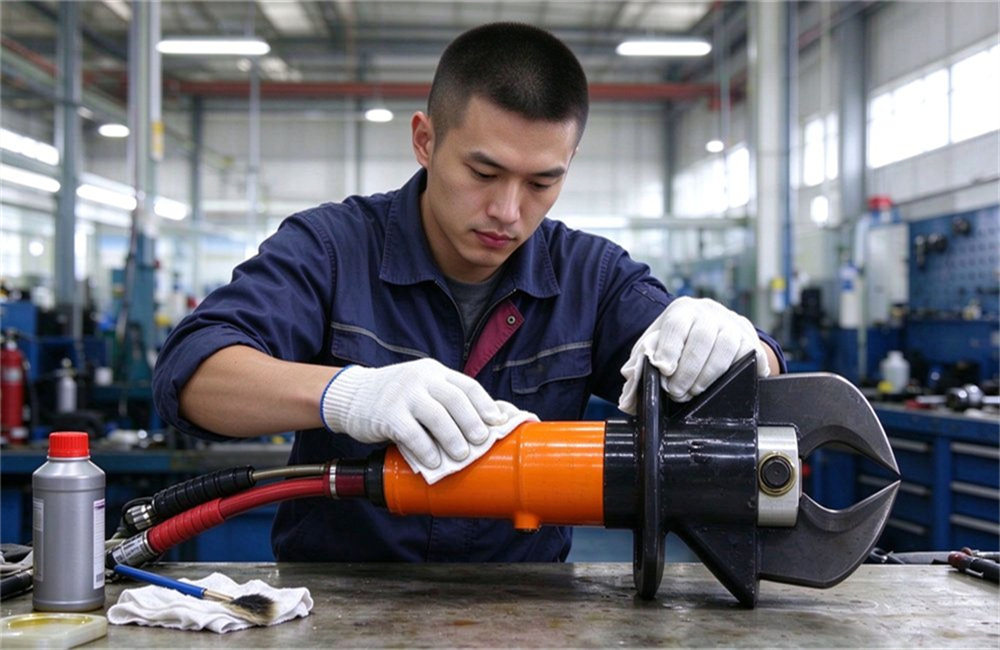
Run the daily check as a team
Pair the check: one operator inspects the tool The hydraulic rescue tool maintenance table lists weekly and annual tasks. while a second reads the checklist and records findings.
Two sets of eyes catch what a rushed solo pass misses, and the record stays complete when the shift changes. Start with the heaviest-used tool, from the hydraulic cutter to the ram, and finish every tool before any unit is cleared for service.
Daily check record template
Keep the daily log simple enough to fill in one minute Teams that finish this hydraulic rescue tool maintenance program report fewer failures. per tool.
Record the date, the tool serial number, the inspector's name, the fluid level, and anything found out of spec with the action taken. A one-line format works: a field for "checked", a field for "fault", and a field for "done by".
A complete daily record turns a three-month history This hydraulic rescue tool maintenance guide answers the common service questions. into a searchable file. The same fault appearing twice on one tool is a pattern, not a coincidence. Patterns are what weekly and quarterly reviews are built on.
What to do when the daily check finds a problem
If a daily check finds a leak, a damaged hose or a failing blade during pump and hose maintenance, stop and act before deployment.
Mark the tool as out of service, tell the shift supervisor This hydraulic rescue tool maintenance routine protects the whole fleet., and book it for repair or parts replacement.
A tool with a known fault should never ride to a scene "because it might not be needed today", because rescue calls never announce their difficulty in advance.
Annual service includes keeping a small spare-parts kit per station: spare seals, a spare hose, a spare blade and the correct fluid.
Most common daily-check faults can be fixed in under an hour Read this hydraulic rescue tool maintenance schedule before your next shift. when the parts are already on the shelf, which is what keeps the fleet available.

3. Weekly Maintenance Tasks That Prevent Downtime
Daily checks catch the obvious; weekly hydraulic rescue tool maintenance tasks catch the developing problems. This routine is how to maintain hydraulic rescue tools on a busy fleet. Put aside thirty minutes per tool, once a week, and work through the list below in the same order every time.
Build the weekly routine around the maintenance schedule
The table below is a practical maintenance schedule This hydraulic rescue tool maintenance guide answers the common service questions. you can adapt to your fleet. Frequency depends on usage, so treat these as minimums: a department running tools every day should shorten every interval.
Hydraulic Rescue Tool Maintenance Schedule – Daily, Weekly, Monthly, Annual
Weekly hydraulic rescue tool maintenance is also the right moment This hydraulic rescue tool maintenance routine protects the whole fleet. to involve a second person. A fresh pair of eyes spots cracks, leaks and wear that the regular operator has stopped noticing.
Keep the weekly kit ready so service never waits on supplies Every hydraulic rescue tool maintenance habit starts at the daily check.. A grease gun, torque wrench, clean rags, the correct fluid and spare seals for the fleet cover almost every weekly task.
Check the kit against the schedule once a month The hydraulic rescue tool maintenance table lists weekly and annual tasks. and restock before it runs dry.
Hydraulic Rescue Tool Maintenance Task
Frequency
Who
Key Points
Visual inspection & leak check
Daily
Operator
Oil, dents, debris, hose condition
Blade edge & jaw check
Daily
Operator
Nicks, rolls, heat discoloration
Coupling & hose check
Daily
Operator
Clean, click, release; roll hoses for soft spots
Fluid level & battery check
Daily
Operator
Correct grade only; pack charged
Clean & lubricate
Weekly
Operator
Blade pivots, cylinder rods, collars
Fastener torque check
Weekly
Operator
Blade bolts and visible fasteners
Seal condition check
Weekly
Operator
Weep, swell, wet streaks
Light pressure test
Weekly
Operator
Reduced load, smooth operation
Hose & coupling detail check
Monthly
Technician
Full length, fittings, relief valve
Battery runtime test
Monthly
Technician
Record runtime; test packs
Full pressure test
Annual
Service partner
Rated force, holding pressure, seals
Fluid change & filter service
Annual
Technician
Or every 500 operating hours

Scheduling maintenance around call volume
Do not let weekly maintenance collapse because the week was busy Read this hydraulic rescue tool maintenance schedule before your next shift.. If the crew cannot service every tool on schedule day, prioritize by usage: tools that deployed most go first, and the rest follow within two days.
A hydraulic rescue tool maintenance schedule that is only "mostly " is the same as no schedule, because the gaps are exactly where failures hide.
Assign each tool a named owner Every hydraulic rescue tool maintenance habit starts at the daily check.. When one person is responsible for a tool's log, lubrication and fluid level, small issues surface early and the record stays honest.
Rotate owners occasionally so no single routine goes unexamined. This hydraulic rescue tool maintenance schedule keeps every task honest. Teams that finish this hydraulic rescue tool maintenance program report fewer failures.
4. Hydraulic Fluid: Level, Type and Replacement
Hydraulic fluid is the blood of the system. It transmits force, lubricates moving parts and carries heat away from the pump.
Using the wrong fluid, or running low on hydraulic fluid check results, damages seals and reduces cutting force faster than almost any other mistake in hydraulic rescue tool maintenance.
Choose the right fluid grade
Most rescue tool systems use a mineral hydraulic oil with an ISO viscosity grade of VG 32 or VG 46, but always follow the manufacturer specification for your model.
A thicker fluid makes the tool sluggish in cold weather. Every hydraulic rescue tool maintenance program lists this rule.; winter storage and long-term care include draining and fresh-fill for this reason.. Every hydraulic rescue tool maintenance program lists this rule. This hydraulic rescue tool maintenance routine protects the whole fleet.; a thinner fluid increases wear in hot climates.
Pump and Hose Maintenance: When to Check Hydraulic Fluid
Check the fluid level at every daily inspection. Teams following hydraulic rescue tool maintenance never skip this step. and visually confirm the fluid is clean. Hose coupling and seal inspection goes side by side with every fluid check.
Cloudy fluid, dark fluid or fluid with a burnt smell Read this hydraulic rescue tool maintenance schedule before your next shift. signals contamination or overheating. If the fluid looks wrong, plan a full change before the next deployment.
Hydraulic Fluid Check: Fluid Replacement Intervals
As a rule of thumb, change the fluid at least once a year Every hydraulic rescue tool maintenance habit starts at the daily check. or every 500 operating hours, whichever comes first.
Change it immediately after any repair that opens the hydraulic circuit, and after any incident where the tool was dropped, struck or exposed to water.
Hydraulic Fluid Reference for Rescue Tool Systems
A hydraulic fluid check belongs in both the daily and the annual routine. Keep a small stock of the correct fluid per tool so a field top-up never uses the wrong grade.
|
Fluid |
ISO Grade |
When to Check |
When to Change |
|
Mineral hydraulic oil |
VG 32 (cold climates) |
Daily level; visual check |
Annual or 500 hours |
|
Mineral hydraulic oil |
VG 46 (standard) |
Daily level; visual check |
Annual or 500 hours |
|
Contaminated or burnt fluid |
N/A |
Replace before next use |
Immediately |
|
After circuit repair |
Per manufacturer |
Top up correct grade |
Full change required |
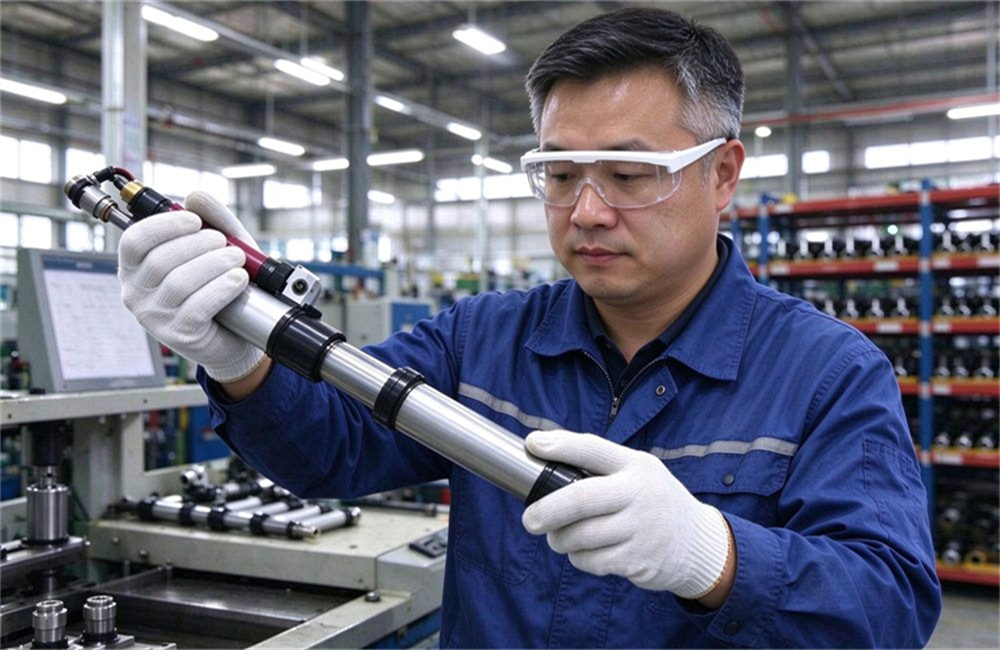
Change fluid with the system unpressurized and the tool resting. Wear gloves and eye protection, because hydraulic oil at operating temperature can burn skin.
Drain into a sealed container, wipe the filler neck clean before refilling, and dispose of old oil through a licensed waste service.
Most hydraulic failures start with contaminated fluid. Dust, water and metal particles enter through open ports, dirty fill caps and worn seals, then act like sand inside the pump.
Prevent contamination at the source: keep fill caps closed, clean the area around the filler before opening it, use a filtered funnel, and never pour from a container that has been stored open.
Watch for the two classic contamination symptoms. Water makes the fluid look milky and causes rust inside cylinders; particles make the fluid feel gritty and accelerate seal wear.
Either symptom means a fluid change, a filter check and a seal inspection before the tool goes back to work.

Cutting edges do the real work, and they wear the fastest. Blade sharpening. Edge care are the part of hydraulic rescue tool maintenance that crews can actually feel: a sharp blade cuts a car pillar in seconds, while a dull one drags and slips.
Run a thumb lightly along the edge (never across it) or use a soft cloth.
Sharpening vs replacement
Light sharpening restores a worn edge and can be done with proper equipment by trained staff.
Deep chips, cracks and bent blades are structural damage: replace the blade. Never weld, grind or hammer a cracked blade back into service, because rescue loads are too high for repaired edges to be trusted.
Keep spare blades in stock
A spare blade set turns a damaged edge into a ten-minute swap instead of a week of downtime.
Store spare blades clean, lightly oiled and protected from impact, and record the blade serial number when it goes into service.
Blade care is also a safety topic: crews should confirm that replacement blades are genuine parts for the tool model, because aftermarket edges can change cutting geometry and rated force.
Sharpening creates fine metal dust, so do it with eye protection and away from open equipment.
Use the tool manufacturer's guide or a dedicated sharpening jig, and dress the edge in short passes instead of heavy cuts that overheat the steel and soften the blade.
Blade geometry and why it matters
The cutting edge of a rescue blade is ground to a specific angle for a reason.
That angle balances sharpness against edge strength: too acute an angle cuts fast but chips; too blunt an angle holds up longer but pushes instead of cutting.
When a blade is sharpened repeatedly, the edge angle drifts, so follow the manufacturer's sharpening spec and use a guide when dressing edges.
For cutters that work on vehicle pillars and rebar, the blade gap matters as much as the edge.
Check that the jaws close with the correct clearance after sharpening, because a gap that is too wide turns a clean cut into a crush. When in doubt, have the tool checked on a test bench after any major edge work.
6. Hose, Coupling and Seal Inspection
Hoses, couplings and seals are the parts that fail without warning.
They are also the parts most often skipped in a busy maintenance routine, which is why pump and hose maintenance deserves its own section in your checklist.
Inspect hoses like your life depends on them
Hydraulic hoses carry oil at high pressure. Check the full length for cuts, abrasion, bulges, exposed reinforcement and stiff or cracked covers.
Pay attention to the last 50 mm at each fitting, where flexing concentrates stress. Replace any hose you are not sure about: a hose failure under pressure is dangerous to everyone nearby.
Couplings: clean, click, release
Quick couplings are the most-used part on a rescue tool. Keep them clean, lubricate the moving collar lightly, and test the connection cycle at each weekly service.
A coupling that leaks, sticks or fails to click fully should be replaced immediately.
Seals: the quiet leaker
Cylinder seals weep oil long before they blow. Wipe the cylinder rod clean, then run the tool through a full cycle and check for fresh oil on the rod or housing.
A thin film is normal; a drop or a wet streak is not. Record seal condition at every weekly check so slow wear is visible in the log.
Pump and hose maintenance also includes checking the pressure relief valve and the pressure gauge.
Confirm the gauge reads zero when the system is off and reaches rated pressure during operation, and have the relief valve verified during annual service.
Quick coupling care tips
Quick couplings fail in two ways: they leak under pressure, or they refuse to release. Both are preventable with simple habits.
Keep couplings capped when the tool is not connected, wipe them before every connection, and never let dirt sit in the socket overnight.
If a coupling feels gritty or releases with a jump, service it before it jams at a scene.
Match coupling brands and sizes across your fleet. Mixed coupling systems cause leaks and slow connections, and they complicate spare-part management.
When you standardize, keep the coupling spec in the tool log so replacement parts are always correct.
Hose replacement and storage
Replace a hose when the cover is cut or cracked, when reinforcement shows, or when the hose stiffens and refuses to lie flat.
Match the new hose to the original spec, including rated pressure and fitting type, and respect the manufacturer bend radius instead of forcing tight loops.
Store spare hoses coiled loosely, out of direct sunlight, and away from ozone sources such as motors and welding areas.
Sunlight and ozone crack rubber covers even when the hose is not in service, so date the spares and rotate stock on a first-in, first-out basis.
7. Battery and Power Unit Maintenance
Battery tools and engine-driven power units have very different maintenance needs. Treating them the same way is a common mistake, and it is why hydraulic rescue tools care must cover both sides separately.
Battery tools: care for the pack
For electric hydraulic rescue tools, the battery pack is the highest-value item in the hydraulic rescue tool maintenance routine.
Charge packs after every use with the correct charger, store them at moderate temperatures, and avoid leaving them fully discharged. If runtime drops noticeably, or the pack gets warm during normal use, have it tested and replaced when needed.
Battery maintenance also means keeping contacts clean and checking the charger condition. A dirty contact creates heat, and heat shortens pack life. Wipe contacts with a dry cloth at each weekly service.
Diesel power units: the engine side
Diesel hydraulic power units need engine-level care: check oil level, fuel, air filter and coolant on a regular basis, and follow the engine manufacturer service intervals.
Run the unit monthly even when it is not deployed, so seals stay lubricated and the engine is ready to start.
Electric power units: simpler, not free
Electric-motor power units follow the same hydraulic rescue tool maintenance rules but skip fuel and exhaust checks, but they still need the same hydraulic-side care: fluid level, filter condition and hose inspection.
Confirm the motor cooling intake is clear and the electrical connections are tight and dry.
Whichever power source you run, battery and power unit maintenance belongs in the same log as the tools, so the whole system is serviced on one schedule.
Filter care is part of hydraulic power unit maintenance. Check the return filter at every fluid change, replace it on the interval the manufacturer specifies, and top up fluid through a clean filler only.A clogged filter starves the pump and shows up first as a slower cycle time.
Charging habits that extend battery life
How you charge matters as much as how often you charge. Use the charger supplied for the pack, charge in a dry area, and unplug once the pack reaches full charge instead of leaving it on the charger for days.
Extreme heat and extreme cold are both battery killers, so keep spare packs somewhere temperate.
For long deployments, carry at least one spare pack per tool and rotate packs so no single pack carries every job.
Label each pack with its purchase date and track runtime in the weekly log; packs that lose more than a third of their original runtime should be retired and recycled properly.
8. Pressure Testing and Annual Service
Pressure testing is the annual service step that proves a tool still performs to specification, and it is the backbone of hydraulic rescue tool maintenance. It is also the step that many departments postpone because it means sending tools to a service shop.
What a pressure test covers
A proper pressure test runs the tool against a calibrated test bench, checking rated force, holding pressure, cycle time and seal integrity. How to maintain hydraulic rescue tools means proving rated pressure every year.
For cutters and spreaders, the test confirms the jaws reach rated opening and force.
For rams, it verifies extension force and stroke. The test bench measures the system at its working pressure, and our rescue tools are rated to the 63 MPa class.
How often to test
Annual service is the industry standard for full pressure testing, and annual pressure testing follows the test methods in standards such as NFPA 1936 for powered rescue tools.
Tools that see heavy use, flood exposure or impact damage should be tested sooner.
Test sooner after heavy seasons, flood exposure or impact damage.
A tool that has cut continuously for days, been submerged, or taken a hard drop should be pressure-tested before it returns to normal rotation, even if the annual date has not arrived.
Keep service records with the tool
Record the test date, measured values, technician name and any parts replaced. These records matter for fleet planning, for proving tool readiness, and for your own audit trail when equipment is inspected.
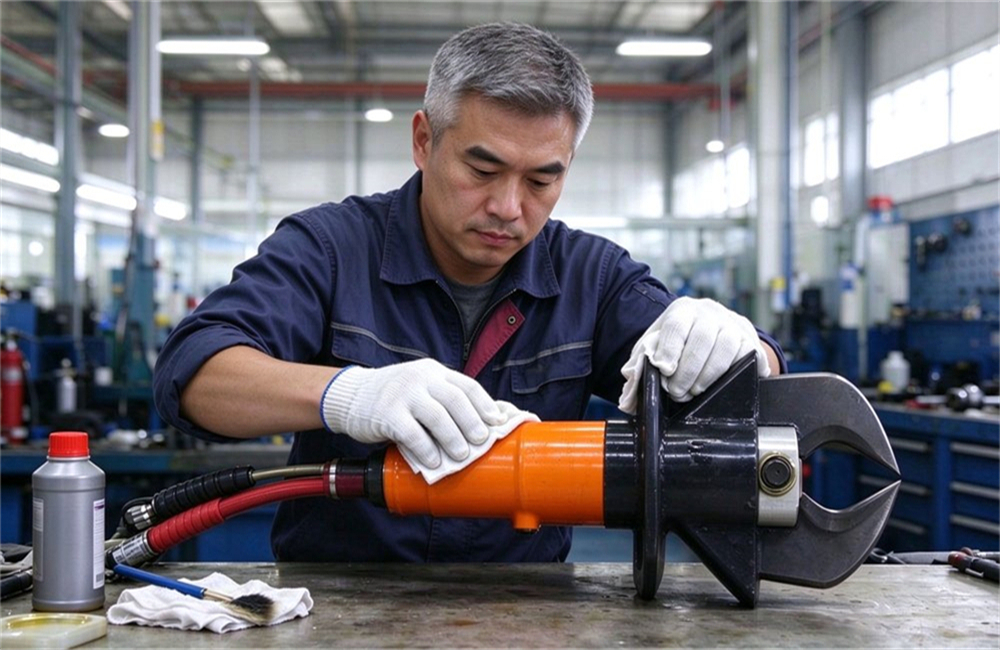
Common Hydraulic Rescue Tool Problems and Simple Fixes
If your department does not have a test bench, use a qualified service partner for annual pressure testing.
The cost of an annual test is small compared with the cost of discovering a failed tool at a live rescue scene.
Choosing a qualified service partner
If you outsource annual service, choose a partner that works with the same tool family you run, uses calibrated test equipment, and issues a written test report.
Ask how they handle seal kits and genuine parts, and confirm they return the tool with a documented pressure test, not just an oil change.
Keep the relationship simple: one service partner per tool family, one test report format, and one person on your side who reviews every report.
That single point of ownership makes it easy to spot a tool that fails the same test twice, which is the clearest signal that a deeper repair is due.
Symptom
Likely Cause
Check / Fix
Tool loses cutting force
Low fluid or leaking seal
Check fluid level; inspect cylinder seals
Blades drag or slip
Dull or rolled edge
Dress or sharpen; replace if chipped
Oil on cylinder rod
Worn seal
Wipe and run a cycle; replace seal
Hose bulges or stiffens
Internal damage or age
Replace hose immediately
Coupling leaks or sticks
Dirt or worn collar
Clean; lubricate; replace if needed
Battery runtime drops
Pack aging or dirty contacts
Clean contacts; test pack; replace
Diesel unit hard to start
Fuel, filter or cold
Check fuel and filter; warm and run
Pressure gauge reads wrong
Gauge or relief valve issue
Verify at annual service

9. Winter Storage and Long-Term Care
Winter storage changes the hydraulic rescue tool maintenance rules. Cold temperatures thicken hydraulic fluid, strain seals, and drain battery packs. Rescue tools stored for winter need a plan, not just a shelf.
Prepare tools for cold weather
Store tools in a dry, heated area when possible. Cold-soaked seals crack and hoses stiffen, so bring tools inside between calls.
If tools must stay in vehicles, run them through a cycle when the shift starts to warm the fluid and exercise the seals.
For very cold climates, check whether a lower-viscosity fluid is approved for your system, and confirm the fluid change is done before temperatures drop.
When a hydraulic rescue tool will not be used for months, do not just park it.
Clean it, lubricate it, change or top up fluid, relieve pressure, disconnect the battery, and cover it against dust. Note the storage date in the log so the tool re-enters service with a full inspection, not a surprise.
Follow a cold-start procedure when a tool has sat overnight in a cold vehicle.
Hydraulic tools fear humidity more than they fear hard work. Condensation forms inside tool bodies and cylinders when a cold tool is brought into a warm, humid room, and that moisture rusts rods and contaminates fluid.
Store tools off the floor, keep the storage room ventilated and dry, and wipe exposed rods with a light oil film before long storage.
Rust on a cylinder rod is a repair ticket, not a cosmetic issue, because the pitted surface destroys seals within hours of use.
Check rods and blade surfaces for rust at every monthly service, and treat any rust immediately before it spreads.
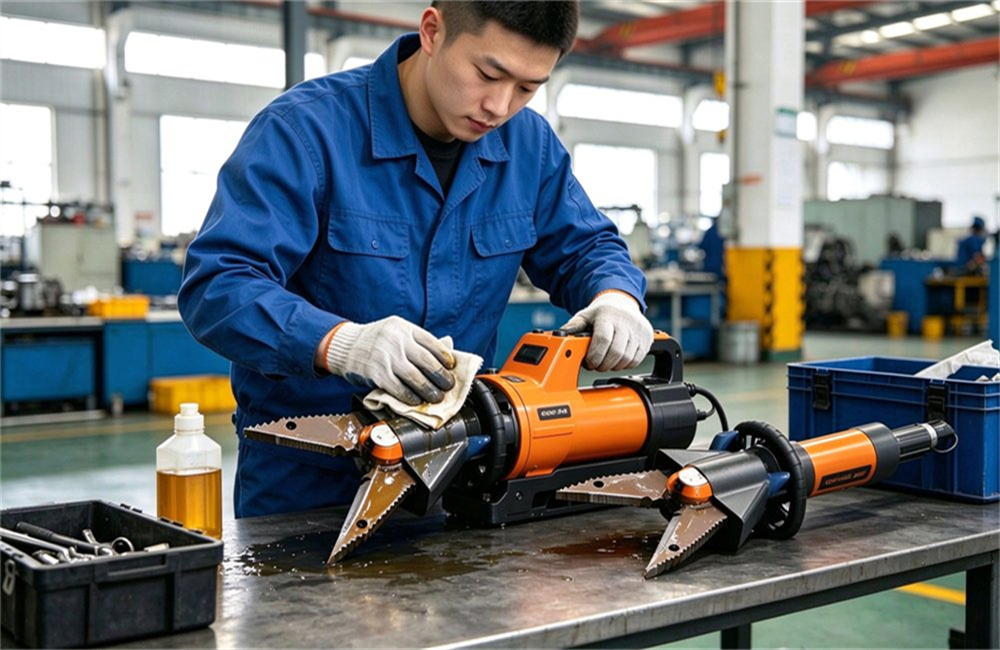
Here is the whole hydraulic rescue tool maintenance program reduced to one page. Post it in the equipment room and work through it in order.
After every use: clean the tool, wipe couplings, recharge or refuel, and log the deployment.
Daily: run the ten-minute check: fluid level, blade edges, couplings, hoses and battery.
Weekly: clean, lubricate, check fasteners and seals, run a light pressure test, and record everything.
Monthly: inspect hoses and couplings in detail, test battery runtime, and run any idle power units.
Annually: full pressure test, fluid change, filter and seal service, and updated service records.
Train every operator on the same routine, assign one person to own each tool's log, and review the logs quarterly.
A maintenance log is only useful if someone reads it. Once a quarter, review every tool's log with the crew.
Compare deployment counts with service counts. Look for tools that keep returning with the same fault. Check that spare parts stock matches what the fleet actually consumed.
The review often reveals patterns that daily checks miss, such as one station that always skips lubrication or one hose size that fails early.
Use the review to update the maintenance schedule itself. If a tool is tested annually but floods twice a year, move it to a six-month test.
If battery packs consistently die at eighteen months, plan replacements earlier. A maintenance schedule that adapts to real usage is the final proof that the program is working.
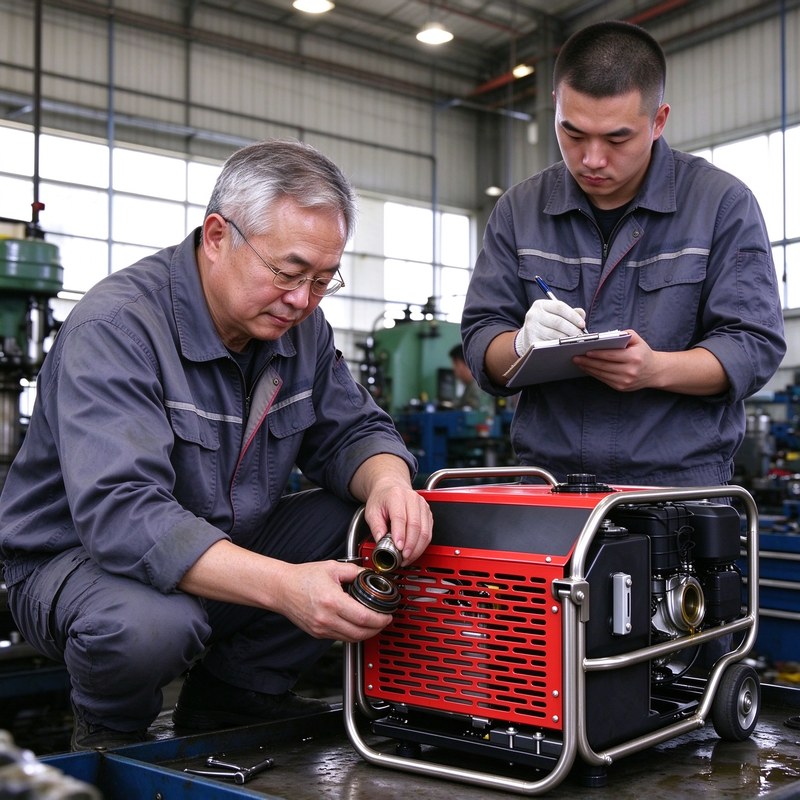
Hydraulic Rescue Tools Hub · Hydraulic Cutter for Rescue · Hydraulic Spreader for Rescue
Hydraulic Power Unit Rescue · How to Choose Hydraulic Rescue Tools · Battery vs Engine Hydraulic Pump ·
Hydraulic vs Manual Rescue Tools

Frequently Asked Questions
How often should hydraulic rescue tool maintenance be performed?
Daily checks should run before every shift, weekly tasks once a week, and a full pressure test plus fluid change at least once a year or every 500 operating hours.
Tools used heavily or exposed to water and impact should be serviced sooner. Frequency always follows usage, so log every deployment and service event.
Build the intervals into a visible schedule and review them quarterly, because a schedule nobody checks is just a list.
What is the first step of the daily maintenance checklist?
The first step is a visual inspection: check for oil leaks, dents, debris and damaged hoses before touching anything. Then work through blade edges, couplings, fluid level and battery in the same order every time, and record the results in the tool log.
What hydraulic fluid should I use for rescue tools?
Most rescue tool systems use a mineral hydraulic oil with ISO viscosity grade VG 32 or VG 46, but the correct grade is set by the manufacturer for each model. Never mix grades, and change the fluid at least annually or after any repair that opens the hydraulic circuit.
How often should I check the hydraulic fluid level?
Check the fluid level during every daily inspection with the tool in its normal working position. Visually confirm the fluid is clean: cloudy, dark or burnt-smelling fluid means contamination or overheating and should trigger a full fluid change before the next deployment.
How do I know when hydraulic cutter blades need sharpening?
Check the cutting edges daily. A rolled or slightly worn edge can be dressed with a fine stone, while chips, cracks and bent blades need professional sharpening or replacement. If cuts slow down or the blade drags, sharpen or replace before the next deployment.
Can I weld or repair a cracked blade?
No. Rescue blades carry very high loads, and welding, grinding or hammering a cracked blade changes its heat treatment and geometry. Replace any blade with cracks, deep chips or bends, and use genuine parts matched to the tool model.
How often should hoses and couplings be replaced?
Inspect hoses weekly along their full length and replace any hose with cuts, bulges, stiff covers or exposed reinforcement. As a rule, replace hoses on a fixed interval based on age and usage, and always after any visible damage or a pressure test failure.
What causes a hydraulic rescue tool to lose power?
Common causes are low hydraulic fluid, a leaking seal, a damaged hose, a worn pump or a contaminated filter.
Work through the checklist in order: fluid level and condition, seals, hoses, then power unit. If power loss persists, schedule a pressure test to isolate the fault.
Power loss that comes and goes is often a coupling or relief valve issue, so test the tool under load before assuming the pump is at fault.
How should battery rescue tools be stored in cold weather?
Store battery packs charged, at moderate temperatures, and disconnected from the tool if it will sit for weeks.
Avoid leaving packs fully discharged, keep contacts clean, and replace packs when runtime drops noticeably or the pack runs hot during normal use.
Do diesel power units need special maintenance in winter?
Yes. Diesel power units need engine-level care: oil level, fuel, air filter, coolant and engine service intervals, plus a monthly run to keep seals lubricated and the engine ready. The hydraulic side still needs fluid, filter and hose checks on the same schedule as the tools.

What is a pressure test and how often do I need one?
A pressure test runs the tool on a calibrated bench to verify rated force, holding pressure, cycle time and seal integrity at working pressure. Full pressure testing is standard at annual service, and sooner after heavy use, flood exposure or impact damage.
Why do I need to keep maintenance records?
Records show each tool's service history, prove readiness for inspections, and help you plan parts and replacements. Log every daily check, weekly service, fluid change, pressure test and repair, and keep the log with the tool.
How should rescue tools be stored in winter?
Store tools in a dry, heated area, keep battery packs warm and charged, and consider a lower-viscosity fluid if approved for your system. Run tools through a cycle at shift start to warm the fluid and exercise seals, and complete fluid changes before temperatures drop.
What should I do if a tool fails during a rescue?
Remove the tool from service immediately, mark it clearly, and do not return it to use until it passes a full pressure test. Use a backup tool from the fleet, log the failure, and investigate the cause before the tool is serviced and re-certified.
How do I know when a seal needs replacement?
Replace a seal when you see fresh oil on the cylinder rod after a full cycle, when the rod shows a wet streak, or when the tool loses force while fluid level is normal. Seals should also be replaced as a set during annual service, because old seals next to new ones fail first.
Can I use hydraulic fluid from another brand?
You can use another brand if the ISO viscosity grade and additive family match the manufacturer specification, but never mix two different grades or additive types in one system. When in doubt, drain, flush and refill with the recommended fluid, and record the change in the tool log.
What does annual service include beyond the pressure test?
Annual service should include a full pressure test, a fluid change, filter replacement, seal inspection or replacement, hose and coupling inspection, torque checks on all fasteners, and a written service report. It is also the right time to check spare parts stock and update the tool log.
How often does the hydraulic fluid check happen?
The hydraulic fluid check runs daily for level and yearly for grade. Hydraulic rescue tools care keeps the fluid clean so seals and pistons last between annual services.
What does annual service cover on a rescue tool?
Annual service covers seals, blades, pump pressure and the fluid change. Teams with a hydraulic rescue tool maintenance plan log each service in the record sheet shipped with the tool.
How does hydraulic rescue tools care protect the pump and hose maintenance schedule?
Hydraulic rescue tools care protects the pump and hose maintenance schedule because clean fluid and dry couplings extend seal life. Teams that follow hydraulic rescue tools care keep the annual service interval and reduce mid-year failures.

OSHA rules require employers to maintain a workplace free of known hazards. Equipment maintenance is a basic part of that duty. That is why the record-keeping steps in this guide matter as much as the wrench work.
Keep every check documented, keep the log with the tool, and review it with the crew quarterly.
Liens amicaux :
droits dauteur © Custom Disaster - Relief Bedding: Tents, Sleeping Bags, Blankets Tous les droits sont réservés
léquipe professionnelle au service !