Catégories
dernier blog
Last updated: October 26, 2026 | Author: YRF Textile Emergency Preparedness Team | drought relief supplies for Africa
Drought relief in East Africa is rarely about food alone: nights stay cold for pastoral families even when the rains fail, and blankets arrive as part of the same relief pipeline. This guide explains which blanket specs suit drought response, how to order them in bulk with consistent quality, and what procurement teams should confirm before shipment.
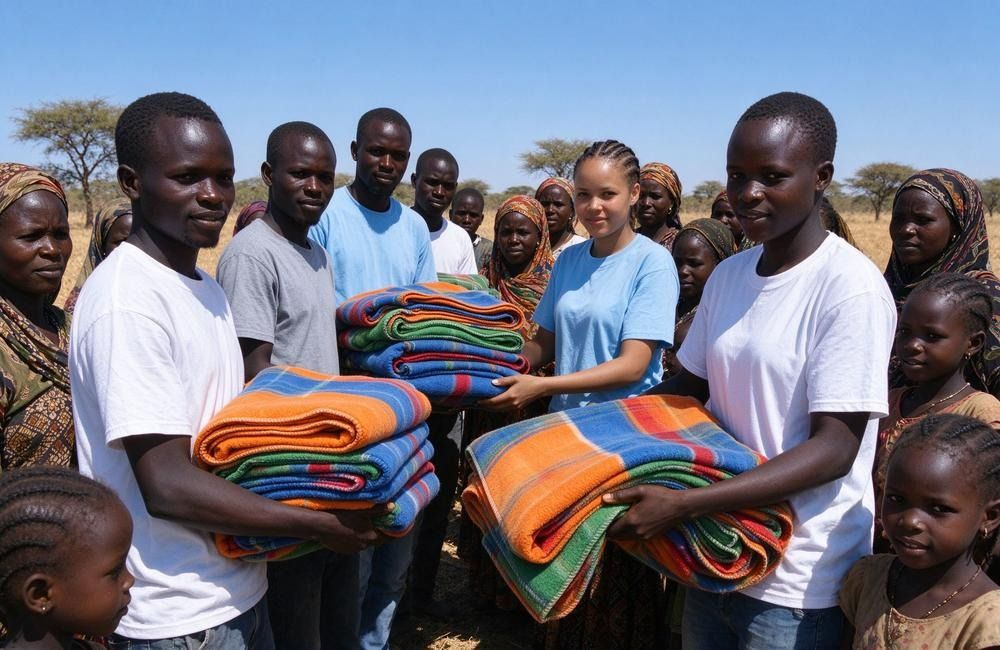
Field distribution of drought relief blankets in a drought-affected village.
Field distribution in a drought-affected village follows the same checklist as any relief pipeline: the quantity on the truck matches the distribution list, the specification matches the approved sample, and every family receives the same item. The photo shows the moment the plan becomes a delivered blanket, which is also the point where the record for the next order is created.
The need that follows is not only food. Clear skies that hold no rain radiate heat away quickly at night, and highland areas routinely fall below 10 degrees Celsius after sunset. Families sleeping under open sky in thin clothing face respiratory illness that food aid alone cannot prevent. That is why blankets for drought relief have become a first-line item in agency supply lists.
For procurement officers at NGOs, government bodies and relief organisations, the practical question is the same every season: which drought relief supplies give the most protection for the budget, and which suppliers can deliver them in the volume a response demands. Getting this answer right the first time saves weeks of re-tendering and keeps emergency blankets for East Africa on schedule.
The answer starts with warmth, shelter and bedding built for arid conditions. A good relief blanket holds heat through cold desert nights, shrugs off dust and sand, and packs light enough to ship in bulk. Shade netting, a simple tent and washable bedding for health centres complete the core package.
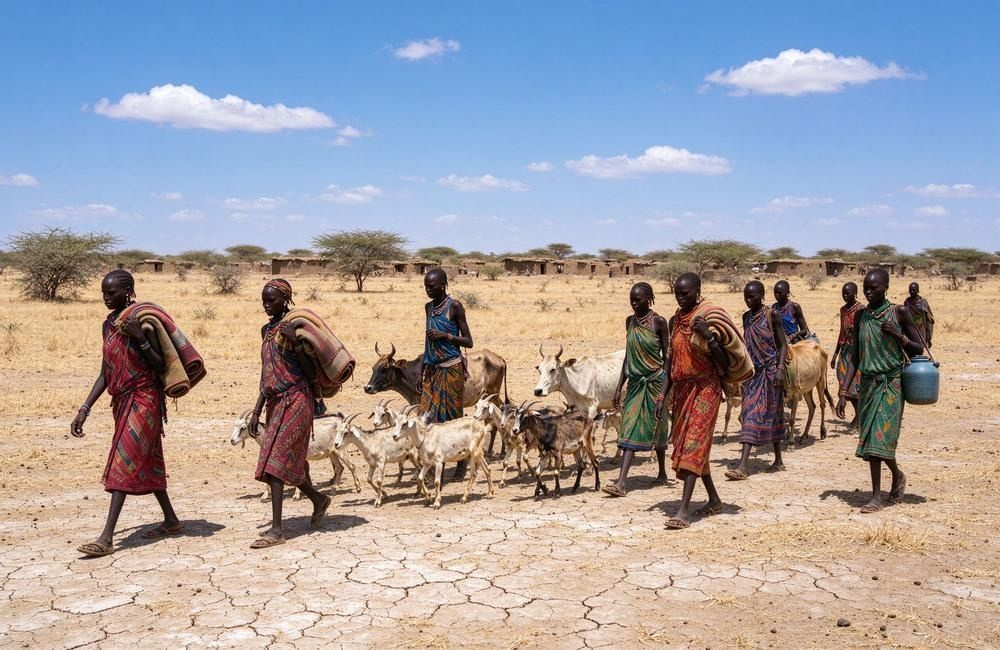
Dry savanna and pastoralist families during drought conditions.
This article walks through every step of buying these items, from material specifications to RFQ data, so your next drought relief order arrives on time and works in the field. You will see which specs matter for dry highlands, how to pack for hot dusty storage, and how to answer an agency RFQ with confidence.
Night-time temperature data is the first input for a drought blanket specification. Record the coldest night of the season for each target highland area, then add a safety margin of five degrees. That number decides the GSM band, the finished weight and the fibre mix, and it belongs in the RFQ next to the quantity. Agencies that write the temperature basis into the specification receive comparable quotes, because every supplier prices against the same cold standard.
Dust exposure changes the care instruction, not the GSM. A fine-weave polyester blanket sheds dust more easily than a brushed flannel, and the care label should name dusting and shaking before washing. In arid highlands the blanket is stored longer than it is used, so ask for the storage test result: colour fastness after six months of storage and the shrinkage number after the first wash.
Warehousing in a dry climate is about temperature swings, not humidity alone. Blankets stored in a metal container under direct sun can reach surface temperatures far above the room reading, which accelerates fibre ageing. Specify shade, airflow and off-floor pallets in the warehousing clause, and rotate stock by production date so the oldest bales leave first during the response season.
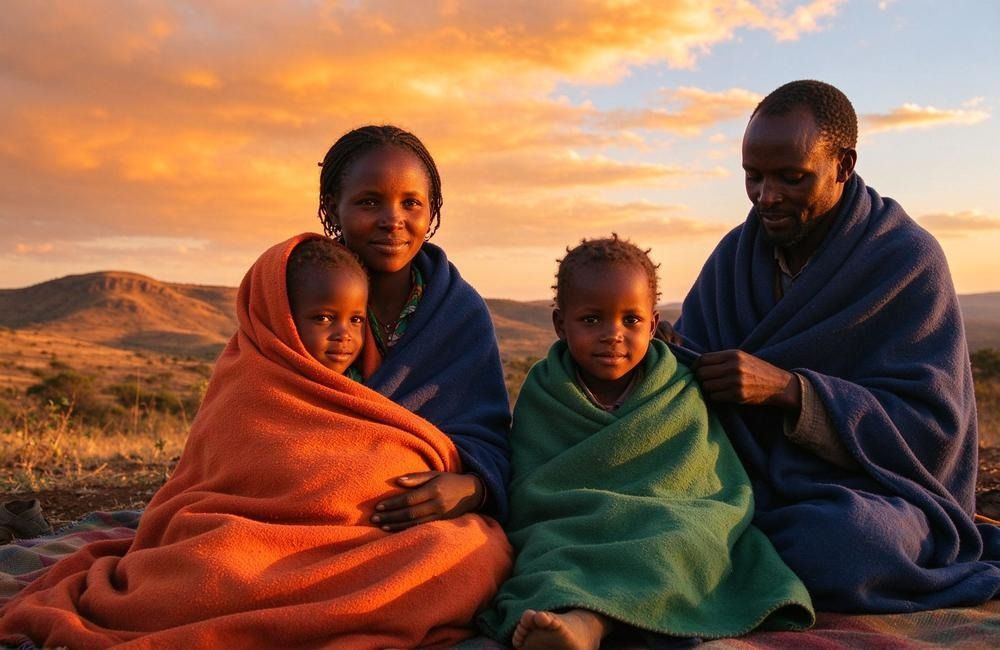
A highland family wrapped in blankets against the evening cold.
Seasonal drought response follows a predictable calendar: agencies finalise orders before the dry season peaks, and the factory confirms a production window instead of a vague lead time. Ask for a written production calendar with the sample date, the bulk start date and the port arrival date, so the inland transport and the distribution can be booked before the goods ship.
A drought RFQ that names the temperature basis, the storage test and the warehousing clause produces quotes that survive a review meeting. The same document becomes the audit record: the specification line, the quantity model and the delivery dates are all on one page, and the next season reuses it with updated quantities.
Order sizes in drought programs are easier to defend when the quantity model is written beside the temperature data. State the number of people per household, the nights of use per year and the replacement rate, then multiply. The model is the same one the committee can re-run, and it stays in the RFQ as the calculation column.
Colour fastness matters more in drought zones because blankets are washed less often and stored longer. Ask the factory for the light-fastness rating and the storage test result before the bulk order, and keep the certificate copy with the order file, because the same certificate is requested again at the next tender.
Distribution planning for drought relief works best with a staging warehouse. Name the staging hub, the delivery schedule and the re-baling point in the RFQ, so the inland transport quote matches the actual route and the receiving team knows which documents arrive with each consignment.
Field distribution in drought zones is a schedule, not an event. Write the dispatch calendar into the RFQ: the warehouse release date, the staging hub arrival and the last drop-off point, with a named contact at each handover. When the goods move in stages, the receiving team checks the packing list against the dispatch note at every transfer, and the stock record stays accurate from the factory floor to the final distribution point.
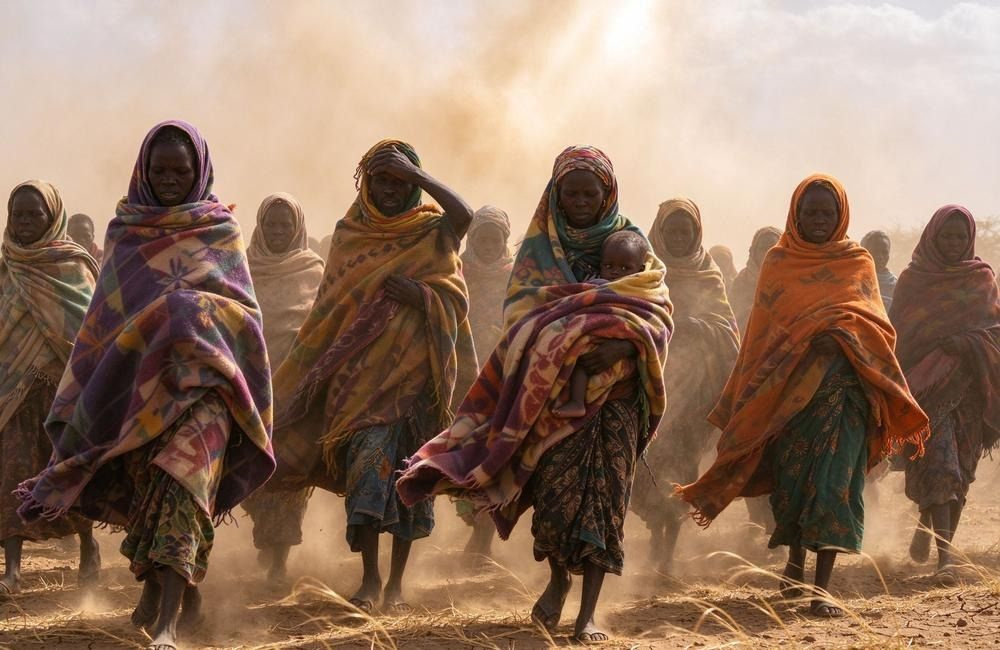
Villagers using blankets against a dust storm.
Drought blankets are also a budget line that committees re-check, so the RFQ should separate fabric cost, finishing cost, packing and freight in four rows. A price breakdown by layer shows where the number comes from and survives the review, while a single lumped figure invites a second round of questions about the same product.
Finally, name the handover documents in the RFQ: the packing list, the inspection certificate and the delivery note travel with each consignment, and the receiving team files them by programme number. Documented handovers close the loop between the warehouse, the transporter and the distribution team, so the next drought response starts from accurate stock numbers instead of a fresh count.
A simple tracker with the dispatch date, the route and the handover contact per consignment keeps every movement visible, and the same tracker becomes the audit trail when the programme is reviewed at the end of the season.
Season reviews work best with the tracker and the RFQ side by side, because the quantity model meets the actual dispatch record in one view.
Keep the tracker updated on the same day a consignment moves.
Accurate stock numbers are the cheapest insurance a drought programme can buy, and they cost nothing more than the habit of updating the tracker on the day a consignment moves.
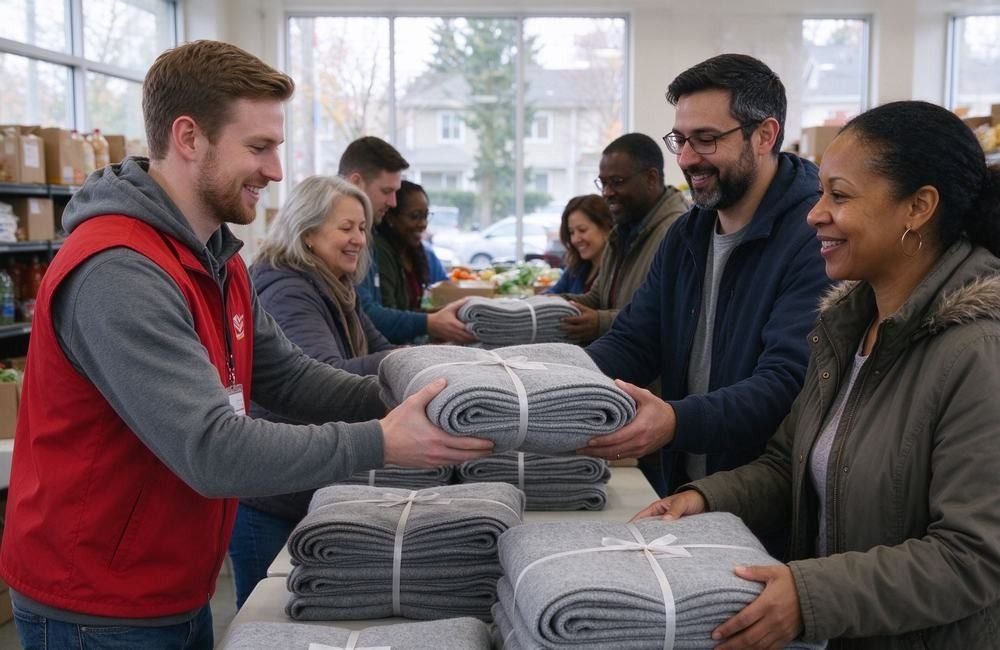
Community distribution of relief blankets.
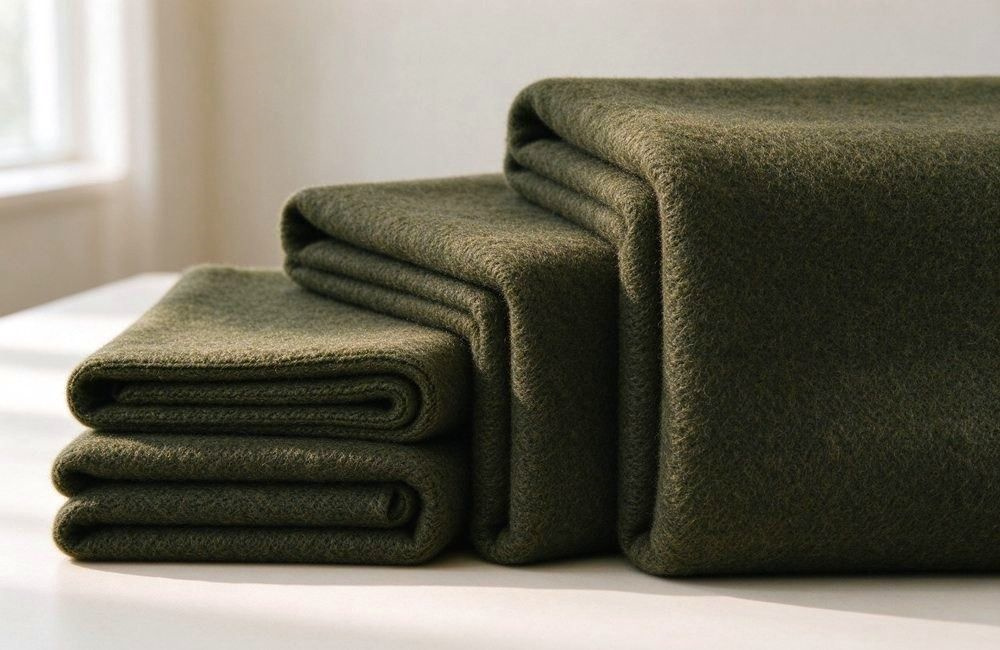
Blanket GSM weight samples for drought program selection.
Drought in East Africaica is often measured in harvests, but its deepest effects are slower and easier to miss. When the rains fail for one season, families sell livestock; when they fail for a second, households leave their land and walk toward towns, camps or relatives who still have water. The result is displacement without a flood, hunger without a headline, and a quiet spread of need across millions of people.
Food distribution alone cannot stabilise a drought-affected community. Families also need a way to keep children warm through cold nights, a place to shelter from the wind, and bedding that can be washed when a child falls ill. Agencies that plan for these needs together report faster stabilisation and lower rates of repeat displacement.
The scale is real. According to FAO food security monitors, failed rains push families into crisis levels of food insecurity long before famine is declared. Each dry season adds households that cannot recover on their own, and the assistance plan for the region grows season by season.
Women and children carry the heaviest burden in drought displacement, and their needs are often the first sign that food alone is not working. Mothers walk further for water, children miss school and meals, and the whole family loses the routines that keep it healthy. Agencies therefore plan warmth and bedding for the same families they feed, so the response reaches the same people twice: once with food, once with shelter.
For procurement teams, the practical lesson is simple: drought response is not one shipment of grain. It is a supply chain that includes warmth, shelter, bedding and hygiene items, ordered together so that a family receives one useful package instead of a single sack of food.

A family using a warm blanket during drought conditions.
about droughtisconception about drought is that dry weather means warm weather. The opposite is true. Clear skies that bring no rain also radiate heat away quickly after sunset, and highland areas across East Africa regularly fall below 10 degrees Celsius at night. Families who lost their homes sleep under open sky in thin clothing, and children and the elderly feel the cold hardest.
Related guidance: WHO.
The health evidence is clear. According to WHO East Africa health updates, respiratory infections rise among drought-displaced people exposed to night-time cold, and for children who are already malnourished, hypothermia slows recovery. That makes a blanket a public health measure, not a comfort item.
Children and the elderly are the first to suffer, and their needs shape blanket choice. A child recovering from malnutrition loses body heat faster, so child-size blankets in bright colours are often requested separately from adult blankets. Elderly family members benefit from heavier wool-blend covers, so agency orders routinely mix two or three blanket weights in one shipment.
For bulk buyers this means specifying blankets for drought relief rather than generic throws. A blanket for an arid highland needs to trap heat without trapping moisture, hold up to repeated folding in and out of storage, and feel familiar enough that families actually use it. Brushed flannel and wool-blend blankets in warm, practical sizes are the choices drought programs request most.
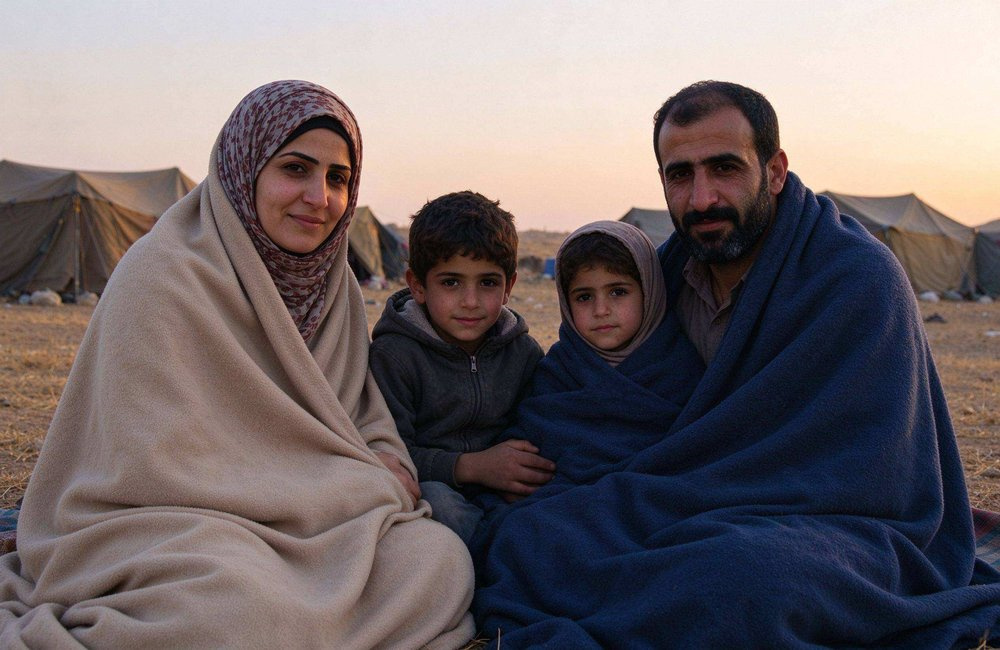
Warm blankets used outdoors in cold dry conditions.
Once you accept that drought programs need warmth, the next question is which blanket to order. Bulk buyers compare three things: weight, size and fabric. Each choice changes comfort, freight cost and how many blankets fit in a container, so the specification deserves the same care as the price negotiation.
GSM is measured in grams per square metre. A 250 GSM brushed flannel blanket gives reliable warmth for highland nights without becoming too heavy to transport, while a 300 GSM wool blend is the choice for the coldest districts. For pre-positioned stocks, a mid-weight flannel at 280 GSM balances warmth, weight and cost, and that weight shows up most often in agency tender lists.
Colour is a practical specification, not a decoration. Bright colours make blankets easy to identify in a crowded warehouse, reduce confusion during distribution, and help families feel they received a useful item. Many drought programs specify two or three colour families, such as warm reds, blues and greens, so different kit types can be told apart at a glance.
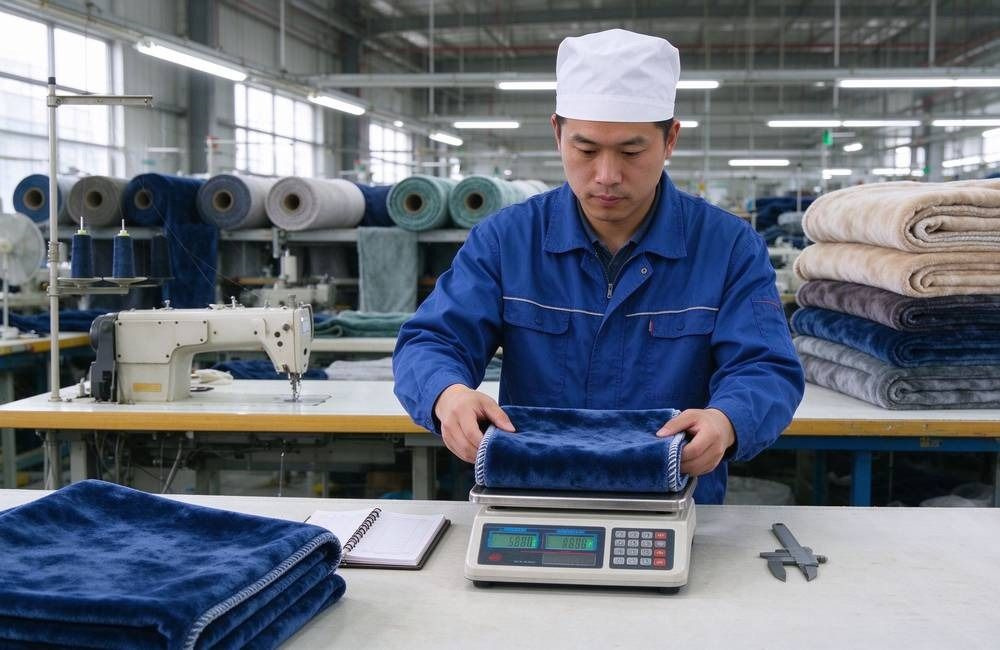
GSM weight verification against the drought specification.
Size matters for family use. The 150 x 200 cm size covers one person; 180 x 220 cm wraps two people and is the most requested for family packages; 200 x 230 cm adds margin for tall adults and cold nights. Agencies usually standardise on 150 x 200 for individual kits and 180 x 220 for family kits, which also keeps packing simple.
Certification and test reports are part of the specification in agency tenders. A flame-retardant or OEKO-TEX claim means little without the report behind it, and buyers in drought programs usually ask for a fabric test certificate covering weight, weave and dye fastness. Prepare these documents with the quotation, not after the award, and the review process moves twice as fast.
Fabric choice decides durability in the field. Brushed flannel is soft, quick to dry and naturally resistant to dust; wool blends add warmth for the coldest highland nights; synthetic blends are lightest for freight. For drought relief, a practical rule is flannel for volume orders and wool blend for cold-weather districts. Wholesale drought blanket orders typically mix two fabrics to balance cost and warmth.
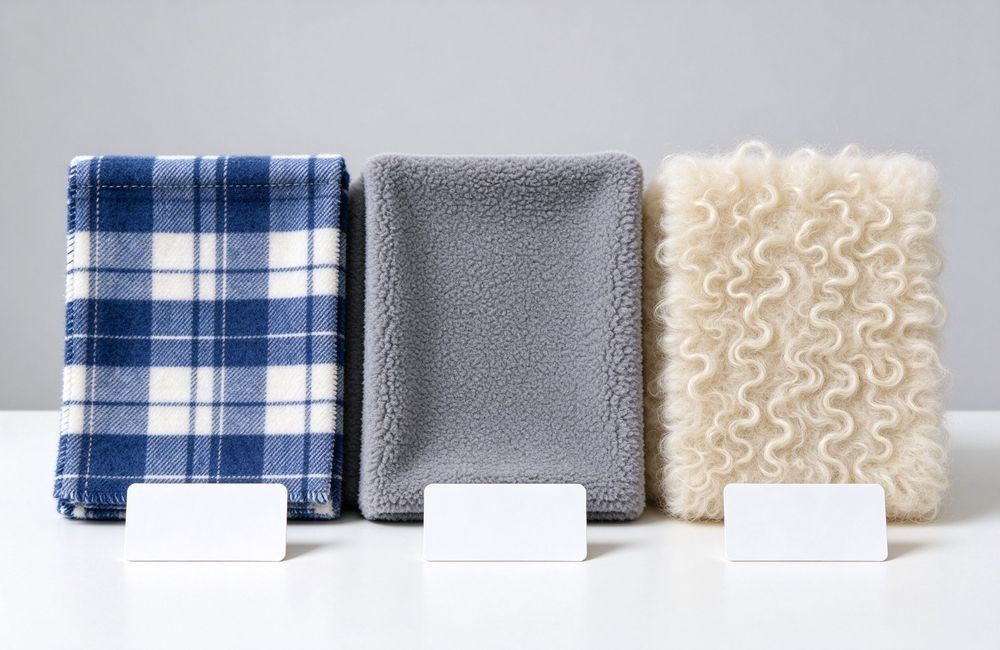
Blanket fabric swatches compared for drought program selection.
The table below summarises the three specifications that dominate drought blanket tenders. Use it as the starting point for your RFQ, then confirm each line with the supplier before production.
Compare the three lines before you order. A mixed GSM and size order covers most drought programs without complicating the warehouse.
|
Specification |
Common choices |
Best for drought programs |
|
GSM weight |
180 / 250 / 300 |
250 general; 300 cold districts; 180 lowland |
|
Size |
150x200 / 180x220 / 200x230 cm |
150x200 individual kits; 180x220 family kits |
|
Fabric |
Brushed flannel / wool blend / synthetic |
Flannel for volume; wool blend for cold highlands |
For a full tender, request a production sample of each GSM you plan to order, and confirm the fabric blend on the packing list.
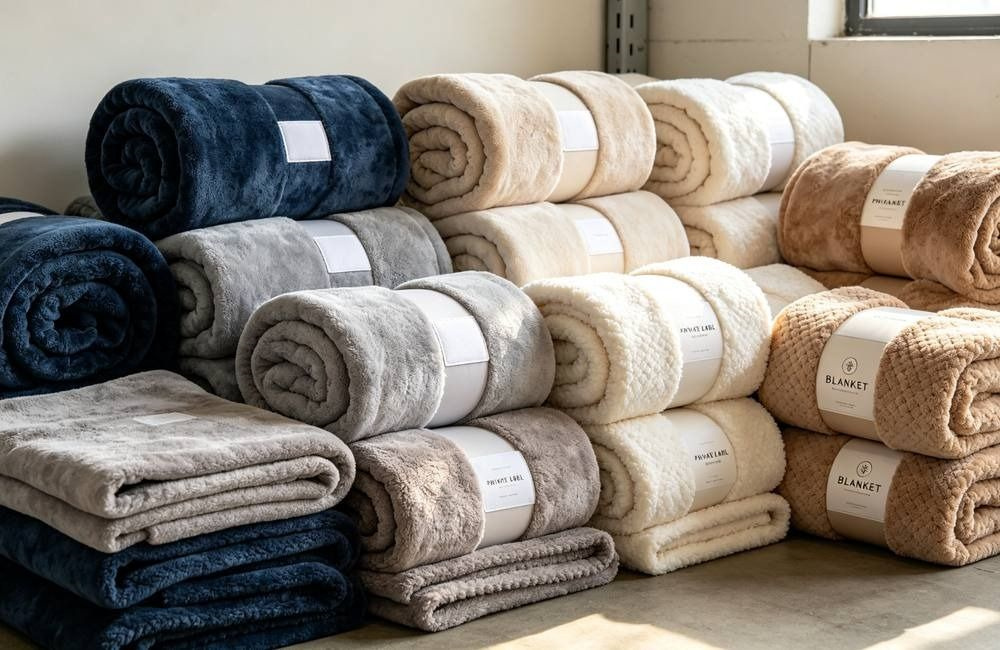
Wholesale blanket stack for drought program orders.
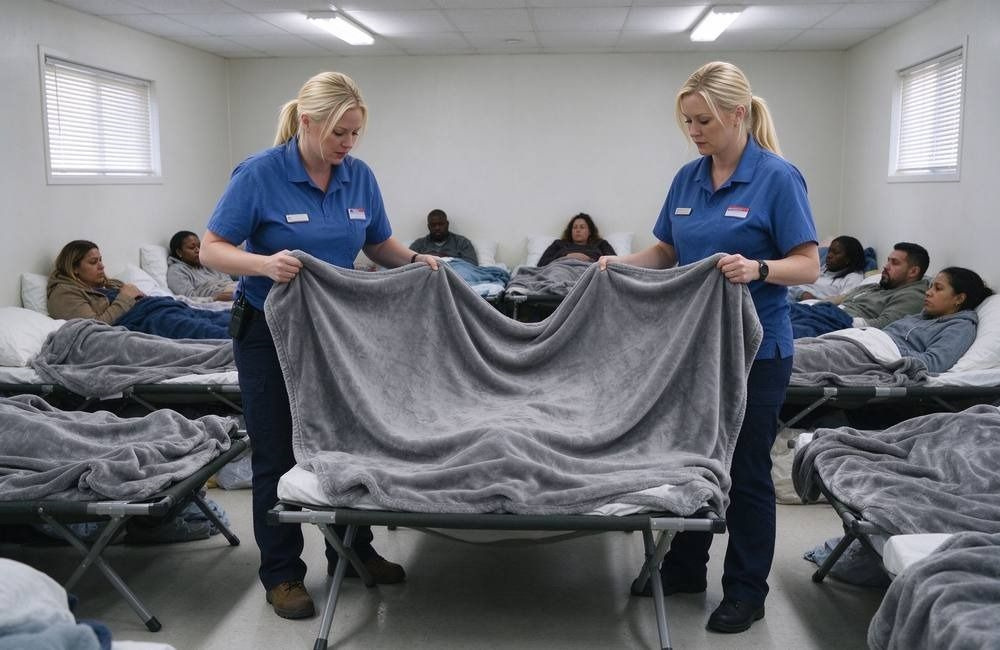
Shelter setup at a drought camp.
Shade netting is the fastest shelter solution in arid climates. A 50 to 70 percent shade net strung over poles drops the heat underneath sharply, and it costs a fraction of a full tent. Tarpaulins add a wind and dust barrier on two or three sides, creating a semi-enclosed space that families can use day and night. Together they form the standard drought shelter tent package for quick response.
Dust protection belongs in the shelter package as much as sun protection. A tarpaulin wall on the windward side keeps sand out of bedding during the worst hours, and a shade net over the sleeping area keeps daytime heat from building up. Agencies that specify both sides of the problem, sun and dust, end up with camps that stay usable for months.
Where full tents are needed, agencies look for dome or tunnel tents that stand up to wind and hold heat at night. A 12-square-metre family tent fits a household of five to six people with bedding inside. For bulk drought orders, family tents are supplied flat-packed with poles, ropes and pegs, one tent per household, with shade netting for communal areas.
Buying shelter and bedding together is also a logistics decision. Shade nets, tarpaulins and blankets share the same container space and the same dispatch schedule, so a combined order keeps one supplier accountable for the whole camp package.
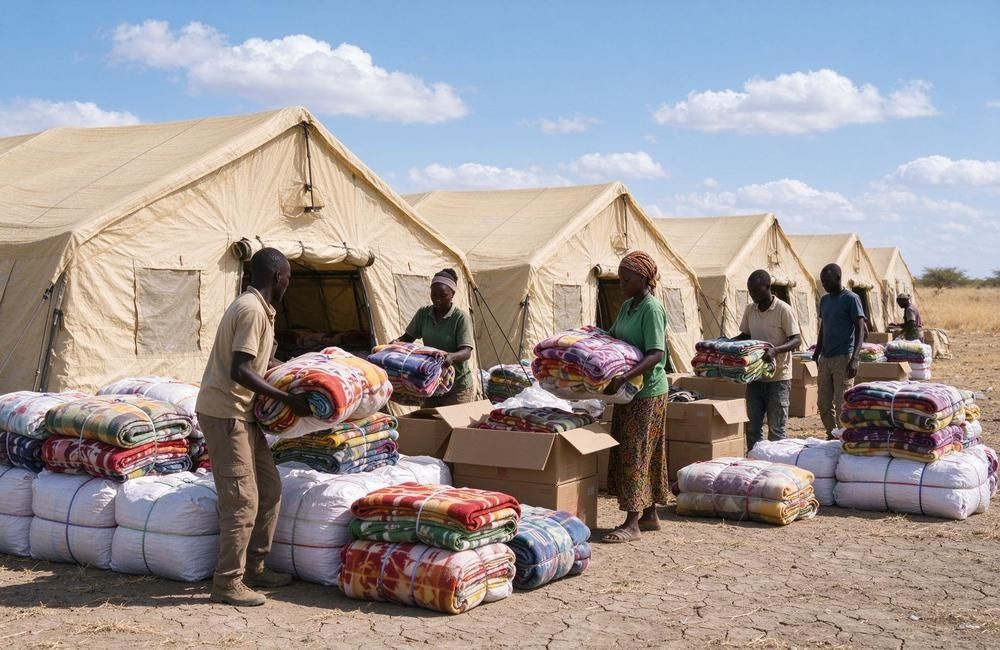
Shade net shelters and stacked supplies at a drought camp.
Drought responsense is not only about camps. Health centres and nutrition feeding points see a surge of patients when families arrive weak and underfed, and these facilities need relief bedding for drought areas that can be washed, reused and shared safely between patients.
A standard health centre order includes a mattress cover or protective sheet, two blankets per bed, and pillow covers that withstand industrial washing. Because drought patients often arrive with respiratory problems from night cold, the blanket itself should be a dense weave that holds warmth through repeated washing without losing shape.

Beds with blankets in a drought-response health centre.
Postnatal wards and care for the elderly add another layer. New mothers need clean, warm bedding for recovery, and older patients who arrive with chronic conditions need extra covers that are easy to change and wash. A single bedding order that covers these wards as well as general beds lets the health centre manage one stock instead of several.
Child nutrition wards have a separate need. Small blankets for children's cots, in bright colours that families recognise, help mothers keep a feeding baby warm between sessions. Agencies often add child-size blankets to the same order so the nutrition programme and the bedding arrive together.
Bedding quantity planning starts with bed counts, not blanket counts. Multiply the number of ward beds by two blankets per bed, add the nutrition ward cots at one blanket each, and keep ten percent as spares for turnover between patients. A health centre that runs its own small laundry can then manage the stock cycle without outside help.
For bulk buyers the rule is simple: specify hospital-grade washability, order in sets per bed, and include child-size items in the same shipment. This turns a bedding order into a health programme input rather than a separate logistic.

Child-size blanket in a nutrition ward.
Arid climates are hablankets storedin a way that floods are not. Dust gets into every fold, sand abrades the surface, and blankets stored for the next season must come out clean and usable. Fabric choice and care instructions decide how many seasons a blanket survives.
Brushed flannel handles dust well because the brushed surface sheds loose particles and washes clean easily. Dense weaves resist sand abrasion better than loose knits, so open cellular textures fail quickly in dusty conditions. For drought programs, specify dust resistant blankets with a smooth face and a tight weave.
Colour fastness and labelling are the details that agencies check in samples. A blanket that bleeds colour in the first wash stains everything around it, so verify the dye fastness report before volume production. Sewn-in care labels and country of origin tags also matter for institutional buyers who must report what they distribute.
Care matters as much as the fabric. A simple instruction card with each bale, showing how to shake out dust, air blankets in the shade and wash them without bleach, extends service life noticeably. Industrial laundries in drought towns already handle blankets in bulk, and blankets built for ten or more wash cycles stay in service for several seasons.
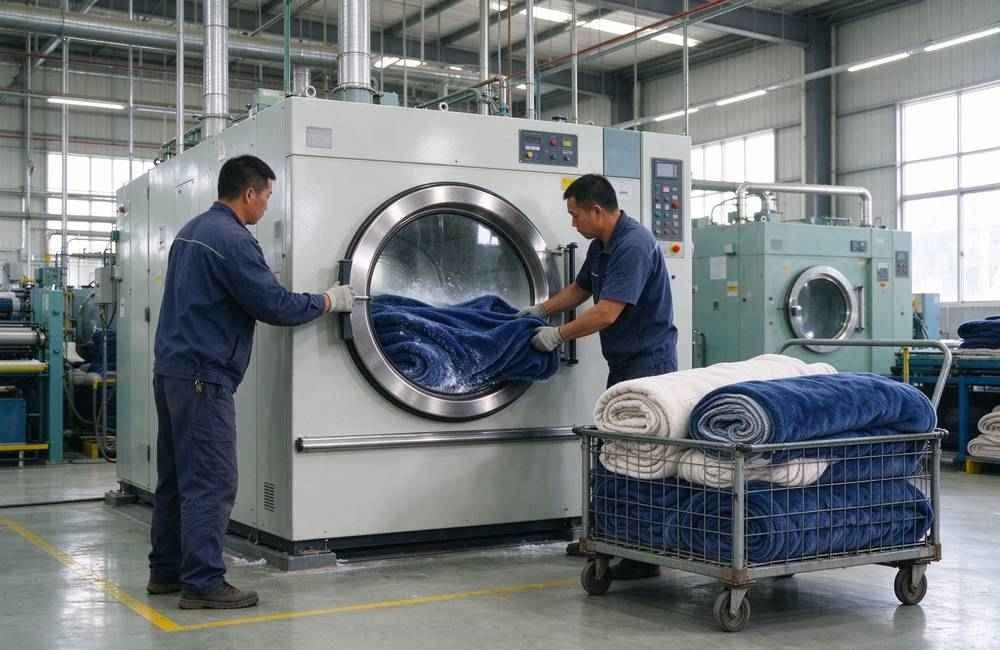
Industrial laundry handling drought programme blankets.
The table below lists the fabric and care choices that hold up best in dust and sand conditions. Confirm the weave and the wash-cycle rating with the supplier before you commit to a volume order.
The four choices above cost little extra and change how many seasons the blanket stays in service.
|
Item |
Dust-prone choice |
Why it lasts |
|
Weave |
Dense, smooth face |
Resists sand abrasion; sheds loose dust |
|
Fabric |
Brushed flannel |
Washes clean; keeps warmth after many cycles |
|
Care card |
Shake out, air in shade, no bleach |
Simple habits double service life |
|
Wash rating |
10+ industrial cycles |
Survives seasonal reuse and re-deployment |
Ask the supplier for a wash-test report before volume production so the care claims are verified, not assumed.
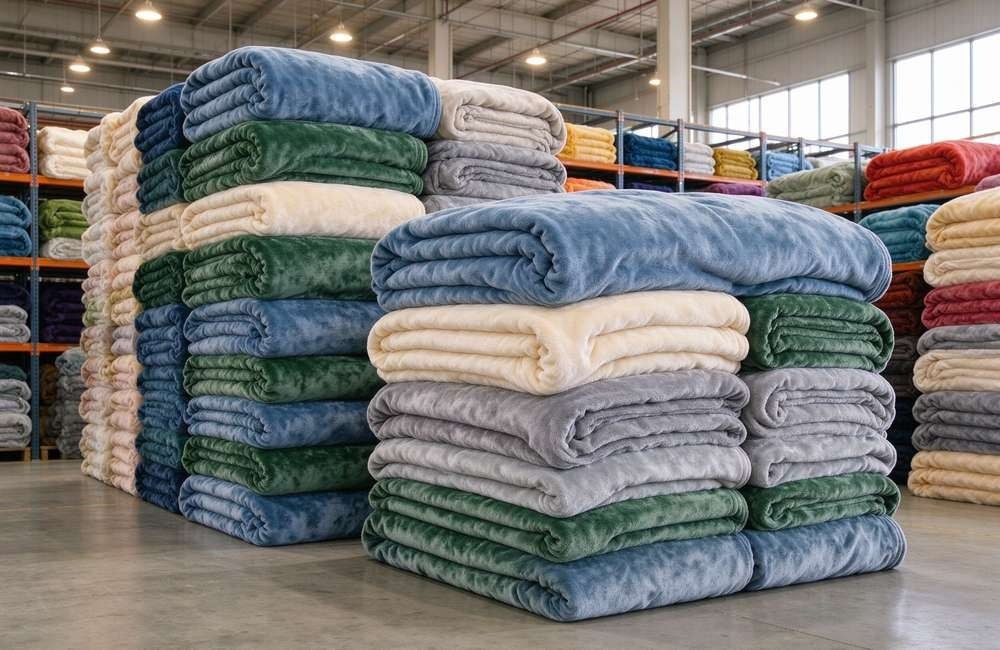
Flannel blanket stack showing dense weave.
Warehousing in an arid region has different rules from a coastal warehouse. Heat and dust affect packaging, and blankets stored for the next dry season need protection that a humid-climate pack does not provide.
Compressed bales are the standard for drought relief for the same reason they dominate flood response: volume. A 40-foot container carries tens of thousands of compressed blankets, and compression keeps the bale tight against dust. For arid storage, add an inner plastic liner to each bale so the blanket stack stays clean even when the outer carton is handled roughly.
Warehouse layout matters too. Stacked pallets off the floor, with air gaps between stacks, keep blankets dry and make stock counting faster. In dusty warehouses, keep the stack wrapped until dispatch and unwrap only at the distribution point. This simple habit protects the blankets more than any special fabric.
Stock rotation keeps pre-positioned blankets usable. First-in first-out is the rule: blankets stored first are dispatched first, and older stock is checked and rotated before the new season order arrives. A simple FIFO plan, with the bale date marked on the pallet, prevents the common failure of finding last season stock damaged at the bottom of the stack.
Seasonal ordering adds one more rule. Drought response is often pre-positioned: agencies order blankets before the dry season so the stock is ready when the rains fail. That means packing must survive months of storage, not just a single shipment, and suppliers should confirm the bale and liner specification in writing.
Confirm all four lines in writing with the supplier before ordering, especially for pre-positioned stock.
|
Packing element |
Specification |
Why it matters |
|
Bale |
Compressed, tight wrap |
Cuts freight volume; keeps dust out |
|
Liner |
Inner plastic liner |
Protects blankets in hot storage |
|
Pallet |
Off-floor with air gaps |
Keeps dry; speeds stock counting |
|
Dispatch |
Unwrap at distribution point |
Avoids dust ingress in the warehouse |
A packed sample sent with the quotation shows the buyer exactly how the bale will arrive.
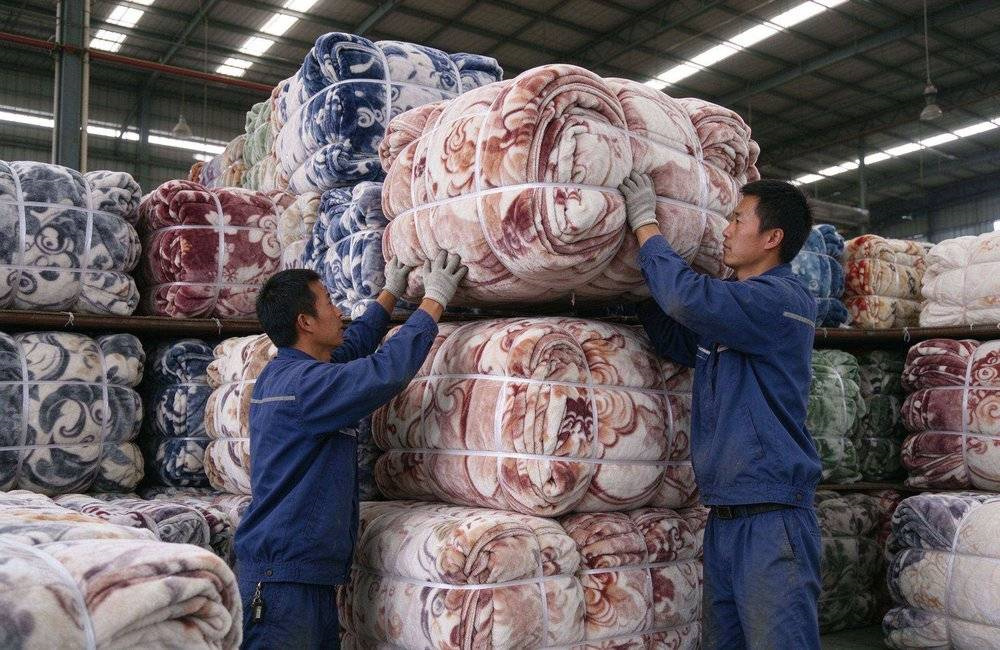
Compressed bales stored in a dry-climate warehouse.
Drought relief is seasonal in a way that earthquake or flood response is not. Agencies can predict which regions are at risk and pre-position stock before the dry season peaks. That predictability changes how you order: earlier, bigger, and with more attention to the packing that keeps stock usable in storage.
Related guidance: NOAA.
Order timing is the first decision. For East African drought programs, orders placed three to four months before the dry season give production, sea freight and inland delivery time to line up. Late orders push everything into emergency freight, which raises cost and risks the shipment arriving after the need has peaked.
Colour and sample confirmation belong in the order process. A digital colour card plus a physical production sample approved before production locks the specification, and the approved sample becomes the reference for the whole shipment. Buyers who skip this step accept the risk that production drift goes unnoticed until the containers arrive.
Volume planning starts from the family count. One family kit typically holds two blankets, one shade net or tarpaulin and hygiene items; an individual kit holds one blanket and one light cover. Agencies multiply the family count by the kit contents to reach the total, then add a five to ten percent reserve for damage and late arrivals.
A single supplier that can produce blankets, tarpaulins and shade netting in one factory reduces coordination. Ask for one consolidated quote, one production schedule and one dispatch, so the whole drought package moves together rather than arriving in pieces. The same consolidated quote keeps wholesale drought response kits moving on one schedule.
The timeline keeps the whole response ahead of the season instead of racing it.
|
Step |
Timing |
Action |
|
Plan |
3-4 months before dry season |
Confirm family count and kit contents |
|
Order |
3 months before |
Send RFQ with full specification |
|
Produce |
4-8 weeks |
Approve samples; monitor production |
|
Ship |
Before dry season peak |
Book freight; track to port |
|
Pre-position |
Ready before rains fail |
Warehouse with liner and pallet rules |
Late orders double freight cost and risk missing the need; the calendar is the cheapest part of the budget.
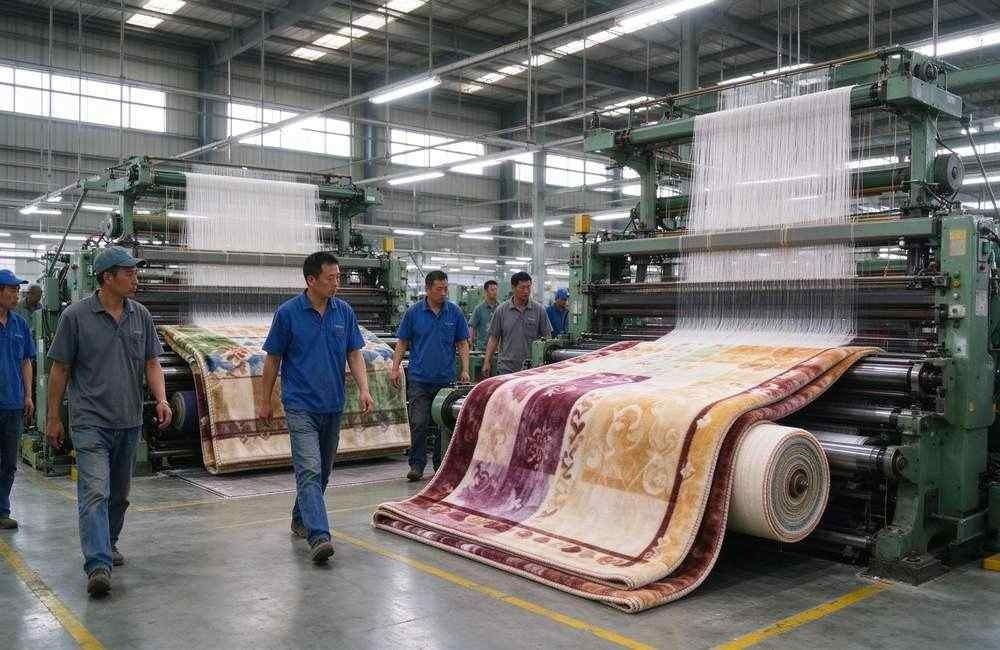
Production weaving line for drought orders.
Most drought relief blanket orders come from NGOs, UN agencies, government bodies and their local partners. Working with them is different from selling to a distributor: they have procurement rules, evaluation criteria and reporting requirements that shape how you quote and deliver.

Procurement staff reviewing blanket samples for a drought program.
NGO buyers usually issue an RFQ or tender with a clear specification, a delivery window and a scoring matrix. Price matters, but so do sample quality, production capacity, documentation and delivery evidence. Because the buyer must justify the award, a supplier that responds with complete, organised documents has a clear advantage. Agency networks such as IFRC operations in East Africa publish guidance on exactly what suppliers should prepare.
Delivery reporting is part of the product. Agencies need dispatch dates, packing lists, container numbers, photos at loading and arrival documentation to close their own records. A supplier that provides these documents without being asked saves the agency days of follow-up, and that reliability is remembered at the next tender.
Government and UN tenders add registration requirements. Agencies often need suppliers to complete vendor registration before an order can be placed. The practical advice is to prepare the paperwork once, keep it updated, and offer it proactively when you quote: company profile, product specifications, test reports, packing details and shipping terms.
Samples and colour cards deserve the same attention as the price. Agencies evaluate a drought blanket on three physical checks: the feel of the fabric, the accuracy of the GSM, and the behaviour in a quick wash test. Send these three together with the quotation and the buyer can complete the evaluation in one sitting instead of waiting for three follow-up shipments.
One rule applies across every agency: be transparent about lead times and capacity. An agency that knows a supplier is honest about what it can deliver will keep coming back, even when another quote is lower.
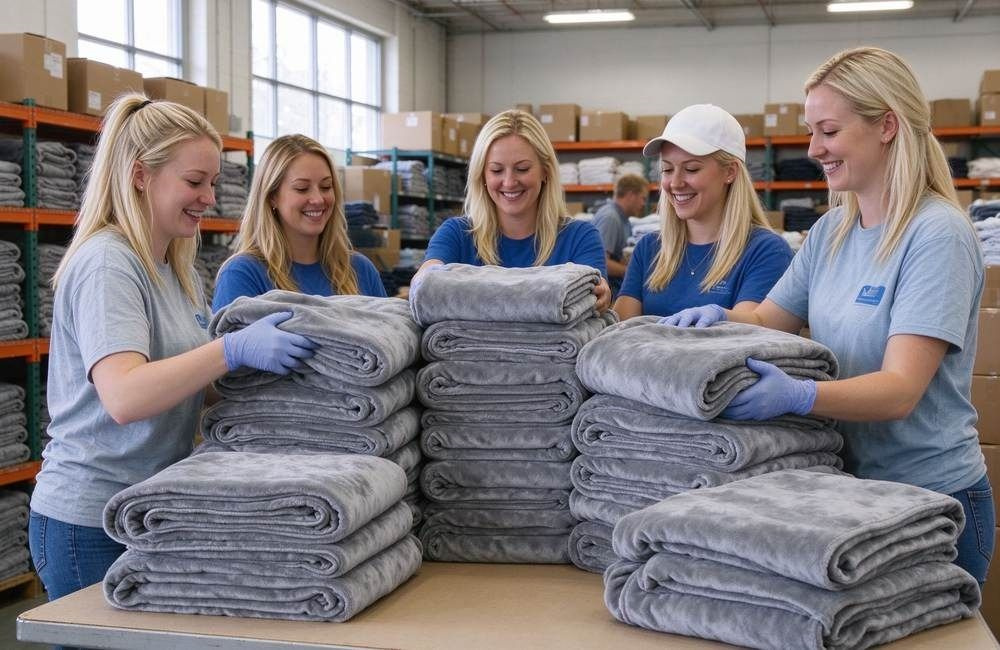
Volunteers folding blankets for dispatch.
A clear RFQ is the fastest way to a reliable order. Buyers who list every specification, packing detail and delivery term get accurate quotes and fewer surprises. The checklist below covers the items that drought relief buyers verify most often.
Start with the product specification: blanket type, GSM, size, fabric blend, colour options and child or family sizing. Then add packing and delivery: bale weight, bale dimensions, inner liner, cartons per bale, palletisation, container loading and port of discharge. Finally, add the commercial terms: sample schedule, production timeline, incoterm, payment terms and documentation.
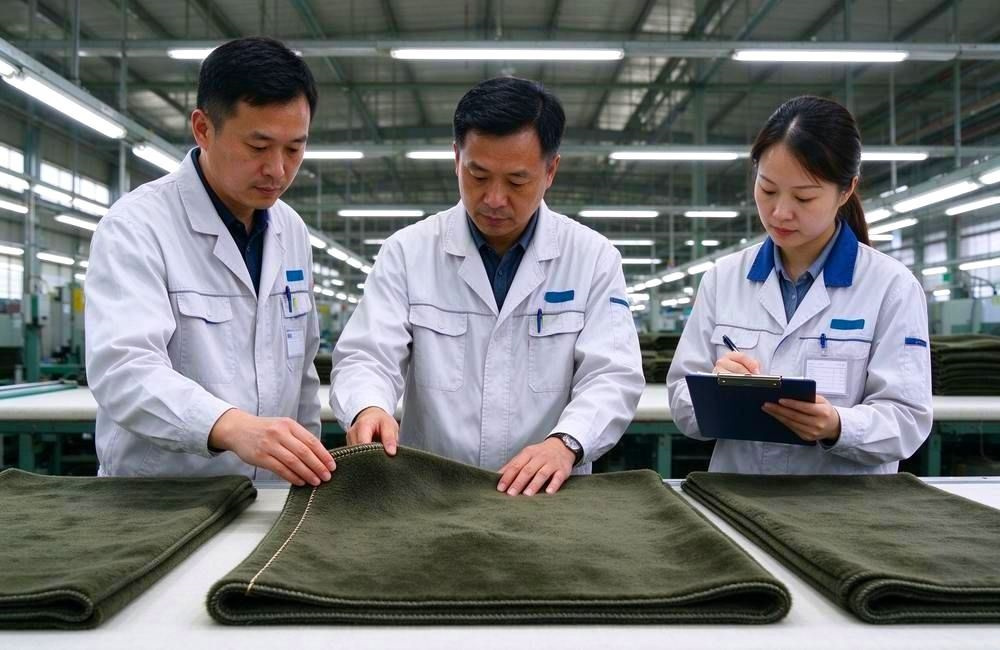
Quality inspection against the drought RFQ specification.
When comparing quotes, look beyond unit price. Total landed cost includes freight, insurance, inland transport and the cost of late arrival. Two quotes at the same unit price can differ by a wide margin once delivery terms are compared, so ask each supplier for the same incoterm and the same port before you compare numbers.
Sample review is the step buyers skip at their cost. A production sample confirms the GSM and weave, a wash test confirms the care claims, and a packed sample confirms the bale survives handling. Asking for all three before placing the order prevents the most common causes of late, wrong or damaged deliveries.
Total cost per blanket, not unit price, is the number that matters at the end of a drought program. Freight, inland transport, clearing costs and the value of stock that arrives late all sit on top of the price. Suppliers that quote the same incoterm and the same port make this comparison simple; suppliers that switch terms make it a trap.
For drought programs specifically, confirm two extra points: the packing survives months of hot storage, and the supplier can document the production line for the exact specification quoted. Both points protect the pre-positioning strategy that makes drought response work.
Fill every line before sending the RFQ. Buyers who list everything get quotes they can compare line by line.
Category
Items to list
Purpose
Product
Type, GSM, size, fabric, colours
One specification for accurate quotes
Packing
Bale weight, dimensions, liner, cartons
Comparable freight and storage plans
Delivery
Port, palletisation, timeline
Clear arrival expectations
Samples
Production, wash test, packed sample
Verify claims before volume order
Terms
Incoterm, payment, documents
Clean commercial close
Add the two drought-specific confirmations: hot-storage survival and documented production capacity.
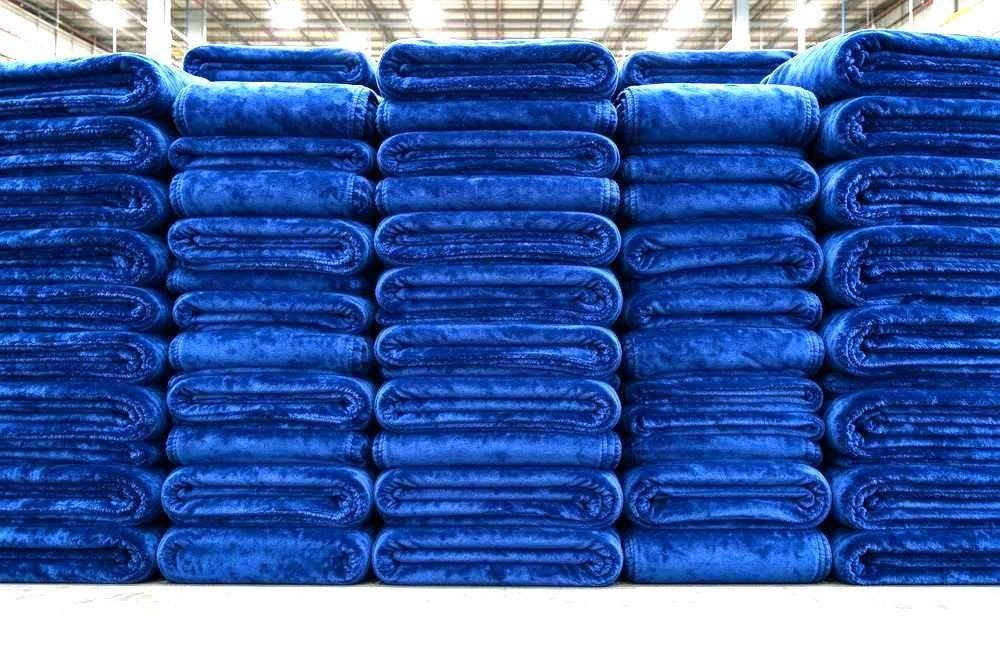
Folded blankets packed into drought response kits.
Here aredrought blanket order,s ask most often before placing a drought blanket order, with practical answers from field programs.
Food addresses hunger, but drought-displaced families also lose their homes and sleep outdoors in highland cold. Blankets prevent respiratory illness and help families recover faster, so agencies include them in drought relief packages alongside food aid.
Most agencies choose 250 GSM brushed flannel for general use and 300 GSM for colder districts and winter months. 180 GSM works for lowland distribution. A mixed order of 250 and 300 GSM covers most drought programs.
Yes. We supply 50 to 70 percent shade netting, tarpaulins, poles and pegs for drought camps, and we can quote them together with blankets so one shipment covers shelter and bedding.
Health centres use dense-weave blankets that survive industrial washing, plus child-size blankets for nutrition wards. Bedding keeps patients warm during treatment and reduces complications in underfed children.
Compressed bales with an inner plastic liner, stored on pallets with air gaps, keep blankets clean through months of hot dusty storage. We confirm bale weight, dimensions and liner specification in writing.
A family kit normally holds two blankets plus shade netting or a tarpaulin; an individual kit holds one blanket and a light cover. Agencies add a five to ten percent reserve for damage.
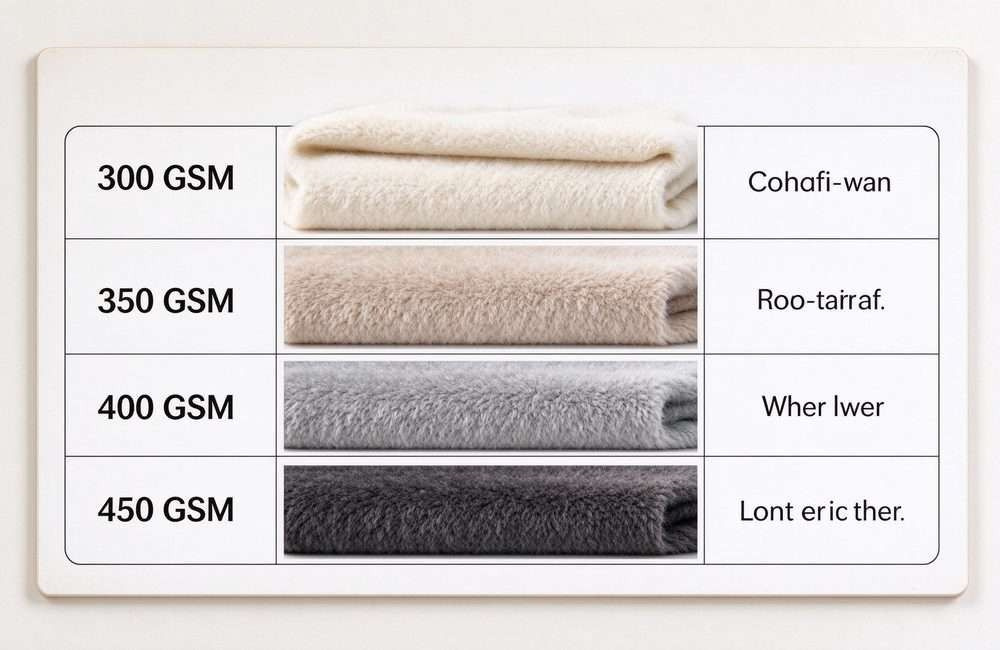
GSM selection guide for drought blankets.
Brushed flannel with a tight weave sheds dust and resists sand abrasion well. We recommend dust resistant blanket construction and simple care cards so blankets last several seasons.
Lead times depend on volume and specification, typically four to eight weeks for production plus sea freight. We confirm the exact schedule in the quotation, and pre-season orders avoid emergency freight costs.
Agencies issue an RFQ or tender with specification, delivery window and scoring criteria. We respond with complete documents: samples, test reports, packing details, capacity and shipping terms.
Yes. We supply 150 x 200 cm individual blankets, 180 x 220 cm family blankets and bright child-size blankets for nutrition wards, all in the same order.
We provide a production sample, a wash test result and a packed sample before an order, so buyers can verify GSM, weave, care claims and packing in one review.
Yes. Pre-positioning is the standard for drought response. We plan production so stock is ready before the dry season, and our packing is designed for months of hot storage.
Yes. One consolidated quote covers production, packing, container loading and delivery, so the whole drought shelter and bedding package moves on one schedule.
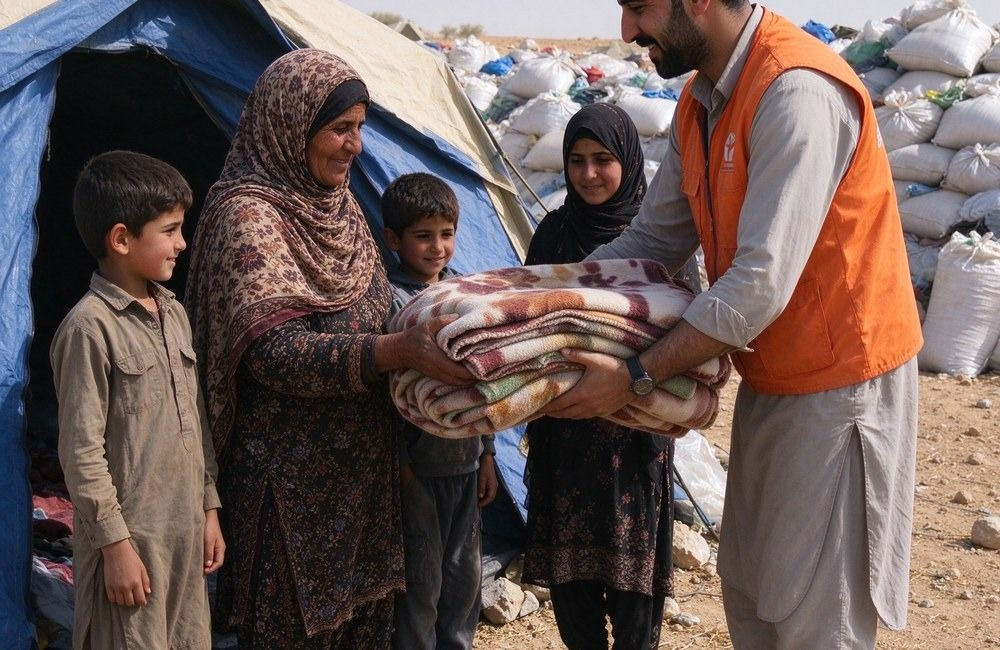
Drought relief is rarely about food alone: nights stay cold for pastoral families even when the rains fail. The blanket in this distribution is specified for dry, dusty conditions, dense enough for cold nights and packed to travel with the rest of the relief pipeline, so it arrives usable after weeks in storage.
Précédent :
Flood Relief Blankets in Bulk for Africa: GSM, Weight, Packing and Delivery Decisions for NGOs, Aid Programmes and Government Procurement Teams Stocking Emergency Shelter SuppliesSuivant :
Cyclone Relief Supplies for Madagascar, Mozambique and Malawi: Blankets That Withstand High Winds, Humidity and Long Storage, Plus Bulk Ordering and Sizing for Emergency ProgrammesLiens amicaux :
droits dauteur © Custom Disaster - Relief Bedding: Tents, Sleeping Bags, Blankets Tous les droits sont réservés
léquipe professionnelle au service !