Catégories
dernier blog
Last updated: November 24, 2026 · Chemical spill kit supplies
A chemical spill kit turns a fast response into a safe one. PPE, eyewash and shower stations, absorbents and first aid supplies follow one checklist, so factories, laboratories and response teams stay protected in the first minutes. This guide covers kit contents, spill cleanup and the legal compliance documents buyers need.
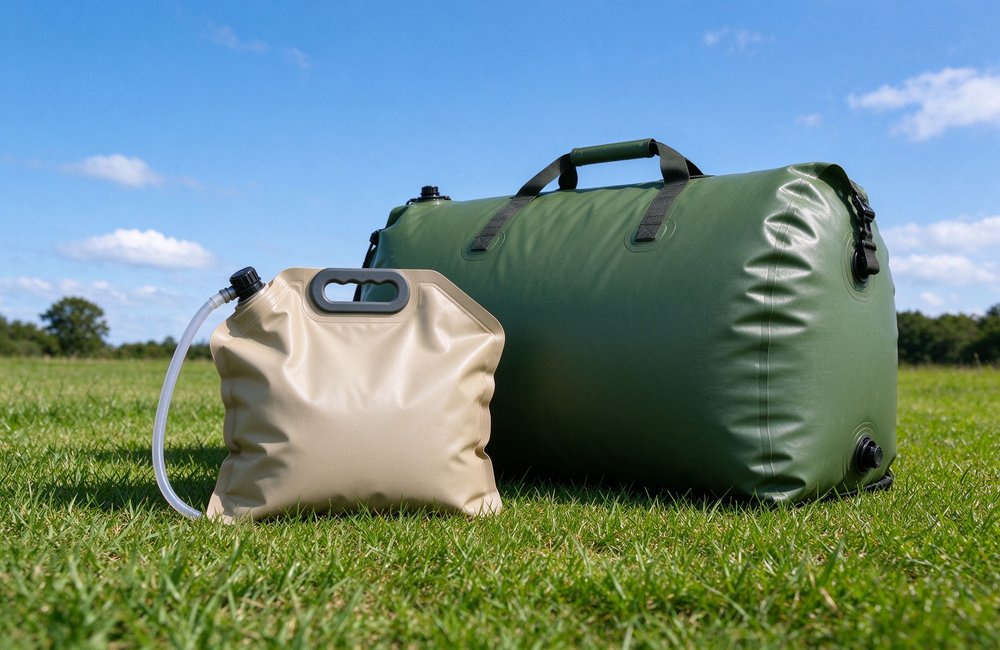
Complete chemical spill kit supplies in a family layout, PPE, absorbents, eyewash bottles and first aid items arranged for the chemical spill kit checklist
 |

|
Table of contents
A spill does not wait for a decision. The first minutes decide whether a leak becomes a clean-up or an exposure, and the chemical spill kit closes that gap: PPE, eyewash, absorbents and first aid follow one list, placed where the spill happens.
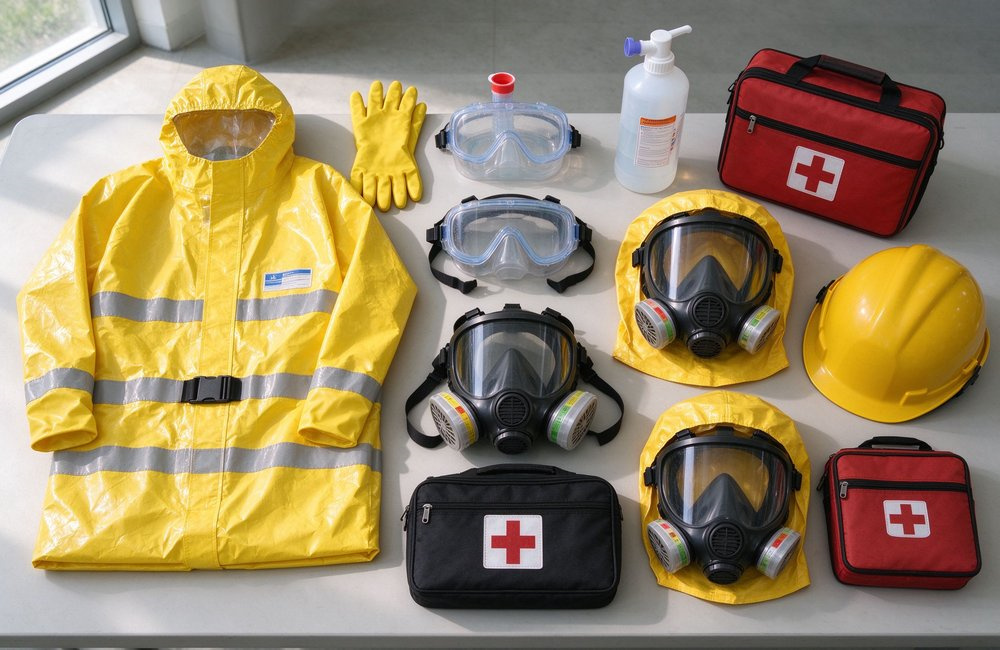
Hazmat suits and chemical resistant gloves in a flatlay, full PPE arranged for the chemical spill response and hazmat suits wholesale
The sections follow the response order: what a chemical spill is, the PPE layer, eyewash and shower stations, exposure first aid, cleanup supplies, scenario-specific kits, compliance, training and the complete kit layout.
A chemical spill kit supplies order follows the same list whether the buyer runs one line or fifty sites, and the factory packs the same layers with the same documents.
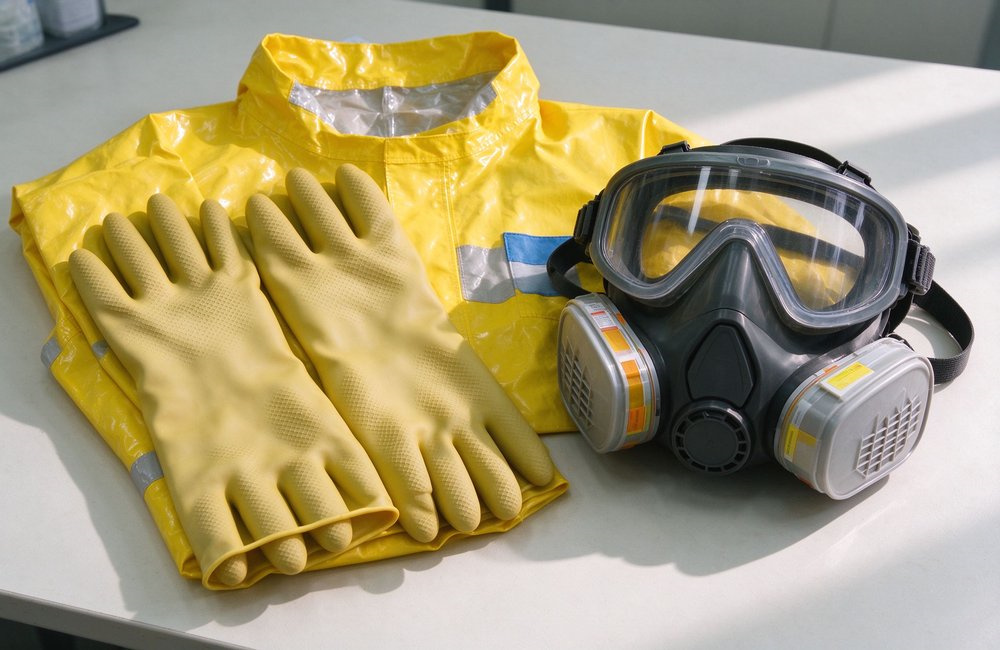
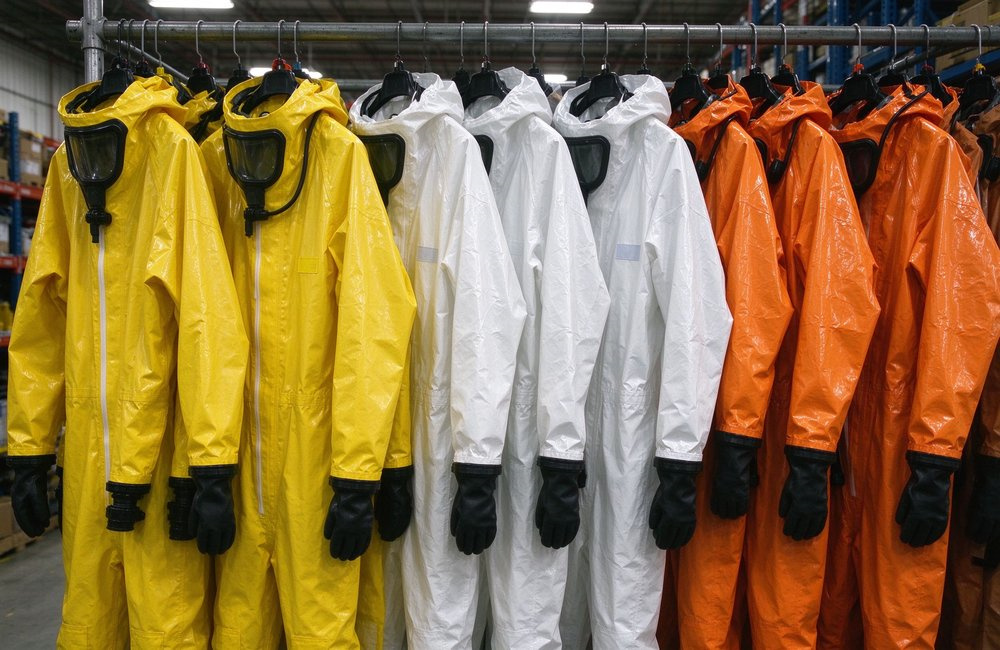
Hazmat suits in multiple colors on warehouse shelves, bulk chemical protection gear ready for the chemical spill kit supplies order
The guide serves a factory floor, a laboratory and an emergency response team the same way: start with the PPE layer, add the cleanup and decontamination items, confirm compliance, and drill the kit once a quarter.
The checklist also covers the drill schedule and the compliance folder, because a kit without practice and paperwork fails the inspection long before it fails the spill.
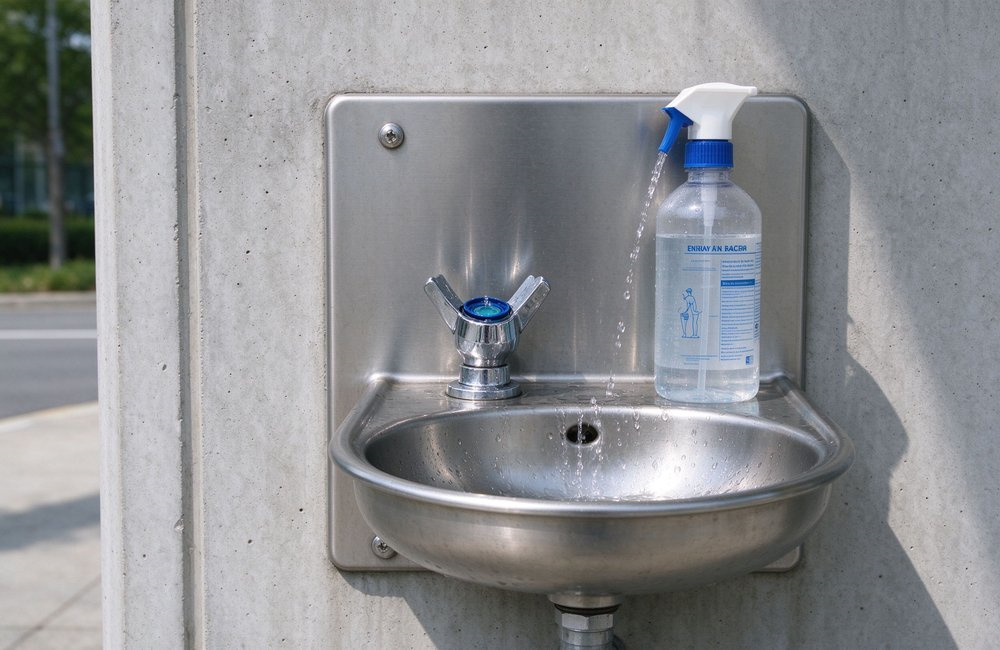
Emergency eyewash station with rinse bottles and clear signage, safety equipment checked weekly for the chemical spill kit and eyewash station inspection
By the end you will know what belongs in every chemical spill kit, how to select chemical resistant gloves and respirator masks, how far the eyewash station must be, and what compliance documents buyers need with bulk hazmat kit orders.
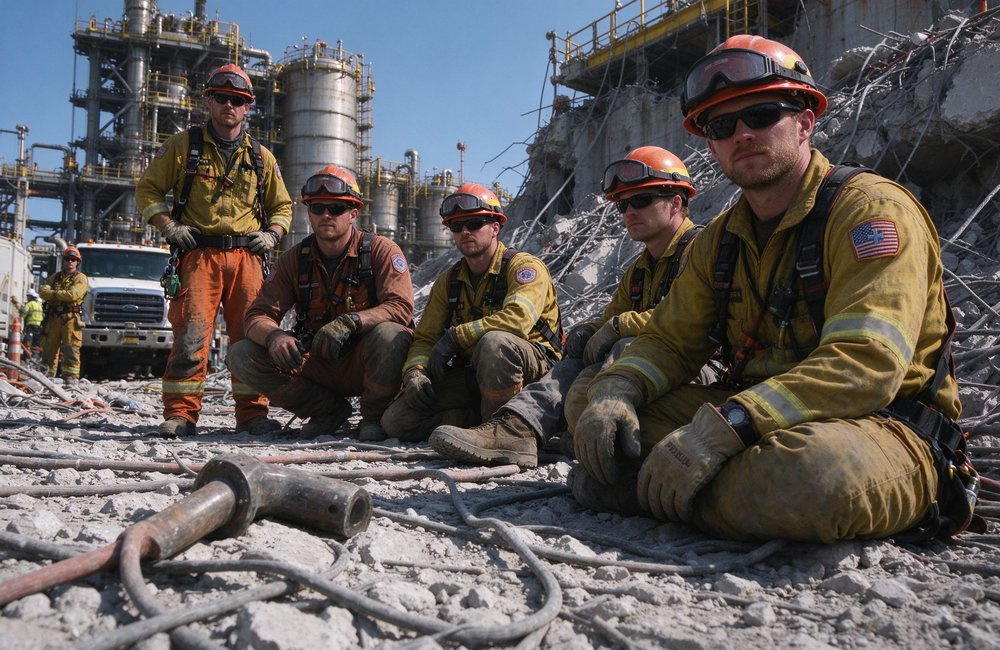
Workers unboxing and distributing PPE kits at a facility, hazmat suits and gloves ready for the chemical spill response plan
A chemical spill is any release of a hazardous substance that threatens people, the workplace or the environment. The size decides the response: a small drum leak needs absorbents and gloves, while a tank release needs evacuation and hazmat teams.
Sites that map their chemical inventory and mark the hazard class keep the kit matched to reality, and the matching check happens with the monthly safety walk.
The definition is broad: acids, solvents, fuels, cleaning agents, lab reagents and waste streams all count. The chemical spill kit supplies stay the same across them, because the response layers are shared.
The only change is scale and the PPE class required. One training session covers every chemical on site, and the responder switches only the glove and cartridge class for the chemical in front of them.
Factories handle solvents and corrosives, laboratories store reagents, warehouses keep cleaning chemicals, and transport carries fuel and cargo. Each site maps its inventory, marks the hazard class, and stocks the matching chemical spill kit before an incident, not after one.
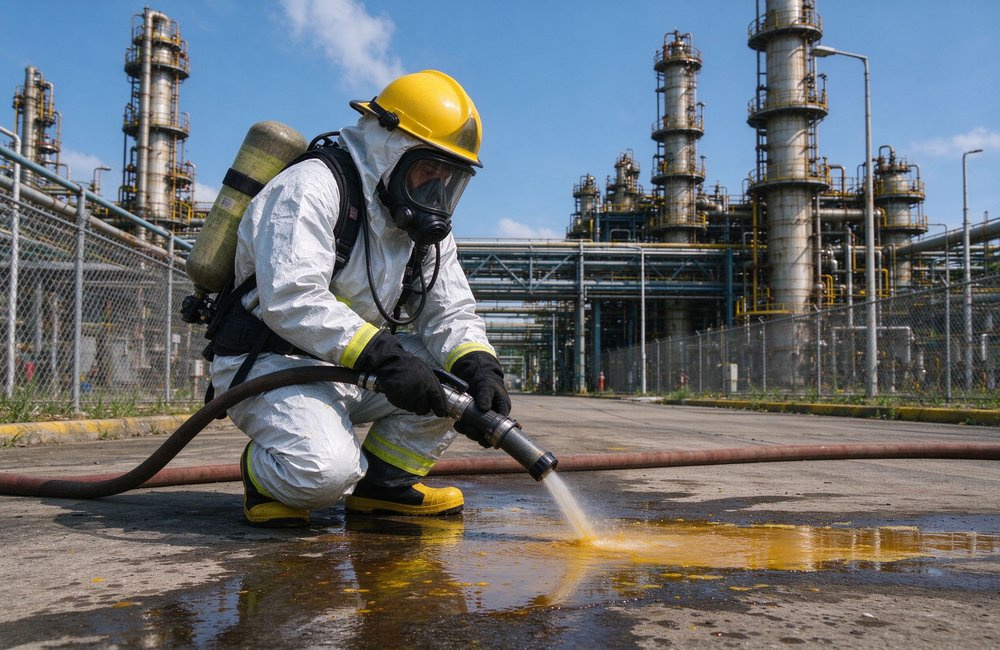
PPE is the first layer of defense and the last one to improvise. Gloves, suits, boots, goggles and respiratory protection follow the chemical class on the label, and the selection table below is the working reference for any chemical spill kit supplies order.
The PPE layer is sized by the number of responders on the shift, with one spare set stored next to the spill cart for the person who arrives first.
Chemical resistant gloves protect the hands, hazmat suits cover the body, and boots shield the feet. Choose the material by chemical class, not by brand habit: nitrile for oils, neoprene for acids, and a full hazmat suit for splash risk.
Respirator masks come in two families: filtering masks for particles and vapors, and supplied-air respirators for oxygen-deficient or concentrated environments. The respirator mask rating on the cartridge must match the chemical on the label.
Read the safety data sheet before the spill, not during it. The SDS lists the required PPE class, the exposure limit and the cleanup method for PPE and eyewash stations selection.
Tape a PPE selection card inside the kit lid so the responder picks the right gloves and respirator in the first minute. The card also lists the second-choice glove, because the first pair may already be in use when the spill happens.
| Chemical class | Gloves and suit | Respirator | Eyewash |
|---|---|---|---|
| Acids | Neoprene gloves, apron | Acid-vapor cartridge | Station required |
| Solvents | Nitrile or Viton gloves | Organic-vapor cartridge | Station required |
| Caustics | Butyl gloves, splash suit | Particle plus vapor | Station required |
| Dry solids | Standard gloves, coverall | Particle mask | Portable bottle |
The table above matches PPE classes to chemical groups: the columns show the chemical class, the minimum gloves and suit, the respiratory protection, and the eyewash requirement. Buyers use the same columns when they order hazmat suits wholesale and chemical resistant gloves bulk.
The first fifteen seconds decide the outcome of an eye or skin exposure. Flush immediately, keep flushing, and only then assess. The eyewash and shower stations are the fastest equipment a chemical spill kit can carry.
Plumbed stations cover fixed work areas, portable units cover field work, and both are marked so the responder finds them without reading a label under stress.
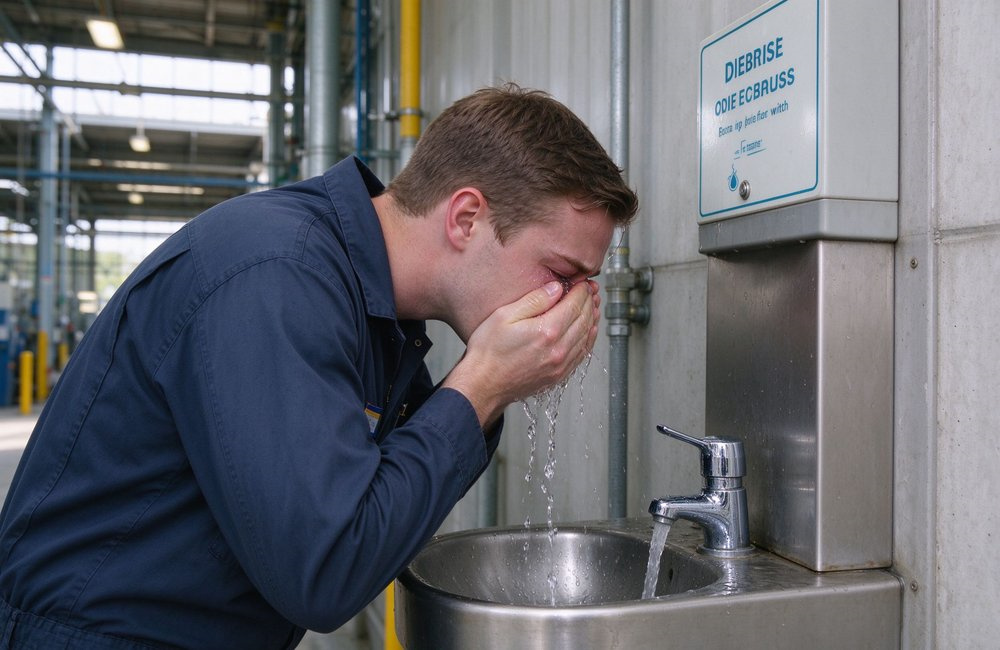
Chemical exposure first aid starts with time, not tools: reach the eyewash within fifteen seconds and flush the eye for at least fifteen minutes. Skin rinses for a minimum of fifteen minutes under a shower. The rule is drilled so the responder acts before thinking.
The emergency eyewash station must sit within ten seconds of the hazard, on the same level, with an unobstructed path. Plumbed stations give a steady stream; portable units cover remote sites. Both are inspected weekly and flushed monthly so the first flush works when it matters.
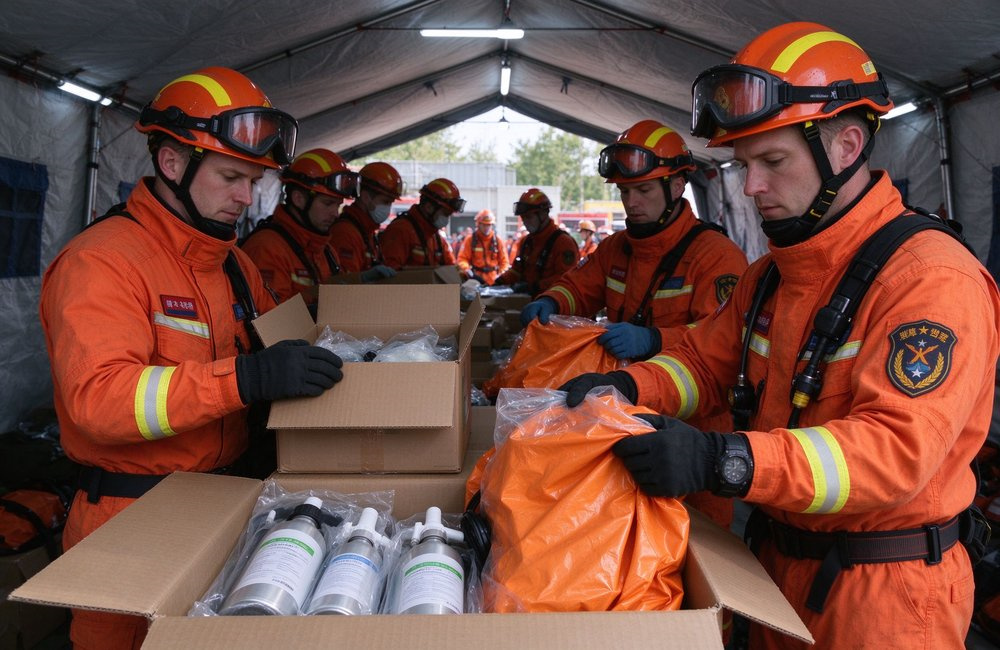
First aid for chemical exposure covers skin, eyes, burns and inhalation. The kit carries the supplies and the printed steps, because responders read the card while the flush runs.
The printed steps stay laminated inside the kit lid, and the timer is part of the drill so the flush runs the full fifteen minutes.
For skin contact, remove contaminated clothing and rinse with running water for fifteen minutes. For the eyes, flush with the eyewash station for at least fifteen minutes and keep the eyelids open. Never rub the eye, because friction spreads the chemical.
Chemical burns are treated with copious rinsing, not creams: flush, cover with a sterile dressing, and seek medical care. For inhalation, move the person to fresh air, keep them warm, and call emergency services if breathing is difficult.
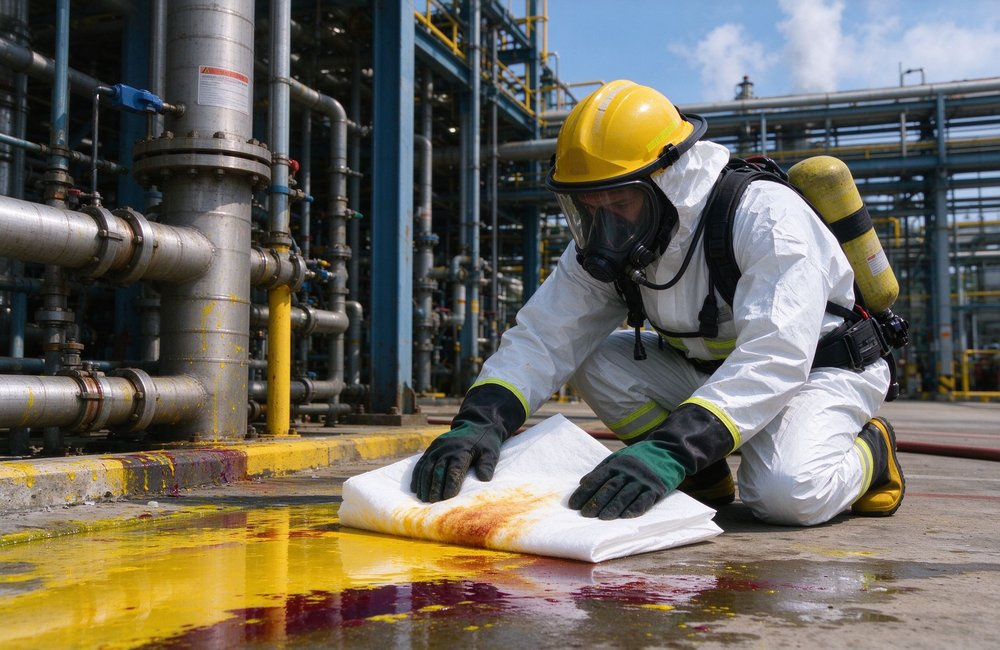
Cleanup turns a hazard into a waste stream. Absorbents, containment tools and disposal bags follow the spill size, and the kit carries enough for the largest spill the site can reasonably have.
This chemical spill cleanup guide layer also includes a spill log and the manifest forms, so every pad used and every bag collected is recorded before the site returns to work.
Spill absorbent pads soak up liquids, granular absorbents cover broad areas, and neutralizers treat acids or bases on contact. Match the absorbent to the chemical class, because a pad that works for oil may not bind a solvent.
Neutralizer ratios come from the safety data sheet, and the kit label carries the mixing steps so the responder does not guess under pressure.
Containment stops the spread: booms and dikes ring the spill, scoops and shovels collect solids, and labeled waste bags carry contaminated absorbents. Disposal follows local rules, so the kit includes the labels and the manifest forms the site uses.
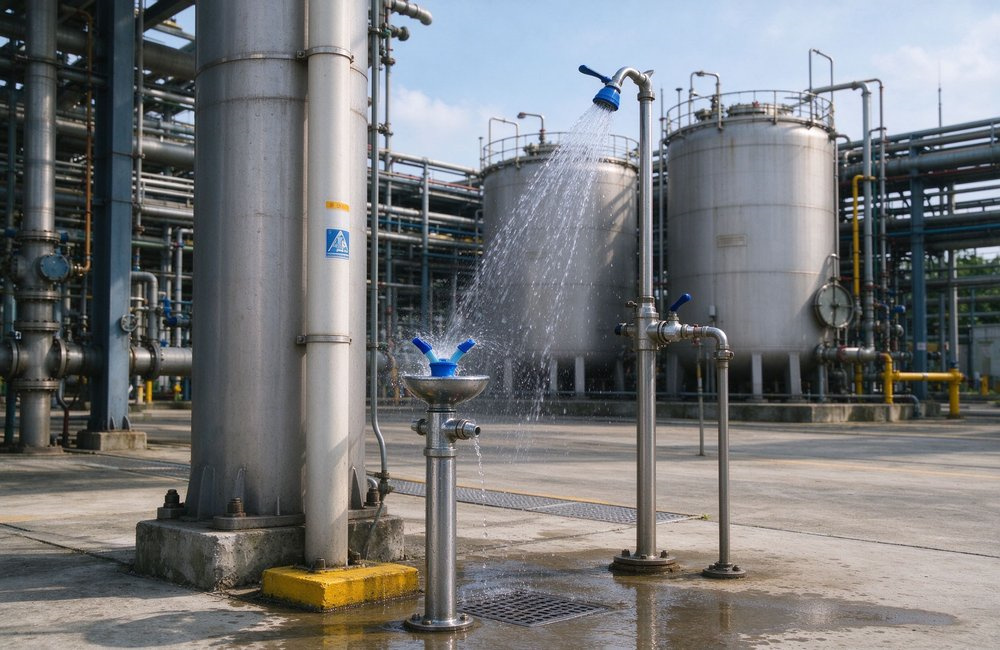
The core kit stays the same, and the scenario layer changes. A factory floor, a laboratory bench and a transport vehicle each add the items their risks demand.
The checklist below maps the three main sites. Each scenario keeps the same core list and changes only the volume and the PPE class, which is why one checklist serves three very different sites.
Factories and warehouses stock large-volume kits: more absorbents, full hazmat suits, wheeled spill carts and a decontamination shower. The kit lives near the storage racks, because the spill starts where the inventory sits.
Laboratories and schools keep bench-level kits: small absorbent packs, chemical resistant gloves, goggles, eyewash bottles and a mini spill bin. The eyewash station is fixed at the bench, and the kit is checked with the chemical inventory each term.
Transport vehicles carry compact kits that fit the cab: absorbent pads, gloves, goggles, a respirator and a spill response card. Emergency response teams carry the full hazmat kit with decontamination and first aid, because their scene is unknown until arrival.
We supply this industrial spill response gear as bulk spill cleanup equipment for fleets, so the response travels with the load that caused it.
A stocked kit fails when the contents do not match the chemicals on site. The confirmation checklist below is the ten-minute check every buyer runs before ordering and every safety officer runs each quarter. The ten-minute confirmation covers contents, dates and the SDS binder, and the same check runs quarterly so the kit stays matched to the site.
Confirm the kit covers: PPE for the chemical classes on site, eyewash and shower access, absorbents sized to the largest spill, first aid supplies, waste bags and the safety data sheet binder. Count one PPE set per responder and one eyewash bottle per bench.
Inspect the kit monthly and rotate what expires: eyewash solution, bandages, gloves and respirator cartridges. Replace used absorbents after each cleanup and log every use.
This chemical safety cleanup kit log is the proof the kit was ready and stocked before the incident, so keep the sheet with the cart.
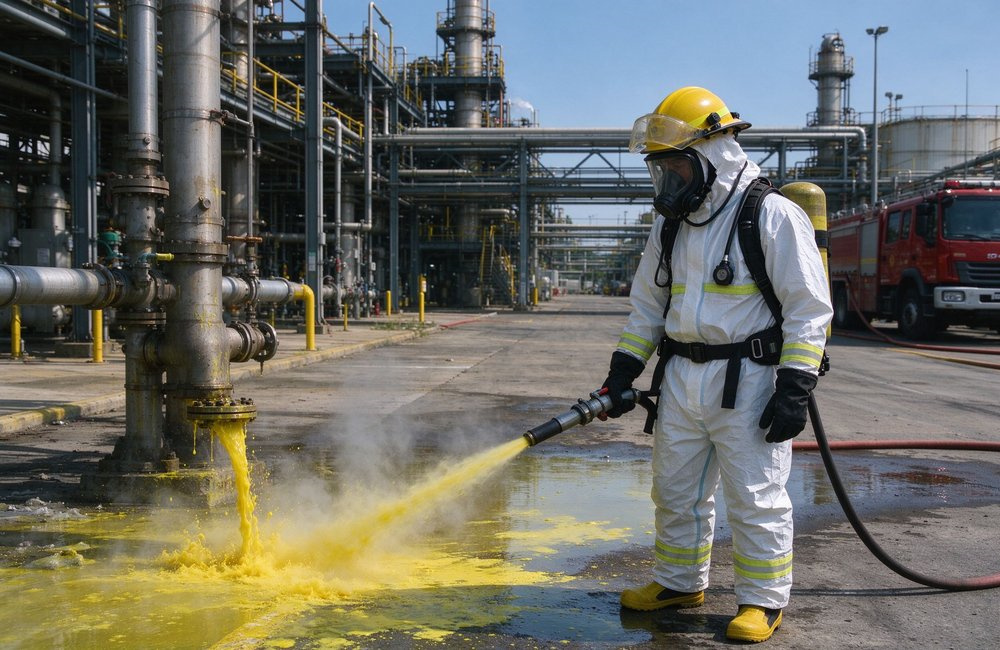
Equipment works only after people practice it. Training covers recognition, PPE donning, eyewash use and cleanup, and drills turn the chemical spill kit from a bin into a response. After each drill, log the times and the missing items, because the gaps in the drill are the gaps in the kit order.
Run a spill drill once a quarter and a full hazmat exercise once a year. Time the eyewash reach, the PPE donning and the cleanup, then fix the slow steps. The drill log feeds the next kit order, because the gaps show what the kit lacks.
Assign roles before the drill: one responder handles the eyewash, one controls the scene, one collects the absorbents and one logs the incident. A six-person team covers most spills; smaller sites train everyone in every role.
Chemical response is regulated, and the paperwork is part of the kit. Buyers need the compliance documents with the order, because the site inspection and the insurance audit both look at the same folder. The same agencies publish the signage, the training hours and the reporting thresholds, so the kit and the paperwork stay aligned with the official baseline.
National workplace safety standards cover hazmat response training and PPE; environmental rules govern spill reporting and cleanup standards, and local fire and environmental agencies add site rules.
For the broader preparedness baseline, the NWS general emergency preparedness guidance and the Red Cross survival kit supplies checklist frame how workplaces layer chemical spill kit supplies with site response plans. Keep the same Red Cross emergency survival kit supplies checklist beside the SDS binder during drills.
Ask the factory for a packing list, material declarations and applicable certificates before the full run. Confirm the kit contents match the compliance checklist, and keep the SDS binder with the kit so the documentation travels with the response.
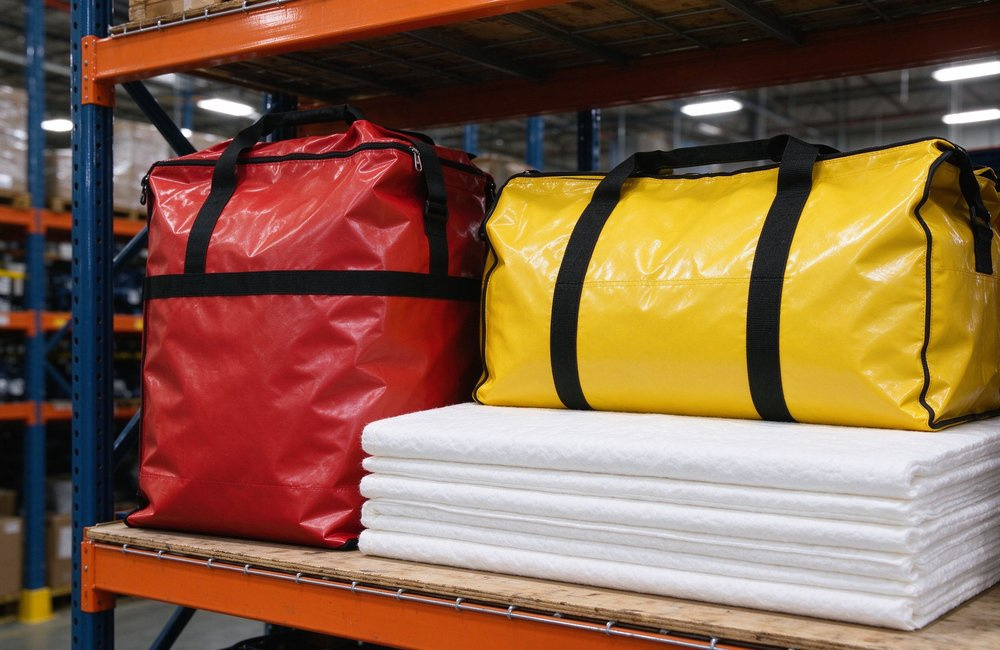
A complete kit combines the PPE layer, the eyewash layer, the cleanup layer and the first aid layer in one cart or cabinet. The table below is the full contents list, sized for a mid-size factory.
The complete kit is one cart that answers the first hour: PPE on the shelf, eyewash on the wall, absorbents in the bin and the folder in the front.
Layer the kit by speed: eyewash and gloves on top, absorbents in the middle, suits and respirators behind, first aid and documents in the front pocket. Every item has a labeled slot, so a missing glove is visible before the drill starts.
| Layer | Core items | Quantity | Replacement |
|---|---|---|---|
| Eyewash | Station, bottles, flush | 1 per bench | Monthly check |
| PPE | Suit, gloves, goggles, mask | 1 set per responder | Per use |
| Cleanup | Absorbents, booms, bags | Largest spill size | After each use |
| First aid | Rinse, dressing, card | 1 kit | Monthly check |
| Docs | SDS binder, manifest, log | 1 folder | Quarterly |
The table above is the complete contents list: the columns show the response layer, the core items, the minimum quantity and the replacement cycle. Buyers turn this list into a chemical spill kit supplies order, and the factory quotes the same columns.
Ordering hazmat kits wholesale follows the same confirmation: packing list, material declarations, applicable certificates and one assembled sample. Keep the sample as the receiving reference, and compare every delivered cart against the sample before the lot is accepted.
Chemical spills are measured in minutes, and the first minutes decide the outcome. A stocked chemical spill kit supplies plan turns a small release into a contained cleanup instead of an evacuation.
Our chemical spill cleanup guide and hazmat response supplies help buyers close these gaps before a release occurs.
Industrial sites hold solvents, acids and fuels at volume. They need full hazmat carts, decontamination showers and wheeled spill kits near storage racks as part of their industrial spill response gear.
Bench-level labs keep small absorbent packs, gloves, goggles and eyewash bottles. We supply bench kits scaled to the chemical inventory each term.
Vehicles carry compact under-seat kits with absorbent pads and a spill response card. We supply bulk spill cleanup equipment sized to the load.
Response teams carry the full hazmat kit with decontamination and first aid. They buy consistent chemical safety cleanup kit sets with packing lists and samples.
Oil gloves do not stop solvents. Match the glove and cartridge to the chemical class on the safety data sheet before the drill.
Every second counts. Reach the eyewash within fifteen seconds and flush for fifteen minutes instead of walking to the office first.
Use pads made for the chemical class. Oil pads may not bind solvents, and neutralizers only treat acids or bases.
Record every pad used and every bag collected. The log proves the kit was ready and restocked before the next release.
Choose the kit by site size and chemical class. The table below matches each kit to its use.
|
Kit type |
Best for |
Core contents |
Typical buyer |
|
Bench kit |
Labs and school benches |
Pads, gloves, goggles, eyewash bottle |
Schools, labs |
|
Factory cart |
Production floors, warehouses |
Suits, absorbents, booms, bags |
Factories |
|
Vehicle kit |
Fleets and transport |
Compact pads, gloves, response card |
Carriers |
|
Team hazmat kit |
Response teams |
Full PPE, decontamination, first aid |
Response teams |
Pair the kit with PPE and eyewash stations matched to the hazard class on site, and order the same set for every factory floor, laboratory and transport vehicle so quarterly drills stay consistent across all locations.
Use this quick-response timing table alongside the kit choice.
|
Step |
Action |
Time target |
|
Reach eyewash |
Get to station, begin flush |
Within 15 seconds |
|
Flush eye / skin |
Hold eyelid open, rinse |
At least 15 minutes |
|
Contain spill |
Boom or dike, stop spread |
Before absorbents |
|
Decontaminate |
Rinse PPE, bag waste |
After secure |
Drill these response timings each quarter with the spill cart open, so responders reach eyewash, absorbents and PPE without thinking and the ten-minute check stays fresh before every incident.
Basic care keeps every layer ready for the next release.
We supply all of the above as hazmat response supplies for wholesale and OEM, including every chemical safety cleanup kit and industrial spill response gear cart.
Orders over 200 sets can be private-labeled; MOQ and lead time are per contract.
PPE, an eyewash and shower plan, absorbents, containment tools, first aid supplies and waste bags, sized to the chemicals and the largest spill on site.
Within ten seconds of travel from the hazard, on the same level, with an unobstructed path; plumbed stations are checked weekly and flushed monthly.
Nitrile, neoprene, butyl and Viton gloves resist different chemical classes; check the safety data sheet and the glove chart, and verify the break-through time before use.
Match the cartridge rating to the chemical on the label; filtering respirators handle particles and vapors, and supplied-air units cover oxygen-deficient or concentrated environments.
Start within fifteen seconds and flush for at least fifteen minutes, keeping the eyelid open; never rub the eye, and seek medical care afterward.
Pads made for the chemical class, because oil pads may not bind solvents; granular absorbents cover broad areas and neutralizers treat acids and bases.
Once a quarter for spill drills and once a year for a full hazmat exercise; time the eyewash reach and PPE donning, then fix the slow steps.
A packing list, material declarations, applicable certificates and one assembled sample as the receiving reference for the whole order.
Flush the eye for at least fifteen minutes and rinse the skin for fifteen minutes under a shower; the rule starts with reaching the eyewash within fifteen seconds.
Place them in labeled waste bags with the manifest forms the site uses, and follow local disposal rules; keep the disposal log with the kit.
Yes. Laboratories and school benches keep bench-level kits with absorbent packs, gloves, goggles, eyewash bottles and a mini spill bin, checked with the chemical inventory.
The packing list, material declarations, applicable certificates and the safety data sheet binder, because site inspections and insurance audits review the same folder.
The chemical spill kit is one layer in a complete preparedness plan. Pair it with the universal emergency kit checklist, which covers water, food, first aid and lighting for every site, and keep the spill-specific layers on top.
The universal checklist and the spill-specific layers share the same review rhythm, so one quarterly walk refreshes the whole preparedness plan.
A chemical spill is measured in minutes, not hours. PPE, eyewash, absorbents and first aid follow one checklist, drilled once a quarter and restocked after every use. When the spill happens, the response is ready because the kit was.
Review the kit after every use, restock what the drill consumed, and confirm the dates at the quarterly walk, so the next spill finds the same ready kit.
Liens amicaux :
droits dauteur © Custom Disaster - Relief Bedding: Tents, Sleeping Bags, Blankets Tous les droits sont réservés
léquipe professionnelle au service !