Catégories
dernier blog
Last Updated: October 15, 2026
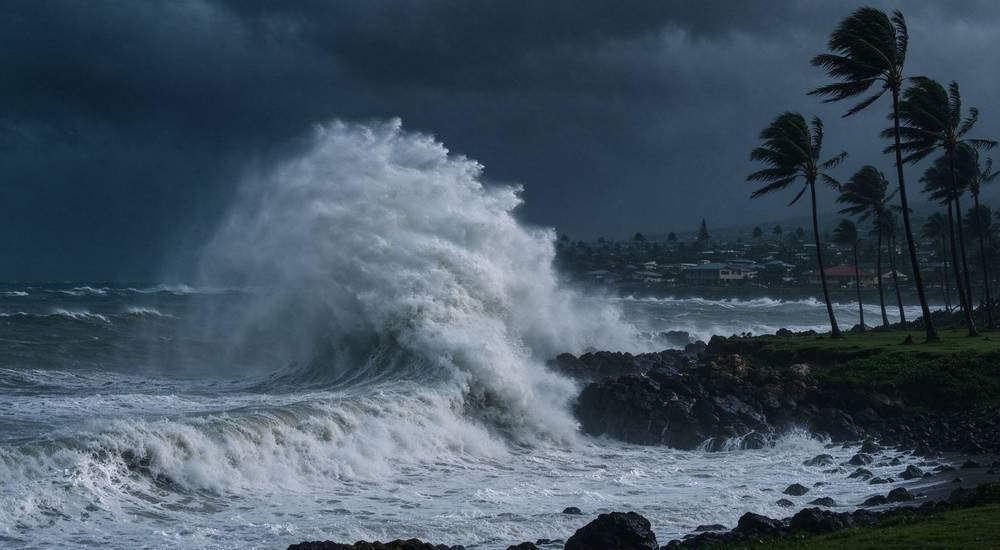
Drought is the wildfire preparedness season. Grass, brush, and soil turn to tinder, and fire districts need bulk wildfire response equipment staged before the first red flag warning. This guide covers what frontline crews actually need: foldable water bladders, hand tools, fire blankets, and PPE.
disaster relief suppliespreparedness
Drought-stricken landscape with cracked earth, wildfire smoke in the distance.
One stray cigarette, one power line spark, and a fast-moving grass fire starts. Fire trucks cannot drive down every dirt road, so crews need foldable water bladders at remote trailheads, hand tools to cut fire lines, and PPE for 12-hour shifts in 100°F heat. portable water storage tank Whether you are building a drought emergency kit for a community or preparing for drought preparedness as a relief organization, choosing the right bulk supplies makes all the difference.
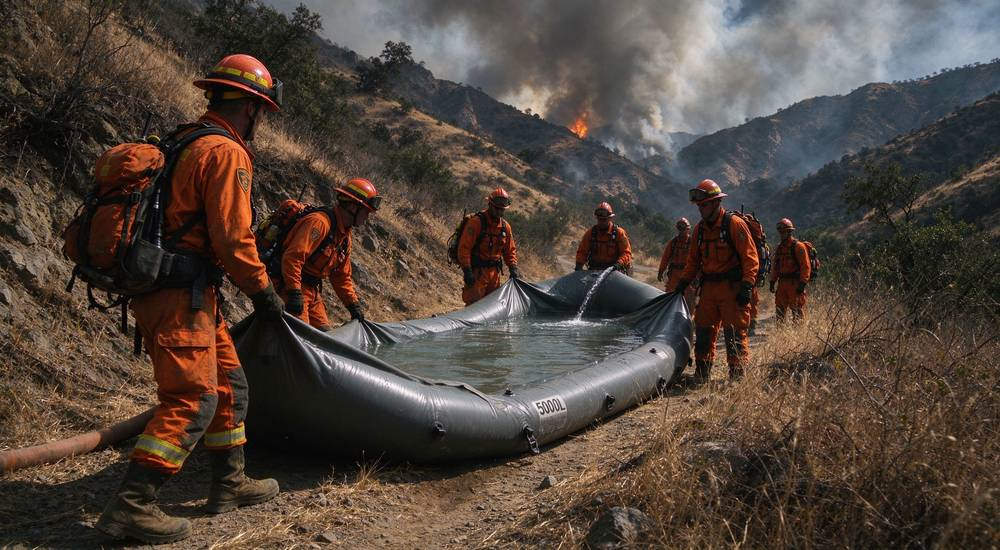
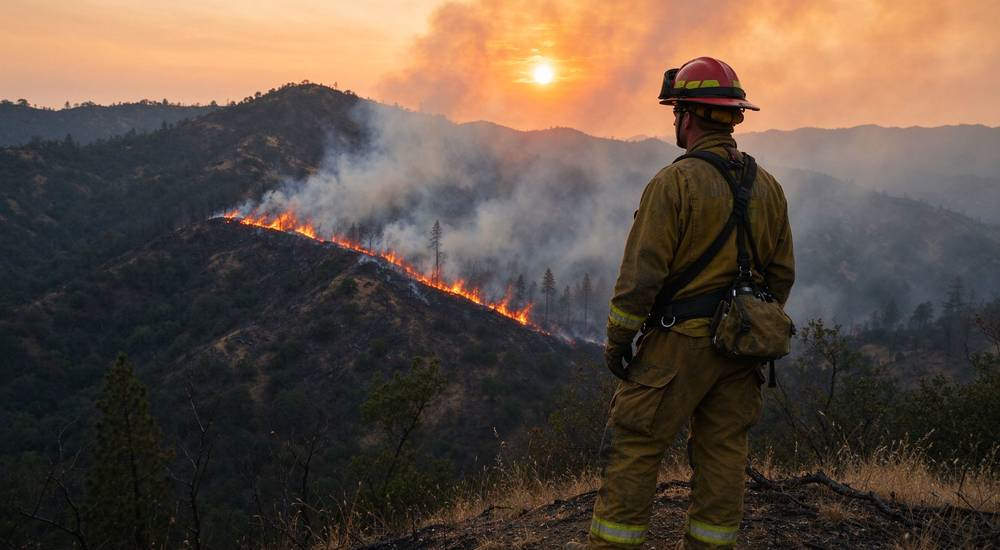
Firefighters deploying a 5000L foldable water bladder on a mountain trail.
Our China factory supplies bulk fire department equipment to rural fire districts and emergency NGOs worldwide. Every product is tested to CE, ISO9001, and EN standards. We ship mixed pallets to any port. fire department supplies
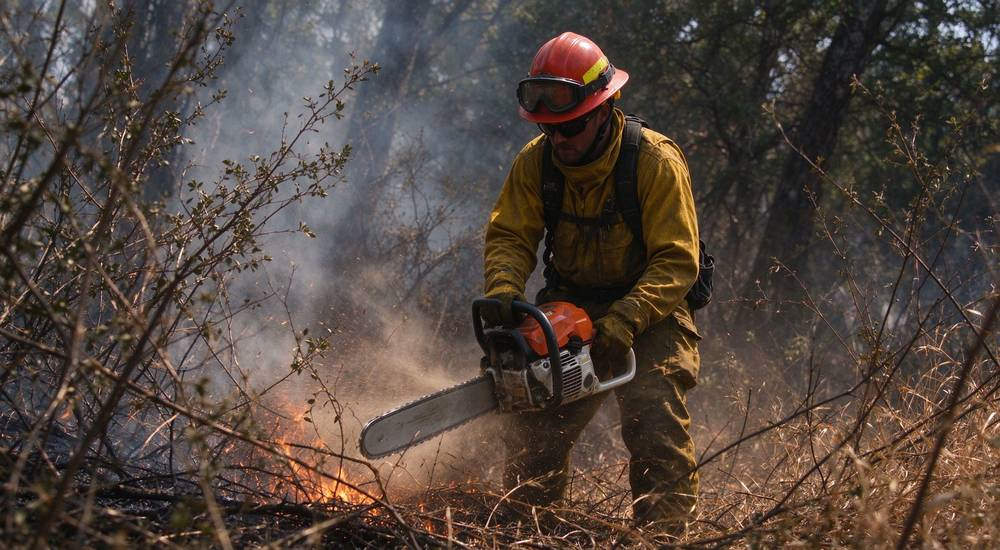
Firefighter using a chainsaw to cut a fire line through dry brush.
The biggest mistake rural departments make is waiting until fire season starts to order. By then every supplier is out of bladders and tools, lead times stretch to 8 weeks, and prices jump 25%. Order 3 months before the dry season.
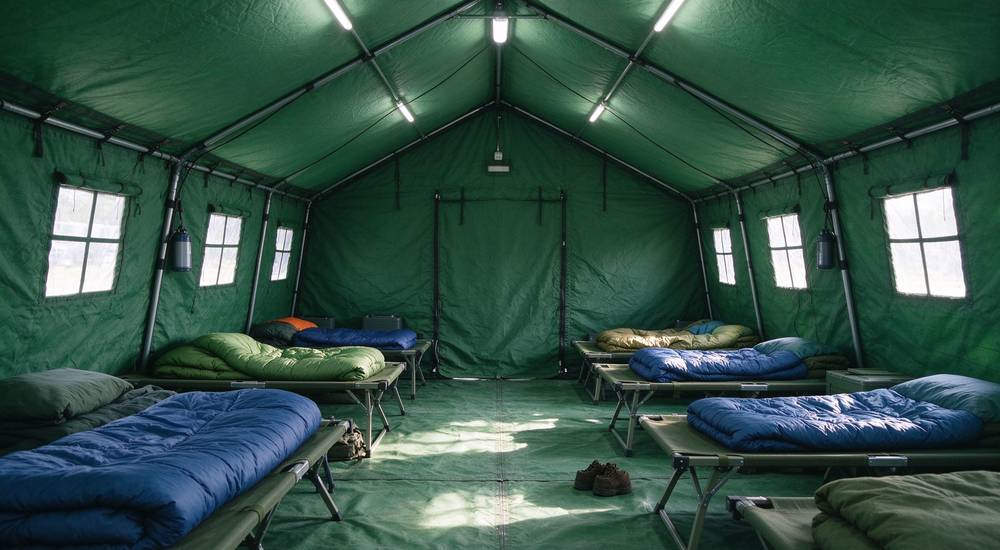
For long deployments, crews need shade tents, folding cots, and portable shade shelters. A tired crew with no rest area makes mistakes. Our rugged command tents and packable gear keep crews operational for 24-hour shifts.
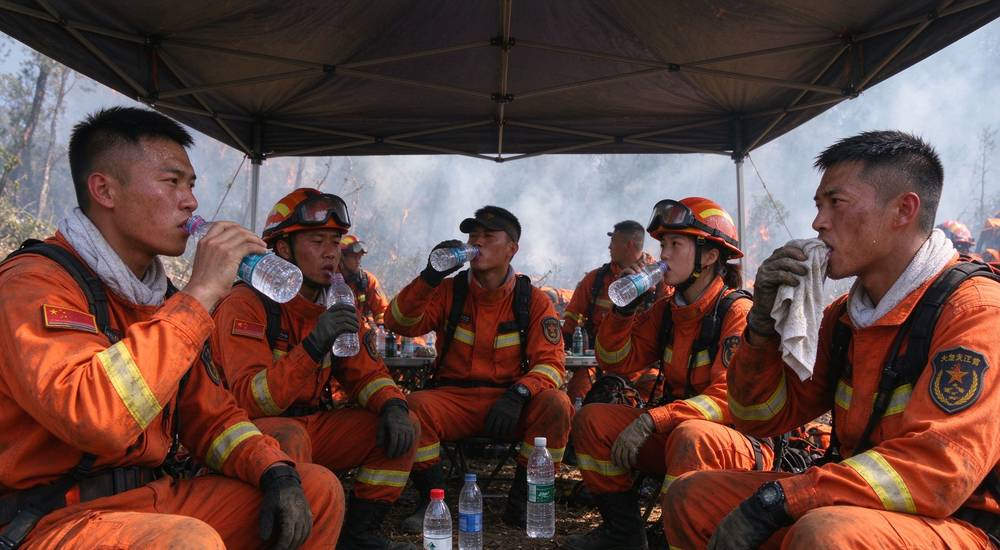
Firefighters resting under a shade tent during a hot wildfire shift.
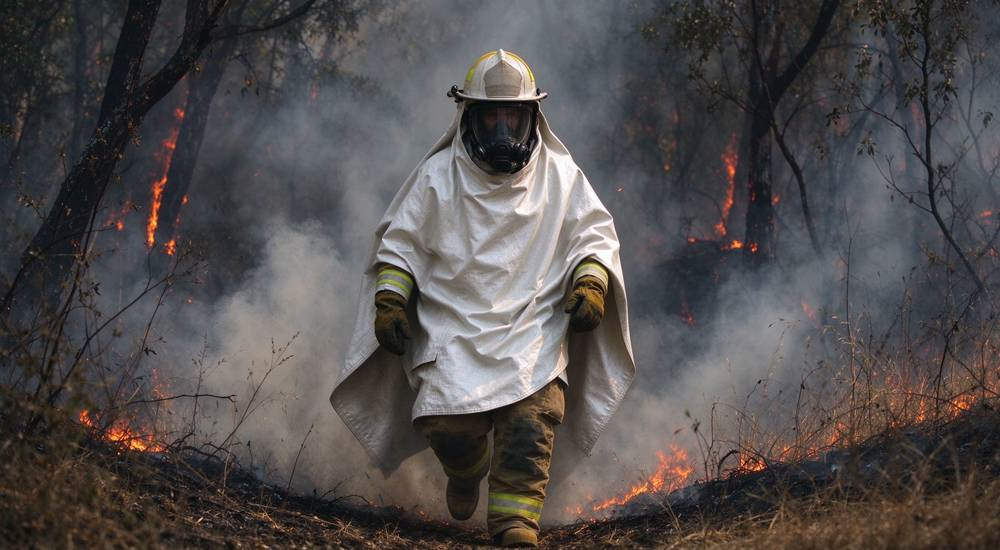
Firefighter walking out of wildfire wrapped in a fire blanket.
When the World Meteorological Organization reports three months of below-average rainfall, fire danger climbs to "Extreme" for months on end. One stray cigarette, one power line spark, and a fast-moving grass fire starts. Fire districts that pre-stage bulk wildfire fighting equipment before the dry season hit do not get caught waiting for backorders.
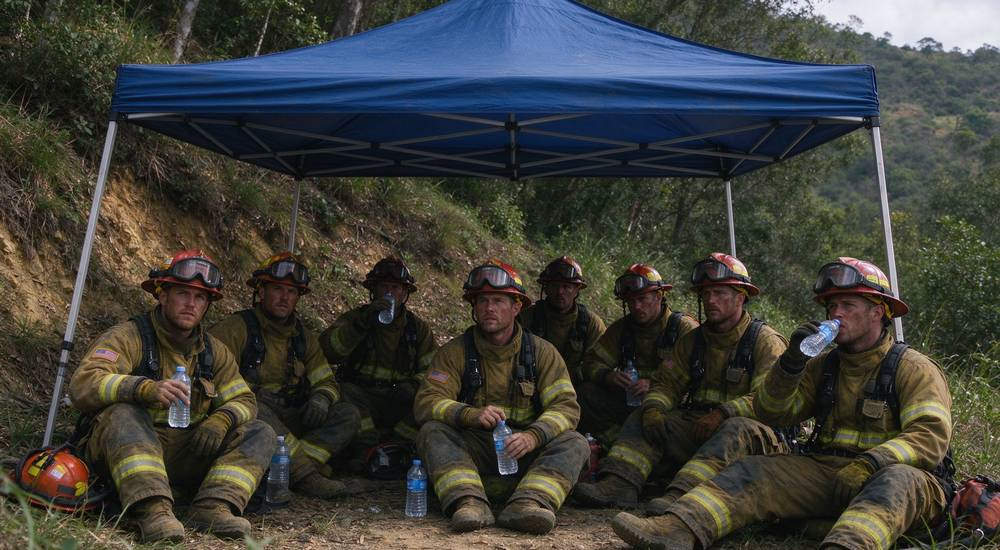
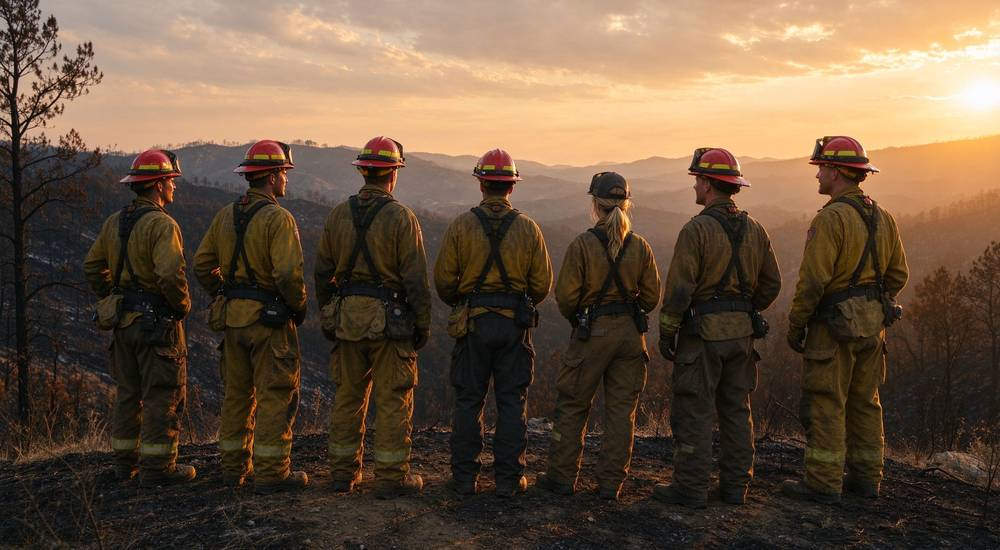
Group of firefighters preparing for wildfire response.
For bulk emergency supplies and fire department gear, plan ahead. Drought is not just low shower pressure. It means vegetation becomes so dry it ignites on contact, relative humidity drops below 20%, and strong winds spread embers miles ahead of the main fire. The National Fire Protection Association reports that severe drought years account for 70% of the largest and most destructive wildfires on record. Crews work 12-hour shifts in 100°F heat, building fire lines, mopping up hot spots, and evacuating rural homes. During large fires, mutual aid brings in crews from neighboring districts, and your gear has to work for people who did not train on it.
At the same time, drought-related heat waves crash the power grid. Rolling blackouts last for hours, cell towers go down, and fire stations lose power. Crews cannot rely on electric pumps, electric lights, or phone service during a fast-moving fire. The International Labour Organization reports that heat stress and equipment failure are the top two causes of on-the-job injury for wildland firefighters, which is why staging reliable gear before the season starts is not optional.
The Ready.gov wildfire preparation guide recommends that fire districts pre-position hand tools, water storage, and PPE 3 months before fire season starts, so crews are not waiting on backorders when the first red flag warning hits. Our China factory supplies bulk fire department equipment bulk to fire districts, rural rescue teams, and emergency NGOs worldwide. Every product is tested to CE, ISO9001, and EN standards, and we ship mixed pallets to any port.
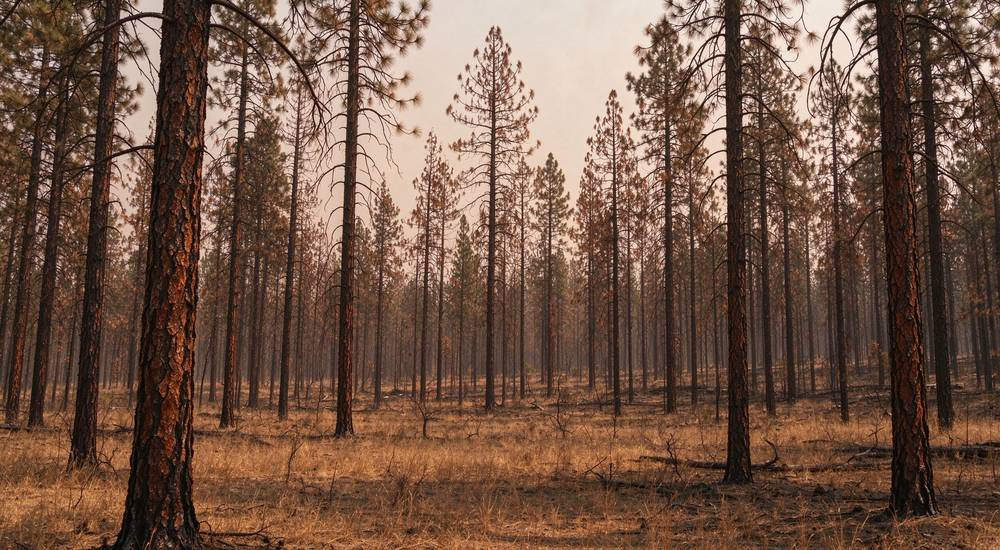
Firefighter carrying a backpack water tank spraying on a hot spot.
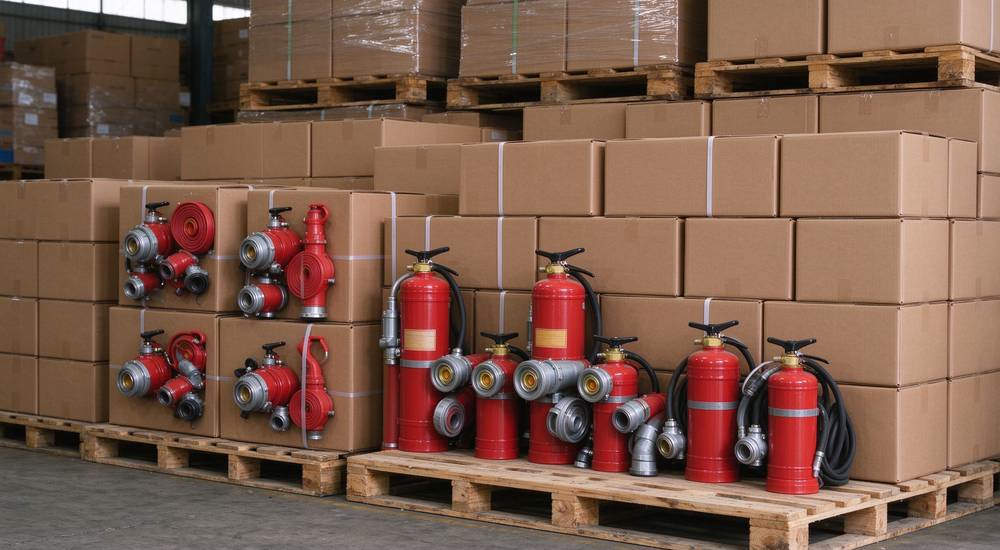
A complete frontline kit covers six categories: water storage, hand tools, fire safety PPE, lighting and communication, heat relief, and scene marking. Everything fits in a standard equipment pallet, ready to deploy when the fire dispatch call comes in. We recommend double-staging: half the gear at the main station, half at a remote outpost, so a road washout does not leave a whole district empty. fire safety equipment bulk
|
Category |
What to stage |
Qty for 50-person crew |
Why it matters |
|
Water storage |
5000L foldable water bladder + hand pump |
2 units |
Temporary water source at remote trailheads |
|
Portable water |
20L foldable water tank + fire hose adapter |
10 units |
Carry water to checkpoints and road blocks |
|
Hand tools |
Fire axe + chainsaw + portable water gun |
5+3+2 units |
Cut fire lines and suppress small flames |
|
Fire PPE |
550°C fire blanket + EN403 smoke hood |
10+5 units |
Initial attack and crew evacuation |
|
Lighting |
Hand crank radio + LED headlamp |
5+10 units |
Works during drought-related blackouts |
|
Heat relief |
Disposable cold pack + pop-up shade tent |
50+2 units |
Prevent heat stroke on long shifts |
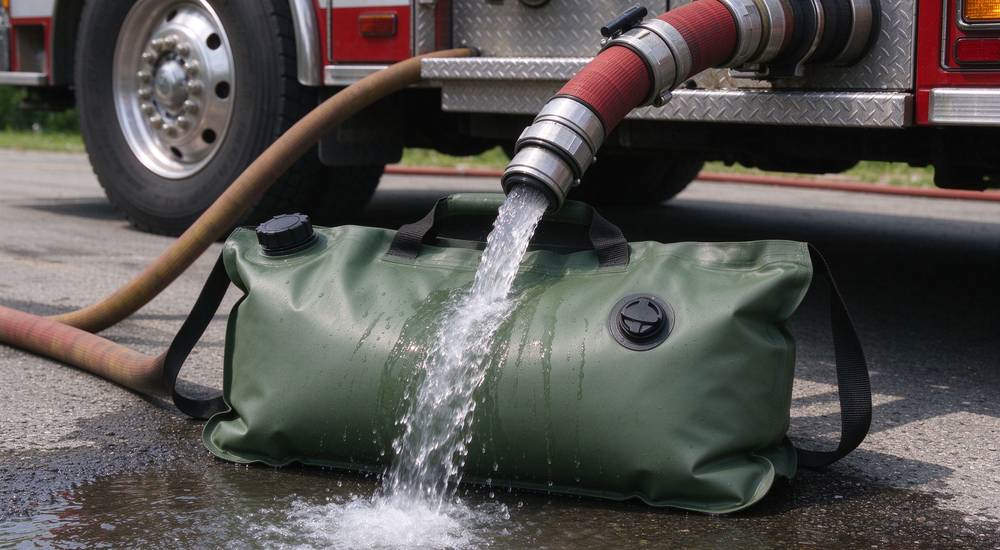
Most rural fire departments under-buy water bladders and hand tools, and over-buy bottled water. Bottled water runs out in a week, takes huge storage space, and cannot feed a fire hose. Foldable bladders store flat, set up in 10 minutes, and connect directly to standard fire hose couplings. When a brush truck drives 20 minutes up a dirt road, it does not want to carry all its water load—it wants to dump its tank at the bladder and shuttle back for more. emergency water storage
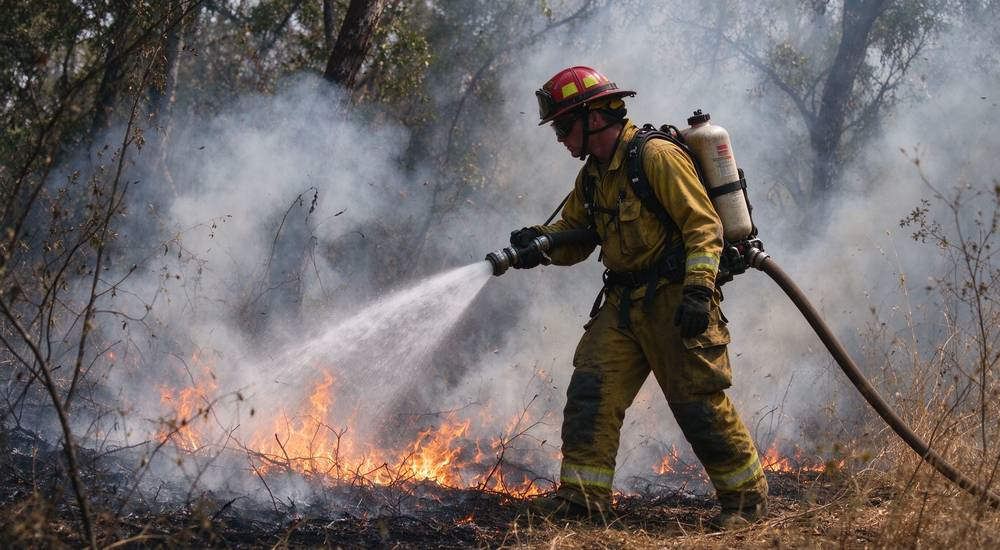
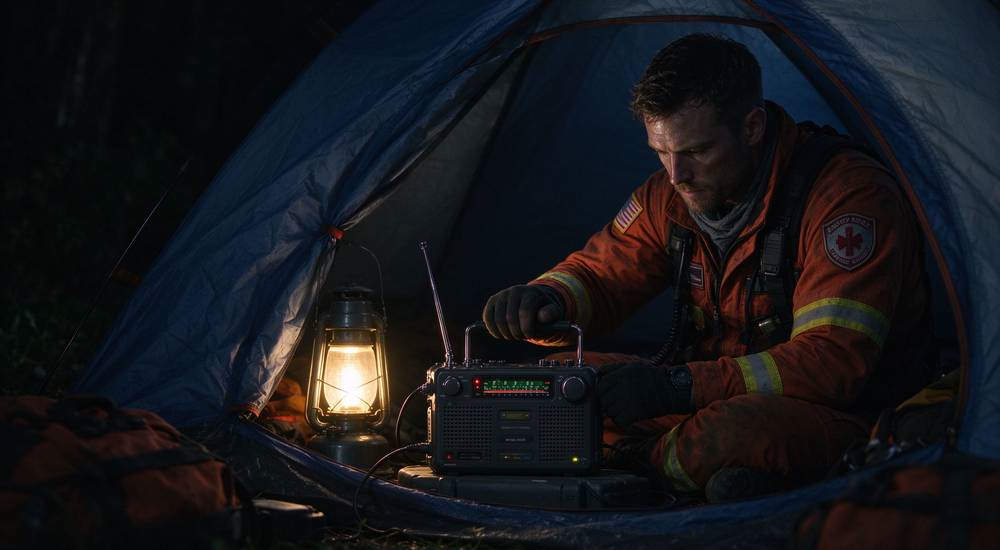
Rescue worker using a hand crank emergency radio at night camp.
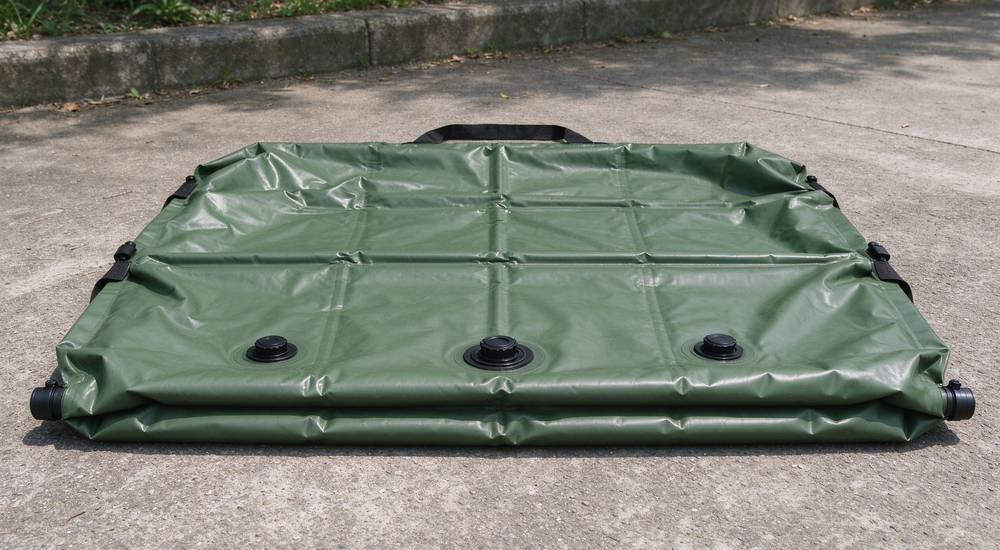
The single most requested item during drought wildfire response is the foldable water bladder. Fire trucks cannot drive down every narrow dirt road to the fire line. Crews hike in to build fire breaks, and they need a reliable water source nearby to refill backpack pumps and feed portable water guns. A 5000L bladder deployed at a trailhead gives crews a refill point they do not have to hike miles back to the truck for. wildfire response equipment
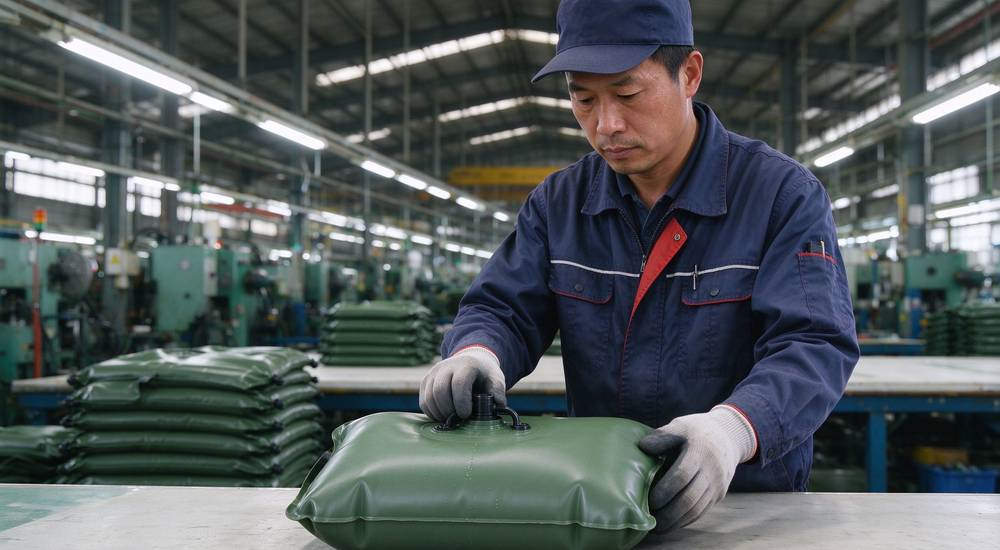
Our bladders are made of food-grade reinforced PVC with a nylon mesh layer that resists punctures from rocks and twigs. They weigh 25kg empty—two people can carry one into a remote site—and fold down to the size of a suitcase when not in use. Every bladder comes with a 2-inch NH (national hose) thread drain valve that connects directly to standard fire hose, so you do not need a special adapter to spray water on hot spots. We also supply reducer fittings, so the bladder works with both 1.5-inch and 2.5-inch hose, the two sizes most rural districts carry. portable water tank
We also supply hand-operated diaphragm pumps, which draw water from the bladder into backpack sprayers without power. The pumps weigh 3kg, fit in a gear bag, and work even when the bladder sits on sloped ground. For road checkpoints, the 20L foldable tanks clip into an ATV rack, so crews can move water between the base bladder and remote lookout posts. The tanks have a wide screw top, so you can fill them from a creek with a bucket, no power needed.
Deployment tip: always set the bladder on level, cleared ground, not on a slope where it can slide. Lay a piece of heavy canvas under it if the ground is rocky, and fill it slowly the first time, so the PVC stretches evenly. We include a deployment guide in every bulk order, so mutual aid crews who have never seen your bladder can set it up in 10 minutes without training.
Firefighter wearing a silver smoke mask in wildfire smoke.
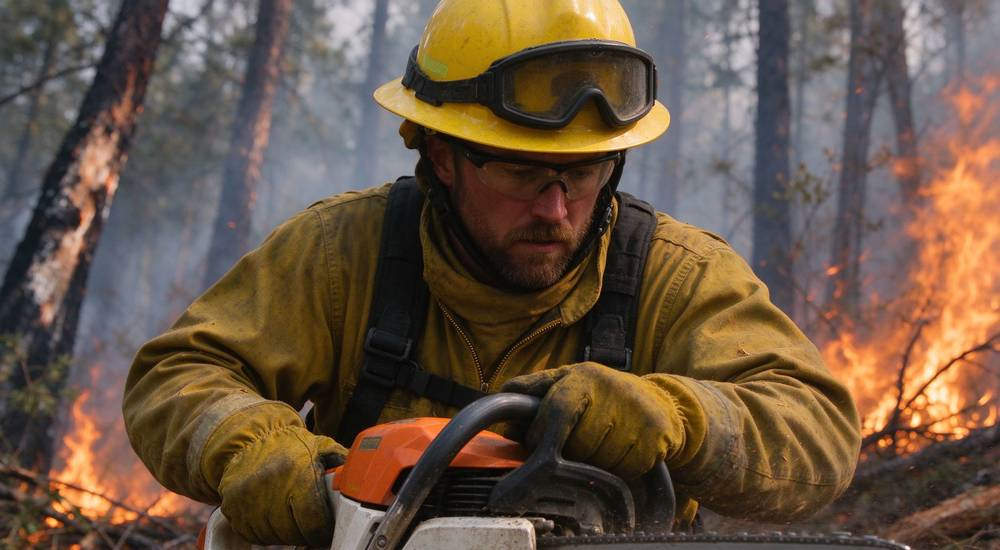
Building a fire line is physical work: crews cut through brush, dig through roots, and clear a 3-meter wide strip of bare earth between the fire and unburned forest. They need sharp, reliable hand tools that do not fail mid-shift. We supply fiberglass-handled fire axes, which are lighter than wooden axes and do not rot in wet weather. The blades are hardened 5160 steel, sharpened and tested before shipment, so crews do not waste time sharpening tools at the fire line. We specifically avoid the cheap cast-steel axes sold at discount hardware stores—those heads fly off after 4 hours of chopping, which is a major safety hazard on a fire line. portable light tower
For thicker brush and small trees, we supply portable battery chainsaws, which are quieter than gas saws and do not require fuel cans at the fire line. The 40V brushless motor runs for 45 minutes on a battery, and spares are swapped out every 2 hours. We supply two batteries per saw, so crews never wait for a charge. Gas saws are loud, fume-heavy, and hard to start at high altitude; battery saws start on the first pull, with no choke and no carburetor adjustment.
For initial suppression of small grass fires, we supply portable backpack water guns, which hold 20L of water and spray a stream up to 10 meters. These are perfect for putting out spot fires before they grow. The tank sits on padded shoulder straps, so crews can hike for an hour with it without shoulder strain. We also supply collapsible fire shovels, which break down to fit in a gear bag. Every tool comes with a nylon carrying sheath, so sharp blades do not tear up other gear in the truck. We can print your fire department logo on the tool handles, so gear is not lost during mutual aid calls.
Tool maintenance matters. Cheap tools rust after one season in dusty fire environments. We ship all our tools with a coat of corrosion-inhibiting oil, and include a maintenance card in every bulk order: wipe down after each shift, sharpen blades every 40 hours, re-tighten axe heads at the start of every fire season. A tool that fails mid-fire is not just lost equipment—it is a crew safety hazard.
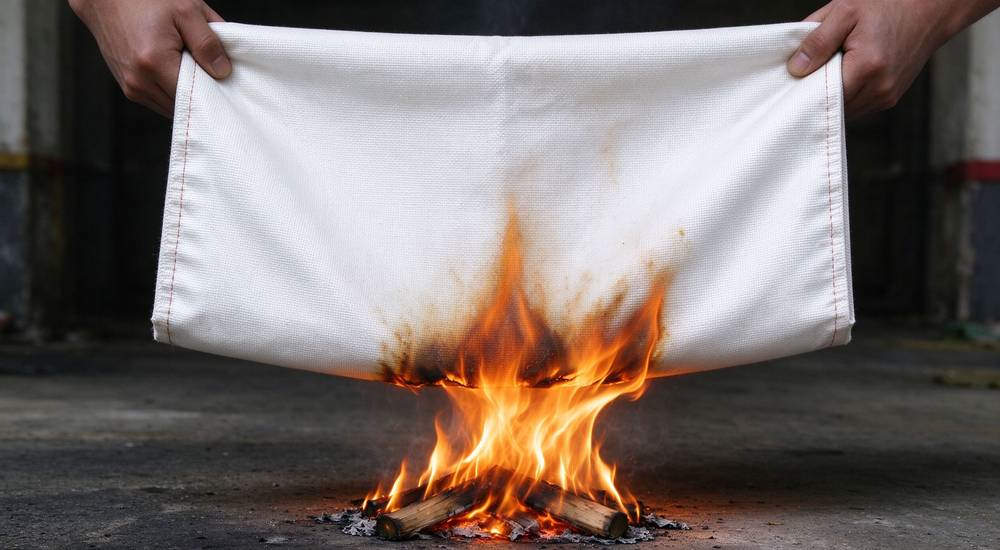
Drought means every campfire, every cigarette butt, every power line spark is a potential fire. Fire stations and trailheads need 550°C fiberglass fire blankets mounted on quick-release hooks, for initial attack on small fires before they grow. Our blankets stop grass fires, clothing fires, and small equipment fires in seconds, cutting off oxygen before the fire can spread. They are 1.5×1.8m, large enough to wrap around a person or smother a burning piece of equipment. drought emergency supplies
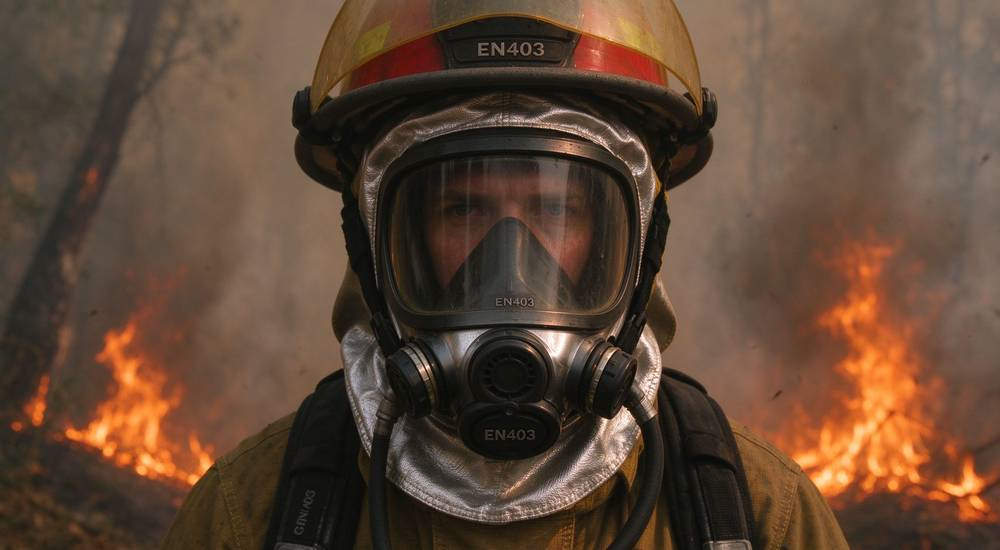
We also supply EN403 silver smoke hoods for crew safety, providing 15 minutes of clean air in heavy smoke. Every hood is sealed in a vacuum pack, so it does not get dusty or clogged in the equipment bay. When a fast-moving fire traps crew members, they put on the hood, grab the fire blanket, and crawl out through the smoke. The hoods have a wide view port, so crew members can see exit routes even in heavy smoke.
We recommend storing blankets on visible hooks at every fire access gate, not locked in a cabinet. During a fast-moving fire, you do not have time to search for keys. A blanket on a hook is usable in two seconds. We supply the mounting hooks with every bulk order, so you can install them the same day the gear arrives. Every blanket has "FIRE BLANKET" printed in 5cm high English letters, so it is visible even in dim, smoky light.
Drought heat waves crash the grid. Rolling blackouts last for hours, sometimes days, during the hottest parts of the dry season. Fire stations lose power, cell towers go dark, and traffic lights fail on rural roads. Crews cannot rely on wall chargers or cell service during a major fire. fire department equipment bulk
Every response kit needs a hand crank solar weather radio, which runs on solar and cranking, no batteries needed. Our radios are IPX5 splash-proof, so they work in dusty, smoky conditions, and have a USB port to charge dead phones. We also supply LED headlamps with a 20-hour battery life, so crews can work at night without stringing temporary power lines. The headlamps have a red light mode, which does not ruin night vision when crews are watching for spot fires on a dark ridge. emergency radio For site marking, we supply chemical light sticks that glow for 12 hours. Crews clip them to their gear, mark trailheads, and mark evacuation routes when the power goes out. These do not require batteries, do not get hot, and do not spark—safe to use even in a smoky fire zone. We pack them in cases of 50, with three colors: green for crew routes, red for danger zones, yellow for medical stations. wildfire evacuation kit
Drought heat is dry, relentless, and dangerous. Crews work 12-hour shifts in 100°F direct sun, and heat stroke hits fast. Disposable cold packs are a critical recommendation: when someone starts showing heat exhaustion symptoms—dizziness, nausea, headache—crew chiefs break a cold pack, hold it to the neck and armpits, and bring the temperature down before it becomes heat stroke. We recommend ordering these through your local medical supplier; our range covers the shelter and shade gear below. drought relief supplies wholesale
We also supply pop-up shade tents that set up in 10 minutes, giving crews a shaded break area every 2 hours on a long shift. Heat stroke prevention is not just water—it is regular breaks in the shade. The tents are 3×3m, big enough for 8 crew members to sit in, with a waterproof top that blocks 98% of UV. We supply standard EN397 safety helmets, so crew members have head protection on long shifts on exposed hillsides. The helmets come in four colors, so you can color-code command staff, crew members, and volunteers.
For longer deployments, we supply folding cots, so crews have somewhere to rest between shifts. The cots fold up small, so you can store 50 of them in a small equipment bay and deploy them all in a day. When crews are working 24-hour shifts, a dry place to sleep makes a huge difference in how long they can keep going.
For overnight shifts, we also supply portable shade shelters rated for 5°C, which pack down small and keep a crew member warm on a cot after a long hot day. We do not supply heavy cooling towels here—firefighters already carry nomex turnout gear, and they need something light and packable, not a bulky blanket. We also supply emergency command tents (4×4m) that go up in 15 minutes, giving the crew chief a place to plan routes, check weather, and sleep at night, instead of doing paperwork on the hood of a truck. These tents have a rainfly, so they hold up even when a dry fire season turns into a rainy night on the mountain. cooling towel
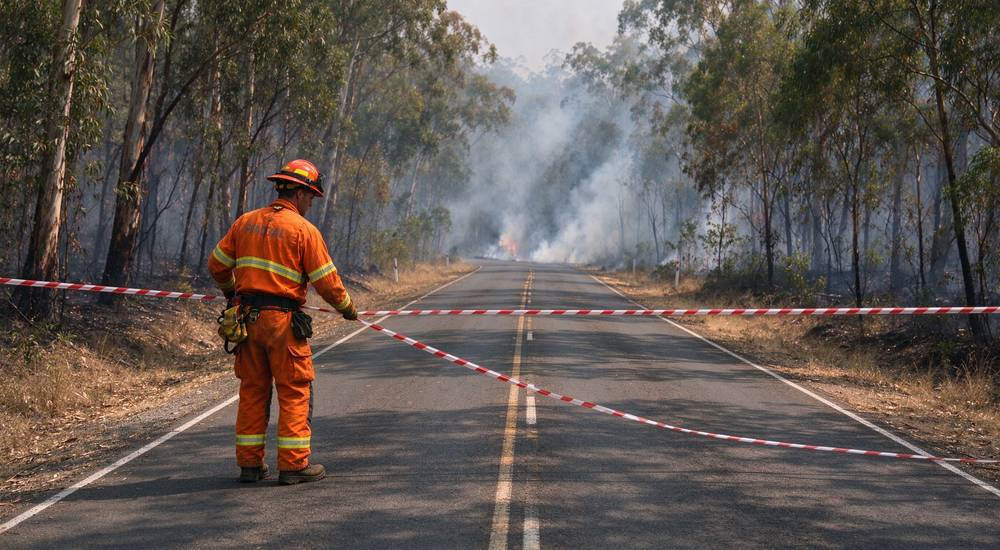
Wildfire scenes are confusing: heavy smoke, multiple agencies, helicopters flying overhead, and civilians trying to drive through evacuation routes. Crews need high-visibility vests, barrier tape, and signage to keep the scene organized and prevent accidents. wildfire response gear
We supply Class 2 reflective vests that meet international roadside visibility standards. Crews wear them on road blocks, so passing drivers can see them through the smoke. The vests have two pockets for radios and notebooks, and adjustable side straps so they fit over turnout gear. We also supply red and white barrier tape, 500m per roll, which marks off hazard zones and keeps civilians out of active fire areas.
We also supply dry-seal first aid kits, stocked only with gauze, bandages, and trauma dressings—no liquid ointments that expire or leak. Every kit is sealed in a hard plastic case, so it survives dust, heat, and rough handling in the back of a fire truck.
Cooling towels in multiple colors, essential heat relief gear.
Cheap water bladders are the most common procurement mistake. Thin PVC bladders develop leaks at the seams after one filling, and you find out when the bladder is half empty in a remote fire site. When you order bulk bladders, ask for three things: radio-frequency welded seams, a food-grade PVC certification, and a patch kit included with every unit.
Our bladders have RF-welded seams, not glued seams. Glued seams leak after a few months of sun exposure; welded seams hold for 5+ years. Every bladder we sell is pressure-tested before shipment: we fill it to capacity, leave it for 24 hours, and check for drops before it leaves the factory. We also provide a 2-year warranty on seams, so you can replace any bladder that fails under normal use.
Storage matters, too. Bladders stored folded in a hot equipment bay get brittle and crack when you try to unfold them. Store them in a cool, dry place, partially inflated, with the drain valve slightly open to let air circulate. We send a storage instruction sheet with every bulk order, so your warehouse team knows how to keep the bladders usable for years. Never store a bladder folded tight in direct sun—the PVC will delaminate after one summer.
We see the same mistakes over and over from first-time wildfire gear buyers. First, ordering only bottled water, which is heavy, expensive, and runs out in a week. Second, buying cheap fire blankets that melt at 300°C and fail during a real fire. Third, waiting until the wildfire season is already underway to order, when every supplier in the country is out of bladders, axes, and pumps.
Place your order 3 months before the dry season starts. Reservoirs drop, fire danger climbs, and orders pile up fast once the first fire starts. Lead times stretch to 8 weeks, and prices go up 25% because demand spikes. Ordering in the off-season means you get the best price, have time to train staff on how to set up the bladders, and are ready before the first red flag warning.
Another mistake is buying the cheapest hand tools. A $12 axe from a discount store looks the same as a $22 axe from a proper supplier, until you hit a root and the head flies off. Buy tools with forged heads, fiberglass handles, and a 1-year warranty. Cheap tools end up costing more, because they break mid-fire and leave crews without the equipment they need. We recommend ordering 10% extra tools, so when one breaks, you do not send a crew out without a saw.
Another mistake is storing all your gear in a valley-level bay, which floods during the rare heavy rains that come during drought. Store bladders and tools on high ground, in a dry, locked shed, so a surprise rain event does not ruin your entire stock. We recommend doing a drill once a year: set up a bladder, fill it with water, check for leaks, run a saw through its paces, then put it all away. This finds small problems before they become emergencies.

Portable light tower illuminating a night work site.
This budget covers a 50-person rural fire crew. Prices are FOB China, based on mixed pallet orders of 500+ units. For smaller orders, unit prices run 15-25% higher. We recommend ordering 20% extra tools and bladders to cover breakage and fire damage, and storing all gear on high ground in dry, locked sheds.
|
Item |
Unit cost (FOB China) |
Qty for 50-person crew |
Subtotal |
|
5000L foldable water bladder |
$85-$140 |
2 units |
$170-$280 |
|
20L foldable water tank |
$4.50-$8.00 |
10 units |
$45-$80 |
|
Fiberglass fire axe |
$12-$22 |
5 units |
$60-$110 |
|
Battery chainsaw (2 batteries) |
$45-$85 |
3 units |
$135-$255 |
|
Portable backpack water gun |
$18-$30 |
3 units |
$54-$90 |
|
550°C fire blanket (1.5×1.8m) |
$3.50-$6.50 |
10 units |
$35-$65 |
|
EN403 smoke hood |
$8-$14 |
5 units |
$40-$70 |
|
Hand crank solar radio |
$12-$22 |
5 units |
$60-$110 |
|
LED headlamp (20h battery) |
$4.50-$8.00 |
10 units |
$45-$80 |
|
Long-deployment camp |
|||
|
Folding cot |
$12-$22 |
10 units |
$120-$220 |
|
5°C rated portable shade shelter |
$8-$15 |
15 units |
$120-$225 |
|
4×4m emergency command tent |
$55-$95 |
1 unit |
$55-$95 |
|
Bulk pallet discount (500+ units mixed) |
15% off total + free ocean freight to major ports |
||
Per 50-person crew: $939-$1,720. For a 10-station rural fire network, multiply by 10, and the bulk discount kicks in. For mutual aid deployments, we recommend printing your department logo on every tool and bladder, so equipment comes back after the fire is over.
Evacuation shelter interior with families resting.
When you source bulk wildfire response equipment from our China factory, every order goes through three QC checks: incoming material inspection, mid-production check, and final pressure test for bladders before shipment. We provide food-grade PVC certification for bladders, EN1869 for fire blankets, EN403 for smoke hoods, CE, ISO9001, and RoHS documentation, so customs clearance is smooth.
Our order process is simple: send us your list and target quantity, we send back a proforma invoice with pricing and lead time, you confirm and pay the deposit, we produce and QC, you pay the balance, we ship by sea or air. Lead time for standard stock items is 7-15 days; custom logo and pre-packed orders take 25-35 days. We can ship to any port worldwide, and work with your freight forwarder or arrange CIF shipping directly.
Tell us how many crew members you have, how long your fire season lasts, and what gear you already stock, and we will send you a customized list with pricing, lead time, and free sample availability. We work with rural fire departments, rescue teams, and emergency NGOs worldwide. fire rescue equipment
When sourcing drought and wildfire emergency supplies, procurement managers should prioritize suppliers who can handle mixed-pallet orders, provide all required certifications, and deliver on time. Look for manufacturers with experience serving government agencies, NGOs, and fire departments worldwide. Bulk orders typically qualify for tiered pricing, and many suppliers offer free samples for quality testing before full deployment.
Another key consideration is shelf life. Emergency supplies stored for months or years must remain functional when needed. Choose products with long expiration dates, rugged packaging, and clear usage instructions. This ensures that when a drought or wildfire strikes, your stockpile is ready to deploy without last-minute scrambling for replacements.
Proper drought and wildfire preparedness saves lives, reduces response time, and ensures that communities recover faster when disaster strikes. Investing in quality emergency supplies today means fewer casualties and lower overall costs tomorrow. wildfire preparedness kit
A 50-person crew working remote lines needs two 5000L bladders at trailheads, plus ten 20L portable tanks for road checkpoints. The bladders hold enough water for drinking and mop-up; the portable tanks get water to spots the truck cannot reach. Add one extra bladder for every additional trailhead.
For remote wildfire response, yes. Rigid tanks are heavy, hard to carry in, and crack in winter. Our RF-welded bladders hold pressure for 5+ years, weigh almost nothing when empty, and connect directly to standard fire hose couplings. They are the standard choice for wildfire crews worldwide.
Yes, we supply fiberglass-handled fire axes, collapsible shovels, and battery chainsaws, all tested before shipment. Tools are packed in hard cases for shipping, and we can print your department logo on the handles. Chainsaw batteries are available as spares, and we ship replacement blades with every order.
Our 550°C fiberglass blankets smother small grass and brush fires within seconds, by cutting off oxygen. They are not for fighting large flames, but they are perfect for stopping a small campfire or cigarette ignition before it grows. Every fire access gate should have one mounted within arm's reach.
Axes and shovels carry a 1-year warranty against manufacturing defects. Chainsaws carry a 2-year warranty on the motor, with 6 months on the batteries. Bladders carry a 2-year warranty on seams. If any product fails under normal use, we ship a replacement, no questions asked.
Yes, we print department logos on tool handles, bladder sides, and vest backs, in one or two colors. The minimum order for logo printing is 100 units per item, and it adds 10 days to lead time. Logo-printed gear stays with your department during mutual aid calls, and does not get mixed up with other agencies' equipment.
Our standard MOQ is 500 units per product for mixed pallet orders. For smaller pilot orders, we can work with 100 units per item with slightly higher unit pricing. Many rural fire departments start with a 100-unit pilot order, test the gear through one fire season, then scale up to cover the whole district.
Aerial view of wildfire smoke and burn scar landscape.
 |

|
Liens amicaux :
droits dauteur © Custom Disaster - Relief Bedding: Tents, Sleeping Bags, Blankets Tous les droits sont réservés
léquipe professionnelle au service !