Catégories
dernier blog
Last updated: November 9, 2026 · Home fire emergency kit
Fires spread in under three minutes, and smoke kills more people than flames. For relief groups serving high-risk families, preparation means stocking bulk fire safety supplies long before an alarm sounds.
This guide shows your agency how to build a home fire emergency kit that protects escape first, suppresses small fires second, and keeps shelter operations safe after a fire event.
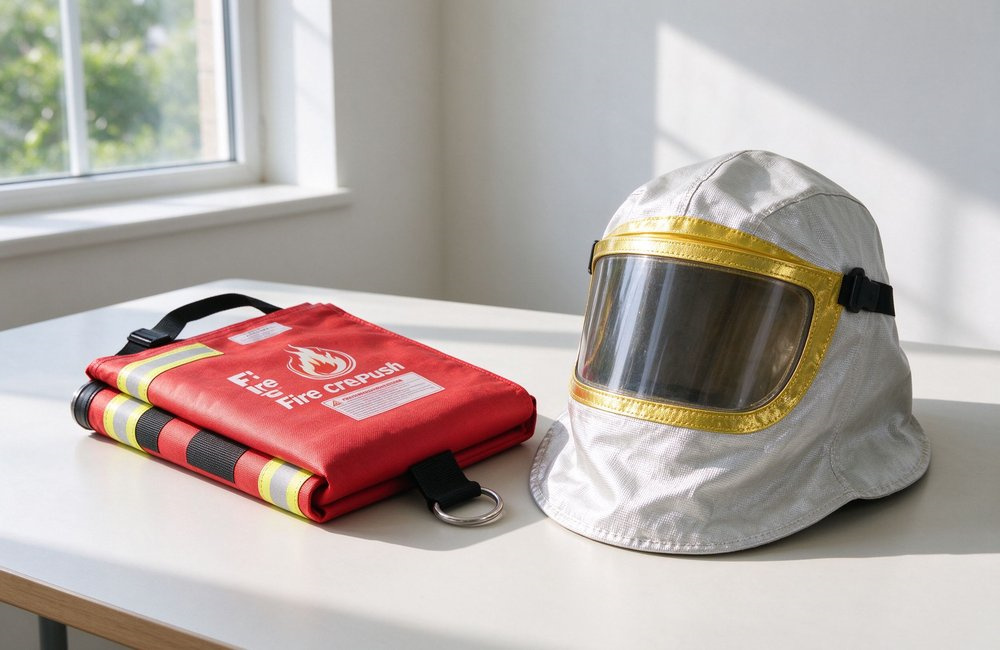
Fire blanket and smoke escape hood for home fire emergency kit on clean white background, compact residential fire escape safety gear set
Table of Contents
1. Why Home Fire Preparedness Matters
2. Common Home Fire Types
3. Home Fire Emergency Kit Essentials
4. Escape First: Routes, Crawls and Assembly Points
5. Shelter Operations with Fire Supplies
6. Suppressing Small Fires Safely
7. Drills and Smoke Alarm Training
8. Recovery After a Fire Event
9. Seasonal Audits and Replacement
10. Procurement Essentials and Budgets
11. Home Fire Statistics and Real-World Impact
12. Who Needs Home Fire Preparedness the Most?
13. Common Home Fire Mistakes to Avoid
14. How to Care for Your Home Fire Gear
15. FAQ
According to U.S. fire safety statistics, home fires cause most fire deaths in the United States, and roughly one in three reported home fire deaths happens in a home without a working smoke alarm.
For community programs, the evidence is clear: families need working alarms, clear escape routes and simple suppression tools before a fire starts.
A home fire emergency kit that covers escape, suppression and shelter keeps both residents and responders safer. Keep this guide next to your seasonal planning calendar, because the kit that protects a family also protects the volunteers who respond to them.
Put the same kit in staff rooms and vehicle trunks, so the people who run the response are equipped before they arrive on scene.
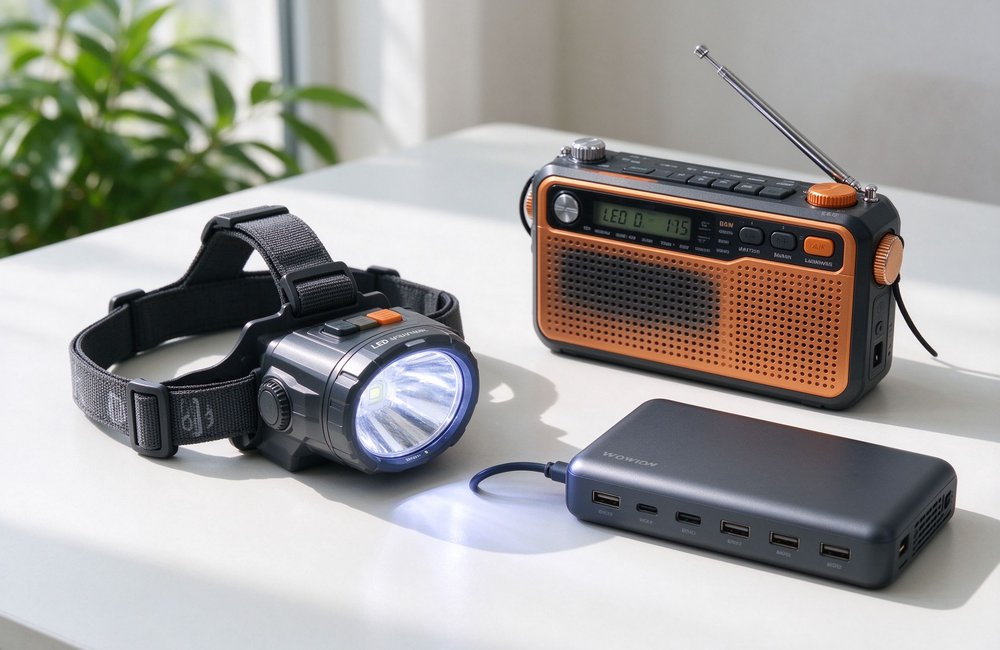
Emergency LED flashlight whistle and weather radio arranged on table for home fire escape kit, backup power and communication emergency supplies
For procurement teams and program managers, the priority order is simple: escape first, suppress second, shelter third. Every section of this guide covers a specific part of the kit, the specifications to verify, and quantities that fit shelters, schools and community distribution programs.
The sections move in the same order your staff will move during an event: escape, suppression, shelter, recovery, then restocking.
Write that order on the cover of your supply plan, because it is the filter for every purchase decision and the message every volunteer should be able to repeat.
A shelter that prints the order on the wall and repeats it in every training turns a principle into a habit.
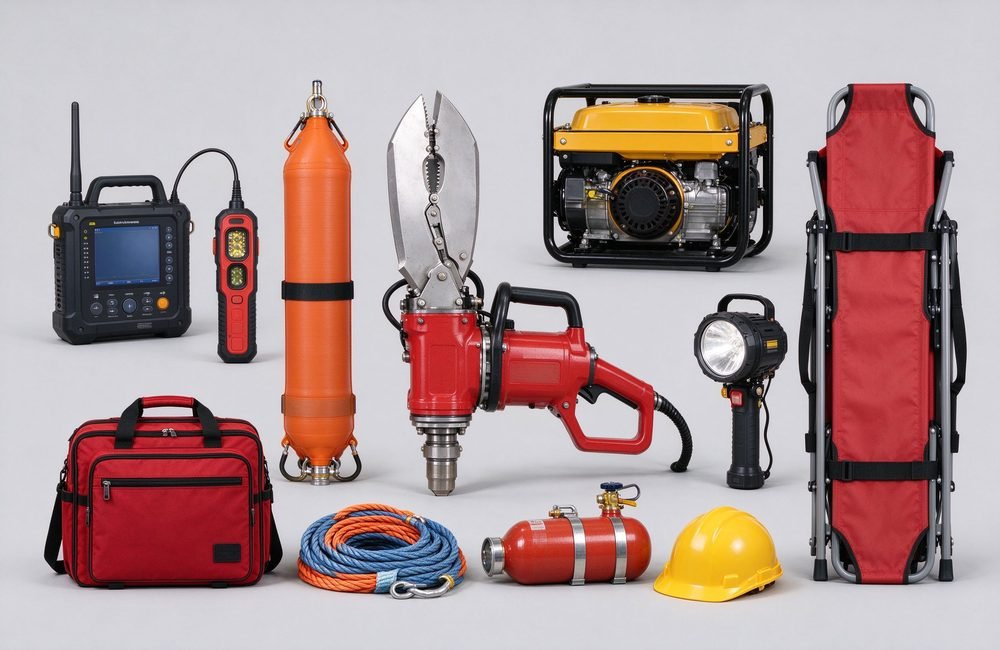
Complete home fire emergency kit flatlay with fire blanket smoke mask whistle flashlight and first aid rescue tools for structural fire rescue
In any home fire emergency kit, escape tools come first: smoke escape hoods, escape ladders and flashlight sets reduce the time families spend in smoke. Suppression tools come second, because a fire blanket or extinguisher can stop a small fire before it spreads.
Third comes shelter operations, because displaced families need fire-safe bedding, alarms and evacuation drills in every temporary space.
Shelter fire safety is an operational issue as much as a supply issue, so every section below ties the physical item to the drill, the audit and the staff role that keeps it working.
Low-income households, older adults, mobile homes and crowded shelters carry the highest fire risk. Older buildings, missing alarms and limited mobility all slow evacuation.
For community shelter programs, the business case is clear: stock fire blankets, smoke hoods and lighting before fire season, and rehearse escape routes with every family.
Programs that rehearse see faster, calmer evacuations and fewer smoke exposures, which is why every kit distribution in this guide is paired with a two-minute escape walk.

Relief volunteers distributing emergency supplies including fire safety items to families at community refugee camp for disaster humanitarian aid
One more fact drives every procurement decision below: the cheapest fire plan is written before the fire. When a fire breaks out, there is no time to compare quotes. This guide gives your team the checklists, specifications and budget ranges to buy with confidence in the off-season.
Use the checklists during the spring planning meeting, keep the specification sheets with the purchase orders, and share the budget ranges with your finance team so the funding request is ready before fire season arrives.
Most grant cycles close in the spring, so align the budget request with the audit results from the previous season to keep the numbers defensible.
The finance team also needs the certification files early, because grant reviewers ask for them before they ask for photos. A full kit audit also tells the finance team what to budget for the next season, turning the seasonal check into the annual planning input.
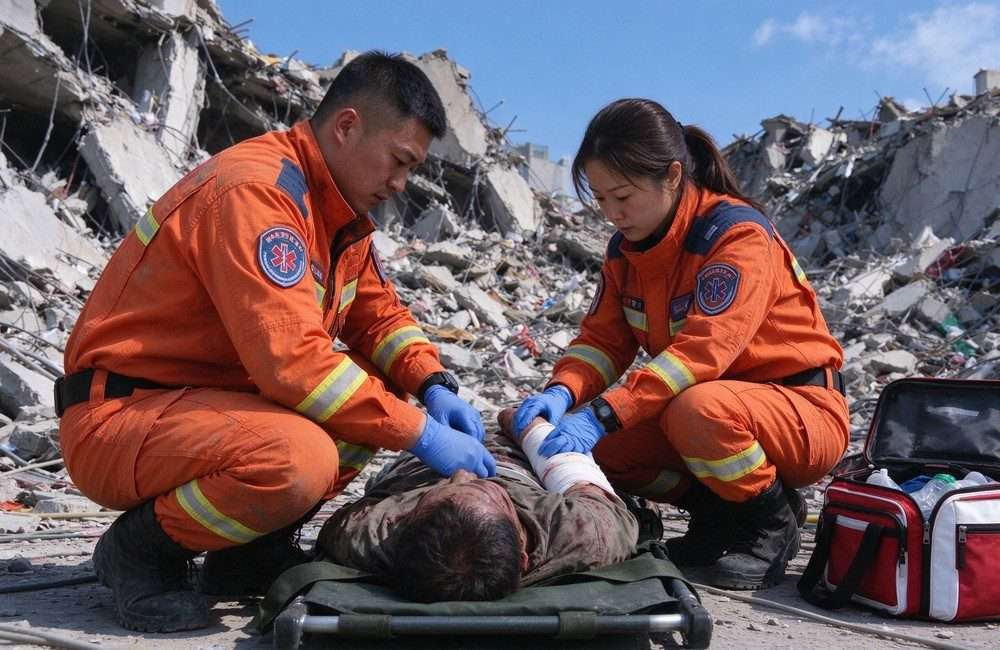
Trained first responder treating a burn injury at a community disaster site with sterile burn dressing while a colleague holds bulk fire safety supplies, realistic emergency medical care, bright daylight wide shot
Most people underestimate how fast a house fire becomes deadly. A fire can fill a room with smoke in under a minute, and a working smoke alarm cuts the risk of dying in a home fire by half.
For relief programs, a home fire emergency kit that reaches families before the fire is the difference between a drill and a tragedy.
Programs that pre-position kits see faster evacuations and fewer injuries, because families already know where the blanket, hood and flashlight live when the alarm sounds.
Residents who can recite their two routes and test their own alarm are less likely to freeze in the doorway, and that rehearsal is the cheapest fire insurance a program can buy.
Once flames reach a sofa or curtain, the room can become fully involved in under three minutes. Doors that feel warm mean the fire is on the other side, and the exit route must change.
This short window is why escape planning matters more than any single supply item, and why every kit should include a smoke escape hood and a flashlight kept by the bed, not in a cabinet.
The kit belongs where people sleep, because most fatal fires start at night, and the twenty seconds of searching can be the difference between reaching the door and being overtaken by smoke.
A practiced family moves in seconds even in darkness, while an unpracticed family spends the same seconds searching, which is why the escape drill is the real star of the kit.
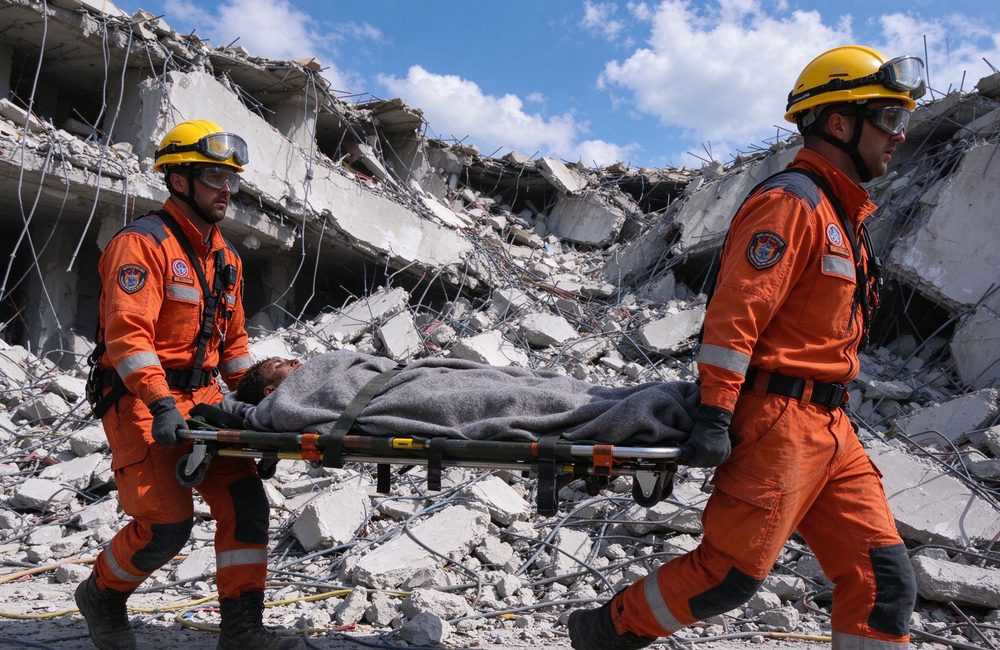
Trained rescuers carrying an injured person on a stretcher across rubble near a damaged building during a home fire response, coordinated emergency team in protective gear, realistic scene
Toxic smoke disorients and incapacitates, and most fire deaths are caused by smoke inhalation rather than burns. A smoke escape hood with a filter can buy a family the few extra minutes they need to reach fresh air.
Relief programs should treat smoke hoods as core kit items, not optional extras, because smoke, not heat, is what most people will face first.
In shelter settings the same rule applies: hoods stored beside each cot and a spare at the exit give residents the same protected seconds, and staff should demonstrate hood use during the first-day orientation so nobody fumbles with the packaging during a real emergency.
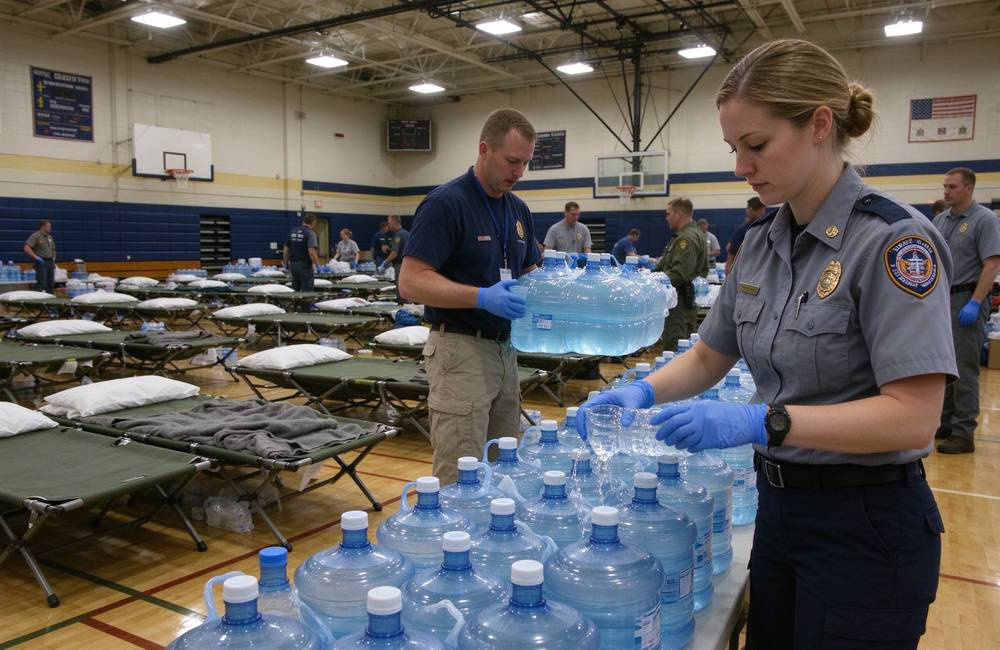
Community shelter set up in school gymnasium with cots blankets and supplies for displaced residents after local fire emergency
Not all home fires behave the same way. Understanding the four most common types helps procurement teams choose the right supply mix instead of guessing.
Cooking is the leading cause of home fires and fire injuries. Unattended oil and grease fires spread quickly, and water makes them worse.
Every home kit should include a fire blanket sized for the kitchen range, plus a kitchen extinguisher mounted within reach but away from the stove, because a burning pan is the most common first fire most families face.
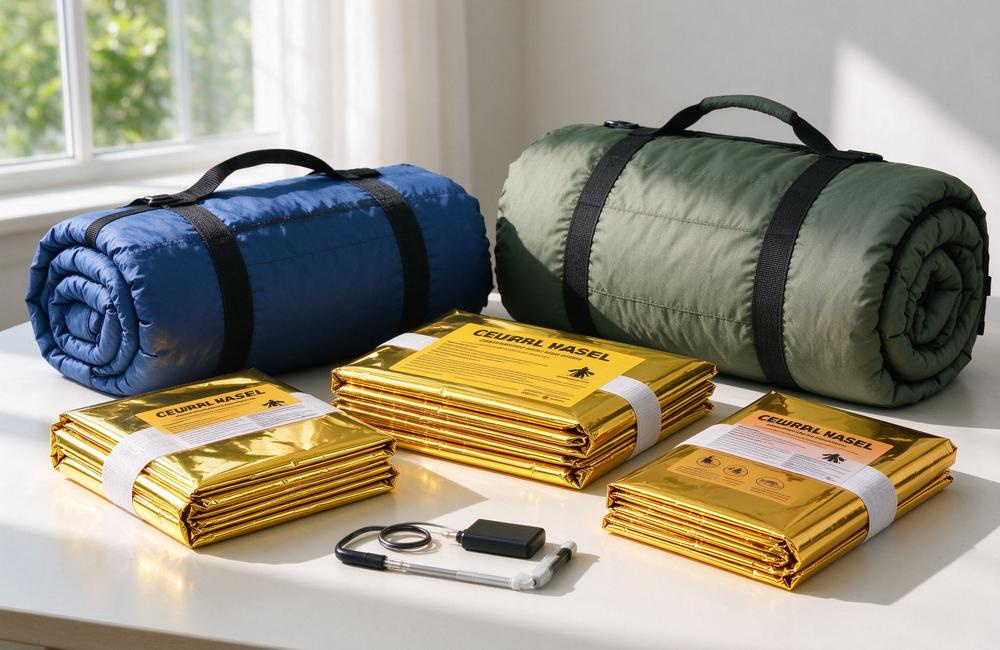
Stack of emergency blankets and sleeping bags for fire-displaced families on white background, portable thermal survival supplies for disaster evacuation
Faulty wiring, overloaded outlets and damaged cords cause many overnight fires. Electrical fires can start inside walls, where they are hard to see and suppress.
A home fire emergency kit for older buildings should include a Class C extinguisher rating and an electrical-safety checklist, because upgrading cords and outlets is a prevention step that belongs in every program plan.
Program staff should walk older buildings during the seasonal audit, checking for frayed cords, overloaded power strips and outlets near bedding, and flagging the findings to the property owner in writing.
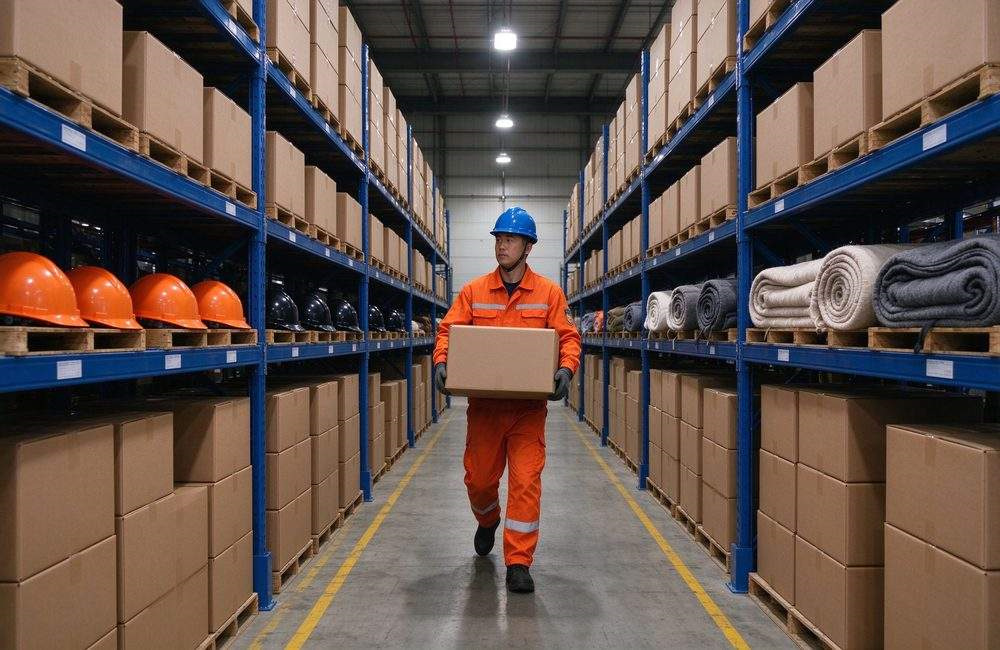
Emergency supply warehouse with organized shelves of fire blankets extinguishers and first aid kits, bright logistics scene with staff checking inventory
Space heaters, wood stoves and candles are leading winter fire risks. Anything flammable within three feet of a heater is a fire waiting to happen.
Programs serving cold-climate regions should bundle heating-safety reminders with their kit distribution, because the same household that needs a fire blanket may also be the one using a portable heater all winter.
Distribution events are the right moment to remind families about the three-foot rule, because prevention messages land best when a physical kit is already in hand. The distribution checklist should include the heater clearance question, because a reminder in hand beats a brochure on the counter.
Ask families to confirm the heater clearance during registration, and note it on the intake sheet so the program can track prevention follow-through. Ask families to confirm the heater clearance during registration, and note it on the intake sheet so the program can track prevention follow-through.
The same intake sheet feeds the grant report, showing the program connects supplies with behavior change.
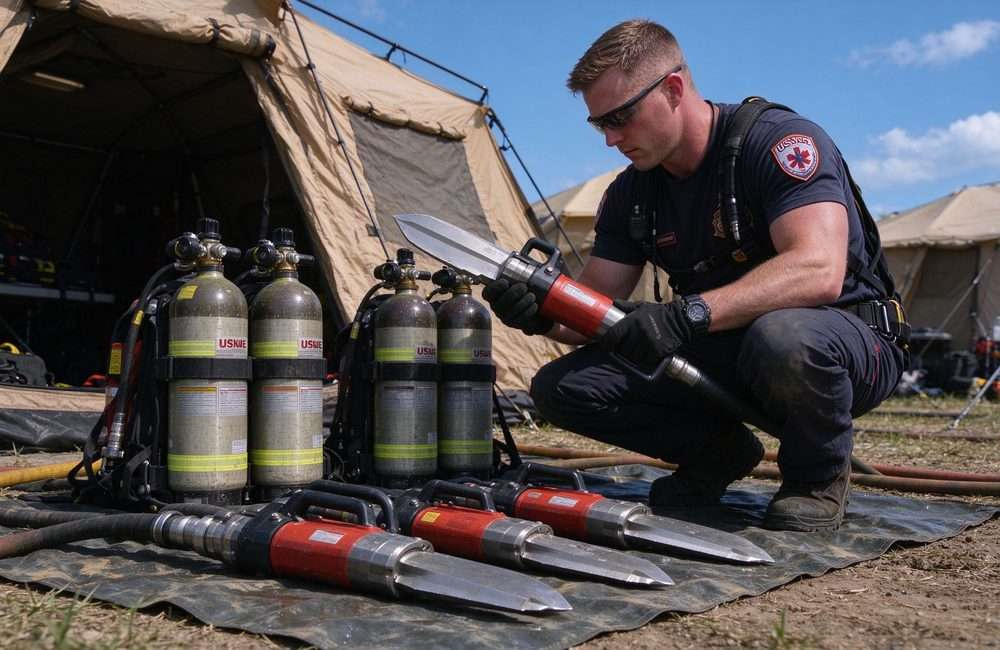
Safety officer inspecting electrical outlets and fire extinguisher pressure gauge in a community emergency tent camp, checking rescue hydraulic tools and air cylinder equipment
Smoking materials are a top cause of fatal home fires, and lighters within reach of children cause many small fires.
Bedroom fires from smoking often start while the smoker is asleep, making alarms and escape routes the only reliable protection. Community programs should prioritize smoke alarm installation and escape drills in these highest-risk households.
A simple home visit that installs an alarm, confirms two exit routes and demonstrates the low crawl can reduce a household fire risk more than any single supply item on the shelf.
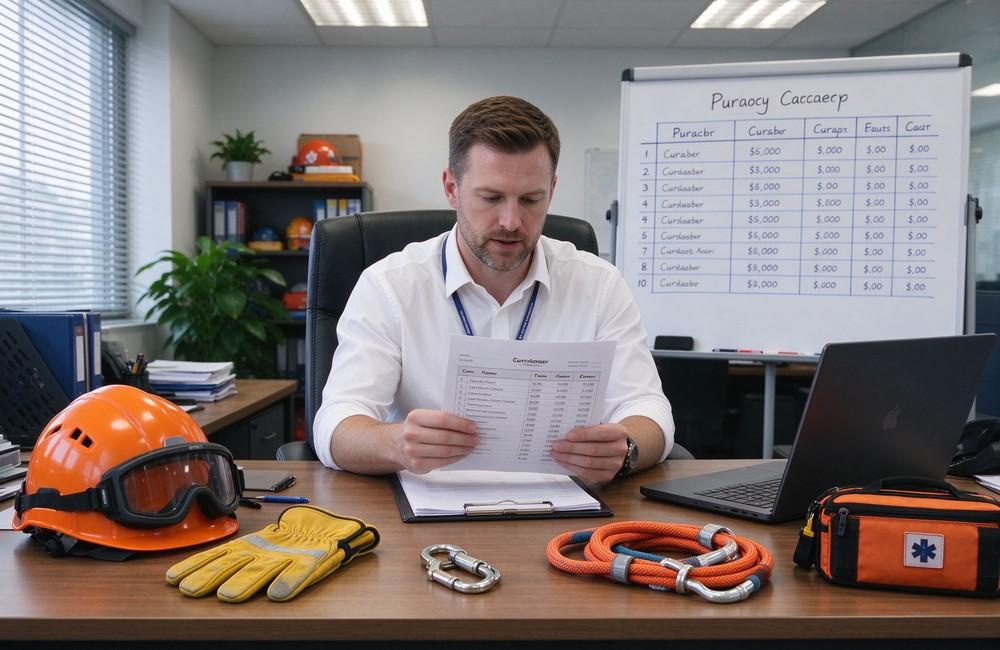
Procurement officer reviewing a home fire emergency kit equipment checklist at an office desk with rescue gear and safety PPE laid out for bulk sourcing
A well-stocked home fire emergency kit helps families escape, suppress small fires and recover after an event. These are the items every community program should stock in bulk.
A fire blanket is the fastest tool for smothering a small pan fire or wrapping a person whose clothing is on fire. Quality blankets are made of woven fiberglass, sized 1.0×1.2 meters or larger, and stored in a quick-pull case.
For bulk fire safety supplies, check the fiberglass weave, the case opening mechanism and the label instructions, and ask the supplier for a sample and written specification sheet.
In bulk orders, ask for a stitch and edge test on the sample, because the weave quality is what separates a blanket that smothers a fire from one that lets it through.
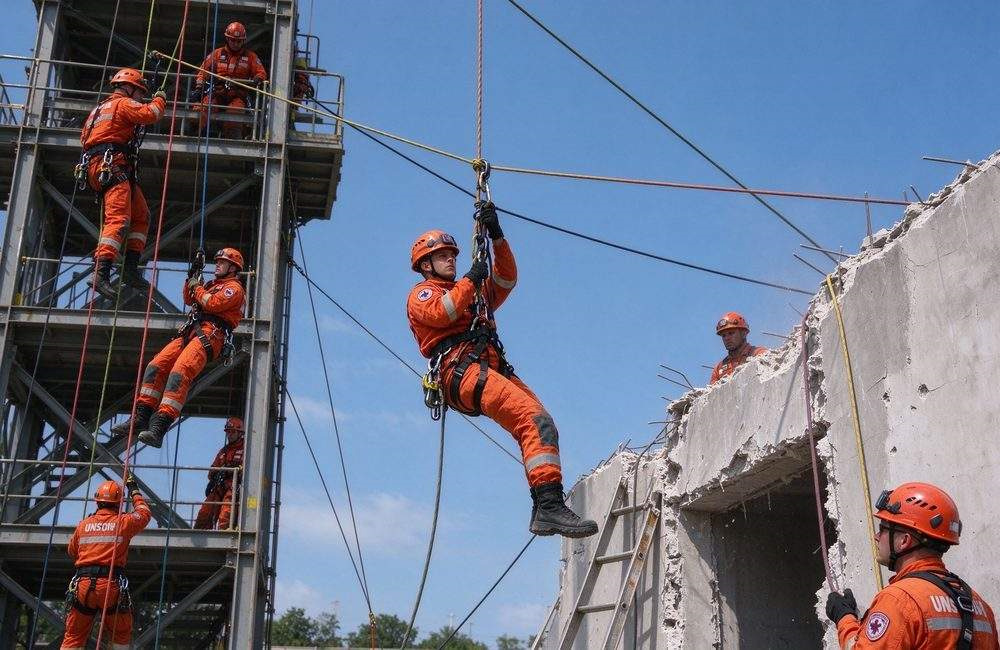
Rescue team training with rope ladder and high-angle equipment on tower exercise, bright daylight wide shot for vertical disaster rescue practice
A smoke escape hood covers the head and filters smoke for several minutes of escape time. Hoods are compact, fit children and adults, and belong beside every bed and in every shelter exit kit.
For bulk orders, verify the filter type, the storage life and the one-size-fit design, and keep spare hoods in the office for staff training.
Verify the hood fits children as well as adults, because most households include both, and check the storage pouch opens with one hand, since the other hand may be holding a child during an escape.
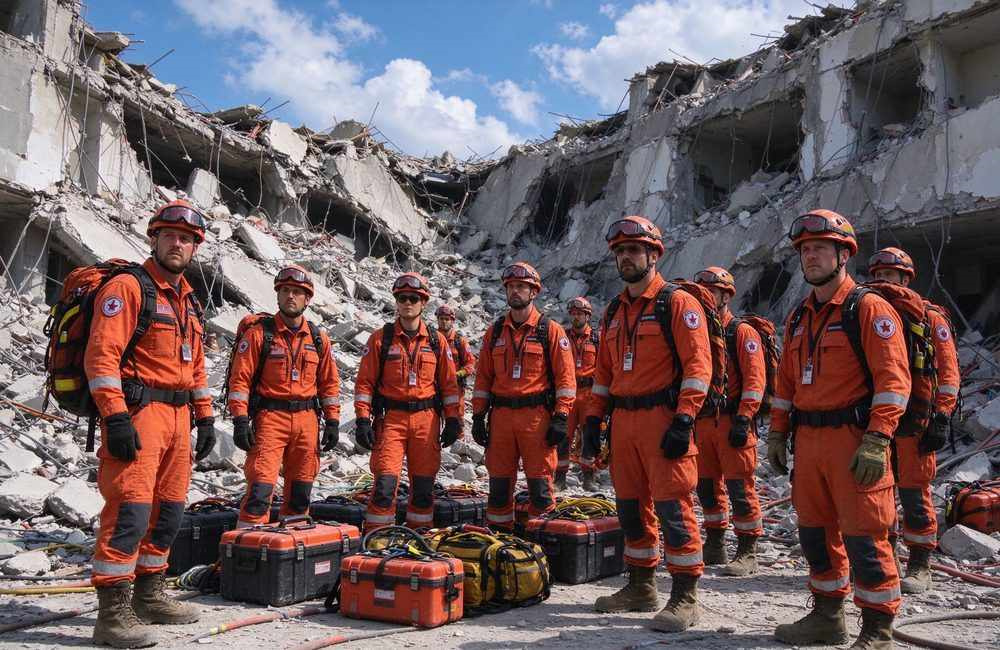
Emergency team receiving briefing beside staging area of fire response equipment, leader pointing to rescue plan before high-angle rope rescue operation
One multi-purpose extinguisher per home and one per shelter zone is the practical baseline.
Choose ABC-rated units, check the pressure gauge monthly, and place them near exits rather than near the stove, so nobody reaches across a fire to grab one. For shelter programs, plan one extinguisher per 50 residents plus spares in the office.
Mark each extinguisher location with a sign, and include the location list in the shelter handbook so new staff can find every unit during the first shift, not during a fire.
Place a small extinguisher in the kitchen and a multi-purpose unit at the main exit, and keep the office unit visible so staff can point to it in under three seconds.
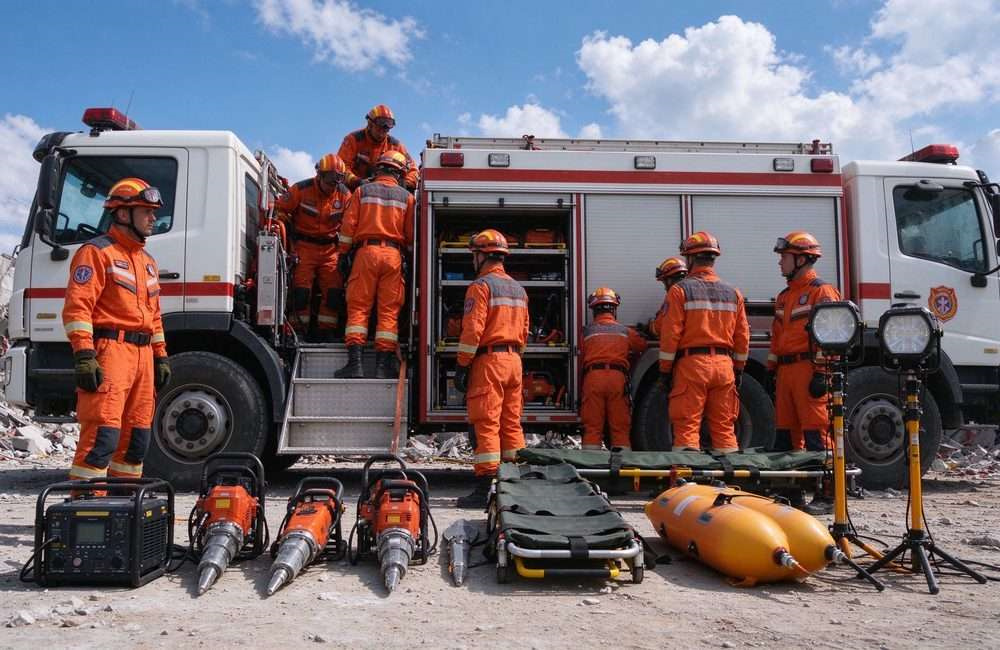
Bulk fire safety supplies staged in organized rows outside a community shelter building, labeled rescue gear cases ready for disaster search and rescue mission
Home fires often knock out power and fill rooms with smoke. A rechargeable flashlight beside each bed and a whistle at each exit help families move through darkness and signal for help.
LED lighting with a long battery life and a simple push-button switch is more reliable in panic situations than complex multi-mode models.
A simple press-and-hold button beats a multi-mode interface in smoke, because muscle memory works when conscious thought fails, and spare batteries should live beside the light, not in a drawer.
After a fire, injuries come from burns, cuts and smoke exposure. A fire-specific first aid kit should include burn dressings, sterile gauze, bandages, saline and gloves in a waterproof red-and-black case.
Large programs should place a dedicated first aid station in every shelter zone, because emergency services may be delayed after a widespread fire event.
Include a burn treatment card in each kit so volunteers know the basic do-not-touch-and-cool rule, and keep saline and burn dressings separate from general gauze to avoid cross-contamination.
The table below gives a practical bulk stocking plan per 100 people for shelters and distribution programs. Quantities are planning references for serving 100 residents; adjust for building size, population and fire risk level.
|
Item |
Use |
Quantity per 100 People |
Specification to Verify |
|
Fire blankets (1.0×1.2 m) |
Smother pan fires and wrap people |
40-60 pieces |
Woven fiberglass / quick-pull case |
|
Smoke escape hoods |
Filter smoke during escape |
40-60 pieces |
Filter type / 5-year storage life |
|
ABC fire extinguishers |
Small fire suppression |
2-4 units |
ABC rating / gauge check monthly |
|
Rechargeable escape flashlights |
Light escape routes in smoke |
50 pieces |
LED / push-button switch |
|
Fire first aid kits |
Burn and cut treatment |
5-10 kits |
Burn dressings / saline |
|
Whistles and glow markers |
Signal and mark assembly points |
100 pieces |
High-visibility |
Stock these core modules per 100 residents, then adjust quantities to your actual occupancy; keep a spare module shelf so restocks never pause a scheduled drill. Review the list each quarter and replace expired hoods before fire season begins.
These quantities provide a working baseline for the first three days of a 100-person shelter. Programs serving schools or large community centers can scale up and add sleeping bags, spare smoke hoods and additional extinguishers.
Recalculate the plan every spring so the quantities match current headcounts and building layouts, and adjust after every drill.
Scaling for a 500-person center means roughly tripling the 100-person figures and adding a second staging shelf per floor, because the physical layout of the building matters as much as the headcount.
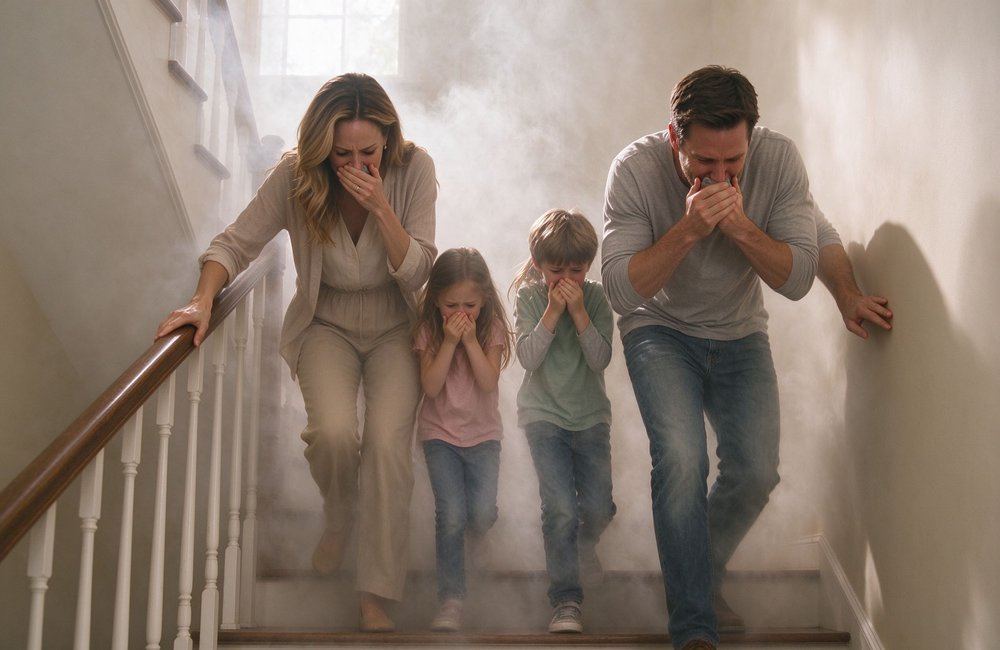
Family of four crawling low with hands covering mouths down smoke-filled staircase during evacuation from residential house fire
Escape planning is the heart of fire preparedness. When an alarm sounds, families have seconds, not minutes, so the home fire emergency kit must support fast, practiced exits. This is the section that separates prepared programs from unprepared ones.
Every bedroom needs a primary route through the door and a backup route through a window. Walk the routes during the day and again in the dark, and confirm windows open from the inside and screens release quickly.
Post a simple two-route plan in each bedroom, and make sure children can recite it without prompting, because panic erases memory under stress.
For families with children, rehearse the route while blindfolded after dark, so the practice sticks without sight cues, and teach children to shout and knock loudly during the drill so adults know where they are.
Smoke rises, so the cleanest air is near the floor. Families should practice low crawling to the exit, feeling doors with the back of the hand before opening them, and never re-entering a burning building for any reason.
Every household and shelter needs a named outdoor assembly point, such as the mailbox or the corner lamppost, so headcounts happen quickly and nobody runs back inside.
Assign one volunteer per group of ten residents to own the headcount, and use glow sticks or whistles to mark the assembly point at night, because a dark parking lot makes quick counting impossible.
Rehearse the night count once per season with the lights off, so volunteers know exactly where the glow markers and the checklist live.
Multi-story homes need an escape ladder stored near the bedroom window. A portable rope or chain ladder rated for the building height gives upper-floor families a second route when the stairs are blocked.
For shelters with dormitories above ground level, stock one ladder per upper-floor zone and train staff on deployment, because ladders fail when nobody has practiced opening them.
Attach the ladder storage hook beside the window frame, check the rungs during the seasonal audit, and teach the family to throw the ladder out the window before climbing, so the hooks seat properly.
During an evacuation, never open a door that feels warm, never hide from firefighters, and never re-enter until officials confirm it is safe. Shelters should post clear exit signs, keep fire doors closed, and repeat the assembly point message at every drill so residents move without hesitation.
Volunteers should guide families away from smoke-filled corridors and count heads at the assembly point within two minutes.
Repeat the assembly point message in every announcement, post it on the exit signs, and include it in the family orientation card so new arrivals learn the route before they need it.
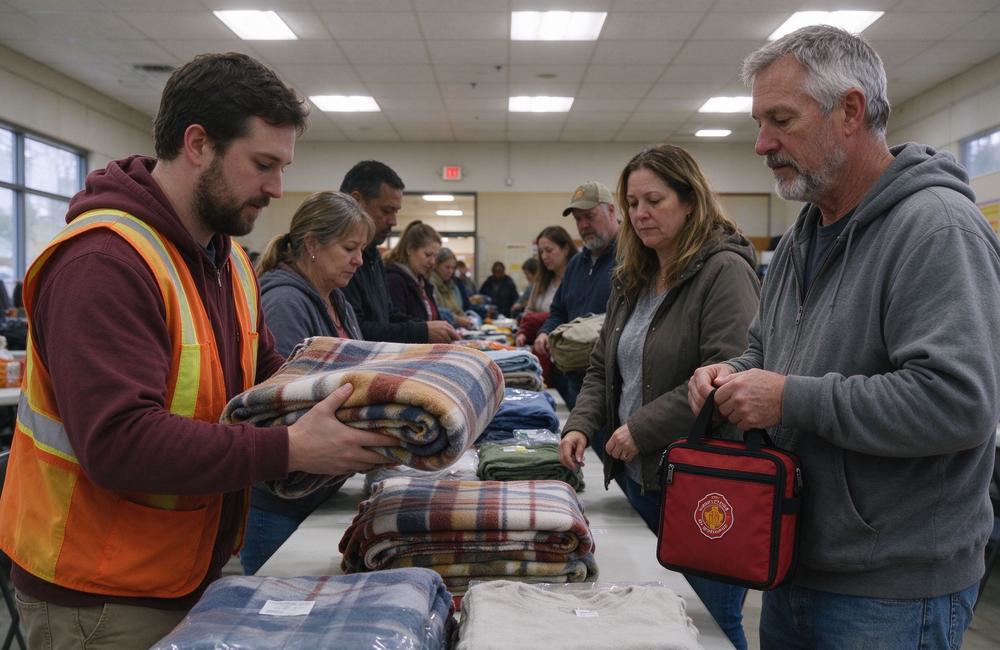
Volunteers distributing blankets and emergency kits to residents at shelter distribution table, providing relief supplies for fire-displaced families
home fire emergency kitWhen displaced families arrive, the shelter becomes a small city. Bedding, alarms and suppression tools determine whether residents stay safe through the night.
Each shelter zone needs fire-resistant bedding, clear aisles and no open flames. Flame-retardant blankets and sleeping bags reduce ignition risk in crowded sleeping areas, and keeping aisles clear lets residents reach exits in seconds.
When cots and flame-retardant blankets are pre-stocked, schools and gymnasiums can become shelters within hours, so coordinate the conversion plan, keys and storage space before fire season.
Assign a smoke escape hood and a flashlight to every cot, and keep spares at the exit. In a shelter fire, residents wake in a smoke-filled room with seconds to move; a hood on each cot cuts that risk sharply.
Label each hood with the cot number so families grab their own on the way out, and replace any hood that has passed its storage life.
Place one extinguisher per 50 residents near exits, keep fire doors closed at night, and mark every exit with a glow sign.
Staff should know which extinguisher serves which zone and who carries the evacuation checklist. Keep the extinguisher pressure gauges in the green zone and log the monthly check on the shelter board.
home fire emergency kitSuppression tools work only when used correctly and only on small, contained fires. The goal is to buy escape time, not to fight a growing fire. This section covers the two tools every kit should include and the simple rules for using them.
Use the PASS sequence: Pull the pin, Aim at the base of the fire, Squeeze the handle, Sweep side to side. Stand six to eight feet away and keep a clear exit behind you.
If the fire does not shrink in seconds, leave immediately, close the door behind you and call the fire service.
Never fight a fire that is spreading, blocking your exit or larger than a waste basket.
For a pan fire, drape the blanket over the flames and leave it in place until cool. For a person whose clothing is on fire, wrap the blanket around them, drop to the floor and roll. Never lift the blanket while it is still hot.
Fire blankets are single-use for most incidents, so replace any blanket that has been deployed, and keep the replacement in the kit before the next drill.
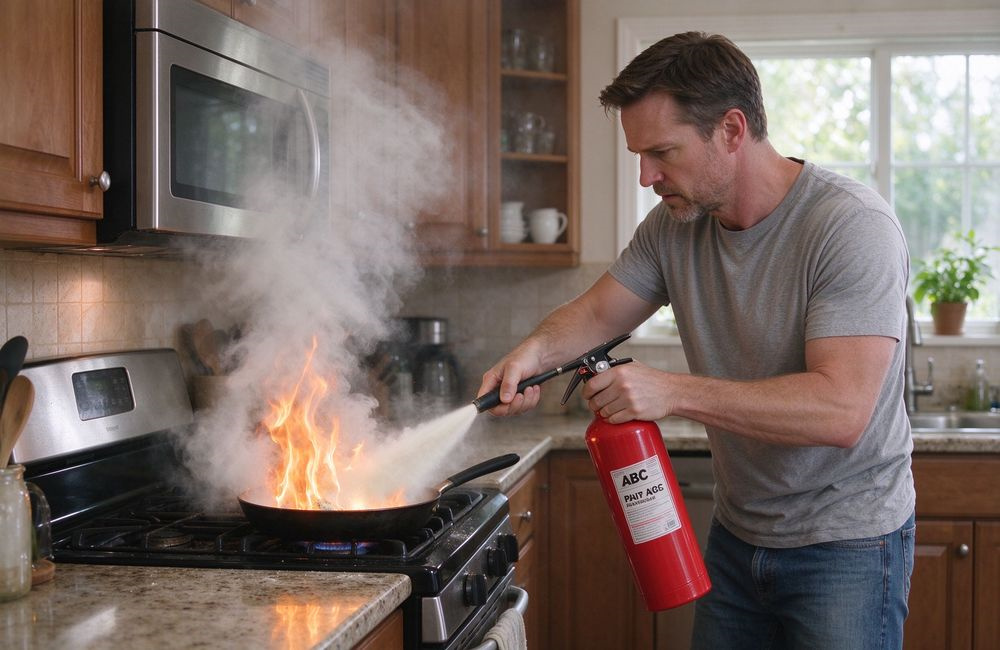
Man using red dry chemical fire extinguisher on stovetop grease fire in home kitchen, white powder suppressing cooking flame safely
home fire emergency kitSupplies without practice fail. The most effective fire programs pair every kit distribution with a drill and a smoke alarm test, because people act on what they have rehearsed.
Run a full evacuation drill every quarter, once at night and once with simulated smoke. Time the drill from alarm to headcount, and record the result so improvement is measurable.
Shelters should run a drill within the first hour after residents arrive, because families who know the route move faster when it matters.
Record the drill time in seconds and post the improvement on the shelter board, because visible progress keeps volunteers engaged through the off-season.
Test smoke alarms monthly and replace batteries twice a year, or switch to sealed 10-year alarms where possible.
A working alarm is the single most effective fire-safety device, and programs should prioritize alarm installation in homes that lack them. Log every test on a simple sheet so grant reports show the program is active, not just stocked.
Keep the log in the same binder as the inventory register, and review both at the quarterly staff meeting so the audit never becomes a one-person ritual. Use the same log for shelter drills, and keep both logs in one binder for inspectors and donors.
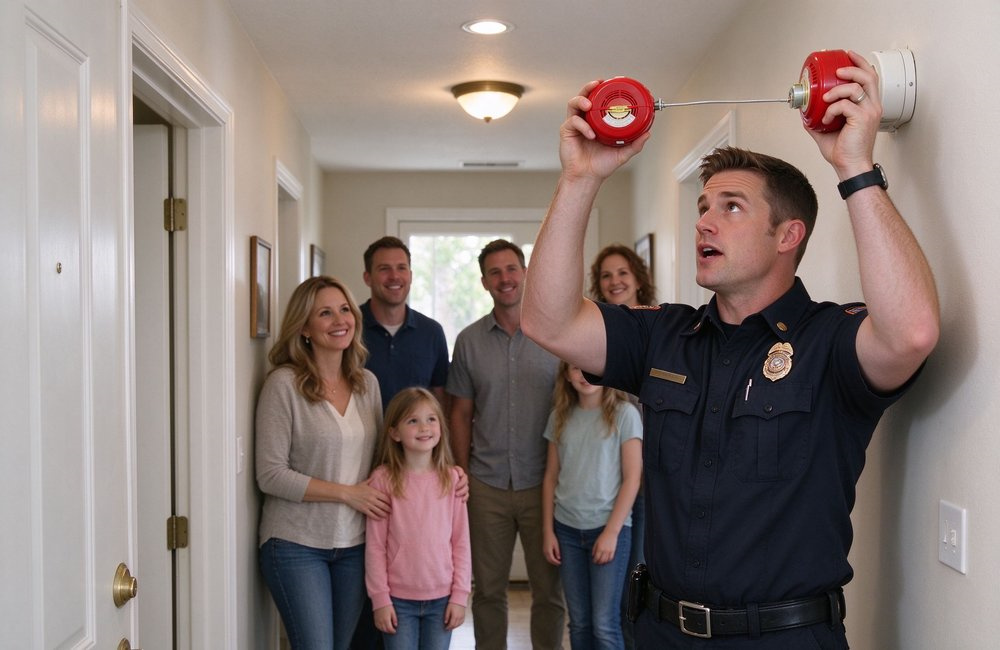
Firefighter demonstrating smoke alarm placement to family group in home corridor, holding alarm and teaching residential fire early warning safety knowledge
After the flames are out, the danger continues. Smoke damage, structural instability and contaminated water threaten survivors and responders alike. A recovery plan belongs in every home fire emergency kit.
Check all people first. Clean cuts and abrasions with antiseptic and cover them with sterile dressings from the kit. Anyone with chest pain, breathing difficulty or burn injuries needs immediate medical care.
Do not re-enter the building until officials confirm it is safe, and use the kit's burn dressings while waiting for emergency services.
Photograph the damage before moving anything, for insurance and grant claims. Keep residents away from smoke-damaged rooms and let the building dry before any re-entry.
Record every item used from the kit so the program can restock immediately, because the next family in need may arrive the same day.
home fire emergency kitFire supplies expire, gauges drift and batteries die. A seasonal audit keeps the kit honest, and an honest kit is what saves lives when the alarm sounds.
Before fire season and again mid-season, test every flashlight, check every extinguisher gauge, verify smoke hood storage life and confirm blanket cases open.
Replace anything that fails and record the check in the inventory register. The register doubles as evidence for grants and donor reports, so a thirty-minute check saves hours of paperwork later.
The register also becomes the evidence file for grants and donor reports, and it tells the next audit owner exactly what to replace, so the seasonal cycle stays unbroken. It also shows insurers that the program maintains working alarms and gauges, which strengthens claims after an event.
The audit owner and the backup should swap roles each season, so two people know the shelf layout and neither burns out.
Any deployed fire blanket, used extinguisher or expired smoke hood must be replaced before the next drill. Keep a replacement shelf stocked in the office so staff can swap items the same day.
Assign one person per shelter zone as the audit owner, with a backup, because volunteer turnover is the most common reason audits get skipped.
Put the audit date on the program calendar six months out, and pair the audit with a drill so the two tasks share one visit and neither gets postponed.
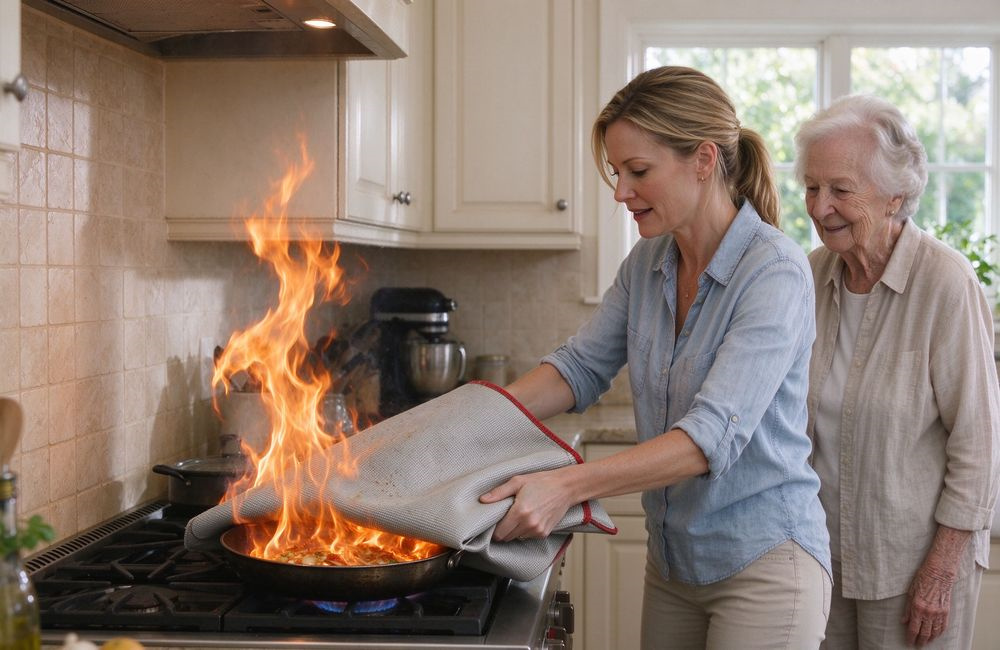
Woman covering burning pan with fire blanket in home kitchen while older woman watches, flame being smothered safely by fire suppression blanket
home fire emergency kitThe most common gaps in community programs repeat themselves. Avoid the pitfalls below and your agency leads most peers; the budget table gives planning ranges for three common scenarios.
First, buy escape tools before suppression tools, because escape is the priority. Second, refuse cheap fire blankets that tear under the weave test; demand woven fiberglass with a specification sheet.
Third, never skip smoke escape hoods. Fourth, insist on ABC-rated extinguishers with visible gauges. Fifth, test every item at the seasonal audit, not at the fire.
Sixth, run a drill with every kit distribution. Seventh, never lock the kit in a cabinet; visible, labeled supplies are supplies that get used.
Label every shelf with the item name and quantity, and keep a photo of the fully stocked shelf in the handbook so any staff member can spot missing items in seconds.
Buy before fire season, not during it. When a fire makes the news, inventory sells out and transport times double.
Compare specs, not just unit prices: fiberglass weave, filter type and extinguisher ratings must match the specification sheet. Ask for written spec sheets, keep samples, and verify certification files before signing the purchase order.
Certified brand supplies also satisfy donor and grant requirements. Custom-branded kits, including blanket cases, hood packaging and extinguisher signage, are available with logo placement and minimum quantities confirmed per order.
The table below gives planning ranges for fire supply stockpiles by shelter population. Costs are estimated at bulk wholesale pricing; retail typically runs two to three times higher.
|
Program Size |
Core Kit Cost |
Contents |
Typical Configuration |
|
Small shelter (50 people) |
$1,400-2,400 |
30 blankets, 30 hoods, 2 extinguishers, 25 flashlights, 3 first aid kits |
Escape + suppression |
|
Medium shelter (200 people) |
$5,000-8,000 |
100 blankets, 100 hoods, 4 extinguishers, 100 flashlights, 10 first aid kits |
Full shelter baseline |
|
Large community center (500+) |
$12,000-18,000 |
250 blankets, 250 hoods, 10 extinguishers, 250 flashlights, 25 first aid kits, ladders |
Complete program |
Budget ranges exclude shipping and staff training; add a one-year refill line for first aid supplies and hood filters so the program stays funded year after year. Request a written quote with tiered volume discounts before the grant cycle closes.
These ranges let programs match budgets to real needs: small shelters start with escape and suppression tools, while large centers add the full sleeping, first aid and ladder capacity needed for long-term recovery.
For a 1,000-person program, double the large-center figures and add a second distribution point with its own inventory register.
Kit tier configurations help buyers match investment to need. The table below shows three common tiers from family kits to full shelter programs.
|
Tier |
Contents |
Best For |
Quantity |
|
Basic |
Flashlight, whistle, mini first aid kit |
Individual and family kits |
1 per household |
|
Standard |
Adds fire blanket, smoke hood, extinguisher |
Households and small shelters |
1 per household + shelter stock |
|
Enhanced |
Adds escape ladder, large first aid kit, glow markers |
Shelter zones and community programs |
Per shelter zone |
Match the tier to the room, not the budget; every classroom receives the evacuation kit while shelters stage the enhanced kit at the main assembly point. Label each container so inspectors can verify contents in under two minutes.
Tier contents are planning configurations; final contents are confirmed per order. Most programs combine the standard tier for households with the enhanced tier for shelter zones, which keeps cost predictable and coverage complete.
Build your fire program on official guidance rather than guesswork. For procurement and program teams, the following sources are the standard references for fire data, family preparedness and response safety, and each one publishes free checklists that can be printed for staff training.
Review them once during the spring planning meeting and again after each fire season ends, so the program handbook stays current with the latest guidance.
Bookmark the three pages on every staff device and keep printed checklists in the shelter handbook, because guidance changes and the handbook must change with it.
Build your fire program on trusted public guidance rather than guesswork. The NWS general emergency preparedness page, the American Red Cross home fire safety guidance and the Red Cross survival kit supplies checklist are free references staff can print for training.
For guidance on other threats, see our hurricane emergency kit and earthquake emergency kit articles.
Home fire risk is concentrated and predictable, which makes bulk fire preparedness supplies a sound investment for community programs. The points below frame the scale that shelters and relief teams plan for.
Certain organizations face the highest fire risk and benefit most from a standardized home fire emergency kit program. Each buyer group below can order in volume with OEM branding.
Schools hold many children in one building, so a fast, practiced escape matters. Schools stock smoke hoods, escape flashlights and fire blankets for every classroom, and buy fire safety supplies in bulk across multiple campuses.
Shelters sleep displaced families at high density, where a small fire spreads quickly. Operators order fire escape and shelter supplies per 50 residents and reuse the same home fire emergency kit across seasonal openings.
Workshops, warehouses and vehicle fleets face electrical and heating fire risks. Fleet managers buy an emergency evacuation kit bundle for each work site and keep spares in company vehicles.
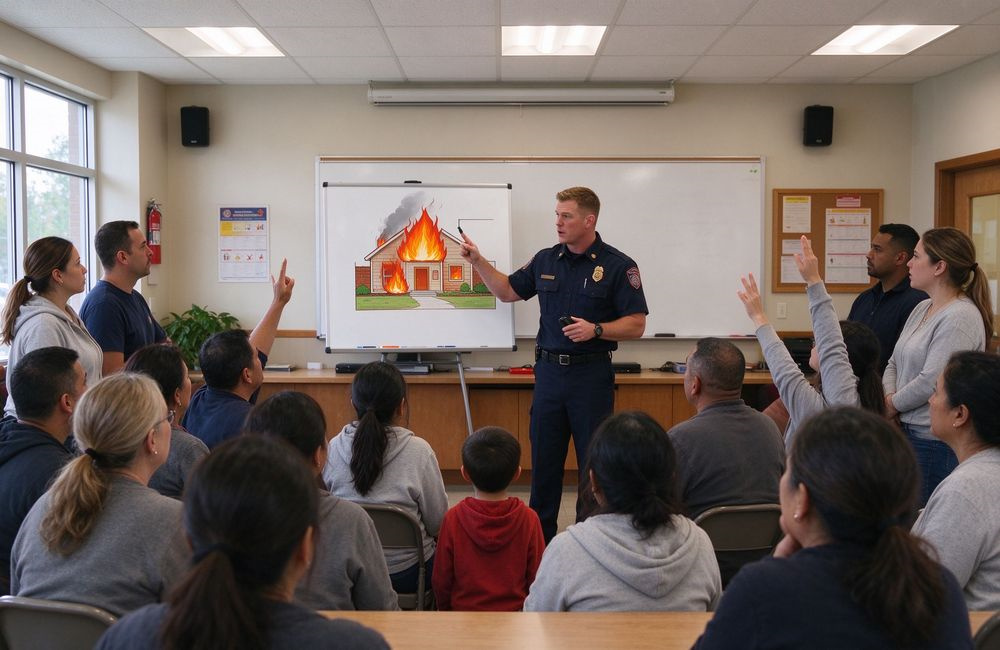
Firefighter presenting home fire safety lesson to community group with whiteboard illustration, teaching residential fire prevention and emergency escape knowledge
A few recurring mistakes undercut even well-funded programs. Confirm the points below during your next bulk fire preparedness supplies review.
Escape saves the most lives. Order smoke hoods, ladders and flashlights first, then add extinguishers and fire blankets, so the priority order matches how people survive a fire.
A locked cabinet kit never gets used. Keep home fire escape kit supplies visible and labeled by the bed and the exit, and rehearse where each item lives during the drill.
Supplies without practice fail. Pair every delivery of fire preparedness gear with a short drill, and record the evacuation time so progress stays measurable.
Hood filters age and extinguisher gauges drift. Run a seasonal audit, replace expired smoke hoods and deployed blankets, and log the check for donor reports.
Simple care keeps a home fire emergency kit ready for years. Follow this short maintenance checklist between seasonal audits.
For orders of 200 kits or more, we support custom OEM branding on blanket cases, hood packaging and extinguisher signage. Minimum quantities and lead times are confirmed per contract.
A ready emergency evacuation kit leaves the shelf only in a drill or a disaster, so check it at every seasonal audit.
Order bulk fire preparedness supplies together with smoke alarms, so each delivery pairs equipment with a behavior change.
A compact home fire escape kit belongs by every bedroom door, while the shelter keeps the bulk fire preparedness supplies in a labeled staging shelf.
Schools buying bulk fire preparedness supplies should bundle a home fire escape kit with each classroom drill.
Keep a labeled home fire escape kit by each exit, so residents grab it on the way out.
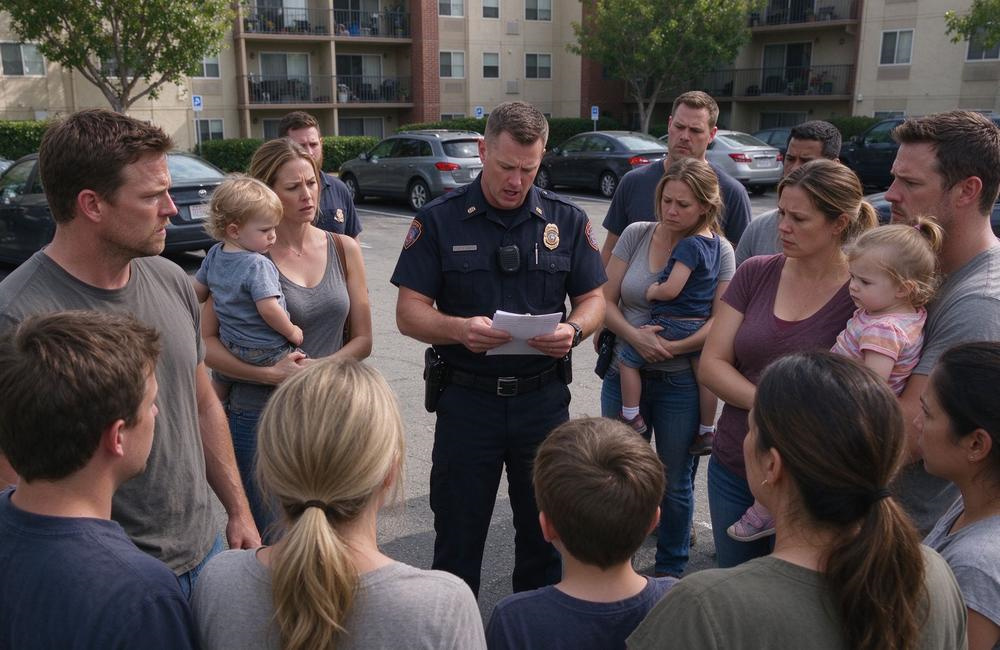
Residents gathered at outdoor evacuation assembly point after building alarm, official checking list and briefing residents on fire emergency status
Q: How often should I replace smoke detector batteries?
A: home fire emergency kit Escape tools come before suppression tools: smoke escape hoods, escape ladders and flashlights help families reach fresh air in the first seconds, and suppression tools only handle small contained fires. The rule keeps kits focused on what saves the most lives.
Q: What should I include in a home escape plan?
A: Stock 40 to 60 fire blankets per 100 residents, sized 1.0×1.2 meters or larger. Keep some at the kitchen, some at exits, and spares at the office, because a deployed blanket is single-use and must be replaced before the next drill.
Q: How often should we practice fire drills?
A: Yes, for the escape window. A smoke hood filters toxic smoke for several minutes, which is enough to move from a bedroom to fresh air. Check the filter type and storage life at every seasonal audit, and keep training spares in the office so staff know how to put one on.
Q: Where should fire extinguishers be placed?
A: Choose ABC-rated multi-purpose extinguishers, one per 50 residents, placed near exits. ABC units handle ordinary combustibles, flammable liquids and electrical fires, which covers the three most common shelter scenarios. Check the pressure gauge monthly.
Q: Should I close doors or open them during a fire?
A: Wrap the blanket around the person whose clothing is on fire, drop them to the floor and roll them to smother the flames. Never lift the blanket while it is hot. For a pan fire, drape the blanket over the flames and leave it until cool.
Q: How do I protect my home from electrical fires?
A: One route can be blocked by smoke, heat or fire. A second route through a window gives families a backup when the door is not an option. Walk both routes in the dark, confirm windows open from inside, and practice with every household member.
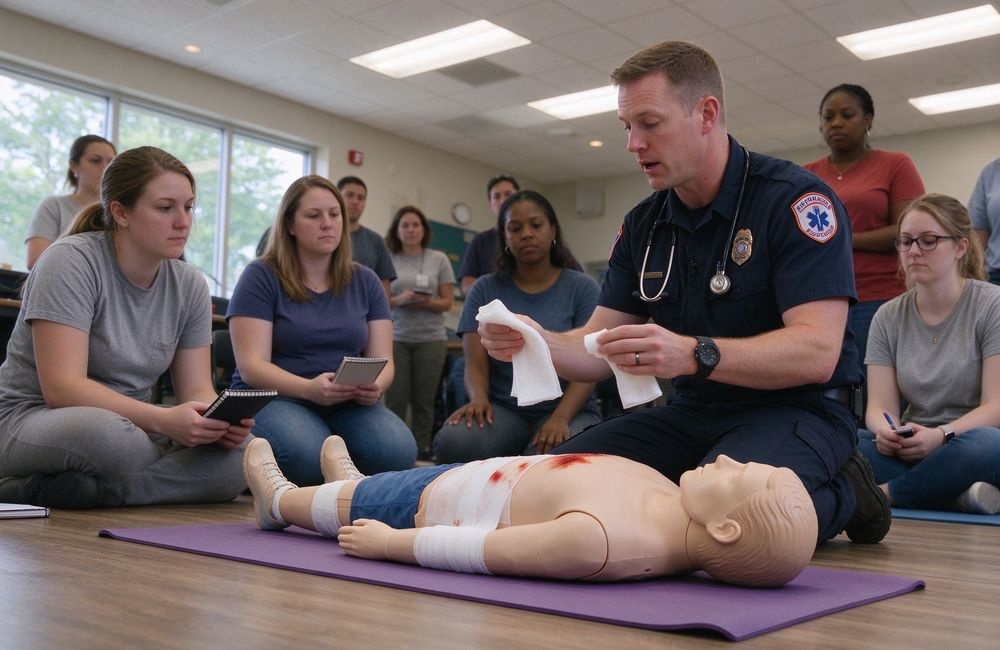
First aid instructor demonstrating burn dressing on training mannequin to volunteers in community emergency medical training class
Q: What is the best way to escape a burning building?
A: Run a full evacuation drill quarterly, and run one within the first hour after residents arrive at a shelter. Time the drill from alarm to headcount and record the result, so improvement is measurable and grant reports show active programming.
Q: Should I use an elevator during a fire?
A: Press the test button monthly and replace batteries twice a year, or install sealed 10-year alarms where possible. Test alarms in every shelter zone during the seasonal audit, and log the test date on a simple sheet.
Qualified relief organizations can request samples. Tell us about your program, and we will confirm current sample terms and lead time before any bulk order.
Minimum quantities vary by product and are confirmed per order. Shelters, schools and government programs receive tiered pricing; contact us with your program size for a quote.
Yes. We ship to North America, Europe, Australia and beyond. Lead times for bulk orders are confirmed by destination, typically 2 to 4 weeks depending on location.
Home fire emergency kits support custom branding, including blanket cases, hood packaging and extinguisher signage. Logo placement and minimum quantities are confirmed per order.
YRF Textile · Fire and home safety supplies for relief organizations
Contact: info@yrftextile.com · Shipping to North America, Europe, Australia and beyond
 |

|
Liens amicaux :
droits dauteur © Custom Disaster - Relief Bedding: Tents, Sleeping Bags, Blankets Tous les droits sont réservés
léquipe professionnelle au service !