Catégories
dernier blog
By YRF Emergency Relief Supplies · Updated August 2026 · 20 years in QC and supply
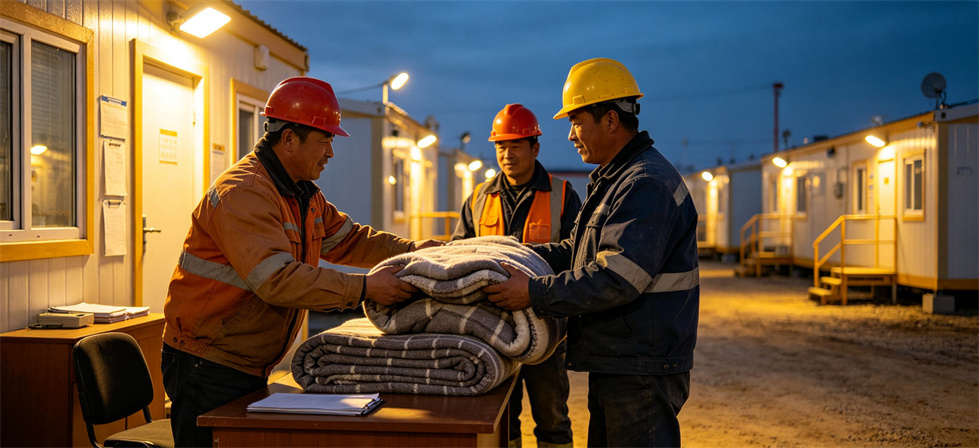
After twenty years as a shelter blanket supplier and shelter blanket manufacturer — first in QC and production, now supplying bulk shelter blankets to government emergency-management agencies, UN bodies, NGOs, and camp-management organisations — I've learned that shelter blanket procurement goes wrong not because the blankets are bad, but because the plan behind them was thin. A buyer orders 10,000 blankets for a 5,000-person shelter, ships them folded in cartons, and arrives to find the distribution team can't tell which bales go to which zone, the labels are in English but the camp speaks French and Arabic, and the night-time temperature is -10°C but the spec was written for "general relief." In this guide I'll walk through how to plan a shelter blanket order from the operating route up — not from a product name down — so the blankets that arrive are the blankets that actually get issued.
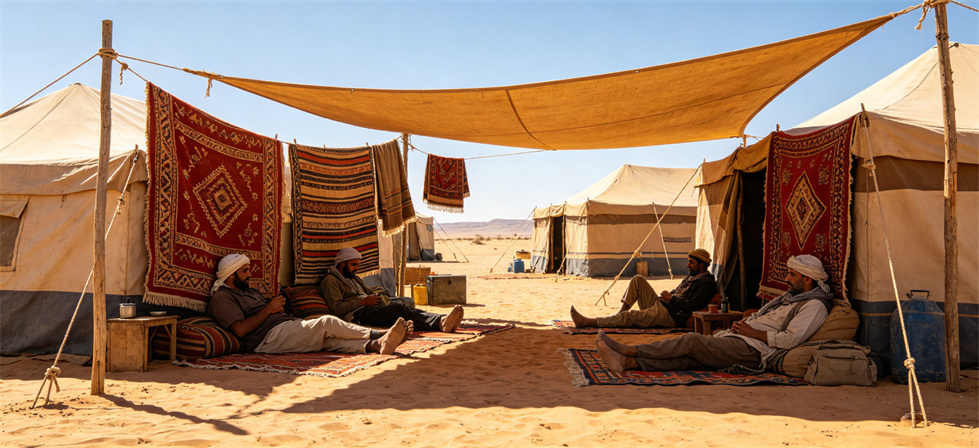
Beyond the core planning and receiving workflow, successful shelter blanket procurement also requires deep knowledge of material specifications, sizing standards, packing logistics, quality control processes, and customization options. The following sections provide detailed reference information to help you write more accurate specifications, evaluate supplier quotes more effectively, and avoid common procurement mistakes.
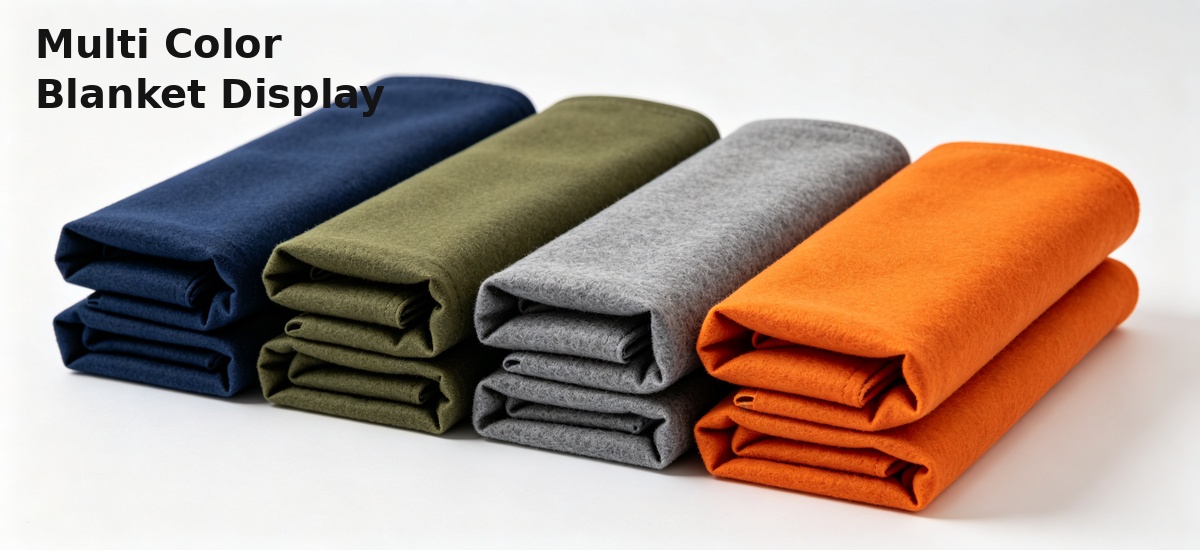
Understanding shelter blanket material options is essential for writing a proper spec. A waterproof shelter blanket uses a different shell from a breathable shelter blanket for indoor collective halls. Use this guide to match material construction to your actual shelter environment.
Material component
Common options
Best for
Key spec to verify
Shell fabric
PU-coated polyester taffeta, ripstop nylon, polycotton, polar fleece
PU-coated for outdoor tents, polar fleece for indoor halls
Hydrostatic head in mm (1000mm = light rain, 2000mm = heavy rain)
Insulation wadding
Polyester staple fiber, hollow conjugate fiber, wool blend, cotton
Polyester for most relief use (dries fast, hypoallergenic), wool for extreme cold
GSM weight (300/400/600/800/1000/1200 gsm) and Rct value per ISO 11092
Lining
Tricot, brushed polyester, cotton flannel, non-woven polypropylene
Soft tricot for children's blankets, non-woven for single-use emergency
OEKO-TEX Class I or II for direct skin contact, especially for children and medical shelters
Edge finish
Overlocked, bound with bias tape, heat-sealed, hemmed
Bound edges for durability in multi-use shelters, heat-sealed for waterproof single-use
Stitch density (6-8 stitches per cm), seam strength per ISO 13935
Fasteners / accessories
Snaps, Velcro, ties, hood attachment, foot box, carrying strap
Snaps/ties for multi-use blankets, carrying strap for mobile emergency response
Fastener durability (≥500 open/close cycles), attachment point reinforcement
Note: For hypoallergenic shelter blankets and antimicrobial shelter blankets used in medical or isolation shelters, require OEKO-TEX Standard 100 Class II certification. For reusable shelter blankets in long-term camps, verify the construction can withstand at least 10 commercial wash cycles without losing more than 10% of insulation loft.
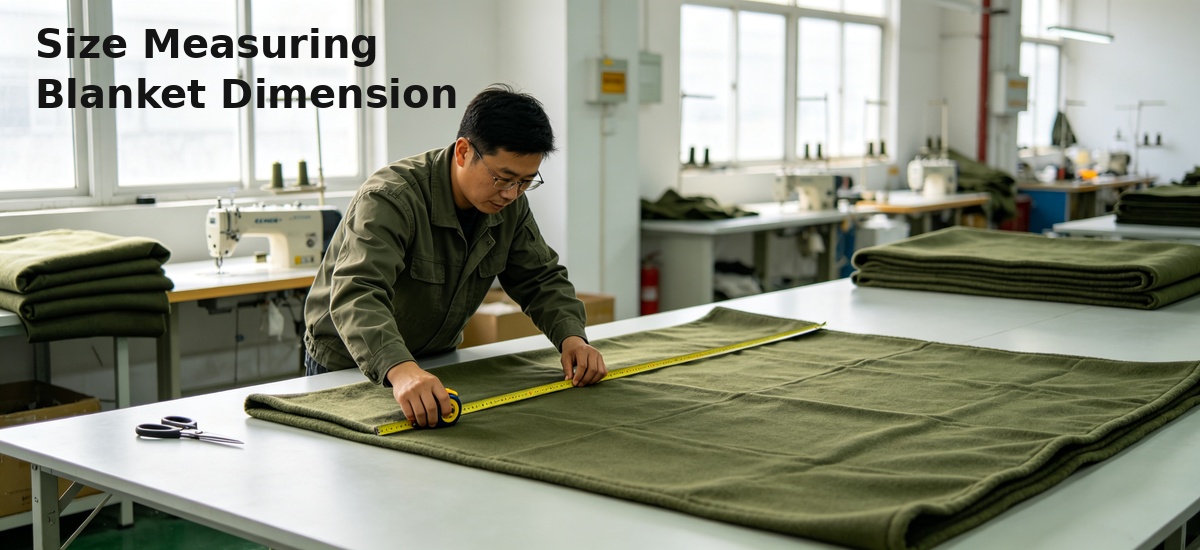
Shelter blanket size and weight specification table
A proper shelter blanket sizing guide and shelter blanket weight guide prevents the common mistake of ordering adult-sized blankets for children's areas or summer-weight blankets for winter camps. Match size and weight to both the user group and the climate.
|
Blanket type |
Dimensions (cm) |
Weight range |
GSM range |
Typical user |
|
Adult standard |
150 × 200 |
1.2 – 3.8 kg |
300 – 1200 gsm |
Adults in collective halls and tent camps |
|
Adult extra-long |
160 × 220 |
1.5 – 4.2 kg |
400 – 1200 gsm |
Tall adults, extreme cold regions |
|
Children's size |
100 × 150 |
0.9 – 1.8 kg |
400 – 800 gsm |
Children ages 4-12, family tents |
|
Infant / baby |
80 × 100 |
0.4 – 0.8 kg |
200 – 400 gsm |
Infants under 3, medical shelters |
|
Bivy / sleeping bag style |
80 × 200 (envelope) |
1.5 – 3.0 kg |
400 – 1000 gsm |
Outdoor emergency response, search and rescue |
|
Single-use emergency foil |
130 × 210 |
0.05 – 0.1 kg |
N/A (Mylar film) |
Immediate shock treatment, first aid kits |
Note: Always specify both dimensions AND weight in your RFQ. For thermal blankets for shelters in cold climates, the weight and gsm are the most important spec — not the brand name or marketing description.
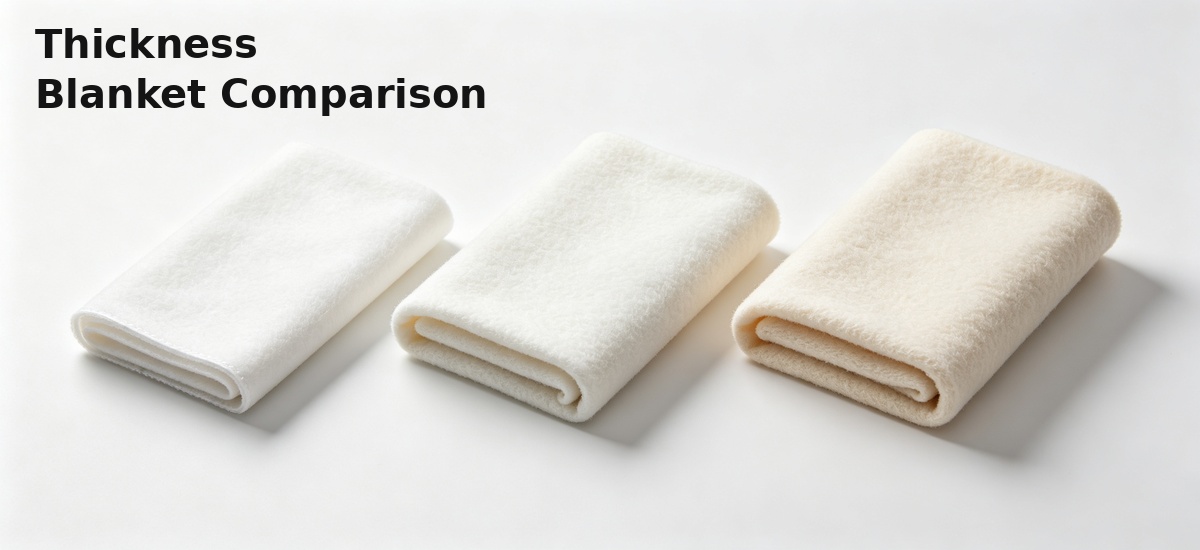
Shelter blanket packing, shipping and 40HQ loading details
Plan a shelter blanket purchase from the site operating route, not from a product name alone. Put demand assumptions, selected product fields, identification rules, packing instructions and receiving responsibilities into one current project plan.
This guide helps a buyer turn the shelter's operating route into procurement decisions. It does not establish blanket specifications, quantities or commercial terms for a particular project.
|
Packing method |
Unit packing |
Outer packing |
40HQ loading (est.) |
Best for |
|
Vacuum compressed bales |
Polybag per piece, then vacuum seal |
10-20 pieces per compressed bale, 6-8 bales per pallet |
6,000 – 10,000 pcs (standard weight) |
Ocean freight, large bulk orders, cost-sensitive buyers |
|
Folded cartons |
Polybag per piece |
10-20 pieces per export carton, 4-6 cartons per pallet |
3,000 – 5,000 pcs (standard weight) |
Air freight, fast distribution, no decompression time needed |
|
Pre-sorted by zone |
Polybag per piece, color-coded by zone |
Bales or cartons clearly marked Zone A/B/C |
Same as above, but sorted at factory |
Multi-zone shelters, saves warehouse sorting labor |
|
Individual retail pack |
Insert card + polybag + UPC/barcode |
Standard export carton |
2,000 – 4,000 pcs |
Retail/wholesale resale, not typical for direct shelter use |
Note: For shelter blanket logistics planning, always confirm carton dimensions, gross weight, pallet specification (ISPM 15), shipping marks, and whether vacuum compression is acceptable given your distribution timeline. For shelter blanket delivery schedule planning, standard production lead time is 25-35 days after deposit for bulk orders, plus 25-35 days ocean freight.
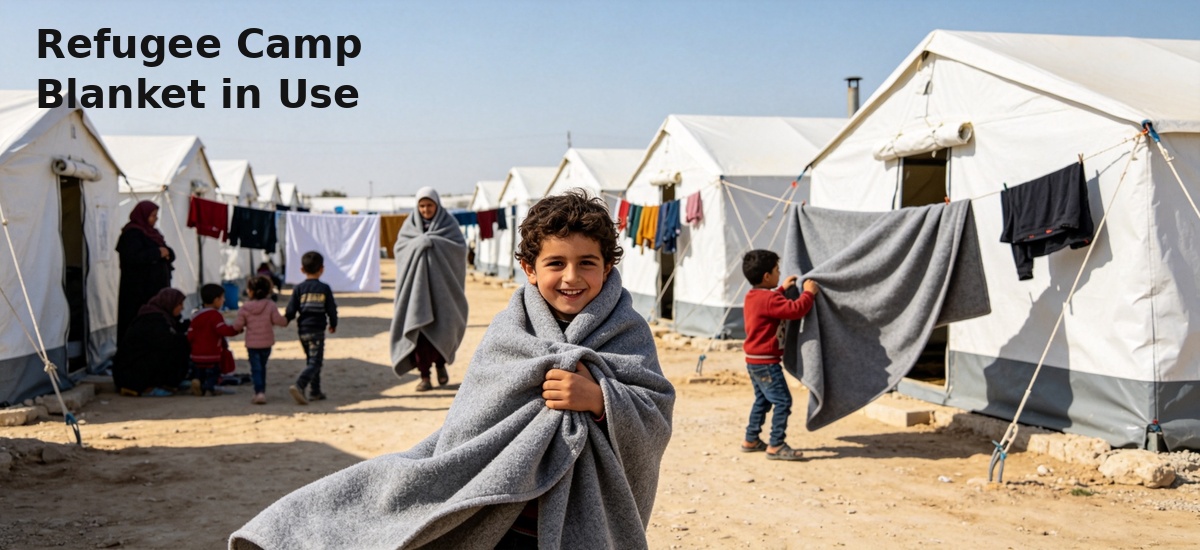
Shelter blanket quality control and inspection process
A proper shelter blanket quality control process catches problems before the container leaves the factory — not after it arrives at the shelter. Here is the standard three-stage inspection process we recommend for all bulk shelter blanket orders:
For large shelter blanket factory audit buyers, we also recommend: three-way sealed samples, test reports from ISO 17025 accredited labs (SGS, Bureau Veritas, Intertek, TÜV), and verification that the factory has proper quality management system certification (ISO 9001) and social compliance audit (BSCI, SMETA, or SA8000).
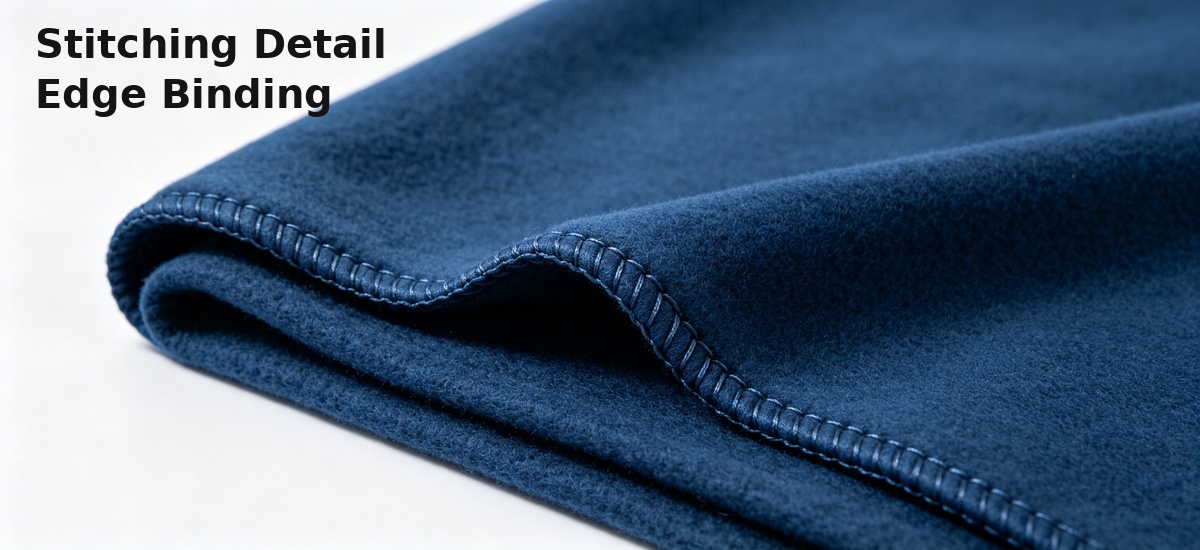
Shelter blanket customization and OEM options
Many shelter projects require custom shelter blankets with specific branding, labeling, or configuration. As an OEM shelter blanket manufacturer, we offer the following customization options — but it is important to understand which options add cost and lead time, and which are standard:
The table below summarizes common customization options, minimum order quantities, cost impact, and lead time impact. Use this when writing your RFQ to avoid unexpected cost overruns or schedule delays for shelter blanket customization projects.
|
Customization option |
Minimum order (MOQ) |
Additional cost |
Additional lead time |
Notes |
|
Custom color (Pantone match) |
500 pcs per color |
Low ($0.10-0.30/pc) |
+3-5 days |
Dyeing fee may apply for first order; standard colors (navy, grey, olive, orange) usually no MOQ |
|
Custom label (woven or printed) |
1,000 pcs |
Low ($0.05-0.20/pc) |
+5-7 days |
Provide artwork in AI/PDF vector format; multi-language labels need translation confirmation |
|
Custom size / dimensions |
1,000 pcs |
Medium ($0.20-0.50/pc) |
+5-7 days |
Cutting die or pattern adjustment fee; verify dimensions fit your distribution and storage |
|
Custom embroidery / logo |
500 pcs |
Medium ($0.30-1.00/pc) |
+7-10 days |
Embroidery setup fee; best for small logos on corner or chest area |
|
Custom printing (sublimation or screen) |
1,000 pcs |
Medium-High ($0.50-2.00/pc) |
+7-10 days |
Sublimation for all-over patterns, screen printing for spot logos; artwork setup fee applies |
|
Special treatment (FR, antimicrobial, waterproof) |
2,000 pcs |
High ($1.00-3.00/pc) |
+10-15 days |
Flame retardant per ASTM D4151 or EN ISO 12952; requires additional testing and certification |
|
Custom packing / zone sorting |
No MOQ |
Low ($0.05-0.15/pc) |
+3-5 days |
Pre-sort by zone at factory, color-coded bales, custom shipping marks; saves warehouse labor |
Note: For shelter blanket OEM and shelter blanket ODM projects, always confirm who owns the tooling/molds after the order, intellectual property rights for custom designs, and minimum reorder quantities for custom specs. For NGO and UN tender projects, customization is often specified in the tender document.
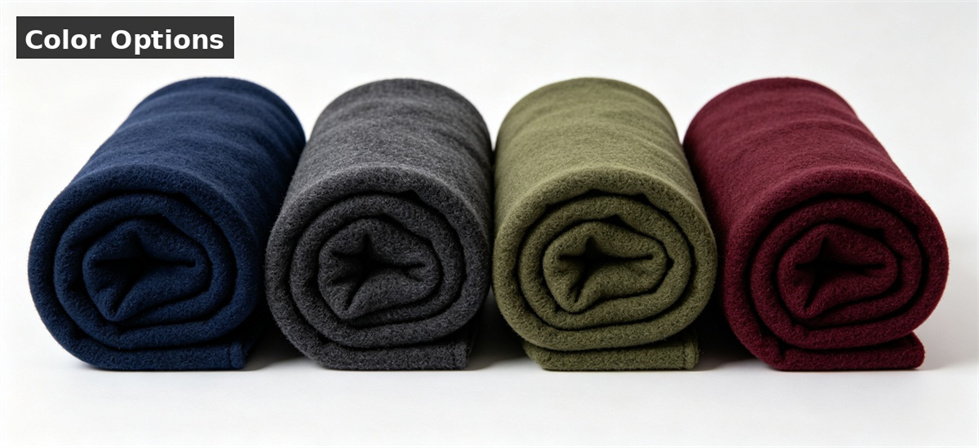
Plan a shelter blanket purchase from the site operating route, not from a product name alone. Put demand assumptions, selected product fields, identification rules, packing instructions and receiving responsibilities into one current project plan.
This guide helps a buyer turn the shelter's operating route into procurement decisions. It does not establish blanket specifications, quantities or commercial terms for a particular project.
In two decades of supplying shelter projects, I've seen the same pattern repeat: the buyer who starts with "how does this shelter actually work, day and night, in the coldest week?" gets a tender that works. The buyer who starts with "we need blankets, send me your best price" gets a container of something that sort of fits — and a scramble in week two.
A few years back an NGO ordered 15,000 standard relief blankets for a winter shelter in the Balkans. The spec said "150×200 cm, navy blue, relief blanket" — no temperature rating, no gsm, no packing instruction. They arrived folded in cartons of 20, labeled only in English. The shelter had three distribution zones, two of them staffed by local teams who read only the local language. Night temperatures dropped to -12°C. The blankets were 300 gsm — fine for a gymnasium in October, useless in a tent in January. By the time the field team reported back, the container was already distributed. The reorder took three weeks. People went cold. The root cause wasn't a bad factory; it was a plan that started from "buy blankets" instead of "how does this shelter actually operate in January?"
Map the route from stock arrival to registration, storage, allocation, issue, recovery and replenishment. Identify who handles a carton at each point, where units are counted, and when the site needs to recognise a selected item.
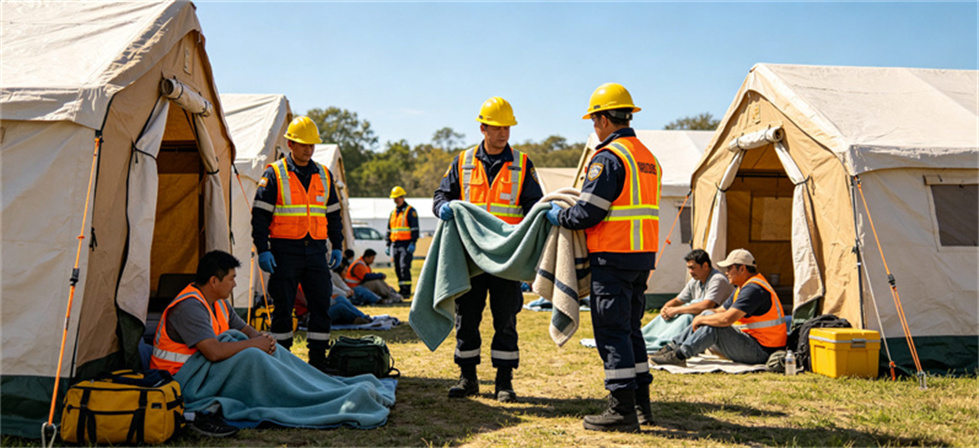
One central issue desk and several distributed points can use the same product but need different identification, packing and handover arrangements. Keep the operating route visible before asking suppliers to quote or pack an order.
Start with the planned sleeping arrangement, issue point, storage location, night-time conditions, expected operating period and collection or replenishment route. These facts reveal what must be confirmed in the project record.
Plain English: draw a simple flow chart on one page. Truck arrives → warehouse → counted → stored → allocated to zones → distributed to families → collected after use → laundered or replaced. Every arrow is a handoff. Every handoff needs a label, a count, and a person responsible. If you can't draw it on one page before you order, you'll be drawing it on a whiteboard in a warehouse at midnight trying to figure out where 2,000 blankets went.
Procurement checkpoint: Before you send a single RFQ, write down:
(1) how many distribution points,
(2) who staffs them,
(3) what languages they read,
(4) how blankets get from the warehouse to each point,
(5) how returns come back. This one-pager determines your packing, labeling, and allocation — and it belongs in the RFQ so the supplier can quote against it.
Build a demand estimate from the project's planned recipients, sleeping positions, issue sequence, arrival pattern, site allocation and project-defined contingency. Keep each assumption visible so the team can revise the estimate when the operating plan changes.
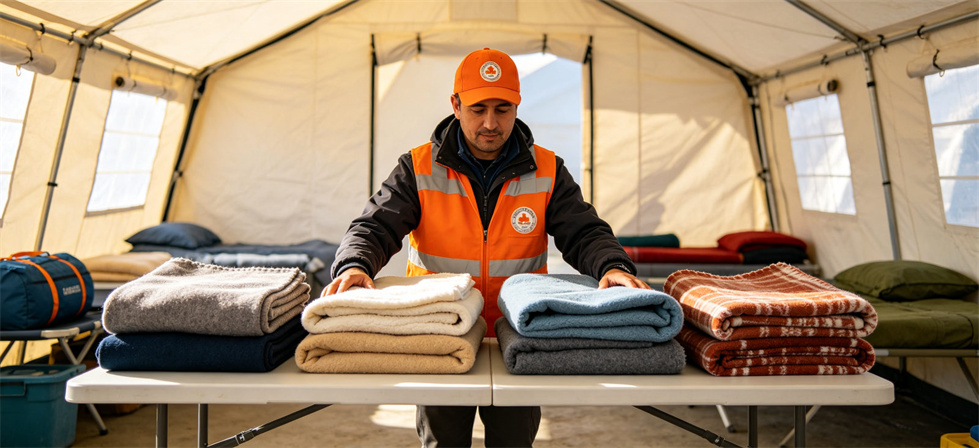
Do not treat one broad population figure as a complete quantity basis. The receiving owner should be able to explain how the total relates to the site allocation and issue route.
Buyer control
Question to close
Useful record
Project brief
What is the actual use and destination?
Current requirement sheet
Configuration
Which physical fields are fixed?
Written specification
Confirmation
What is covered by a sample or document?
Scope note
Payment terms
T/T 3-stage installment for bulk, or 50/50 for custom orders
Written payment confirmation
Inspection
AQL level, DUPRO/PSI arrangements, rejection criteria agreed
Order confirmation clause
Shipping docs
Commercial invoice, packing list, B/L, certificate of origin, test reports
Document checklist
Receipt
How will differences be handled?
Receiving record
Plain English: "We have 5,000 people" is not a demand plan. "We have 3,200 adults and 1,800 children in 800 tents across 4 zones, night temps around -8°C, people arriving at 200/day, operating for 12 weeks" — that's a demand plan. It tells you you need roughly 8,000–10,000 blankets at -15°C rating, packed and labeled by zone, with a replenishment order in week 6.
Separate material construction, dimensions, weight basis, edge finish, colour, label wording and packing. Then connect each field to an actual site purpose: recognition at issue, folded storage, allocation by destination or comparison at receiving.
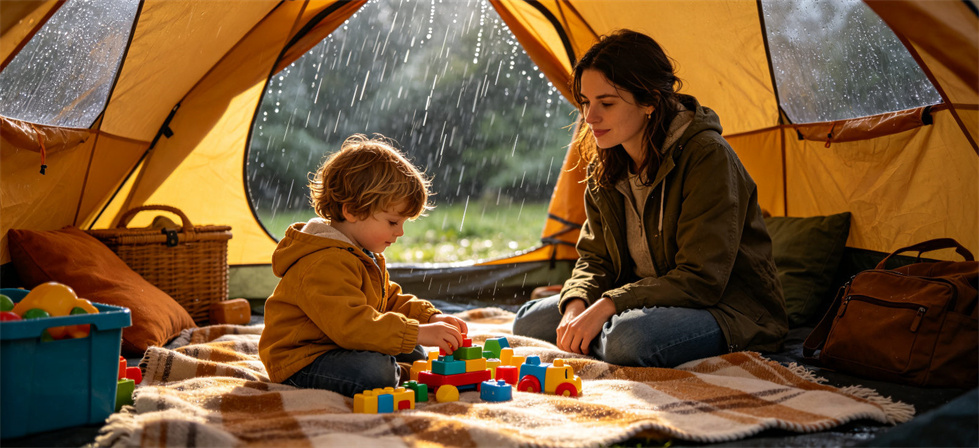
Ask the project team which fields must be measurable or visible at handover. Record selected fields and open fields separately so a general description is not mistaken for an approved shelter configuration.
Shelter condition
Insulation wadding
Single weight
Temperature range
Notes
Mild (above 10°C)
300–400 gsm
1.2–1.5 kg
5–15°C
Standard relief blanket, gymnasium/collective hall
Cold (-5 to -15°C)
600–800 gsm
2.0–2.6 kg
-5 to -15°C
Tent camps, winter shelters, requires PU-coated shell (1000mm)
Extreme cold (below -15°C)
800–1200 gsm
2.8–3.8 kg
-15 to -30°C
High-altitude, northern winter, ripstop shell (2000mm)
Children's (mild to cold)
400–500 gsm
0.9–1.2 kg
0 to -10°C
100×150 cm, softer tricot lining; below -15°C use adult sizes or issue two per child
Note: Children's blankets use a smaller 100×150 cm cut. The 400–500 gsm rating covers 0 to -10°C in that size; for conditions below -15°C, specify adult-sized blankets or plan to issue two per child for the extra insulation.
I once saw a tender that specified "warm blankets for winter shelter" — no gsm, no temperature, no standard. Three suppliers quoted: one at $4.50/piece (300 gsm, essentially a summer blanket), one at $7.20 (600 gsm), one at $11.00 (800 gsm with FR treatment). The procurement officer, seeing a 2.5x price spread, picked the middle one "to be safe." The 600 gsm blankets were adequate to about -5°C. The shelter hit -14°C in week two. The FR treatment was missing because nobody specified it — a kerosene heater near a blanket stack caused a small fire that destroyed 400 blankets. The saving on the blanket price was roughly $8,000. The cost of the reorder, the fire damage, and the reputational hit was ten times that.
This is the section most shelter tenders skip — and it costs them later. Below is what to ask for, by market, so you can write it into the RFQ instead of discovering a missing certificate at the port.

Blankets and tents use different test methods — don't let a supplier quote CPAI-84 or EN 13823 for a blanket. Those are tent standards. For blankets, require one or more of the following depending on destination:
Two types of FR treatment: topical (applied as a finish — cheaper but diminishes over time and with washing, fine for single-use or short-term shelters) and inherent (modified at the polymer level — more expensive but lasts for years, better for multi-year stockpiles). For collective shelters with open flames or heaters, FR is not optional.
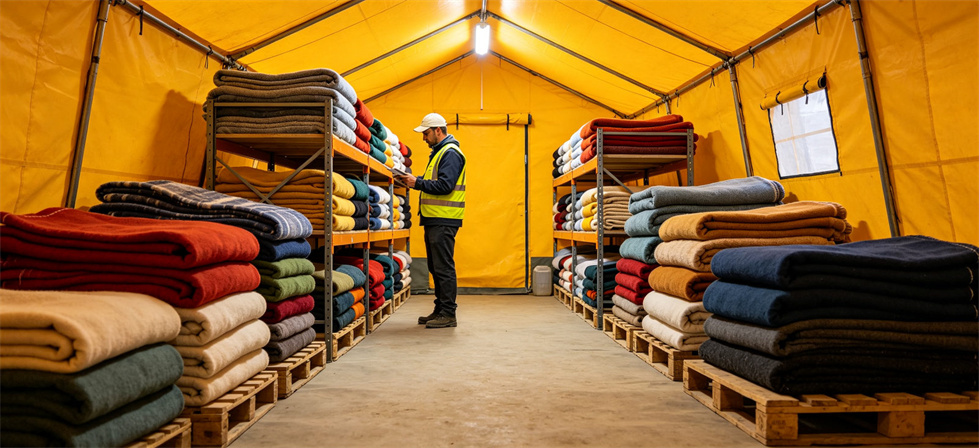
▶ Recycled polyester disaster relief blankets offer both environmental benefits and cost advantages, but recycled content and performance vary widely across products. Our article *How to Select Recycled Polyester Relief Blankets for Bulk Procurement* provides a selection framework based on environmental standards and real-world usage needs.
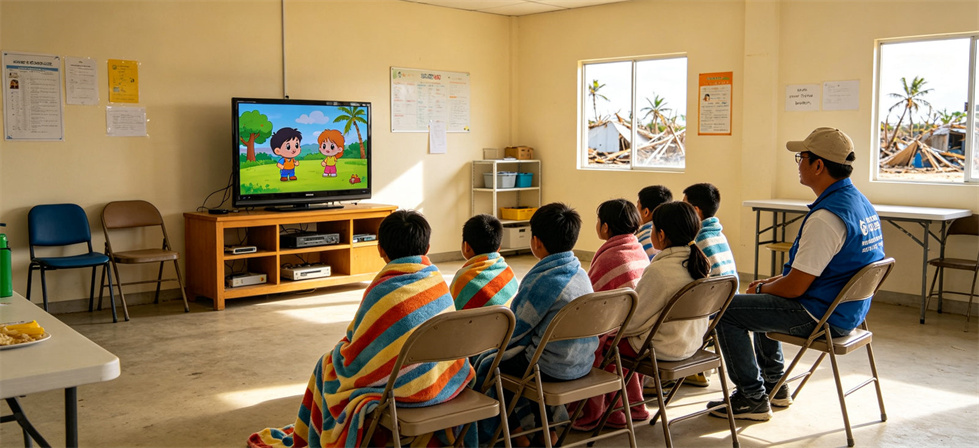
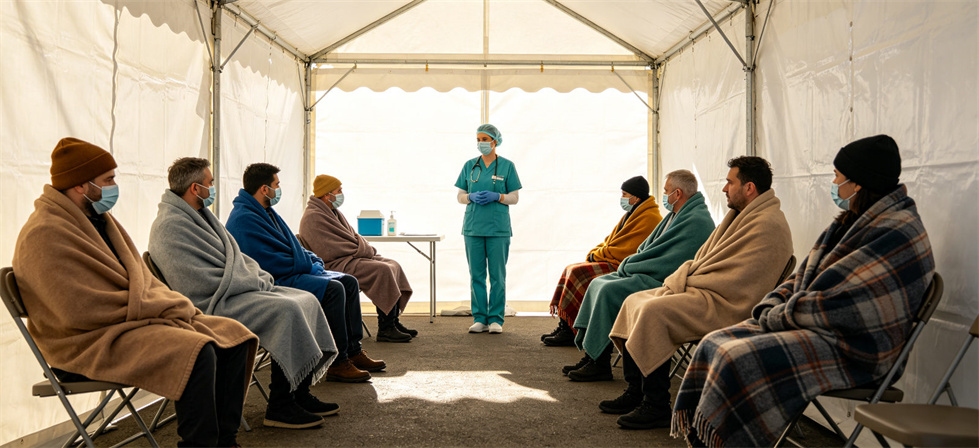
Procurement checkpoint: List every required certificate in the RFQ, not after the order is placed. If you need OEKO-TEX Class II and EN ISO 12952-1/-2, say so in the RFQ — the supplier will price for it, and you won't be negotiating test reports while the goods sit at the port.
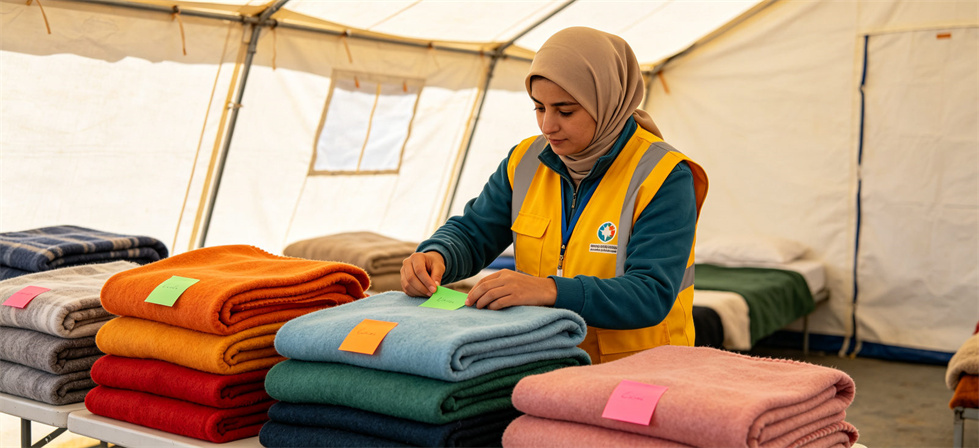
Use unit labels, outer-package marks or destination identifiers only where they help a stated action such as receiving, sorting, issue, return or replenishment. The goal is practical recognition, not decorative marking.
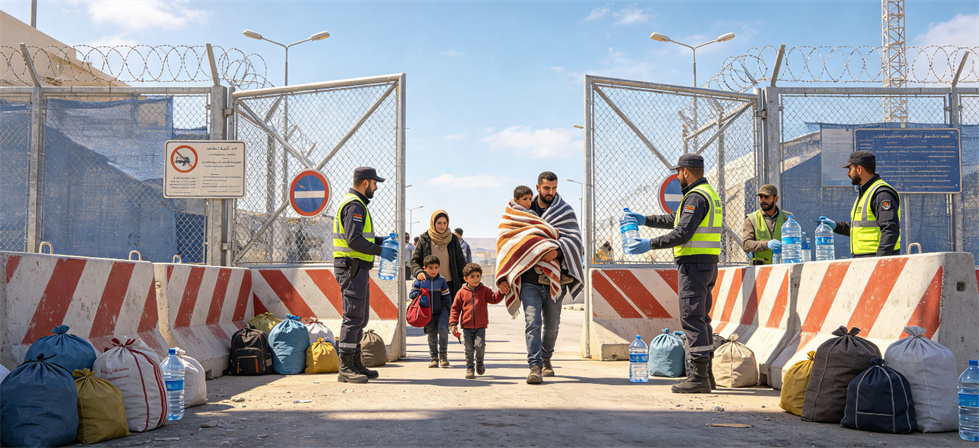
Before production or shipment, decide who reads each identifier, when it is used and which current configuration or site allocation it refers to. Keep approved wording and placement with the associated project record.
Plain English: a label that says "YRF-REL-2026-001" means nothing to a distribution volunteer in a camp who speaks French and Arabic. The label needs a pictogram (a blanket icon), a color zone (red = Zone A, blue = Zone B), a size mark, and care instructions in the languages of the people who will actually read it. For West and Central Africa that's French; for the Middle East and parts of East Africa it's Arabic; for parts of East Africa it's both; for Latin America it's Spanish; for most NGO and UN tenders it's English. If your camp has multiple language groups, use pictograms plus all relevant languages.
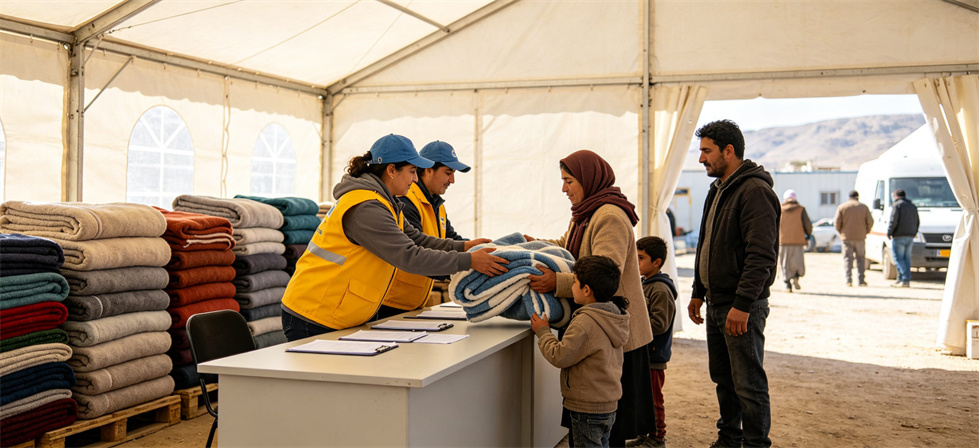
What goes wrong
The lbels are printed in English only. The national staff and volunteers who actually distribute the blankets at the shelter — who may be drawn from the local community or a local NGO partner — don't read English well enough to distinguish Zone A from Zone B or to follow care instructions.
Consequence
Blankets go to the wrong zones, care instructions are ignored (blankets get washed in hot water or dry-cleaned, destroying FR treatment and wadding loft), and the batch tracking system breaks down because local staff can't read the batch number.
How to prevent it
Specify label languages in the RFQ based on the actual staff and population, not the procurement office language. Use color-coding and pictograms as a language-independent backup. Keep the label text minimal: size, care (with pictograms), origin, batch number.
Review how packages will be unloaded, opened, counted and moved into the shelter operating route. A packing method that works at a central warehouse may create extra sorting work at several issue points.
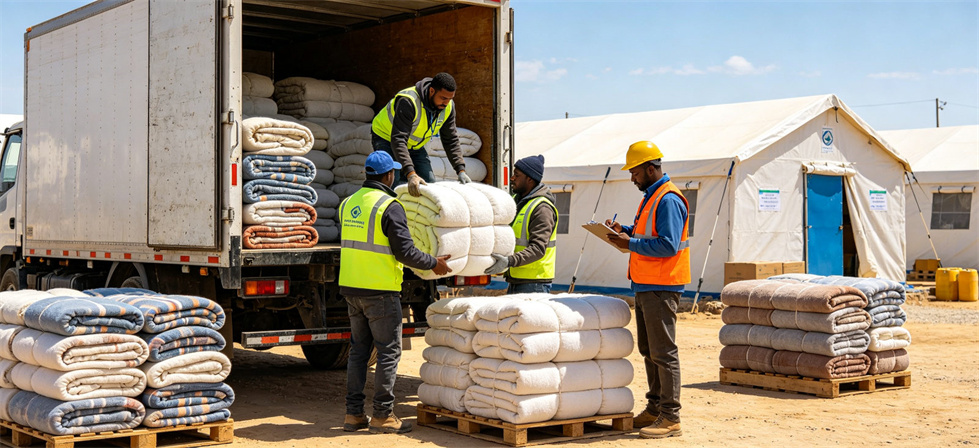
Confirm packing information only for the selected configuration and current folding method. If an operational need changes the packing route, ask for the relevant option to be shown in the current quotation or packing record rather than assuming an older arrangement applies.
For shelter projects, the packing decision usually comes down to vacuum-compressed bales versus folded cartons. Vacuum compression saves 50–70% shipping volume — critical for container budgets — but requires 24–48 hours of fluffing time after decompression before the blankets regain full loft in cold conditions. Folded cartons are faster to distribute at the shelter but ship at roughly half the quantity per 40HQ. For multi-zone distribution, consider pre-sorting by zone at the factory: bales marked Zone A, Zone B, etc., so the warehouse doesn't have to break open mixed bales and re-sort.
Prepare receiving checks around the site operating route: shipment identity, package marks, affected quantities, selected visible sample points and the approved reference used for comparison. State who records an exception and where that record will be kept.
Where stock is split by site or group, the receiving record should make that allocation visible before issue begins. Receiving is part of the distribution plan, not a separate administrative task.
Plain English: when the truck arrives at the shelter, someone needs a one-page checklist that says: count the cartons and match to the packing list, check that shipping marks match the zone allocation, open 5–10 random cartons and inspect the blankets inside (AQL general inspection level II, major 2.5 / minor 4.0), weigh 5–10 random pieces on a scale against the spec weight (±5% tolerance), check labels are in the right languages, check for visible defects (stains, seam gaps, wrong color). If anything doesn't match the approved reference, photograph it, note it on the receiving record, and flag it before the blankets leave the receiving area. Once they're distributed, it's too late.
Procurement checkpoint — after-sales and claims: Agree in writing what happens if a batch fails after delivery:
(1) claim must reference the batch number from the label and include photos; (2) supplier investigates the production record for that batch;
(3) if the fault is confirmed (wrong gsm, seam failure beyond AQL, missing FR treatment), supplier replaces the affected quantity free of charge or credits the value;
(4) for time-critical shelter situations, agree whether replacement ships by sea or air and who bears the upgrade cost. This clause takes five minutes to write into the order confirmation and saves weeks of argument later.
After delivery or use, retain verified observations only: what was received, what was difficult to handle, which changes were approved and what needs different confirmation next time. Avoid turning one local experience into a general product claim.
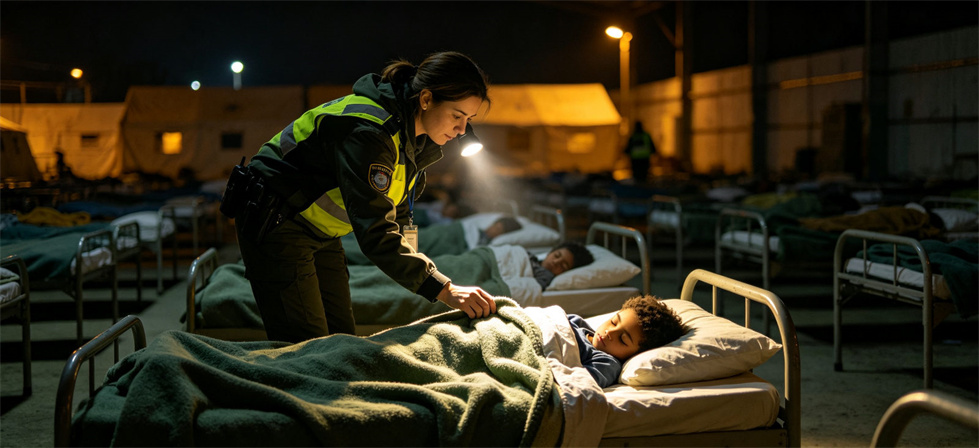
Useful notes can identify a field that should remain fixed, such as an approved configuration version or packing reference, and a field that needs fresh review for the next site.
Concrete things to record: actual night temperatures vs. spec rating (did the gsm match the cold?), which labels worked and which didn't, how long distribution actually took per 1,000 blankets, what percentage came back damaged or soiled, and any packing format that caused bottlenecks. These specifics — not "blankets were fine" — are what make the next tender sharper.
▶ Cheap Deals 4.5 pounds thick texture Wool blanket. Click this title link to check 4.5‑pound heavy‑duty blanket specifications, favorable unit prices and packing details for bulk relief‑supply orders.
Demand planning explains why the project needs a total quantity under its stated assumptions. Allocation explains how approved units move to sites, groups or recipients. Keep both records connected but do not merge them into one unexplained number.
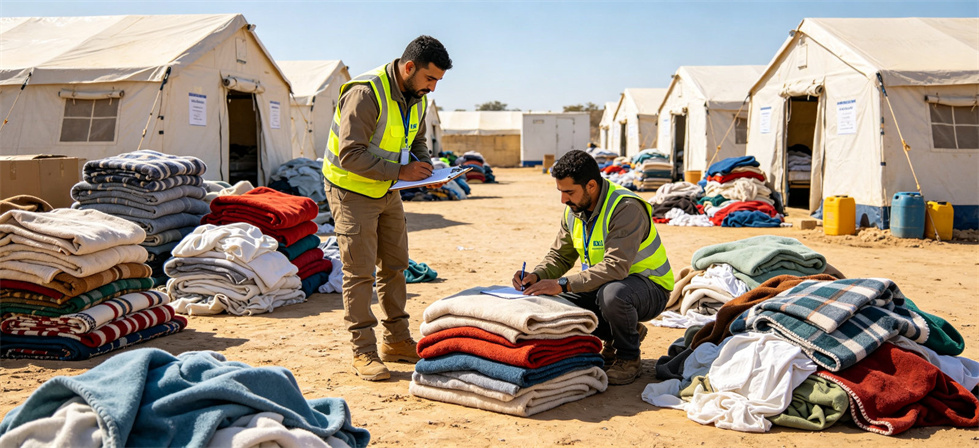
Use a common reference across the demand note, selected configuration, packing plan and receiving record so the teams can identify which decision governs each handoff.
Plain English: "10,000 blankets" is a number. "6,000 to Zone A (family tents), 2,500 to Zone B (collective hall), 1,000 to Zone C (children's area), 500 contingency" is an allocation. The first tells the supplier how many to make; the second tells the warehouse how to label and pack. You need both, and they need to reference the same project number so nobody at the warehouse has to guess which 10,000 you mean.
Before delivery, walk one notional carton from arrival to storage, opening, counting and issue. This simple test can reveal missing marks, unclear responsibility or a destination split that is difficult to use at the site.

Include an exception test: if a package arrives at the wrong point or has an unclear identifier, who checks it, which record is used and who decides the next action? Resolve those gaps while the plan can still be changed.
We ran this exercise for a client supplying a transit centre in Eastern Europe. We walked one carton: truck → central warehouse → counted → stored → requested by Zone 3 → picked → loaded onto pickup → driven 3 km to Zone 3 → offloaded → counted again → distributed. At "requested by Zone 3" we realised there was no requisition form — Zone 3 would just call and ask. That works for 50 blankets; it doesn't work for 500 a day. We added a simple requisition slip (zone, quantity, date, signature) before the order shipped. It took 20 minutes to design and probably saved three weeks of chaos.
Write what was actually received, issued, retained, returned or found different against the approved record. Include the package or product identifier, affected quantity, visible condition and the reference used for comparison.

Factual notes help the next project. They should not become unsupported statements about every blanket, site or future delivery.
What goes wrong
A field report comes back saying "blankets are poor quality, stitching came undone after one week." No batch number, no quantity, no photo, no comparison to the approved sample, no record of how they were washed or handled.
Consequence
The supplier can't investigate (which batch? which production run? how many?), the procurement team can't use the feedback for the next tender (is it a real quality issue or rough handling?), and the relationship with the supplier sours over an unsubstantiated claim.
How to prevent it
Train receiving and field staff to record: batch number (from the label), quantity affected, specific defect (e.g., "seam opening on 12 of 50 inspected, batch BL-2026-034"), photo, and comparison to the approved sealed sample. A factual note with a batch number and a photo is actionable; a general complaint is not.
The next project should begin with a new review of occupancy, destination, operating route and handling needs. Reuse confirmed fields only when they still match the new site's plan.
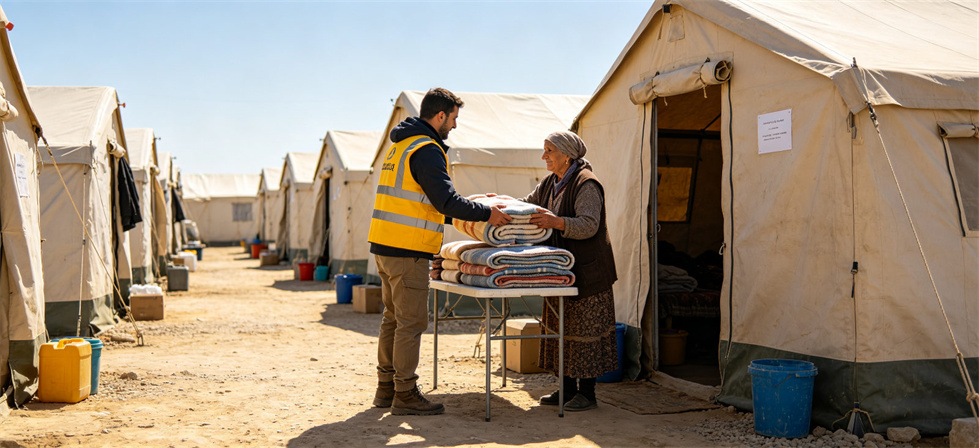
State what remains the same, what changed, which configuration and packing reference governed the earlier project, and which open items need a new confirmation. This makes past experience useful without silently copying it into a different shelter project.
For NGO and UN agency buyers importing as relief goods, check whether the destination offers duty-free or reduced-duty import for humanitarian supplies. Many countries allow this with the right documentation — a certificate of origin, a relief consignment letter from the receiving agency, and the correct HS code (6301.40 for synthetic blankets). Ask your freight forwarder before the goods ship; the saving can be 10–20% of the goods value, and it's too late to claim once the container is at the port.
Planning a shelter-project blanket tender?
We'll share a ready-to-use shelter blanket RFQ template covering every field in this guide:
Stock samples ship in 5–7 days free with freight collect; custom samples 10–15 days (fee deductible from first order). Standard bulk lead time is 25–35 days after deposit. Reach us through the inquiry form with your shelter location, expected population, night-time conditions, and timeline. No obligation, your information stays confidential. Final terms subject to signed contract.
Related reading: The Complete Guide to Relief Blankets · Bulk Relief Blanket Procurement: From RFQ to Shipment · Extreme Cold Blanket Buying Guide · Relief Blanket Procurement FAQ
Map the shelter operating route first: receipt, storage, registration, allocation, issue, recovery and replenishment. That route shows which demand assumptions, product fields and packing details the estimate must support. If you can't describe how a blanket moves from the truck to a person and back again, you can't write a good quantity estimate — you can only guess. In twenty years I've seen buyers skip this step and pay for it later.
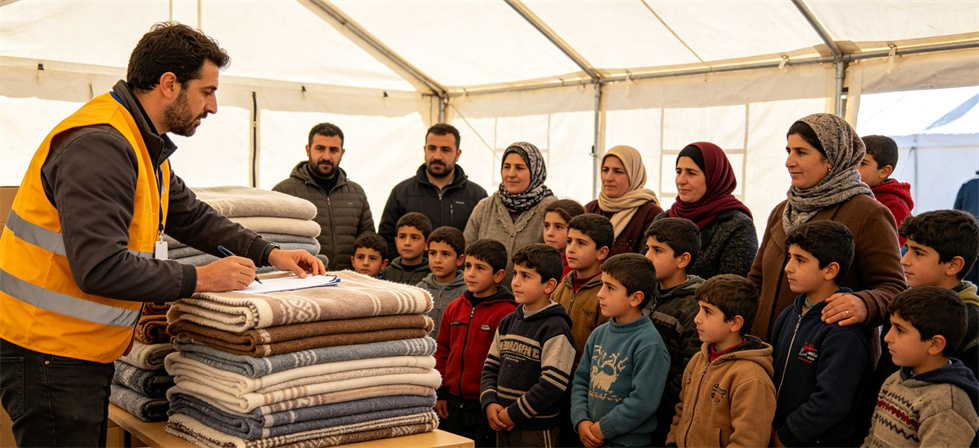
No. The estimate explains a quantity basis; the selected configuration must be confirmed separately. Keep demand planning and product specification connected through the same project reference, but do not treat either one as a substitute for the other. "10,000 blankets" tells the factory how many; "800 gsm, PU-coated, FR-treated, -15°C rated" tells them what.
Identification can help receiving, sorting, issue and return when units must move to different sites or groups. Use it only for a defined operational purpose and record the approved wording or marking method with the relevant plan. A zone mark on a bale that says "Zone B" saves the warehouse from having to open and re-sort mixed bales — which saves a day of labour at the shelter. I've seen this single detail cut distribution time in half.
Check that staff can recognise the selected item, count the intended units, use the current allocation reference and record a visible exception. The exact check should match the site's operating route and approved records. If the distribution volunteer can't tell a -15°C blanket from a 5°C blanket by looking at it, the labels or color-coding have failed — and that's a spec problem, not a volunteer problem.
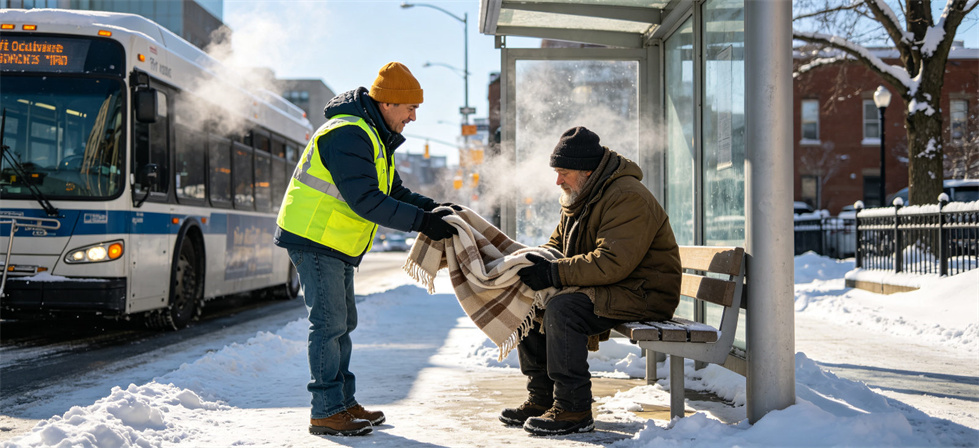
No. Record it as a site-specific observation. It can improve the next brief, but it does not prove that every product, configuration or future project will perform the same way. "30 blankets in batch X had seam failure" is useful; "these blankets fall apart" is not. I tell every buyer: put the batch number on every label, because without it, field feedback is just opinion.
The team needs the current shipment identity, package marks, allocation reference, quantity-check method, selected visible sample points and a clear exception route. These fields connect receipt with later issue and replenishment. Without a packing list that matches the physical marks, the receiving team can only count cartons — they can't verify what's inside. That's how a container of 300 gsm blankets gets signed off as "800 gsm winter stock."
Keep one overall demand basis and a separate allocation record showing how approved units move to each location. Use matching references on the packing and receiving records so the destinations can be identified without relying on memory. If Zone A and Zone B both get 2,000 blankets, the bales for Zone A should say Zone A — not arrive as 4,000 unmarked blankets that someone has to sort in the rain.
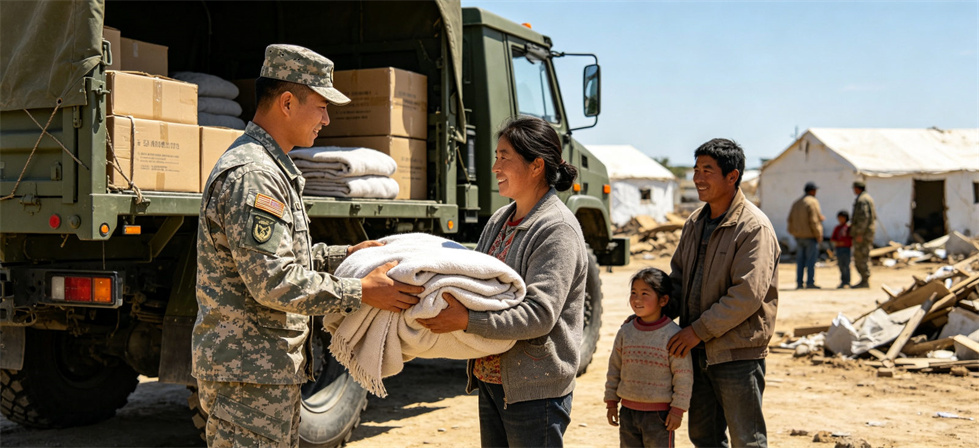
It is final only when it matches the selected configuration, current order and operating route. Revisit it when destination allocation, folding method, unit presentation or receiving requirements change. If the shelter adds a new zone after the order ships, the packing plan for the next shipment needs to reflect it — don't assume the old split still works.
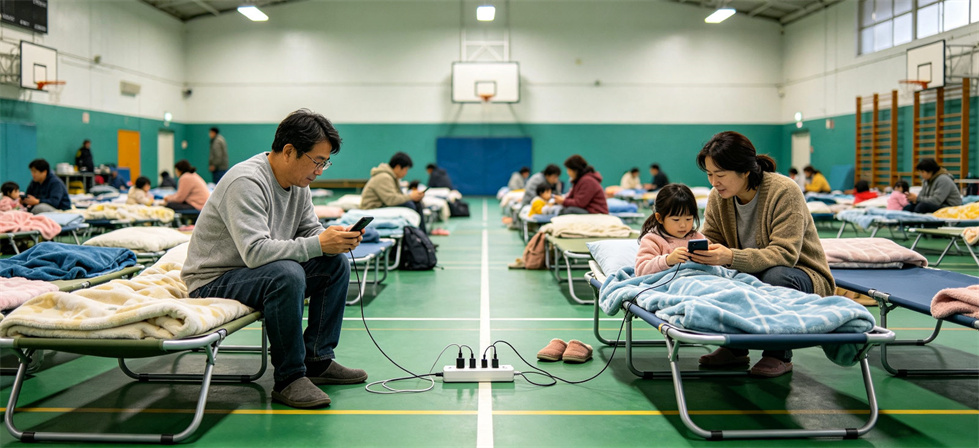
Update the demand assumptions and review the allocation, receiving and packing records affected by the change. Do not simply apply the earlier quantity or distribution plan to a different occupancy pattern. If population doubles two weeks in, a replenishment order with the same spec but different zone allocation is better than trying to re-route blankets already shipped.
Retain the final operating assumptions, allocation method, selected configuration reference, packing or identification record, receiving observations and approved changes. Compare these with the next site's requirements before reusing them. A spec that worked for a -5°C shelter in Macedonia may be wrong for a -20°C shelter in Ukraine — even if the blanket type sounds the same.
Plan for 1.5 to 2 blankets per person in cold-weather shelters (below 5°C night temperature), 1 per person in mild conditions (above 10°C), and 2–3 per family tent depending on tent size and whether children share. Add 10–15% contingency for loss, damage, laundering rotation, and unexpected new arrivals. For phased arrivals, order to the expected peak population, not the opening-day number.
Match the rating to the shelter's actual night-time conditions, not the season name. General shelter above 5°C: 300–400 gsm insulation, 1.2–1.5 kg. Cold environments -5 to -15°C: 600–800 gsm, 2.0–2.6 kg, PU-coated shell (1000mm hydrostatic head). Extreme cold below -15°C: 800–1200 gsm, 2.8–3.8 kg, ripstop shell (2000mm). Always express the spec in gsm and Rct value per ISO 11092, not just a temperature claim.
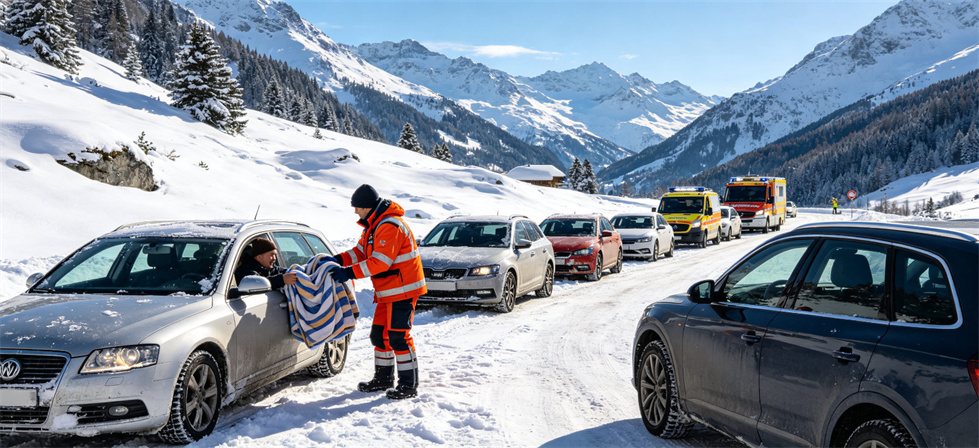
At YRF we work on T/T (telegraphic transfer) only; we do not accept L/C. Bulk and stockpile orders follow a 3-stage installment: deposit to begin production, a second payment at a production milestone (typically mid-production or after DUPRO inspection passes), and the balance before the goods leave the factory. Custom or made-to-order blankets follow 50% deposit on order confirmation and 50% balance before shipment. Confirm all terms in writing in the quotation.
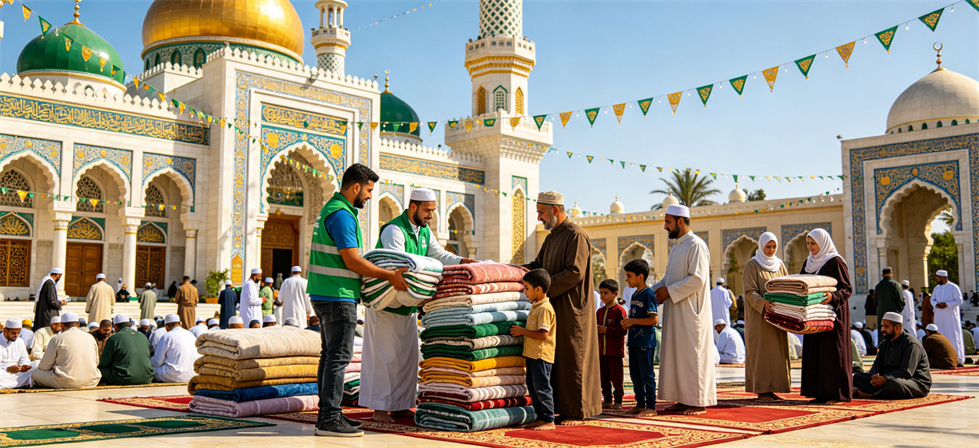
Use pictograms plus the relevant languages based on the actual camp population and staff. Arabic for the Middle East and parts of East Africa; French for West and Central Africa; French plus Arabic for parts of East Africa; Spanish for Latin America; English for most NGO and UN tenders. Keep label text minimal: size, care instructions with pictograms, country of origin, and batch number for traceability. Color-code by zone as a language-independent backup.
Yes — in any collective shelter where open flames, heaters, cooking, or electrical equipment are present, specify flame-retardant treatment. The standard depends on market: ASTM D4151 and 16 CFR Part 1633 for the US; EN ISO 12952-1/-2 and BS 5866 for the EU/UK. Don't confuse blanket FR standards with tent standards like CPAI-84 or EN 13823 — they test different products. Topical FR treatment (applied as a finish) diminishes over time and with washing; for multi-year stockpiles, inherent FR fibers (modified at the polymer level) last longer.
Standard 1.2–1.5 kg blankets vacuum-compressed: 6,000–8,000 per 40HQ. -15°C blankets (2.0–2.6 kg): 5,000–7,000 compressed or 3,000–4,000 folded. -25°C blankets (2.8–3.8 kg): 3,000–5,000 compressed or 2,000–3,000 folded. These are estimates — the exact count depends on finished size, compression ratio, bale dimensions, and pallet configuration. Always confirm loading with your supplier for your exact spec.
Vacuum compression saves 50–70% shipping volume and is standard for delivery. However, after decompression the wadding needs 24–48 hours to recover ≥90% loft at 20°C/60% RH — plan for this before distributing in cold conditions. Folded cartons are faster to issue at the shelter but ship at roughly half the quantity per container. A common approach: vacuum-ship to the central warehouse, decompress and re-bag 24–48 hours before dispatch to distribution points.
Follow a simple one-page checklist:
(1) count cartons/bales against the packing list;
(2) verify shipping marks match the zone allocation;
(3) open and inspect a random sample per AQL general inspection level II (major 2.5, minor 4.0) — that's roughly 7–10 minor defects and 2–3 major defects per 200 pieces acceptable;
(4) weigh 5–10 random pieces on a scale against the spec weight (±5% tolerance);
(5) check labels are correct language and zone;
(6) photograph any discrepancy with batch number visible. Record everything on the receiving record before the blankets leave the receiving area.
Standard set: commercial invoice (USD, full buyer name, correct Incoterms), packing list (carton/bale detail with weights and measures), bill of lading (ocean) or airway bill (air), certificate of origin (Form A, Form E, or CO depending on destination), test reports (flame retardancy, harmful substances per OEKO-TEX/REACH), and any destination-specific import permits or NGO duty-exemption documentation. For NGO/UN relief shipments, check whether duty-free import applies — you'll need a relief consignment letter and the correct HS code (6301.40 for synthetic blankets). For air freight, confirm the 24 kg per carton limit. Ask for the document checklist at order confirmation, not at the port.
Plan a collection point and a simple triage: clean and intact → reissue to new arrivals; soiled but intact → launder per care instructions (do not dry-clean — solvent destroys wadding loft and FR treatment; use a damp cloth and mild detergent for spot cleaning, or a gentle commercial wash at low temperature); damaged beyond repair → record the batch number and quantity, remove from circulation, and add to the replenishment order. Track recovery rates — if 20% come back damaged each week, you'll need a 20% weekly replenishment factor.
Stock samples are free with freight collect (you cover courier cost). Custom samples (custom gsm, custom color, custom labels, special dimensions) may carry a sample fee depending on complexity, and this fee is often deductible from the first bulk order if the sample is approved. Sample lead time is 5–7 days for stock items, 10–15 days for custom. For large tenders, arrange three-way sealed samples: we hold one, you hold one, and the inspection agency (SGS, BV, Intertek) holds one as tiebreaker.

Blankets don't magically stop working below their rating — they just don't insulate enough. A 600 gsm blanket rated to -5°C used at -15°C means the user feels cold, doesn't sleep well, and in extreme cases risks hypothermia. If the shelter's actual conditions are colder than planned, two options:
(1) issue two blankets per person — two 300 gsm blankets can be roughly equivalent or slightly warmer than one 600 gsm due to the trapped air between layers; or
(2) expedite a shipment of heavier blankets. Don't just hope the spec was conservative — if the field reports cold complaints, take them seriously and verify with a thermometer reading in the tent at night.
A shelter blanket order that works is one where the right blanket — in the right weight, the right language, the right zone mark — reaches the right person on the right night. That doesn't happen by accident and it doesn't happen by ordering from a product list. It happens when you map the route before you write the RFQ, write the spec in numbers not adjectives, require the right certifications for the right market, pack for the handoff not the warehouse, and train someone at the shelter to count and compare before they distribute. The blankets are the easy part. The plan is what separates a shelter that sleeps warm from one that doesn't.
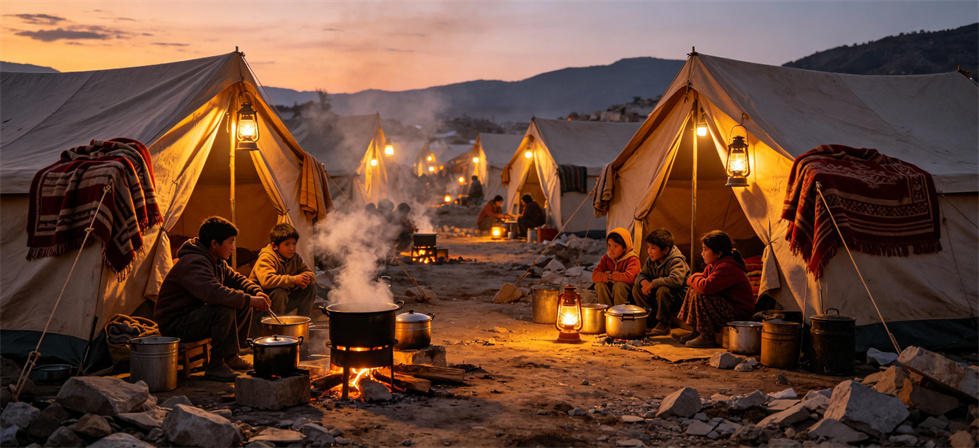
Primary Keyword: Shelter Project Blanket Procurement
Long-Tail Keywords: shelter blanket procurement guide, emergency shelter blankets, refugee camp blanket supply, camp blanket demand planning, blanket distribution shelter, shelter blanket specification, blanket gsm for cold weather, shelter blanket labeling multi-language, flame retardant shelter blankets, ASTM D4151 blanket, EN ISO 12952 blanket, BS 5866 blanket, 16 CFR 1633 blanket, OEKO-TEX relief blanket, REACH SVHC blanket, vacuum packed relief blankets, 40HQ blanket loading, shelter blanket receiving inspection, blanket AQL inspection, shelter blanket tender, NGO blanket procurement, UN blanket tender, emergency shelter blanket supplier, blanket allocation by zone, shelter blanket packing, blanket recovery shelter, multi-location blanket distribution, shelter blanket temperature rating, winter shelter blankets, camp blanket quantity per person, T/T payment relief blankets, China shelter blanket manufacturer, bulk shelter blankets FOB, blanket ISO 11092 Rct, shelter blanket shipping documents, blanket batch tracking, ISPM 15 pallet blankets, shelter blanket contingency planning, NGO duty-free blanket import, relief blanket HS code 6301.40, shelter blanket after-sales claims, blanket test report validity, three-way sealed sample blanket
▶ The core of institutional bulk purchasing lies in strict implementation of technical standards and Continuation stable supply capacity. We provide large-volume wholesale supply of emergency relief blankets for government material stockpiles, prison accommodation, military camps and other scenarios, following project technical standards throughout the entire process. For a systematic understanding of institutional bulk purchasing key points, please refer to our article *Emergency Disaster Relief Blankets | For Government Stockpiles, Correctional Facility Blankets & Military Camps – Bulk Wholesale Supply*.
✅ Factory video link (YouTube): https://x.c1ns.cn/zVNIU
✅ Facebook homepage: https://a.c1ns.cn/SjJla
|
Access our full product document |
Quick real‑time chat for urgent project questions |
 |
 |
|
Get full‑range product specs & package solutions in PDF |
Connect with us for instant project support |
Liens amicaux :
droits dauteur © Custom Disaster - Relief Bedding: Tents, Sleeping Bags, Blankets Tous les droits sont réservés
léquipe professionnelle au service !